


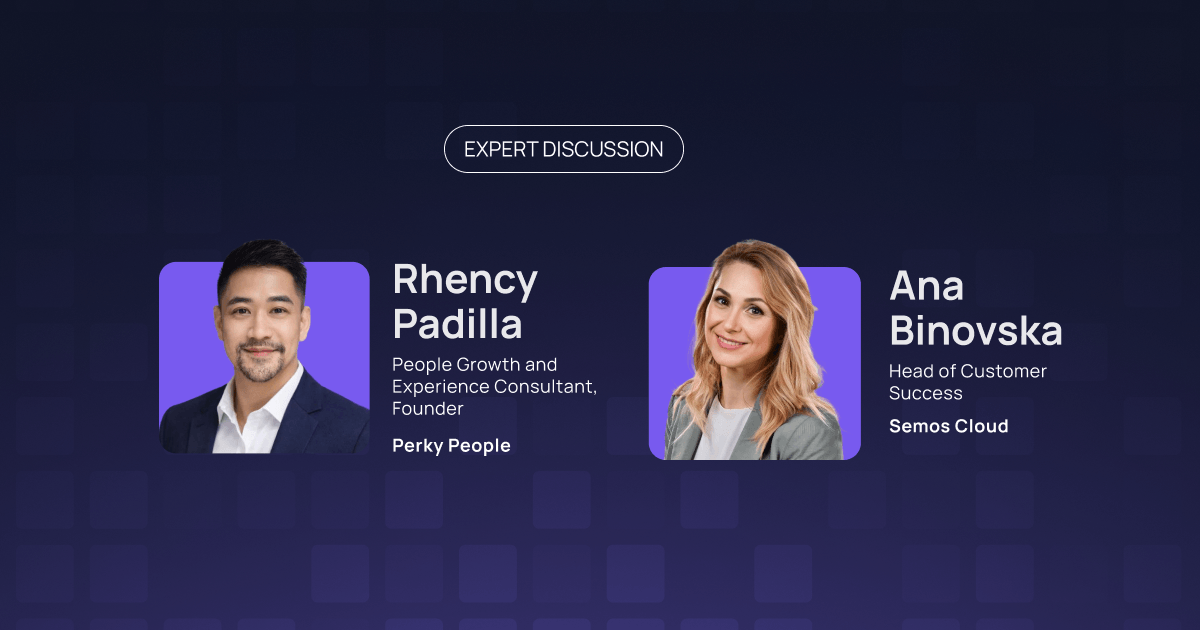


Most executives focus on processes, metrics, and systems, but overlook a foundational question: “What do you want people to feel?” Rhency Padilla, who has designed employee experiences across global industries, argues that the quality of work is directly tied to how valued people feel. And that sense of value is shaped far beyond surface-level perks, it’s about intentional experience design, cultural understanding, and leadership that prioritizes human emotion as much as operational excellence.
Introduction
“What do you want people to feel?” is a question most executives never expect. They tend to focus on processes, metrics, and systems. But Rhency Padilla has learned that without clarity on the emotional experience you want to create, even the best-designed processes fall short.
After 20 years designing employee experiences across airlines, government embassies, luxury retail, and today fast-growing tech companies shaping Dubai’s skyline, Rhency Padilla, Founder of Perky People, Chartered Fellow of the CIPD, and leader of people experience initiatives at G42 has seen a consistent truth across industries and continents: the quality of work people produce is directly tied to how valued they feel.
But that sense of value goes far deeper than perks like free cupcakes or ping pong tables.
In a conversation with our colleague Ana Binovska, Head of Customer Success at Semos Cloud, Rhency explores what truly makes a workplace great, how cultural diversity reshapes recognition and feedback, and why HR leaders need to think more like designers. Drawing on his experience helping organizations achieve Great Place to Work certification in highly diverse environments, he shares practical insights on building cultures where people can genuinely thrive.
[cta-3]
When onboarding checklists aren't enough
Picture a startup in Dubai, 2019. They're growing fast, hiring aggressively. On paper, everything looks perfect. New hires are excited. The offers are competitive. The vision is compelling.
Then, six months later, they're gone.
Exit interviews reveal the pattern: "This isn't what I signed up for." "The role was different than described." "I felt lost from day one."
The HR team is baffled. "We followed the onboarding checklist," they insist. "We sent the welcome email, set up their laptop, assigned them a buddy."
"When I work with a new client," Rhency explains, "they usually start by listing everything they're already doing. The activities. The programs. The initiatives. I stop them and ask a different question: What feeling do you want people to experience when they join your organization?"
Most executives don't expect this question. They want to talk about processes, metrics, systems.
"When you ask about the feeling," he says, "suddenly the conversation shifts. Instead of talking about checklists, we're talking about warmth, belonging, clarity, confidence. Once you know what feeling you want to create, you can work backward to design experiences that actually create that feeling."
This methodology transformed that struggling startup's onboarding, cutting six-month attrition and dramatically improving engagement scores for new hires. The theory became practice with measurable results.
The universal truth hiding in plain sight
Rhency's journey to this insight spans three continents and industries most people would consider worlds apart. From the pressurized environment of airline operations at Etihad Airways, where a single missed detail can ground a fleet, to the bureaucratic complexity of government embassies, to the perfectionist world of luxury retail at LVMH and Chalhoub Group.
"I remember working with an airline client who was skeptical," he recalls. "They said, 'You don't have experience in our industry. Aviation is different.' And I thought, maybe the uniforms are different, maybe the pace is different, but the fundamental human need? That doesn't change."
What he discovered became the foundation of his philosophy: Regardless of industry, regardless of role, every human being wants to feel that they matter.
It sounds simple. Maybe too simple. Yet Rhency has watched organizations spend millions on engagement programs while missing this fundamental truth. They focus on activities like team building events, wellness programs, innovation challenges without first asking whether these activities actually make people feel seen, heard, and valued.
"In one tech company I worked with, they were moving incredibly fast," he explains. "Everyone talked about speed, growth, innovation. When I interviewed employees, the refrain was consistent: 'I don't know if what I'm doing matters.' They were working 12-hour days on important projects, but no one had connected their work to impact."
The fix wasn't complicated. It was intentional.
What "happy" actually means
When Rhency founded Perky People, he knew the name would raise eyebrows.
"Happy workplaces" sounds like motivational poster nonsense. The kind of buzzwords that make pragmatic CEOs roll their eyes and CFOs ask about ROI.
He's heard all the objections: "We're not here to make people happy. We're here to build products." "Happiness is too subjective to measure." "This sounds like HR fluff."
Rhency has the data to back up his philosophy.
"Happiness in the workplace gets misunderstood," he says. "Managers think it means ping pong tables, free cupcakes, pizza Fridays. Yes, those create moments of joy. A truly happy workplace is built on three foundations: clarity instead of confusion, progress instead of stagnation, and belonging instead of isolation."
Clarity - the foundation of control
Consider Sarah, a product manager who spent three weeks building a feature roadmap, only to have it dismissed in a five-minute meeting because priorities shifted and nobody told his. Or Ahmed, who's been unsure for months if he's meeting expectations because feedback is vague and infrequent. Or Priya, a new hire who's still unclear after 60 days about his actual role boundaries.
"When people don't have clarity," Rhency explains, "they can't plan their lives. They can't separate work from personal because they're always worried they're missing something, doing the wrong thing, falling behind. Clarity creates happiness because it creates control."
Research backs this up. Studies consistently show that role clarity is one of the strongest predictors of both job satisfaction and performance.
Progress - the antidote to quiet quitting
In every organization Rhency has worked with, from entry-level employees to the C-suite, he's heard the same complaint: "I feel stuck."
"People want to grow," he says. "Not just promotions and salary increases, though those matter. They want the feeling that they're developing, learning, making full use of their potential. When you feel stagnant, when you know you're capable of more but prevented from doing it, that creates deep unhappiness."
The cost of replacing a skilled employee ranges from 50% to 200% (Gallup) of their annual salary. Progress becomes a financial imperative.
Belonging - the cure for modern loneliness
Here's a paradox of modern work: you can spend nine hours a day surrounded by hundreds of people and still feel completely alone.
"We work in open offices, we're in back-to-back Zoom calls, we're on Slack channels with hundreds of colleagues," Rhency observes. "If you don't feel genuine connection, if you don't feel like you belong to something bigger than yourself, you can still feel isolated."
Rhency argues that belonging doesn't depend on physical proximity. It requires intentional design.
"Belonging means feeling like you're part of a community working toward a shared goal," he says. "It means your voice matters. Your contributions are recognized. You're not just a resource. You're a valued member of something meaningful."
When people have clarity, progress, and belonging, they're more creative. When they're more creative, they solve problems faster and better. They innovate. They collaborate. They stay.
The recognition challenge that most companies don't talk about
Most recognition programs are broken. Not because companies don't care about recognition. They do. Most organizations have some form of recognition program: Employee of the Month, service anniversaries, spot bonuses, peer-to-peer shout-outs.
The problem? These programs are often manual and cumbersome, requiring managers to remember, fill out forms, get approvals. They're infrequent and delayed, with quarterly awards ceremonies long after the contribution happened. They're generic and impersonal with messages like "Thanks for the great work!" They're top-down only, flowing from manager to employee, rarely peer-to-peer or cross-functional. And they're disconnected from values, with no link between recognition and desired behaviors.
The result? Recognition that feels like noise rather than meaning.
"In organizations I've worked with," Rhency explains, "we kept seeing the same theme in internal surveys: recognition, recognition, recognition. People want to feel valued. So companies already have recognition programs in place: formal recognition for major achievements, celebrations for milestones, day-to-day appreciation. But when everything is manual, you get recognition that's wildly inconsistent."
The managers who are naturally good at appreciation do it. The ones who aren't, don't. High performers who are visible get recognized. Quiet contributors who are just as valuable get overlooked.
Research consistently shows that feeling valued is one of the top predictors of whether someone stays or leaves. When recognition depends entirely on whether you happened to get assigned to a manager who's good at appreciation, you've created a retention lottery.
[cta-2]
When recognition becomes infrastructure
One organization Rhency has worked with exemplifies what happens when you get recognition right in a culturally diverse environment.
The company, a prominent AI technology organization in the UAE with 83 nationalities and Great Place to Work certification for multiple consecutive years, faced the same challenge: good intentions, inconsistent execution.
In early 2026, they launched a recognition platform that integrated with their existing HRIS ecosystem. The platform included three key features:
Formal recognition that didn't require spreadsheets Non-monetary day-to-day appreciation that anybody could give instantly
Celebrations that teams could drive themselves
What made the difference? The platform includes intelligence that guides quality.
When someone tries to send a generic "great job!" message, the platform's Message Quality Indicator (MQI) stops them. It suggests improvements. It encourages specificity.
"Telling someone 'thank you, great job' happens every day. The platform pushes you to highlight specific behaviors and actions, recognition becomes meaningful. People value that a lot more."
- Rhency Padilla, Founder, Perky People
The MQI solves a fundamental problem: most people want to recognize others but don't know how to do it well. They default to generic praise because they haven't been taught that effective recognition requires specificity, timeliness, and connection to values.
The results that surprised everyone
"Some of the most powerful recognitions we've seen," Rhency says, "are for quiet contributors. These aren't the people leading high-profile projects. They're the people who notice a teammate is overwhelmed and quietly take work off their plate. The engineer who stays late to help a colleague debug a critical issue. The designer who creates templates that save everyone time."
Before the platform, these contributions were largely invisible. A manager might notice if they were paying close attention. A teammate might send a private thank-you email. Mostly, this work happened in the shadows.
Now, when a manager recognizes that quiet contribution publicly, "Thank you for stepping in while Sarah was on leave, even though it wasn't your responsibility," it appears on a social wall where the entire organization sees it.
"You can imagine the impact in inspiring other people," Rhency says.
What makes recognition actually work
After months of observing recognition in action across thousands of employees, Rhency has identified what separates the programs that genuinely transform culture.
Specificity matters. Compare these two recognitions:
Generic: "Great job on the project, Maria! Thank you!"
Specific: "Maria, the way you ran yesterday's client meeting was masterful. When they raised concerns about timeline, instead of becoming defensive, you asked clarifying questions that uncovered their real fear was about resource allocation. That allowed us to address the actual issue and move forward with confidence. This is exactly what 'bias for action' means: understanding before reacting. Thank you."
"When you highlight specific behaviors and actions," Rhency says, "recognition becomes meaningful. People don't just feel appreciated. They understand what they did that was valuable, which means they can do it again."
Frequency creates momentum. Research on behavioral psychology shows that immediate reinforcement is exponentially more powerful than delayed reinforcement. When recognition happens within days of the contribution, it creates a direct connection: This behavior I exhibited led to this positive outcome.
Authenticity scales through technology. Here's the paradox: the right technology makes recognition more authentic, not less. "Because the platform is highly visible, and because it scores your message quality," Rhency explains, "people don't want to just say 'thank you.' They become more intentional and authentic about why they want to recognize people."
[cta]
The change management strategy: building habits, not just launching platforms
Rhency knows what most organizations miss: Implementing a platform is easy. Changing behavior is hard.
"When you implement a platform like this," he explains, "it requires a change management plan. You want to break old habits and allow people to form new habits."
The approach he recommends is methodical:
Month 1: Executive endorsement. Senior leaders use the platform first to recognize each other and their teams. When employees see their CEO using the platform, it signals that recognition is a priority.
Month 2: Manager cascade. Department heads receive targeted training on how to use the platform effectively, with specific guidance on cultural nuances for their teams.
Month 3-4: Structured campaigns. Monthly themes that encourage specific recognition behaviors: "Cross-company collaboration month" spotlights recognitions between different entities. "Quiet contributors month" highlights people who help behind the scenes.
Ongoing: Social proof amplification. HR showcases standout recognitions in company communications, leadership meetings reference specific recognition stories.
"The goal isn't just adoption," Rhency emphasizes. "We're building habits. We want recognition to become as natural as sending a message to a colleague."
Why every HR leader needs design thinking
We digged deeper into something Rhency has been vocal about: his belief that every HR professional should be a design thinking practitioner.
Why is this so critical?
"Back in the day," he explains, "HR was very transactional. HR was seen as the mailbox for 'do this, follow this, complete this form, follow the policy.' We were order-takers, not strategic partners."
When he started practicing employee experience design as a design thinking practitioner, everything changed.
Design thinking gives you three core capabilities:
Capability 1: Solve real problems, not assumed ones
"You're not just launching a campaign, program, or experience for the sake of doing it. You want to understand: what problem are you actually trying to solve? That's one of the key things about design thinking. You always want to solve a problem of the user, not a problem you think they have. "
- Rhency Padilla, Founder, Perky People
Most HR initiatives fail this test. They solve problems that executives assume employees have, without actually asking employees what's wrong.
Capability 2: Test before you scale
"For bigger organizations," Rhency observes, "there's a tendency to create the campaign, create the initiative, and launch it straight away to everyone. When you practice design thinking, you become comfortable testing the idea before you scale."
This means piloting with one department for a few months. Gathering real feedback. Iterating based on what you learn. Then rolling out company-wide.
Testing with 100 people is cheap. Failing with 10,000 people is expensive.
Capability 3: Co-Create instead of dictate
"Back in the days," Rhency recalls, "HR was expected to solve all people problems. When you intentionally live and breathe design thinking, you're more inclined to involve people not only in understanding the problem but in designing and shaping the solutions."
This shifts the entire dynamic. Instead of HR saying "here's the new policy, follow it," they ask "what would make this better for you?"
When employees help design a solution, they're invested in making it work. Adoption isn't forced. People champion it.
How to actually start (without a certification)
"You don't necessarily need a design thinking certification," Rhency emphasizes. "The most important thing? Start talking to your people."
The advice is almost comically simple. That's exactly why organizations ignore it so often.
"Don't just sit at your desk and expect people will come to you," he continues. "Not even through surveys only. Yes, run surveys. Start having actual conversations with your managers, with your employees."
The questions to ask:
- What's frustrating you about [this process]?
- What's actually working well?
- What would make things better?
- What would you like to see change this year?
"By asking people these questions," Rhency explains, "you shift them from being passive recipients to being part of the solution."
This is design thinking without calling it design thinking. This is co-creation without the buzzwords. This is HR as strategic partner instead of compliance police.
The human element in the age of AI
We're now at an interesting moment in history. AI is transforming how work gets done. Tools like Claude and ChatGPT are automating tasks that used to take days. In the UAE, 84% of businesses are prioritizing AI skills.
So where does the human element remain irreplaceable?
"AI will absolutely improve and transform speed and efficiency," Rhency acknowledges. "Work that could be done in 2-4 weeks can now be done in hours or minutes. It can personalize learning. It can optimize processes. It can predict trends. The transformation is real What AI cannot replace is human judgment and emotional nuances."
AI can analyze data, generate content, automate workflows. It can't read the room. It can't sense when someone's struggling. It can't provide the kind of emotional support that builds trust.
"When you design workplaces in the age of AI," Rhency continues, "we still need empathy. We still need context. We still need ethical decision-making. AI isn't capable of understanding human emotions and human judgment."
The opportunity involves combining both.
"Let AI handle the scale," he says. "Let humans handle the meaning and creating experiences."
In the context of recognition, this plays out clearly. AI can remind managers who hasn't been recognized recently. It can suggest recognition opportunities based on project completion. It can analyze recognition patterns to identify cultural blind spots.
AI can't authentically recognize someone for how they made a teammate feel supported during a difficult time. It can't craft the specific, heartfelt message that makes recognition meaningful. It can't read the cultural context to know whether public or private recognition is appropriate for this particular person.
"That's the partnership," Rhency concludes. "AI makes it possible to do recognition at scale. Humans make it meaningful."
One piece of advice for CEOs who talk about people but don’t invest
Ana asked Rhency the question every HR leader wants to ask their CEO but rarely does:
If you could give one piece of advice to a CEO who says "our people are our greatest asset" but hasn't actually invested in the employee experience, what would you tell them?
"If people are your greatest asset, then their experience should be your greatest strategy. You don't build a great organization by accident. You design happy workplaces."
- Rhency Padilla, Founder, Perky People
Let that sink in for a moment.
"You don't build a great organization by accident," he continues. "You design it. You design happy workplaces. And you do it intentionally."
His advice is to start small: "Pick one moment in the employee journey. Maybe recruitment experience. Maybe onboarding. Maybe recognition. Pick one, and be intentional about understanding what's working, what's not working, what you'd like to see change, and what's your desired experience for people in the future."
This gives permission to focus, not permission to delay.
"If we can all do that," Rhency says, "if we can be intentional about these things, then we can really create workplaces where people feel valued, seen, and heard."
What this means for your organization
The insights from Rhency's work across industries, cultures, and continents point to a simple truth: the companies that win won't be the ones with the best technology or the highest salaries. They'll be the ones that answer a fundamental question: What do you want people to feel?
And then design everything around creating that feeling.
"At the end of the day," Rhency reflects, "people want clarity so they can plan their lives. They want progress so they have hope for their future. They want belonging so they feel connected to something meaningful."
These aren't complicated needs. They're deeply human needs.
"Happy workplaces aren't built on ping pong tables," he says. "They're built through creating clarity, progress, and belonging consistently. When you create those three things, you don't have to chase retention. You don't have to force engagement. You don't have to mandate culture."
People just want to stay.
Watch the full conversation
This article captures key moments from our conversation with Rhency Padilla, but there's so much more we didn't have space to include: his framework for mapping employee lifecycle touchpoints, his approach to running co-creation workshops with time-strapped executives, the cultural nuances of recognition in the UAE's diverse workforce, and detailed case studies from his work across multiple industries.
In the complete interview, you'll discover:
- The three-tiered change management approach that drives platform adoption
- How to identify which employee lifecycle moment to prioritize this year
- Cultural translation strategies for recognition in diverse workforces
- The Message Quality Indicator framework and how it improves recognition authenticity
- Design thinking exercises you can implement tomorrow
- Where AI will change HR and where humans remain irreplaceable
- Real examples of recognition that transformed quiet contributors into visible contributors
Plus, explore our companion resources:
- The global recognition paradox report – How cultural dimensions shape recognition effectiveness across 40,000+ employees in 22 countries
- What great recognition looks like in practice – Practical strategies for adapting recognition to diverse workforces
About the speakers
Rhency Padilla is Founder of Perky People and a Chartered Fellow of the CIPD (FCIPD). With 20+ years designing employee experiences across airlines (Etihad, Air Macau), government (British Embassy), and luxury retail (LVMH, Chalhoub Group) in Asia and the Middle East, he specializes in people experience design, culture transformation, and employee wellbeing. He's also a certified design thinking practitioner, ICF member, NLP coach, and Enhanced LEGO® SERIOUS PLAY® Facilitator. He currently leads people experience initiatives at G42, one of the UAE's leading AI and technology companies, where he's designed recognition programs that have contributed to their Great Place to Work certification across 83 nationalities.
Ana Binovska leads customer success and employee experience at Semos Cloud, where he helps organizations across 170+ countries design and implement culturally intelligent recognition and rewards programs. He specializes in change management for global recognition implementations and has partnered with companies spanning manufacturing, technology, financial services, and consumer goods.
Ready to design your recognition strategy?
Moving from manual recognition to a platform that drives adoption and cultural change requires intentionality and design.
If you're ready to move from activity to impact, from programs to experiences, from good intentions to measurable outcomes, we can help.
Semos Cloud's Recognition and Rewards is built with cultural intelligence from the ground up. Supporting 170+ countries, native integrations with SAP SuccessFactors, Workday, and Oracle HCM, and flexible recognition types for every cultural context from peer-to-peer recognition in individualistic cultures to team-based and manager-initiated recognition in collectivist markets.
Explore related articles

.png)

Ready to unify your people programs?
Stop running recognition, rewards, communications, and development in silos. See how Semos Cloud brings it all together in one AI-powered platform, built for enterprise, certified for compliance, and proven at scale.