





Employee Appreciation Day lands differently depending on where your workforce is. In the Middle East, celebrating people well is not just a feel-good initiative. It is one of the more complex operational and cultural challenges an HR team can take on.
The region’s workforce is characterized by extraordinary diversity: dozens of nationalities working side by side, multiple languages spoken within a single building, frontline employees who may never open a laptop, and cultural expectations around leadership visibility and public recognition that differ meaningfully from Western norms.
At the same time, the talent market is competitive, employee mobility is high, and the expectation that employers will invest in the whole person, not just the role, is rising.
Recognition carries particular weight in this context because compensation budgets have limits. When salary adjustments are constrained by headcount growth, market conditions, or annual cycle timing, structured appreciation becomes one of the most reliable levers HR leaders have to sustain morale and keep people engaged. Organizations that understand this treat recognition not as a reward on top of compensation, but as a sustained investment in the employee relationship that operates independently of it.
This guide draws on the experience of enterprise organizations across the region, from integrated retail and lifestyle businesses to advanced technology groups and diversified industrial organizations, to explore five dimensions of employee appreciation that HR leaders need to get right.
These are practical design decisions with real consequences for whether your recognition program lands or goes unnoticed.
The landscape: What the data tells us
.png)
The pattern across these figures is consistent. 64% of employers in the region (WTW, 2024) already identify talent competition as a key priority shaping their benefits strategy, and yet 44% of employees are still considering leaving in the next year (PwC, 2024), a rate significantly higher than global averages. The foundation is there: 85% of employees in the Middle East understand their organization's goals (PwC, 2024), versus 77% globally, which means recognition has unusually strong conditions to work with. The gap is not alignment. It is whether the program is built to act on it. 6 in 10 employers are actively redesigning recognition and benefits (WTW, 2024) to serve a more diverse workforce, acknowledging that one-size-fits-all appreciation no longer holds. Recognition sits at the intersection of all of this: a retention lever, a culture amplifier, a diversity-responsive tool, and increasingly a strategic priority rather than a peripheral benefit. The question is not whether to invest in it. It is whether the program you have is built to do the work the region actually demands.
1. Scale and personalization are not in conflict
A frequent mistake organizations make when designing a recognition program is assuming they must choose between scale and personalization. The larger the organization, the thinking goes, the more generic the experience has to be.
In practice, the organizations running the most effective programs in the region have rejected this trade-off entirely.
Consider what personalized actually means for an employee. It does not necessarily mean a handwritten note or a bespoke gift. It means that the recognition moment feels right for their context: their language, their business unit, their career milestone, their manager, and the cultural norms around how appreciation should be delivered.
An anniversary notification that arrives in Arabic, from the CEO of the employee’s specific operating company, acknowledging the correct milestone year, and triggering the right reward level for their grade and country, is deeply personalized, even if it was generated automatically.
Building this kind of contextual precision at scale requires two things: a recognition platform that can hold complexity and an integration with your core HR system deep enough that the recognition platform inherits employee data rather than running in parallel to it.
That means multi-language support, multi-country configuration, multi-tiered approval structures, role and grade-specific eligibility rules, and automatic data synchronization from the HRIS.
Organizations that get this right can run programs covering tens of thousands of employees across multiple countries without a proportional increase in HR administration effort.
Key questions for designing scale without losing personalization
- Can your platform configure different milestone years and reward values by country, business unit, and grade at the same time?
- Is your recognition system reading from your HRIS, or does it require manual data entry to stay current?
- When an employee is promoted or transferred, does their recognition profile update automatically?
- Can anniversary and celebration communications be sent from the relevant line of business leader, not just a central HR address?
- Are multilingual communications handled natively, or through manual workarounds?
[cta]
2. Cultural intelligence must be embedded in program architecture
Cultural context in recognition is often discussed as a tone issue: choose the right words, be sensitive to local norms, and adapt the message to the audience.
That is necessary, but it is not enough.
In the Middle East, cultural intelligence needs to be embedded at the level of program design, not just communication style.
Leadership visibility
Across the region, recognition carries significantly more weight when it is visibly endorsed by senior leadership. This is not merely ceremonial. It reflects genuine cultural norms around hierarchy, respect, and the meaning of being seen by those whose opinion matters.
For HR leaders, this means designing recognition programs where leadership involvement is structural rather than aspirational.
One approach that works well is escalating nomination structures: monthly recognition cycles that feed into quarterly awards, with winners determined from the pool of monthly recipients. This creates a visible progression that guarantees senior attention at the higher tier, without requiring leaders to take ad hoc action.
Another effective approach is ensuring that milestone anniversary communications are routed automatically, as a default, from the most senior relevant leader: the operating company CEO, the division head, or the country director, not as an occasional special gesture.
Public recognition
Public appreciation is generally well received in the region because employees value being seen and celebrated by their peers. But the timing of public recognition matters.
Being publicly identified as a nominee, under consideration and not yet confirmed, creates status uncertainty that can feel uncomfortable in cultures where face and standing are important. Being publicly celebrated as a winner is a completely different experience.
Well-designed programs handle this by keeping nomination processes private until a winner is confirmed. Nominees are not notified publicly. Only confirmed winners have their moments shared on the social feed.
The distinction sounds small, but it has a meaningful impact on how recognition is received across the organization.
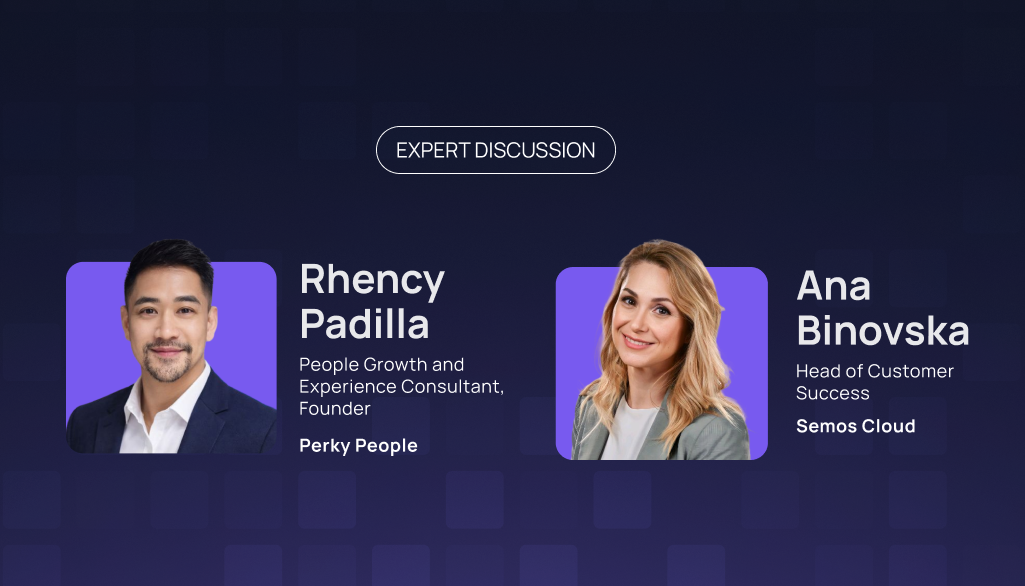
"Telling someone 'thank you, great job' happens every day. The platform pushes you to highlight specific behaviors and actions, recognition becomes meaningful. People value that a lot more."
- Rhency Padilla, Founder, Perky People
Values as common ground
In highly diverse workforces, where employees may share little in common in terms of background, language, or tenure, organizational values become one of the most powerful shared reference points.
The most effective recognition programs in the region use appreciation as a vehicle for reinforcing those values explicitly. Every recognition is connected to a specific behavior, value, or competency.
This is how recognition becomes cultural infrastructure rather than a periodic reward event.
3. Recognition investment needs a clear structure
Meaningful appreciation is not only a cultural question. It is also a governance question.
In a region where 44% of employees (PwC) are considering changing employers, recognition investment is not discretionary. It is one of the few levers that operates continuously, across budget cycles, headcount freezes, and market uncertainty. Organizations that treat it as an annual line item tend to run programs that feel episodic. Organizations that build it into recurring budget governance treat it as infrastructure, and their programs behave accordingly.
From our experience with enterprise recognition programs in the Middle East, organizations usually structure recognition investments through yearly or monthly allocations in their local currency. These allocations often combine peer-to-peer recognition, manager-led spot awards, nominations, and service anniversaries.
The model depends on the organization’s size, industry, culture, and approval structure, but several patterns are becoming increasingly common across large enterprises in the GCC region.
From what we are seeing, the most successful programs usually combine four layers:
- Smaller, high-frequency peer-to-peer recognition.
- Manager-led spot awards.
- Nomination-based quarterly or annual awards.
- Milestone and service anniversary programs.
This layered model matters because different recognition moments serve different purposes.
Peer-to-peer recognition builds everyday appreciation and participation. Manager-led spot awards reinforce timely performance and behavior. Nomination programs create visibility, status, and leadership involvement. Milestone programs ensure employees feel valued across the full employee lifecycle.
The investment levels vary significantly, but the direction is clear: large enterprises in the region are moving away from ad hoc appreciation and toward structured, governed recognition ecosystems.
4. The majority of the workforce is deskless
Any recognition strategy that operates exclusively through digital channels is excluding a significant proportion of the people it is supposed to reach.
In the Middle East, given the concentration of large workforces in retail, hospitality, logistics, construction, and industrial operations, this is not a minority issue.
The practical challenge for HR is designing recognition delivery mechanisms that work for employees who do not sit in front of a screen.
This typically requires a combination of approaches: SMS notifications for award recipients who lack standard email access, bulk export functionality that allows HR administrators to download certificates and memory books for offline printing and physical distribution, and manager-led distribution workflows that give line managers a role in delivering recognition during team briefings or site visits.
What makes this operationally feasible, rather than a perpetual manual task, is having accurate mobile data maintained automatically through your HRIS.
When phone numbers are synced from the core HR system rather than maintained separately in the recognition platform, the data stays current without manual effort, and SMS delivery reaches the right person reliably.
Organizations that solve this well do not treat deskless employees as a harder version of office workers. They design a parallel track from the outset: digital channels for employees with access, hybrid channels for those without, and administrative tools that make managing both tracks practical for a lean HR team.
[cta-2]
5. Technology should remove barriers, not create new ones
A concern that often surfaces when HR teams consider a more structured recognition platform is that technology will make appreciation feel mechanical, as though a system rather than a person is doing the appreciation.
The experience of organizations running mature programs in the region suggests the concern is inverted: the absence of the right technology is usually what causes recognition to feel inconsistent and impersonal.
Consider the operational reality of managing service anniversaries for tens of thousands of employees across multiple countries, each with different milestone years, different reward values, different approval structures, and different communication requirements.
Without automation, doing this consistently at the right time, from the right sender, in the right language, is practically impossible for a human team to sustain.
The choice is not between automated recognition and human recognition. It is between automated recognition and inconsistent recognition.
Where technology does its best work in this context is in removing the barriers that prevent human appreciation from happening.
The manager who wants to congratulate a team member still writes that message. The business leader who wants to acknowledge a nomination winner still reviews and approves. The platform ensures that neither of them has to remember to act or navigate a complex process to do so when they are ready.
This is what it means to sit as an intelligence layer on top of the systems your enterprise already runs, SAP SuccessFactors, Workday, Oracle, and Microsoft, rather than alongside them. Recognition data flows in and out of your core HR system automatically, without manual synchronization, and without building a parallel people infrastructure.
Extending recognition into the tools employees already use, including Microsoft Teams, Outlook, and mobile, amplifies this further.
When a recognition moment surfaces in the platform an employee checks every day, the appreciation registers in context and does not require a separate system visit to receive it.
Integration with collaboration tools is not a premium feature. For many employees, it is the difference between recognition landing or being missed.
6. Measurement tells you whether your program is working or just running
A recognition program that is technically active but not meaningfully used is a common outcome in organizations that have not built measurement into the design.
In the Middle East, where workforce diversity creates significant variation in how recognition is received and adopted, this risk is higher than average.
The metrics that matter go beyond number of recognitions sent.
Useful program health indicators include adoption rates by country and business unit, recognition frequency per manager, competency distribution in recognition reasons, deskless employee participation, and redemption rates for monetary awards.
Organizations that track these dimensions can identify where the program is genuinely building culture and where it is going through the motions. They can then intervene with targeted manager training, campaign nudges, access improvements, or program redesign before disengagement becomes entrenched.
But the most valuable signal recognition data produces is workforce intelligence. When every recognition moment is connected to a behavior, a value, or a competency, the aggregate data tells managers something compensation data never can: who is consistently showing up, which skills are surfacing across teams, where performance is clustering, and who is growing in ways that are not yet visible in formal review cycles. That is the difference between a recognition program and a People and Culture Intelligence platform.
Five metrics that tell you more than total recognitions sent
- Adoption by country and business unit: where is participation low, and is it a communication, access, or cultural fit issue?
- Manager recognition frequency: what percentage of managers have sent at least one recognition in the past 30 days?
- Competency distribution: are all your stated values appearing in recognition reasons, or is one dominating?
- Deskless employee participation: are frontline employees receiving recognition at comparable rates to office employees?
- Redemption rate on monetary awards: are employees converting points, suggesting genuine perceived value?
In practice: How organizations in the region are solving these challenges
The principles above become clearest when grounded in real-world practice. The following examples are based on enterprise recognition programs in the Middle East and show how organizations are solving these challenges in practice.
Example 1: 28 award programs, nine industries, one platform
A major regional conglomerate spanning retail, entertainment, and several other business lines needed one recognition platform to serve all of them, even though each business worked differently.
Some divisions used employee voting. Others needed two rounds of manager approval. Some awards were announced by country, others by division. Panels of up to 50 people were involved in picking winners.
Before, this was a coordination problem. Now, all 28 nomination programs run inside a single system, each with its own rules built in.
Approvals route automatically to the right person. If a second-level approver is missing, the system fills the gap so nothing gets stuck. HR no longer has to manage the process manually across every business unit.
The result is not just efficiency. It is governance, consistency, and a better employee experience.
Example 2: From a three-month selection process to a predictable cycle
One organization was running its nomination process through spreadsheets and email chains.
Getting from open nominations to announcing a single winner took up to three months. Approvers were hard to track down. Nominees had no clear visibility into the process. By the time a winner was announced, the moment had passed.
The organization moved the process onto a structured platform.
Approvers now receive automatic reminders. HR can see at a glance exactly where every nomination is. The organizational hierarchy syncs from the HRIS, so the right approver is always assigned without manual checking.
Nominations now run on schedule, and recognition lands close enough to the behavior that people remember why it happened.
"The results were outstanding. We had both types of programs, the monetary and the non-monetary, but what was unique was seeing such a high-level participation in the non-monetary recognitions. Employees were actively appreciating each other, celebrating teamwork and collaboration, and building up a positive energy across the organization."
- Waqar Wajid, Head of Business Transformation, Al-Futtaim Technologies said in AI, Rewards & Recognition: The Secret to Keeping Top Talent panel session
Example 3: Building recognition that leadership actually sees
A technology organization with more than 10,000 employees had peer-to-peer recognition working well at ground level, but it was largely invisible to leadership.
The organization wanted appreciation to reinforce specific values and give senior leaders a structural reason to be involved, not just an occasional invitation.
They built a two-tier system.
Any employee can be nominated monthly within their business unit for living one of four company values. Monthly winners automatically become candidates for a quarterly award at cluster level.
Employees cannot reach the higher tier without first being recognized at the lower one. Leadership endorsement at the top tier is built into the process, not left to chance.
Over time, the competency framework has become something employees recognize and aspire to, not just HR language on a poster.
Example 4: A certificate posted on LinkedIn, multiplied across the workforce
An employee at a large regional organization posted on LinkedIn to celebrate her one-year work anniversary.
She shared her recognition certificate, generated automatically by the company’s platform. She was proud of it. Her network engaged with it. Nobody asked her to post it.
That is one person. Now think about what happens across tens of thousands of employees in multiple markets.
Anniversary certificates at every milestone can produce thousands of recognition moments per year. Each one is a potential authentic post about what it feels like to work there, created by an employee, not a marketing team.
Recognition has always been designed to serve the person receiving it. That should stay the primary purpose.
But when the certificate is well designed, the message is personal, and the employee feels genuinely proud, they share it. The recognition moment and the employer brand moment become connected.
[cta-3]
Making appreciation stick: A summary for HR leaders
Employee Appreciation Day is a useful anchor, but the organizations making the most meaningful difference to their employees’ experience have moved beyond annual gestures.
They have built recognition into the operating rhythm of the business: present in every milestone, every nomination cycle, every manager interaction, and every values conversation.
In the Middle East, building this well is genuinely complex. The workforce is vast, diverse, multilingual, geographically dispersed, and split between those with full digital access and those with none.
Cultural expectations are high. The talent market rewards organizations that invest in employee experience and punishes those that do not.
The dimensions covered in this guide, precision at scale, cultural architecture, structured investment, deskless inclusion, technology as an enabler, and measurement that drives improvement, are not separate workstreams. They are interconnected.
A recognition program that personalizes at scale but ignores frontline workers will still leave a significant part of the workforce feeling unseen.
One that embeds cultural intelligence but cannot measure its own effectiveness will not know whether it is actually working.
The organizations that are getting this right are not doing it through goodwill alone. They are investing in the infrastructure, integrations, governance, and program design discipline that allows genuine appreciation to happen consistently, at the speed and complexity the region demands.
Want to go deeper?
Semos Cloud is the People and Culture Intelligence platform trusted by global enterprises to keep their workforce motivated, recognized, and visible to leadership. Built on more than a decade of recognition behavior data across 150+ organizations worldwide, we bring that depth of experience to every program we design in the region.
We work with some of the Middle East's largest employers to build recognition programs that handle the complexity this region demands, natively integrated with core HR systems including SAP SuccessFactors, Workday, Oracle, and Microsoft environments.
If you are exploring how to build or improve your recognition program in the region, our team is happy to share what we have learned.
Reach out to discuss your employee recognition needs.
Explore related articles
.png)

Ready to unify your people programs?
Stop running recognition, rewards, communications, and development in silos. See how Semos Cloud brings it all together in one AI-powered platform, built for enterprise, certified for compliance, and proven at scale.