


Recognition is not an HR trend. It is a business strategy, one that directly influences employee engagement, culture, health, and organizational performance. Yet despite the overwhelming evidence supporting it, many companies still approach recognition as a reactive gesture, reserved for birthdays, work anniversaries, or end-of-year wrap-ups.
That approach is not just outdated. It is a missed opportunity.
Employees expect to be seen not just for results, but for effort, learning, collaboration, and the values they bring to the table every day. When executed correctly, the right types of recognition become a daily operating system that powers motivation, belonging, and trust across the entire employee lifecycle.
In this article, we break down the most effective types of recognition in the workplace, explain when to use them, and show how the best organizations combine them into recognition programs that actually drive business impact.
Why Recognition Is a Strategic Priority
Let’s be clear: Recognition is not a feel-good HR tactic. It is a business imperative. Forward-looking organizations now understand that strategic recognition is a proven lever for improving retention, performance, engagement, and alignment with company values, especially in today’s hybrid, high-pressure work environments.
According to Deloitte’s Bersin research, companies with effective recognition programs experience 31 percent lower voluntary turnover and 48% higher productivity. Quantum Workplace adds that organizations with structured recognition systems are 12 times more likely to achieve strong business outcomes, and employees who believe they’ll be recognized are 2.7 times more likely to be highly engaged.
In other words, recognition is no longer optional. It is foundational to building resilient, high-performing cultures.
At the same time, Gallup reports that only one in four employees strongly agree they received meaningful recognition in the past week. That disconnect between potential and practice represents a significant gap. It also presents a strategic opportunity.
Organizations willing to reimagine recognition as a daily behavior embedded into systems and workflows rather than as an annual performance ritual can unlock a significant competitive advantage.
The key lies in understanding the different types of employee recognition and embedding them into everyday moments that matter. Recognition should not sit in isolation. It should be integrated into how people work, collaborate, and grow.
The 9 Most Effective Types of Employee Recognition
1. Peer-to-Peer Recognition
Peer-to-peer recognition is when employees are empowered to recognize each other, formally or informally, for everyday contributions, collaborative wins, or moments that reflect the company’s culture.
This type of recognition is decentralized, democratic, and incredibly powerful. It creates a culture where appreciation flows freely, not just from the top down.
Why it works: Peers witness the full scope of each other’s contributions, often more closely than managers. Peer recognition builds trust, improves morale, and strengthens social bonds within teams.
Examples:
- Giving kudos on a recognition platform
- Nominating a colleague for living out company values
- Shouting out team members during daily stand-ups or Slack channels
Best for:
- Remote or hybrid teams
- Cross-functional collaboration
- Reinforcing an inclusive culture
2. Manager-to-Employee Recognition
Still, the cornerstone of most recognition strategies, manager recognition carries weight because it signals that performance is being seen and valued by leadership.
But to be effective, it must go beyond a generic "good job." It must be specific, timely, and ideally tied to outcomes or values.
Why it works: Managers shape how employees interpret feedback and growth. Recognition from a direct supervisor can increase engagement, trust, and performance clarity.
Examples:
- Highlighting an employee's impact in a team meeting
- Sending a personalized appreciation email after a big project
- Giving a small spot reward for exceptional effort
Best for:
- Project delivery and milestones
- Performance reinforcement
- Building coaching-based leadership
3. Executive and Leadership Recognition
Recognition from senior leaders, C-suite, VPs, or business unit heads amplifies visibility. It makes employees feel seen by the organization at large, not just by their immediate team.
This type of employee recognition should be used selectively to maintain authenticity and perceived value.
Why it works: Recognition from the top communicates strategic alignment. It builds loyalty and shows that the company notices meaningful contributions across all levels.
Examples:
- CEO emails or public spotlights
- Recognition at all-hands meetings
- Inclusion in executive newsletters or leadership dashboards
Best for:
- Large-scale achievements
- Long-term contributions
- Cross-functional or global impact
4. Social Recognition
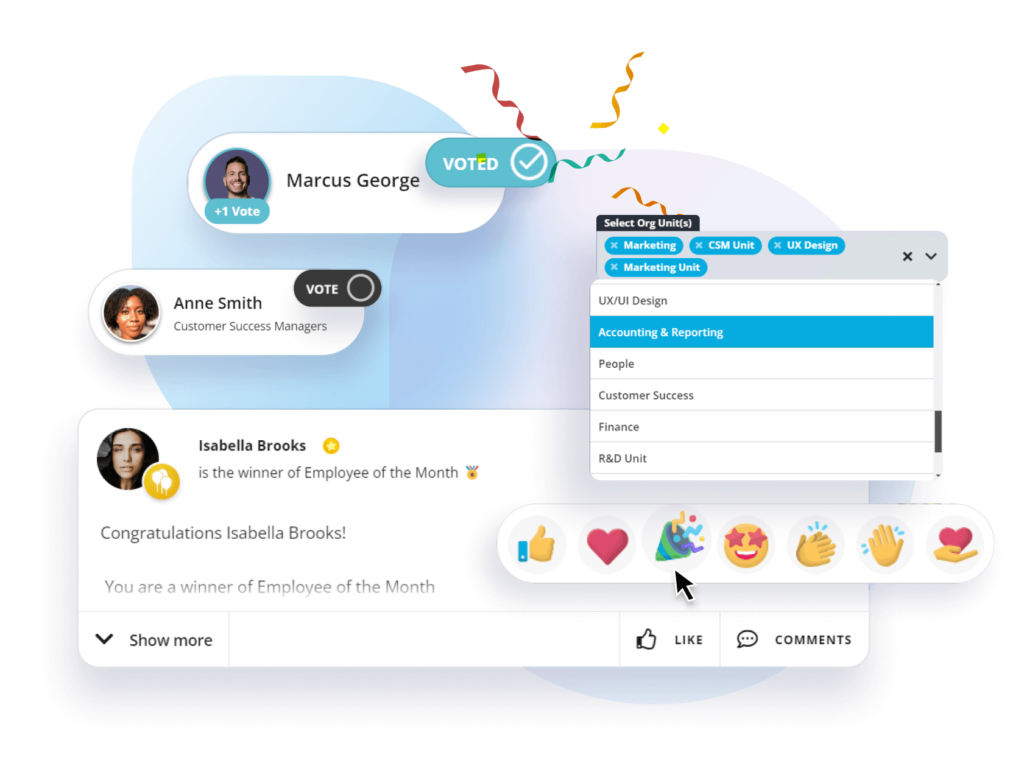
Social recognition is a modern evolution of recognition that lives inside the digital ecosystem of the company. It makes praise visible, interactive, and engaging, turning recognition into content.
Why it works: Public, social recognition encourages a culture of continuous appreciation. It celebrates people openly, boosts motivation, and reinforces company values in real time.
Examples:
- Recognition walls or social feeds on employee platforms
- Digital badges and GIF-based shout-outs
- Celebrations within Microsoft Teams, Slack, or intranet portals
Best for:
- Gen Z and millennial workers
- Internal brand-building
- Scaling recognition across large or global teams
5. Monetary and Reward-Based Recognition
This is the most tangible form of recognition: rewards. These can range from points-based systems to cash bonuses or curated experiences. When designed with equity and flexibility in mind, they create strong behavioral reinforcement.
Why it works: Rewards signal that effort is not only appreciated but also compensated. This creates a strong connection between values-driven behavior and personal benefit.
Examples:
- Gift cards, merchandise, or charity donations
- Experience-based rewards like wellness packages or trips
- Spot bonuses tied to company performance
Best for:
- Sales or performance incentives
- Holiday campaigns and contests
- Recognition programs in competitive environments
6. Milestone and Life Event Recognition
Work anniversaries, birthdays, parental leaves, and major life events are often overlooked. But these types of recognition for employees send a powerful message: "You matter here, not just your work."
Why it works: Personal milestones connect the employee’s identity to the company’s culture. When celebrated properly, they enhance emotional loyalty.
Examples:
- Anniversary awards and thank-you messages
- Personalized birthday greetings with rewards
- Company-wide celebration of life events or achievements
Best for:
- Increasing retention
- Reinforcing the employer brand
- Remote workforce connection
7. Team and Group Recognition
Recognition does not need to be individualized. Celebrating entire teams for shared success builds unity, clarity, and a collective sense of progress.
Why it works: Team-based recognition prevents the “star player syndrome” and promotes collaboration over competition. It also helps align incentives across departments.
Examples:
- Team lunches or outings
- Group awards or public recognition at town halls
- Shared bonus pools or reward points
Best for:
- Cross-functional success
- Agile, project-based teams
- Launches, deadlines, or large initiatives
8. Performance-Based Recognition
This is formal recognition linked to goals, metrics, or outcomes. It often sits within performance review frameworks and ensures that high achievement is noticed and rewarded.
Why it works: This type of recognition helps define what looks good. It provides structure and fairness, especially in high-accountability environments.
Examples:
- Quarterly recognition awards for top performers
- Bonuses tied to KPIs or OKRs
- Manager nominations during review cycles
Best for:
- Goal-oriented environments
- High-performance cultures
- Aligning individual contributions to business outcomes
9. Development and Growth Recognition
Many companies forget to recognize progress. A promotion might be celebrated, but what about the learning journey that led to it?
Growth-based recognition rewards curiosity, self-leadership, and personal investment. It signals a culture of learning and upward mobility.
Why it works: It encourages employees to invest in their development, knowing their efforts will be seen. This drives retention, mobility, and innovation.
Examples:
- Acknowledging course completions or certifications
- Highlighting mentorship or knowledge-sharing
- Recognition for taking on stretch projects or new roles
Best for:
- Early-career talent
- Learning cultures
- Building internal talent pipelines
From Recognition Moments to Recognition Systems
Recognition works best when it’s not treated as a series of isolated gestures, but as a systematic, culture-anchored practice. The most effective organizations don’t just choose one type of recognition; they build recognition programs that integrate multiple approaches and meet people where they are: in the tools they use, the moments that matter, and the milestones they hit.
A strategic employee recognition program typically includes:
- A centralized platform with automated workflows and real-time triggers
- Manager and peer tools for nominations, approvals, and guided messages
- Integrated rewards catalog offering both global and local options
- AI-driven insights that prompt timely recognition across teams
- Dashboards and analytics to track recognition frequency, equity, and cultural alignment
Programs that blend different types of rewards and recognition for employees, such as digital shout-outs, milestone celebrations, development acknowledgment, and value-based awards, consistently outperform those built on a single recognition model.
One emerging best practice: connecting recognition with other touchpoints, like performance feedback and growth conversations. This creates a continuous employee experience where people feel seen for both who they are and how they contribute.
Types of Recognition Awards That Inspire
Awards are symbolic, but their impact is real. The best types of recognition awards feel exclusive, thoughtful, and aligned with purpose.
Common types of employee recognition awards include:
- Values Awards: Celebrating individuals who embody specific organizational values
- Innovation Awards: For forward-thinking and risk-taking behavior
- Customer Champion Awards: Recognizing outstanding service or client impact
- Leadership Awards: For mentoring, inspiring, and developing others
- Culture Awards: For promoting DEI, wellbeing, or social impact
Each award should come with a story. A great award ceremony is not about trophies; it is about telling the story of your culture through the people who shape it.
Final Thoughts
Recognition is not just about what you say; it is about how often you say it, where you say it, and what behaviors you choose to reinforce. The best types of recognition in the workplace reflect your values, match your strategy, and connect people to purpose.
By using a combination of the recognition types listed above, you can build an environment where appreciation is expected, not exceptional.
Because the question is no longer whether you should recognize employees, it is how strategically you are doing it.


Ready to unify your people programs?
Stop running recognition, rewards, communications, and development in silos. See how Semos Cloud brings it all together in one AI-powered platform, built for enterprise, certified for compliance, and proven at scale.