Blog

Key trends from HR Connect London: What HR leaders are talking about
Key trends from HR Connect London: What HR leaders are talking about


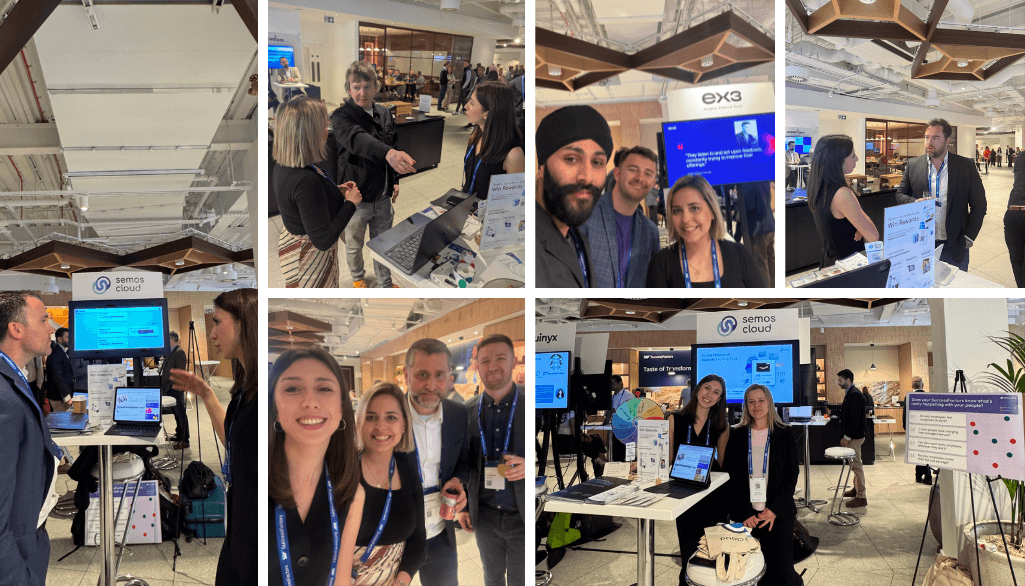
HR Connect brought together a diverse group of HR professionals, transformation leaders, and technology decision-makers, and the conversations were rich with insight. Our team Angela Jankovska, Emilija Jakimova, and Angela Aspland spent the full day in those conversations. Here's a look at the themes that dominated the floor and what they reveal about the direction of the industry.
Recognition & Rewards - still a gap for many organizations
A lot of organizations at HR Connect either had no dedicated recognition platform or had one that hadn't been actively used in 18 months or more. A few had budget allocated to something described internally as recognition that turned out to be a £25 annual gift card process sitting inside a spreadsheet.
What made these conversations interesting wasn't the gap itself. It was how calmly HR leaders described it. There's almost no defensiveness left around the state of R&R. People know it's broken. The harder question they're working through is sequencing: do you fix recognition before the broader HCM stabilizes, or do you wait and keep absorbing the cost of doing nothing? The organizations that have moved tend to treat recognition as a parallel workstream. The ones still waiting often describe it as a Phase 2 item that's been Phase 2 for three years.
For organizations currently evaluating employee recognition platforms, the technical questions coming up at HR Connect centered on integration depth, specifically whether a solution writes data back into SuccessFactors in a way that makes it useful for reporting, or whether it just syncs at the surface level. That distinction is driving shortlisting decisions more than pricing in several of the conversations we had.
https://youtu.be/D2TLv9Avxyk
AI Agents Are Moving from Buzzword to Business Priority
AI came up in nearly every conversation at HR Connect, across job functions that had nothing to do with technology. A Head of Compensation asked about AI agents. So did someone running a frontline workforce of several thousand who'd never attended a tech-focused HR event before.
The conversations weren't abstract. People wanted to know specifically: what does an AI agent actually do inside a benefits workflow, how does it handle exceptions, and who owns the output when something goes wrong? Those are implementation questions, not curiosity questions.
The organizations making visible progress shared one observable trait: they started with a named problem and worked backward to the technology. Contrast that with organizations that have run three AI pilots in 18 months, produced internal demos, and haven't changed how a single manager or employee gets their work done. Both types were represented at HR Connect. The difference in how they talked about AI was audible.
Agentic AI for HR - specifically for recognition prompts, manager coaching support, and benefits communication - is the area attracting the most serious evaluation energy right now. The use cases are concrete enough to build a business case around, which is more than most AI categories in HR could claim 12 months ago.
Total Rewards visibility: A communication problem that's getting reframed as a retention problem
The Total Rewards conversation at HR Connect has shifted. A year ago it was primarily about compensation equity and benchmarking. This year it was about whether employees actually understand what they receive, and whether that understanding affects decisions around staying or leaving.
HR leaders described situations where employees accepted offers from competitors for packages that were, when broken down, comparable or weaker than what they already had. The failure wasn't in the compensation design. It was in how the full picture was communicated - or wasn't.
Total Rewards Hubs are getting traction as the specific solution for this. Give employees a single place where they can see base salary, equity, benefits, pension contributions, and any recognition or incentive balances together. Several organizations at HR Connect had already begun vendor evaluations. A few had demos scheduled for May.
Talent Development and Performance Management Are on the Radar
Performance management came up at HR Connect in a way that was less aspirational than in previous years. Organizations aren't talking about redesigning their performance philosophy. They're talking about the very operational challenge of getting managers to have feedback conversations more than once a year, and what tooling makes that more likely to actually happen.
Learning and talent development conversations had a slightly different quality. There's genuine interest in connecting skills data to day-to-day recognition and feedback, so that when someone demonstrates a capability, it's visible in the system rather than only captured in a development plan reviewed at year-end. Whether that integration is technically achievable inside an organization's current HCM environment is where several conversations stalled.
Continuous performance intelligence is the direction. Getting there requires connecting signals that most organizations currently track in separate systems, if they track them at all.
The Manager Capability Problem Is Louder Than It Was 12 Months Ago
Multiple conversations at HR Connect landed on a version of the same situation: organizations are asking managers to handle things they were never developed for. Navigating uncertainty around AI-driven role changes. Keeping distributed or frontline teams connected when informal culture-building is harder to sustain at scale. Having direct conversations about what good work looks like when parts of the job are being handled differently.
The organizations further along on this had stopped framing it as a training problem. They're framing it as a signals problem. A manager who gets a weekly view of which team members haven't been recognized in three weeks, where goal progress has stalled, and where engagement indicators are dropping has fundamentally different inputs than one working from memory and instinct. The tool conversation follows from that framing, and it tends to go somewhere more productive.
What We're Taking Back
HR Connect this year had less of the exploratory energy of a sector still figuring out its questions and more of the specific, operational focus of one that knows the questions and is frustrated with how slowly the answers are arriving.
Recognition, AI agents, Total Rewards visibility, performance continuity - these aren't separate initiatives inside HR. They're connected infrastructure. Organizations that run them as disconnected programs will keep producing disconnected results. The ones treating them as an integrated system, where recognition data feeds performance signals, where AI surfaces the right prompt to the right manager, where employees see their full total rewards picture in one place, are building something that compounds.
The sequencing question is what most HR leaders at HR Connect were actually working through. There's no clean universal answer to it. But the organizations that had moved did share one thing: they picked a starting point and didn't wait for perfect conditions.
Ready to unify your people programs?
Stop running recognition, rewards, communications, and development in silos. See how Semos Cloud brings it all together in one AI-powered platform, built for enterprise, certified for compliance, and proven at scale.