Oops! Something went wrong while submitting the form.
Semos Cloud wins Best Employee Experience Platform award from HR.com
Semos Cloud's People and Culture Intelligence Platform has been named Best Employee Experience Platform in the 2026 HR.com Awards, recognizing our innovation in combining AI-powered technology with human-centered strategies to transform workplace culture.
The award was announced during HR.com’s webcast, “What Employees Need Most to Thrive at Work,” where the HR Research Institute shared findings from their comprehensive “Future of Human Experience 2026” study.
A Recognition That Validates Our Mission
This recognition from HR.com validates our belief that employee experience requires more than just having the right programs in place. It demands an integrated, intelligent system that genuinely supports people throughout their entire journey with an organization.
“Employee experience has become a critical driver of organizational success. This year’s award winners are setting a new standard by combining innovation, technology, and human-centered strategies to create workplaces where employees can truly thrive.” – said Debbie McGrath, CEO of HR.com
Our People and Culture Intelligence Platform does exactly that by unifying Total Rewards, Employee Communications, and Talent Development into a single AI-powered solution. With over 20 specialized AI agents and seamless integration into major HR systems like SAP SuccessFactors, Workday, and Oracle Cloud HCM, we’re helping organizations turn HR technology into a strategic driver of culture and performance.
The Research Behind the Recognition
HR.com’s selection was informed by their extensive research into what employees need most to thrive. The HR Research Institute surveyed 188 HR professionals across industries, uncovering critical insights that demonstrate why comprehensive employee experience platforms like ours are essential.
The data reveals a significant experience gap. Only 40% of organizations believe their employees would rate their workplace experience as excellent, and fewer than half of employees feel empowered to share honest opinions with leadership. This disconnect between what organizations provide and what employees experience underscores the need for intelligent systems that surface real-time insights.
The research identified three critical factors driving positive employee experiences: positive relationships with coworkers (69%), a sense of meaning and purpose in work (49%), and opportunities for learning and growth (48%). Organizations that excel at employee experience (what the research calls “experience leaders”) are more than four times as likely to report that employees feel their well-being is valued. They’re also more than twice as likely to offer flextime, recognizing that true flexibility extends beyond remote work to include how and when work gets done.
The challenges are equally clear. Heavy workloads (48%), employee burnout (45%), and inability to grow within the organization (45%) top the list of factors negatively impacting employee experience. Experience laggards are nearly five times more likely than leaders to report that employees don’t feel heard by leadership.
The research also revealed that more than half of the U.S. workforce is experiencing burnout, with measurable impacts: 72% say it diminishes their efficiency, 71% report it hurts their job performance, and 65% say it weakens their ability to serve customers effectively.
The Role of Managers and Technology
A particularly significant finding shows that more than 80% of HR professionals say immediate supervisors are responsible for employee experience to a high or very high extent. This makes the manager-employee relationship arguably the most important factor in whether someone thrives at work or merely survives.
Recognizing this critical insight, we’ve developed Semos Manager Agents specifically designed to empower frontline leaders. These specialized AI agents provide managers with real-time intelligence about their teams, helping them understand team dynamics, identify potential issues before they escalate, and receive personalized recommendations for supporting each team member effectively. By equipping managers with the insights they need to be truly effective, we’re addressing what the research identifies as one of the most influential factors in employee experience.
When it comes to technology, organizations are making investments but face significant barriers. Budget constraints (59%) remain the most common obstacle to enhancing employee experience, followed by lack of leadership awareness and insufficient leadership buy-in. The research found that employee recognition and reward tools, survey and feedback platforms, and collaboration tools rank as the most valuable technologies for improving employee experience.
Looking ahead, 42% of respondents expect artificial intelligence to be the primary factor influencing employee experience over the next two years. The expected benefits are significant: 74% anticipate increased automation, 59% predict productivity gains, and roughly half expect improvements in learning, development, and communication. However, concerns about privacy implications and potential job losses remain.
How Semos Cloud Addresses These Workplace Challenges
Our award-winning platform directly addresses the challenges identified in HR.com’s research by transforming fragmented HR data into actionable intelligence. Rather than forcing HR teams to piece together insights from disconnected systems, we provide a single source of truth that integrates compensation data, communication patterns, development activities, and engagement metrics.
What sets our solution apart is how our AI capabilities go beyond basic reporting. With over 20 specialized AI agents working continuously across your HR data, we deliver predictive insights that help identify issues before they become problems. Organizations understand not just what’s happening, but why it’s happening and what to do about it.
The platform seamlessly integrates with existing HR systems, meaning organizations don’t need to replace their current technology investments to start seeing measurable improvements in engagement, retention, and organizational culture.
[cta]
Understanding Experience Leaders vs. Laggards
The HR.com research divided organizations into two distinct groups: experience leaders (those whose employees rate their experience 8 or above on a 10-point scale) and experience laggards (those rating between 1 and 6). The differences between these groups are striking and reveal what separates good workplaces from great ones.
Experience leaders are over four times more likely to report that employees feel their well-being is valued, more than twice as likely to offer flextime, nearly five times less likely to report that employees don’t feel heard by leadership, and over nine times more likely to understand how they compare to industry peers.
These organizations have moved beyond simply offering programs to creating integrated systems that genuinely support their people. They use external benchmarks, not just internal metrics. They prioritize proactive measurement rather than waiting for exit interviews to understand employee sentiment. And they recognize that burnout is a management failure, not just an individual employee problem.
Key Insights for the Future of Work
The research presents eight clear recommendations for HR leaders navigating the future of employee experience. Organizations need to shift from reactive to proactive measurement, catching issues before they become exit interview topics. They should prioritize the relationships that matter most, especially between managers and their teams, while taking burnout seriously as a systems problem rather than just individual resilience training.
The gap between having programs and making them work well requires honest assessment and adjustment. Building business cases for leadership and management training investments will be essential for securing resources, while AI adoption should be intentional and strategic rather than reactive. Organizations should push beyond “good” toward genuine excellence, and external benchmarking provides the perspective needed to know where you truly stand compared to similar organizations.
These recommendations align directly with how our platform is designed. We help organizations make this shift from reactive to proactive, provide managers with the intelligence they need to support their teams, identify burnout risks before they become crises, and offer the external benchmarking data needed to understand competitive positioning.
A Strategic Imperative for Organizations Today
“Winning Best Employee Experience Platform is a powerful validation of our mission to become a leader in the People & Culture Intelligence category. As organizations navigate the AI Era, we believe Culture Transformation is no longer a luxury, it’s a strategic imperative. This recognition fuels our commitment to equipping every organization with the intelligence they need to build thriving, human-centered cultures at scale.” – said Ivana Maznevska, Head of Marketing at Semos Cloud
The timing of this recognition is particularly significant. The research shows that artificial intelligence usage and employee experience are the top two HR-related issues organizations expect to prioritize over the next 12 months. This validates our approach of combining AI capabilities with a deep understanding of what makes employee experience meaningful.
Organizations that successfully leverage AI (approaching it with clear intent to enhance rather than replace human capabilities) will be those that thrive in the coming years. Our platform embodies this philosophy, using AI to empower HR teams and managers with the insights they need to create genuinely human-centered workplaces.
The Technology Paradox and the Path Forward
While many platforms claim to improve employee experience, what distinguishes our approach is the depth of integration and intelligence we provide. We don’t simply aggregate data from different systems. We create a unified intelligence layer that understands the relationships between compensation decisions, communication patterns, development opportunities, and engagement outcomes.
Our AI agents continuously analyze these relationships to identify patterns humans might miss. They can spot early warning signs of disengagement, identify which benefits are driving the most satisfaction, understand which communication approaches resonate with different employee segments, and predict which employees might be at risk of leaving before traditional indicators would suggest it.
This level of intelligence is only possible because we’ve built deep integrations with the HR systems organizations already use. Whether your organization runs on SAP SuccessFactors, Workday, Oracle Cloud HCM, or other major platforms, Semos Cloud connects seamlessly to create a complete picture of your employee experience.
Recognition That Strengthens Our Commitment
We’re honored to receive this recognition from HR.com and the HR Research Institute. This award strengthens our commitment to helping organizations transform their cultures and build workplaces where people genuinely thrive.
The research makes clear that employee experience has moved from nice-to-have to business-critical. Organizations that invest in creating workplaces where people thrive will attract and retain the best talent, drive better business outcomes, and build cultures that can adapt to whatever challenges emerge next.
As we look ahead, we’re energized by the opportunity to help more organizations make this transformation. The insights from HR.com’s research validate that the challenges are real, the solutions require integrated intelligence, and the time to act is now.
Looking Forward
We’re deeply honored to receive this recognition from HR.com and the HR Research Institute. But more than the award itself, we’re inspired by the research findings and what they tell us about where the field of employee experience is heading. This award strengthens our commitment to helping organizations transform their cultures and build better workplaces for everyone.
Key Trends from HR Connect London: What HR Leaders Are Talking About
HR Connect brought together a diverse group of HR professionals, transformation leaders, and technology decision-makers, and the conversations were rich with insight. Our team Angela Jankovska, Emilija Jakimova, and Angela Aspland spent the full day in those conversations. Here's a look at the themes that dominated the floor and what they reveal about the direction of the industry.
Recognition & Rewards - still a gap for many organizations
A lot of organizations at HR Connect either had no dedicated recognition platform or had one that hadn't been actively used in 18 months or more. A few had budget allocated to something described internally as recognition that turned out to be a £25 annual gift card process sitting inside a spreadsheet.
What made these conversations interesting wasn't the gap itself. It was how calmly HR leaders described it. There's almost no defensiveness left around the state of R&R. People know it's broken. The harder question they're working through is sequencing: do you fix recognition before the broader HCM stabilizes, or do you wait and keep absorbing the cost of doing nothing? The organizations that have moved tend to treat recognition as a parallel workstream. The ones still waiting often describe it as a Phase 2 item that's been Phase 2 for three years.
For organizations currently evaluating employee recognition platforms, the technical questions coming up at HR Connect centered on integration depth, specifically whether a solution writes data back into SuccessFactors in a way that makes it useful for reporting, or whether it just syncs at the surface level. That distinction is driving shortlisting decisions more than pricing in several of the conversations we had.
https://youtu.be/D2TLv9Avxyk
AI Agents Are Moving from Buzzword to Business Priority
AI came up in nearly every conversation at HR Connect, across job functions that had nothing to do with technology. A Head of Compensation asked about AI agents. So did someone running a frontline workforce of several thousand who'd never attended a tech-focused HR event before.
The conversations weren't abstract. People wanted to know specifically: what does an AI agent actually do inside a benefits workflow, how does it handle exceptions, and who owns the output when something goes wrong? Those are implementation questions, not curiosity questions.
The organizations making visible progress shared one observable trait: they started with a named problem and worked backward to the technology. Contrast that with organizations that have run three AI pilots in 18 months, produced internal demos, and haven't changed how a single manager or employee gets their work done. Both types were represented at HR Connect. The difference in how they talked about AI was audible.
Agentic AI for HR - specifically for recognition prompts, manager coaching support, and benefits communication - is the area attracting the most serious evaluation energy right now. The use cases are concrete enough to build a business case around, which is more than most AI categories in HR could claim 12 months ago.
Total Rewards visibility: A communication problem that's getting reframed as a retention problem
The Total Rewards conversation at HR Connect has shifted. A year ago it was primarily about compensation equity and benchmarking. This year it was about whether employees actually understand what they receive, and whether that understanding affects decisions around staying or leaving.
HR leaders described situations where employees accepted offers from competitors for packages that were, when broken down, comparable or weaker than what they already had. The failure wasn't in the compensation design. It was in how the full picture was communicated - or wasn't.
Total Rewards Hubs are getting traction as the specific solution for this. Give employees a single place where they can see base salary, equity, benefits, pension contributions, and any recognition or incentive balances together. Several organizations at HR Connect had already begun vendor evaluations. A few had demos scheduled for May.
Talent Development and Performance Management Are on the Radar
Performance management came up at HR Connect in a way that was less aspirational than in previous years. Organizations aren't talking about redesigning their performance philosophy. They're talking about the very operational challenge of getting managers to have feedback conversations more than once a year, and what tooling makes that more likely to actually happen.
Learning and talent development conversations had a slightly different quality. There's genuine interest in connecting skills data to day-to-day recognition and feedback, so that when someone demonstrates a capability, it's visible in the system rather than only captured in a development plan reviewed at year-end. Whether that integration is technically achievable inside an organization's current HCM environment is where several conversations stalled.
Continuous performance intelligence is the direction. Getting there requires connecting signals that most organizations currently track in separate systems, if they track them at all.
The Manager Capability Problem Is Louder Than It Was 12 Months Ago
Multiple conversations at HR Connect landed on a version of the same situation: organizations are asking managers to handle things they were never developed for. Navigating uncertainty around AI-driven role changes. Keeping distributed or frontline teams connected when informal culture-building is harder to sustain at scale. Having direct conversations about what good work looks like when parts of the job are being handled differently.
The organizations further along on this had stopped framing it as a training problem. They're framing it as a signals problem. A manager who gets a weekly view of which team members haven't been recognized in three weeks, where goal progress has stalled, and where engagement indicators are dropping has fundamentally different inputs than one working from memory and instinct. The tool conversation follows from that framing, and it tends to go somewhere more productive.
What We're Taking Back
HR Connect this year had less of the exploratory energy of a sector still figuring out its questions and more of the specific, operational focus of one that knows the questions and is frustrated with how slowly the answers are arriving.
Recognition, AI agents, Total Rewards visibility, performance continuity - these aren't separate initiatives inside HR. They're connected infrastructure. Organizations that run them as disconnected programs will keep producing disconnected results. The ones treating them as an integrated system, where recognition data feeds performance signals, where AI surfaces the right prompt to the right manager, where employees see their full total rewards picture in one place, are building something that compounds.
The sequencing question is what most HR leaders at HR Connect were actually working through. There's no clean universal answer to it. But the organizations that had moved did share one thing: they picked a starting point and didn't wait for perfect conditions.
Analyst Spotlight: Strategic HR Metrics and the Recognition Reality Gap in 2026
The conversation among leading analyst firms has crystallized around a critical tension: HR teams are drowning in metrics, yet struggling to demonstrate strategic value. Between Gartner's initiative prioritization frameworks, comprehensive HR metric taxonomies, and Mercer's 2026 global talent trends, a pattern emerges: organizations are measuring everything while optimizing nothing.
The real question is whether HR is measuring what actually moves the business forward.
The Initiative Overload Problem: When Everything Is a Priority, Nothing Is
Gartner's recent framework on initiative prioritization cuts to the heart of a problem most CHROs face: too many competing priorities with limited resources to execute them well. Their matrix plots initiatives across two dimensions (business impact and complexity/investment) revealing four distinct zones:
Actionable initiatives (high impact, low complexity) should be prioritized for immediate execution. Priority initiatives (high impact, high complexity) require careful resource allocation. Careful consideration initiatives need strategic timing. And resource traps (low impact, high complexity) should be actively deprioritized.
The reality behind this matrix: most HR organizations lack the strategic clarity to say no. When talent management, recognition programs, learning systems, and performance management all compete for budget and attention, HR defaults to doing all of them poorly rather than focusing on the initiatives that directly connect to business goals.
This connects directly to a problem we've observed across global recognition deployments: organizations launch recognition platforms without understanding which business outcomes they're designed to influence. Is recognition meant to reduce turnover? Increase cross-border collaboration? Reinforce cultural transformation? Without strategic clarity on business impact, recognition becomes another "priority initiative" competing for resources rather than a targeted intervention solving a specific business problem.
The Metrics That Actually Matter vs. The Metrics We Actually Measure
His analysis identifies 15 HR metrics that truly matter because they connect directly to business impact:
Speed without quality is noise. Time-to-fill means nothing if time-to-productivity is slow and quality of hire is weak. Hiring fast doesn't create value; hiring well does.
Retention isn't one number. Regrettable turnover, internal mobility, promotion velocity, and succession coverage together paint the real picture. High overall retention might hide muscle loss.
Managers are the multiplier. Most performance issues aren't talent issues (they're management issues). If you're not measuring manager effectiveness, you're guessing about your biggest leverage point.
Engagement without equity is fragile. Employee NPS is important, so is pay equity, so is benefit utilization. Loyalty doesn't survive a question of fairness.
Learning must transfer, not just complete. Training completion rates are vanity metrics. Training transfer rate (how much learning translates to changed behavior and business impact) is what determines ROI.
Capacity matters. HR-to-employee ratio isn't glamorous, but it determines whether HR can move from reactive compliance to proactive strategy.
The insight that ties these together: "The real power is in understanding how these metrics interact. Hiring = onboarding = performance = development = retention = capacity. That's a system. And HR's job is to optimize the system, not just report on it."
This systems thinking is exactly what's missing in how most organizations approach recognition metrics. Companies track platform adoption rates and recognition frequency without understanding how recognition connects to retention, how cross-border recognition enables global collaboration, or how manager-initiated recognition multiplies team performance.
In our analysis of over 40,000 employees across four global deployments, we found that companies measure recognition intensity (awards per user per year) without measuring unique participation rates (percentage of employees actively sending recognition). This creates a dangerous blind spot: high intensity with low unique participation means recognition is concentrated among super-users rather than embedded in culture.
Where Talent Performance Gets Unlocked (And Where Employee Value Lives Under Pressure)
Mercer's 2026 Global Talent Trends report, built on insights from nearly 12,000 leaders, employees, and investors globally, identifies three critical questions that will determine organizational competitiveness:
Where is talent performance being unlocked?
Where is employee value under pressure?
What must HR leaders redesign to build resilient, high-performing organizations?
These are decisions organizations will make in 2026, that will determine their competitive trajectory for years ahead.
The implications for global HR programs are significant. When Mercer asks where employee value is under pressure, the answer often lies in how organizations scale initiatives across diverse contexts. Programs designed for headquarters don't automatically translate to other markets. Cultural nuances, regulatory environments, and workforce expectations vary dramatically, yet most HR systems are built with a one-size-fits-all approach.
This manifests across multiple HR domains: performance management systems that assume Western feedback norms, learning platforms optimized for individual achievement in collectivist cultures, compensation structures that ignore local market realities, and recognition programs that don't account for how appreciation is expressed and received differently across regions.
The Reality Gap: What Analyst Insights Miss
The conversation happening across Gartner, Hacking HR, and Mercer reveals a consistent pattern: HR frameworks assume universal application without accounting for how initiatives manifest differently across organizational and cultural contexts.
Gartner's initiative prioritization framework assumes organizations can objectively assess "business impact" and "complexity." But in global deployments, what appears as "low impact" in one geography may simply reflect different local dynamics. Implementation complexity varies dramatically when you factor in regulatory requirements, technology infrastructure, language barriers, and workforce demographics.
Rubio's emphasis on systems thinking is exactly right, but the system extends beyond the metrics he identifies. One example are employee recognition programs. Recognition doesn't just connect to retention and engagement. It connects to organizational structure, manager capability, communication patterns, and cultural norms. You can't optimize the system if you don't understand the infrastructure underneath it.
Mercer asks where talent performance is being unlocked and where employee value is under pressure. The answer in global organizations: value is under pressure at the intersections (the cross-functional collaborations that stall due to misaligned systems, the multi-country initiatives that fail to gain traction because they weren't designed for local adoption, the headquarters-designed programs that create compliance fatigue rather than engagement in regional offices).
What This Means for HR Leaders Managing Distributed, Cross-Cultural Workforces
The synthesis across these analyst perspectives points to a strategic imperative: HR must move from universal programs to contextually intelligent systems.
This requires three shifts:
1. From universal benchmarks to context-appropriate targets. For example: When it comes to employee recognition programs that would require companies to stop comparing program performance across fundamentally different organizational contexts. A 22-country manufacturing deployment faces different adoption dynamics than a three-country service organization. Geographic complexity, industry norms, and workforce composition all affect what "good" looks like.
2. From activity metrics to impact metrics. Using the same example, recognition platform adoption and program participation measure activity. Business outcomes (retention of high performers, cross-functional collaboration, manager effectiveness) measure impact. The gap between these metrics reveals whether your programs are driving strategic value or just generating activity.
3. From program deployment to systems design. Initiatives that connect to business outcomes require understanding how they interact with existing systems, organizational structures, and workforce realities. This is the "system" Rubio describes, and it extends far beyond traditional HR metrics.
Bridging Strategy and Execution: The Measurement Challenge
The analysts are right: HR needs better strategic clarity, systems thinking, and focus on what actually drives business impact.
But there's a challenge hiding in plain sight across these frameworks: the metrics that matter depend on the context you're measuring.
Manager effectiveness matters, but manifests differently across organizational structures and leadership models. Learning transfer matters, but requires different reinforcement mechanisms depending on job type, tenure, and role complexity. Engagement matters, but the drivers vary significantly between frontline workers, knowledge workers, and distributed teams.
The organizations that will win are the ones who understand that complexity requires intelligent measurement, not just more data.
This means:
Moving from reporting to diagnosis. Understanding why metrics differ across contexts, not just that they differ.
Connecting HR metrics to business outcomes. Proving that initiatives drive retention, productivity, and performance, not just participation.
Building systems that scale intelligently. Designing programs that adapt to local realities while maintaining strategic coherence.
From Insight to Action
The convergence of these analyst perspectives creates a roadmap for HR leaders:
Start with strategic clarity. Use Gartner's framework to identify which initiatives truly connect to business goals. Deprioritize resource traps ruthlessly.
Measure what matters. Apply Rubio's systems thinking to understand how metrics interact. Track participation metrics, not just activity metrics.
Design for context. Take Mercer's questions seriously: Where is performance being unlocked? Where is value under pressure? The answers vary by organization, industry, and geography.
The companies successfully navigating this complexity share a common trait: they've stopped trying to find universal solutions and started building contextually intelligent systems.
Want to understand how context shapes employee recognition program outcomes in global organizations? Our Global Recognition Paradox report analyzes recognition patterns across 40,000+ employees in manufacturing, consumer goods, and petrochemical industries, revealing why one-size-fits-all programs produce different outcomes across organizational contexts and what successful global employee recognition programs do differently.
What SAP's AI Strategy Actually Means for HR Leaders Evaluating Technology Now
A conversation with Ilija Kiroski, Global Head of Alliances at Semos Cloud
The HR technology market has spent the last two years debating AI. Most organizations in SAP environments are past the debate now. The focus has shifted to something more concrete: which AI solutions are genuinely embedded in the SAP stack, and which ones are running alongside it.
Ilija Kiroski, Global Head of Alliances at Semos Cloud, sits at the intersection of the SAP partner ecosystem and the HR leaders navigating it. In March 2026, he attended three major events back to back in Las Vegas: SAP Partner Summit for Americas, Unleash America, and Transform 2026. He was in the rooms where SAP laid out its partner strategy for the AI era, where HR leaders compared notes on what's actually working, and where the ecosystem's direction became considerably clearer.
Semos Cloud has been building People and Culture Intelligence inside SAP environments for a decade, connecting recognition, total rewards, communications, and manager effectiveness natively inside SAP Business Technology Platform and SuccessFactors, a commitment that earned the Built with SAP Business AI certification earlier this year. That foundation shapes how Ilija reads what he heard in those rooms.
This is what he came back with.
Three Events, One Clear Signal
You just came back from three major events back to back in Las Vegas: SAP Partner Summit for Americas, Unleash America, and Transform 2026. That's a lot of rooms, a lot of conversations. What was the overall mood across all three?
Energetic, but grounded in a way that felt different from previous years. The existential AI debate has quieted down. People have moved past "should we do this" and into the messier, more interesting question of how to actually make it work inside real organizations.
At the Partner Summit, the conversations were sharp and honest, less performance, more substance. At Unleash and Transform, the HR community brought a more human lens to it, focused on what this transition means for people, for managers, for culture. But the urgency was consistent across all three. Everyone in those rooms knew the window for experimentation is closing and the time for real decisions is now.
SAP Partner Summit for Americas is your home turf in many ways. What were the most important things you heard there?
I came in with an agenda and left with something more valuable: clarity.
A few things stood out. SAP BTP being the baseline, not the differentiator, was stated plainly and it landed. If you're not native on BTP, you're building on the wrong foundation. That's not a nuanced point anymore, it's just the reality of how SAP thinks about its partner ecosystem now. But the more significant shift was the conversation moving from BTP to Business Data Cloud. BDC is the semantic layer that determines which partners actually participate in the AI flywheel going forward. That's where things get interesting, and that's where the real separation between partners will happen.
The other thing that stayed with me was the agent opportunity framing. SAP shipping 100 agents by year end is a headline, but what the leaders in that room were pointing to was the space outside the SAP core, at the intersection of systems, data, and domain knowledge. That's the territory we've been building in for years.
SAP was explicit about the HR domain being open for partners to fill. What does that signal mean to you, and how does Semos Cloud fit into that space?
It means SAP has decided where to focus and where to trust the ecosystem. Workforce engagement, total rewards, employee experience, these are not on SAP's core build roadmap, and they said so directly. For partners with genuine domain depth, that's a responsibility to step into.
We’ve been in this space for a decade. Recognition, total rewards, communications, talent development, manager support, built natively on SAP’s foundation, integrated into the systems organizations already run. What the Summit reinforced is that domain expertise is now the differentiator. That puts us in exactly the right position to deliver the HR-specific outcomes that make SuccessFactors more valuable for the people using it every day.
A Decade of Building
Semos Cloud received the SAP Business AI certification earlier this year. In the context of everything you heard at the Summit, what does that certification actually represent?
It depends on how you look at it. In isolation, it confirms that our AI is built on SAP Business Technology Platform, leverages SAP AI Core, meets SAP's Responsible AI requirements, and integrates with SuccessFactors through certified patterns. That's SAP verifying we build the right way, which matters.
But in the context of where the ecosystem is heading, it's a signal about participation. SAP is building an AI-driven future where architectural alignment determines who's inside that story and who's alongside it. The certification is part of how you demonstrate you're building for that future, not just claiming to be.
What does the certification mean for an HR or IT leader who's trying to make the case internally for adding a new solution to their SAP environment?
It removes friction from a conversation that's usually full of it. Enterprise procurement is slow for good reasons. IT needs architectural confidence, security needs governance assurance, and procurement needs something defensible. When you're trying to move a good decision forward inside a large organization, anything that reduces the number of questions you have to answer from scratch is genuinely valuable.
The certification doesn't close the conversation, but it starts it in a better place. It's SAP's own verification, not a vendor claim, and that distinction matters when you're in a room with your IT counterpart trying to move things forward.
Semos Cloud already held the SAP Spotlight+ designation. How do these two recognitions fit together, and what do they signal to organizations trying to evaluate long-term fit in this ecosystem?
They answer different questions. Spotlight+ is about outcomes. It recognized that we were delivering at enterprise scale, that customers were adopting and expanding, that our commercial track record in this ecosystem was real. The Built with SAP Business AI certification is about how we build, the architecture, the AI approach, the governance alignment.
Any serious enterprise buyer will eventually ask both. Does this work in practice, and is it built in a way that fits our environment long term. Having a concrete answer to each, backed by SAP's own recognition in both cases, is what it looks like to be a long-term partner in this ecosystem rather than just a listed vendor.
What Leaders Should Do Now
After everything you heard and saw in Las Vegas, what should HR and IT leaders in SAP environments be thinking about right now?
Start with the problem, not the technology. The organizations making real progress on AI in HR have that in common. They defined what they were trying to accomplish before they evaluated what to use. The ones that are stuck are doing it the other way around, and it shows.
For HR leaders, the question is whether the AI you bring into your people programs is actually embedded in the environment where work happens or sitting alongside it. That distinction determines whether you get intelligence or just more noise. For IT leaders, SAP's certification framework exists for a reason. Use it as a filter. The people infrastructure either connects to the broader transformation or it becomes irrelevant to it, and that's a decision most organizations need to make now, not next year.
Semos Cloud is deeply embedded in this ecosystem. What does the next chapter look like from your vantage point?
We're finally in the chapter where the foundation pays off. Ten years of decisions that weren't always easy or obvious: native BTP, deep SuccessFactors integration, AI governance built to SAP's standards. And now the ecosystem is moving exactly toward the architecture we committed to early. You can't manufacture that kind of alignment, it either exists or it doesn't.
The next chapter is about recognition, rewards, communications, and manager interactions all generating signals that connect into a shared foundation and give organizations real visibility into how their people are performing and why. Inside the SAP environment where decisions actually get made. After Las Vegas, I'd tell any HR leader running SAP: the path forward is clearer than the market noise suggests. The question is whether the solutions you're evaluating are built for it.
The Takeaway for HR Leaders
The SAP AI era isn't arriving gradually. Most organizations running SAP are already inside it, whether they've made deliberate decisions about their people technology or not. What Ilija heard in Las Vegas confirms that the window for getting those decisions right is narrowing.
For HR leaders, the practical takeaway is straightforward: the solutions that will matter in two years are the ones built for where SAP is going today, not just where it's been. Architectural alignment, domain depth, and certified integration aren't vendor talking points anymore. They're the evaluation criteria that determine long-term fit.
If you're an HR or IT leader navigating these decisions right now, let's connect and we'll show you what People and Culture Intelligence looks like inside your SAP environment and what it takes to get there.
Transform 2026: What Three Days in Las Vegas Taught Us About the Human Side of AI
Three thousand HR and people leaders descended on Las Vegas for Transform 2026, and the conversation has shifted noticeably from a year ago. Less "will AI take our jobs" and more "how do we actually run organizations where humans and AI work side by side." Our team - Stefan, Ilija, and Bratislav- spent three days in those sessions and hallway conversations. Here's what stayed with them.
The Fear Narrative Has Faded. The Execution Problem Hasn’t
One of the clearest signals at Transform this year was the mood in the room. The existential anxiety that dominated AI conversations in 2024 has largely given way to something more pragmatic: energy, experimentation, and the specific frustration of moving from knowing AI matters to actually making it work at scale.
HR leaders aren't afraid of AI anymore. They're overwhelmed by the implementation gap. Everyone has pilots. Fewer organizations have operating models that embed AI into how work actually gets done, in daily workflows, manager rhythms, and performance conversations, rather than as a standalone tool employees log into separately.
This came through across sessions and in the side conversations that tend to matter more. The organizations making real progress share a common trait: they started by defining the business problem, then asked how AI could help. The ones stuck are still asking "how do we implement AI" without a clear answer to "to accomplish what, exactly." Understanding what that looks like for the people side of the business is where most of the hard work sits.
Performance Intelligence Is Moving Out of the Annual Cycle
One of the more striking themes was how many speakers and practitioners pushed back on lagging performance systems. The pattern is consistent across industries: organizations invest in sophisticated HR platforms, run annual reviews, and then wonder why they're always reacting to performance problems rather than catching them early.
The conversation at Transform has moved toward continuous performance intelligence - signals from how work is actually happening, rather than a point-in-time snapshot taken after the fact. Recognition data, goal progress, manager feedback cadences: organizations that connect these signals can see performance developing or degrading as it happens, weeks before any formal review would surface it.
For us, this validates something we've been building toward for years. Recognition isn't a separate program that runs alongside the talent cycle. When it's embedded in daily workflows and connected to the systems where work actually happens, recognition becomes a real-time performance signal - one that shows who's driving impact, which managers are creating environments where people thrive, and where the organization's energy is concentrated. The scale of what's possible becomes clear when you look at deployments like the one at SAP: 100,000 employees, more than 2 million recognitions in 2024, all running through an experience layer native to the HCM rather than bolted on beside it.
The Manager Layer Is Under-built for What’s Being Asked of It
Multiple sessions at Transform landed on a version of the same problem: organizations are asking managers to do something they were never trained to do.
Leading a team through an AI transition requires skills that have nothing to do with technical fluency. Managers need to hold space for uncertainty, have honest conversations about how roles are changing, calibrate what "good work" looks like when AI is handling parts of the job, and keep people connected to meaning and purpose when the nature of their contribution is shifting. These aren't skills that develop from a workshop on AI tools.
One speaker put it plainly: organizations have been promoting people into management for decades without teaching them how to hold a real human conversation about fear or uncertainty. AI makes that gap more urgent, not less. The answer isn't replacing managers. It's giving them better support structures, better signals about their teams, and better tools for the conversations that matter. That's the problem Manager Agents is designed to address. Agents turn meetings and work signals into better actions across managers, employees, and HR.
Skills Are the Organizing Unit for the AI Workforce
Several sessions explored how organizations are rethinking job architecture in a world where the task composition of roles is changing faster than job descriptions can keep up. The emerging view is consistent: skills are a more durable organizing unit than job titles when the work itself is in flux.
This creates both a workforce development challenge and a data challenge. Organizations need visibility into what skills exist in their workforce today, what skills will be needed, and how to develop and recognize the skills that matter, especially the distinctly human ones: judgment, synthesis, relationship-building, the ability to manage ambiguity.
The recognition layer matters here more than most organizations realize. When skills are recognized and connected to growth pathways, employees can see the link between their development and their trajectory. When recognition data connects to skills frameworks inside an HCM, it becomes evidence of skill demonstration, visible in the flow of work rather than surfaced only at review time.
The Human Case Won the Room
There were plenty of sessions at Transform that addressed the hard questions: job displacement concentrated among junior workers, the pay gap widening as senior roles are augmented rather than eliminated, what responsibility employers have to the people whose roles are disrupted. The conversations were serious and unresolved, as they should be.
What was notable was how many practitioners held both truths simultaneously. Yes, jobs are changing. Yes, some will be lost. And: AI is also creating more interesting work, faster feedback loops, and more capacity for the human-judgment-intensive work that organizations have always needed but rarely had enough bandwidth for.
The clearest framing that emerged: AI is the enabler, humans are the differentiator. The organizations that win won't be the ones with the most sophisticated technology. They'll be the ones that embed AI into how their people think, decide, and act, while maintaining the human infrastructure that makes any of it worth doing. Culture, connection, recognition, manager relationships - these aren't soft programs that run alongside transformation. They're the operating system.
What We’re Taking Back
Three days at Transform 2026 reinforced something the Semos team has been working through in conversations with customers across Europe, the GCC, and globally: the technology conversation and the human conversation are the same conversation.
Organizations that treat recognition and people programs as separate from their AI transformation will hit a wall. The signals that recognition data generates about engagement, performance, and manager effectiveness are exactly what's needed to run a smarter AI-enabled organization. The manager capability gap that makes AI transformation hard is exactly what better manager support tools are designed to close.
The people infrastructure either connects to the broader transformation, or it becomes irrelevant to it. That's the choice most organizations are navigating right now. Transform 2026 had 3,000 people in that room thinking it through. The conversation is more grounded and more urgent than it's been at any point in the last few years.
Pay Transparency Readiness: Why the June 2026 Deadline Is a Stress Test, Not a Finish Line
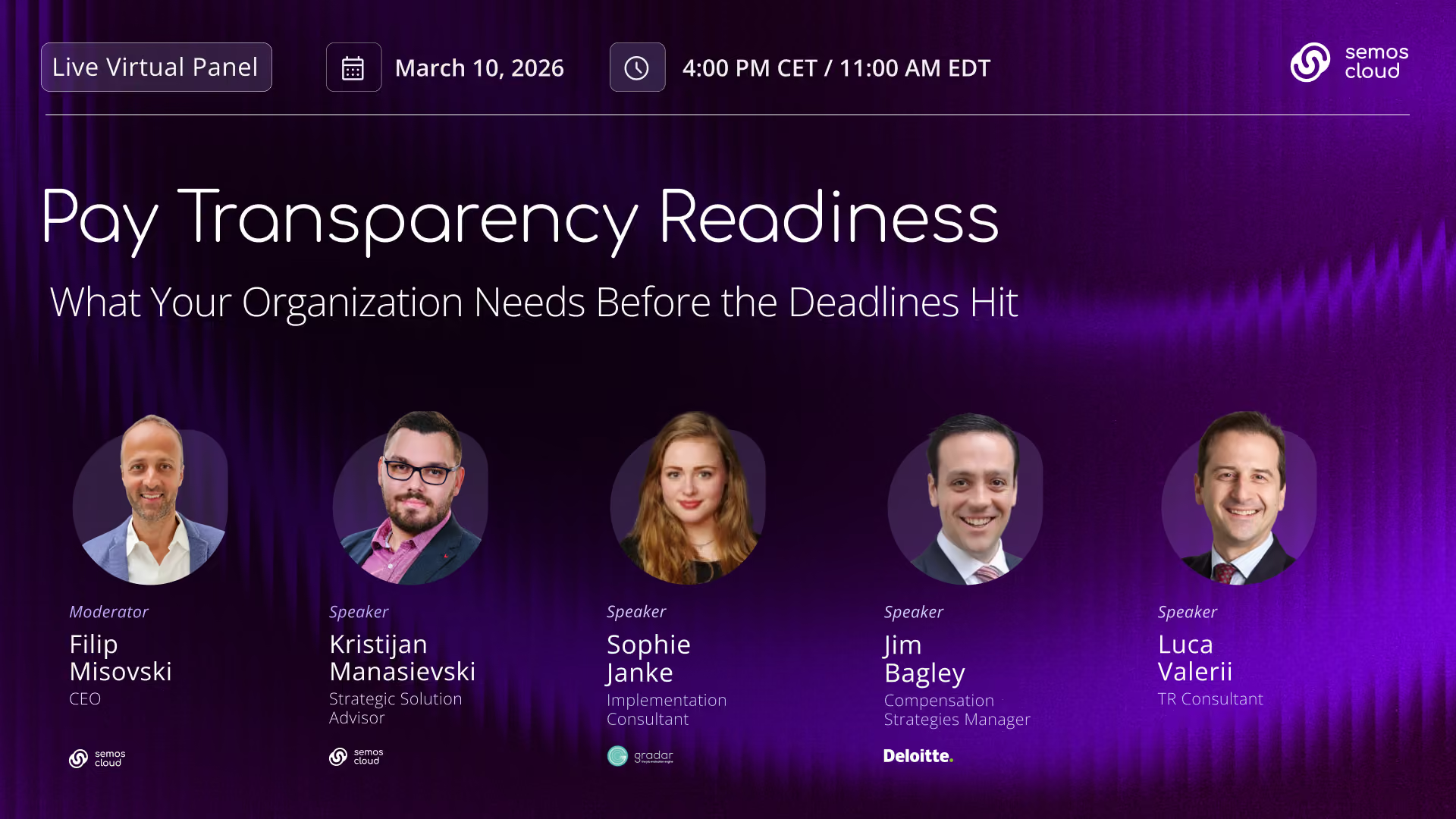
This article is based on insights from our recent pay transparency readiness panel featuring practitioners from Deloitte, gradar, and enterprise Total Rewards leadership. Watch the full recording, or read on for the highlights and our analysis.
Only 9% of European companies have developed and implemented a full pay transparency strategy. That's from Mercer's 2025 Global Pay Transparency Survey, and I don't think the number has moved much since. June 7, 2026 is when EU member states need to transpose the Pay Transparency Directive into local law. First reporting obligations for companies with 150+ employees kick in by June 2027. Companies with 100 to 149 employees get until 2031, which sounds generous until you realize the structural work takes 6 to 12 months for most organizations, longer for complex enterprises.
So here's the thing about June 2026. It's a stress test for your compensation infrastructure. Basically, the moment that exposes whether your pay architecture can hold weight under scrutiny, whether the decisions you've been making for years can be explained and defended when someone asks. The directive introduces a 5% gender pay threshold. If reporting reveals a difference greater than 5% in any worker category performing equal work, and the employer can't justify it with objective, gender-neutral factors, a mandatory joint pay assessment gets triggered. That involves employee representatives, documented corrective action, and real accountability.
No company as of today, no company, at least on the several that I've been the chance to talk with, is ready.
— Luca Valerii, Total Rewards Consultant, ex-Microsoft EMEA HR Director
A lot of companies are sitting in a "wait and see" posture, holding off until their specific country transposes the directive. I think that's a miscalculation. The directive's requirements on pay ranges in job postings, on Article 7's right to information, on Article 18's burden of proof shift, those are already defined at the EU level. Waiting for local transposition doesn't buy you time. It burns it. The genuinely difficult piece: companies need to justify historical pay decisions under rules that didn't exist when those decisions were made. As Luca put it during our recent panel, "We are trying to explain the past without knowing what we need to comply with." The readiness spread across European countries sits somewhere between 36% and 63%, depending on which survey you read. That range tells you something.
Why Job Architecture Is the Foundation You Can't Skip
Sophie Janke from gradar used a metaphor during our panel that's worth unpacking. She compared launching pay transparency without proper job architecture to pulling the curtain on a theater stage where the actors aren't in position and the crew is still building the set. What the audience sees is chaos. Things that can't be explained. Structures that don't hold.
Most organizations do have some version of job titles, pay bands, maybe even formal pay structures. Sophie described it as having a map with cities but no routes connecting them. You can see the destinations, you can see where people are, but there's no documented logic for how anyone got there or how they'd move. That's the problem the directive will surface.
What "routes" means practically: consistent leveling across countries, clear and documented criteria for how roles map to pay bands, rationale that HR can actually explain when an employee asks "why am I at this level?" without reaching for an answer that sounds improvised. I think most organizations underestimate how much of their current job architecture runs on informal logic, things people just know because they've been there long enough. That informal knowledge doesn't survive regulatory scrutiny.
The multi-country dimension makes this harder by an order of magnitude. A framework built for one headquarters, one country's labor market, one set of collective bargaining agreements, that framework fractures the moment you try to apply it across 12 EU member states with different transposition timelines and worker category definitions. Sophie's point was clear: job architecture needs to be sustainable and trusted across the entire organization, across teams, across borders. Basically, if your framework only works when the people who designed it are in the room to explain it, you don't have a framework. You have institutional memory.
The Operating Model Problem: Frameworks Don't Run Themselves
Most companies will build a framework. The ones that actually succeed at pay transparency will build an operating model, a discipline that runs consistently across teams, countries, and the thousand exceptions that real organizations generate every quarter.
Pay transparency doesn't succeed because the framework is perfect. It succeeds because the organization can run it consistently, handle exceptions fairly, and explain decisions properly and openly.
— Sophie Janke, Implementation Consultant, gradar
Jim Bagley from Deloitte broke the readiness work into three buckets during our panel, and I think the framing is useful because it captures the full scope without making it sound like a weekend project. The first bucket is housekeeping. Clean your data. Audit your pay ranges. If your stated practice is "we don't pay above the maximum or below the minimum," verify that's actually happening. You'd be surprised how often it isn't. This is unglamorous, tedious work, and it's where most organizations need to start.
The second bucket is what Jim called the art and science of transparency. Who gets what information, when, where, and how. This varies enormously by country, by employee segment, by organizational culture. There's no universal answer. A company that's open-book about career paths but silent on compensation creates a disconnect that employees feel immediately. Jim was direct about it: "It has to be consistent with who you are culturally. Otherwise, it comes across as forced, and awkward, and clunky."
The third bucket, education and communication, is where frameworks either become operational or remain documents nobody references after the initial rollout. This is about equipping the people who'll actually have the conversations. We'll get to that in a moment.
One more thing on operating models. The directive gives member states authority to set penalties for non-compliance. The specifics will vary country by country. The cost of a bad operating model, one that breaks down at the first exception or the first employee question that goes off-script, goes beyond reputation. It carries financial and legal exposure that boards need to take seriously.
Managers Are the Critical Failure Point in Pay Transparency
53% of companies cite "aligning and educating leaders" as their top pay transparency challenge, according to Mercer's 2025 survey. I think that number is low. It probably undercounts the organizations that haven't even started thinking about manager readiness because they're still stuck on data consolidation.
Transparency is not a light switch. You're not just all of a sudden being transparent with pay. — Jim Bagley, Compensation Strategies Manager, Deloitte
Jim's point lands because it captures what most implementation plans miss. You can flip a policy switch. You can publish salary ranges in job postings starting next Tuesday. What you can't manufacture overnight is a manager population that knows how to have honest compensation conversations without defaulting to "I don't know, comp made me do it, go ask them." Jim flagged that exact scenario as the worst possible outcome, and I've seen it play out at customer organizations too many times to treat it as hypothetical.
Article 7 of the directive gives employees the right to request pay information. Managers are the first point of contact for those requests in most organizations. If a direct report walks in and asks why they're paid in the lower quartile of their band, the manager needs to understand the architecture well enough to explain it. What factors determine band placement, how progression works, why two people in similar roles might sit at different points. Handling "why does my colleague earn more than me" without freezing up or deflecting. Knowing when the question goes beyond their scope and should be escalated to compensation specialists.
Luca Valerii made a point during the panel that I think gets underappreciated. Companies are so consumed by the calculations, the job architecture, the data work, that they forget manager preparation is probably the single highest-impact piece of the entire readiness effort. Employees are already reading about the directive in the press, on social media, in conversations with friends. Questions are coming whether managers are ready or not.
Don't break the trust with your people by pretending that you're doing everything and all you have done in the past is perfect.
— Luca Valerii, Total Rewards Consultant, ex-Microsoft EMEA HR Director
That's the posture that works. Honesty about imperfection, commitment to improvement, and managers who can communicate both without sounding like they're reading from a script. Basically, manager readiness means practiced capability, not a one-time briefing that nobody remembers by month two.
We built A Manager's Guide to Strategic Pay Conversations for exactly this. It covers how to frame compensation discussions, handle difficult questions, and turn pay conversations into trust-building moments rather than damage control.
Total Rewards Visibility: The Context Employees Are Missing
Employees do a quick mental calculation. Salary, maybe bonus if they remember the last payout. That becomes their entire basis for evaluating fairness. Benefits often represent 30 to 40% of total compensation, yet most employees significantly underestimate what they're actually receiving. Retirement contributions, equity, learning and development budgets, wellness programs, insurance, all of it sitting in separate systems, separate portals, sometimes in PDF documents nobody has opened since onboarding.
An employee who doesn't see their full picture will undervalue what they receive. That's a fact.
— Kristijan Manasievski, Total Rewards Specialist, Semos Cloud
Kristijan walked through this during our panel with specific examples from recent customer conversations. One enterprise uses JP Morgan for equity management. Another tracks equity and dividends in an Excel file. A third uses a completely different vendor. Benefits live in legacy SharePoint sites. Pension information is somewhere in the HR portal, probably. The employee experience of all this is fragmented, and that fragmentation has a real cost. People compare their base salary to a number on a LinkedIn job ad and feel underpaid, even when their total package is competitive. Some leave for a higher base offer that actually represents a net downgrade once you account for everything they're walking away from.
What employees need is context. Where do I sit in my band? What moves me forward? What's the total value of everything I receive, not just the number on my paycheck? Jim Bagley illustrated the absurdity of the current state in the US, where some companies post ranges like "$5 to a million dollars" to technically comply with state disclosure laws. 16 US states plus DC now have pay transparency requirements. Data without context creates noise, and noise erodes the trust that transparency was supposed to build.
Semos Cloud's total rewards platform makes the full compensation picture visible inside the employee's existing HCM environment. One view, everything consolidated. It works as an experience layer alongside the systems of record that enterprises already run. At organizations like SAP, with 100,000+ employees and operations across dozens of countries, total rewards visibility at that scale requires a dedicated layer that brings everything together, because the core HCM was never designed to present it that way.
The US Is Catching Up Faster Than You Think
16 US states plus the District of Columbia now have pay transparency laws on the books. Colorado was early. California, New York, Washington, and Illinois followed with their own disclosure requirements. The patchwork is growing, and the complexity it creates for multi-state employers starts to rival what European multinationals face across EU member states.
The wide-range problem, companies posting absurdly broad salary bands to technically comply, is getting corrected through tighter enforcement and updated regulations. States are closing loopholes. Employees and candidates are getting smarter about what meaningful disclosure looks like versus what's a compliance fig leaf.
So here's what matters for organizations operating on both sides of the Atlantic. The job architecture that satisfies the EU directive also works for US state requirements. The operating model that trains managers for Article 7 conversations in Frankfurt works for the same conversations in New York. I think companies that build one consistent approach across jurisdictions will outperform the ones doing jurisdiction-by-jurisdiction minimum compliance by a wide margin. The structural investment is the same. The returns compound.
There's a talent market angle worth considering too. In jurisdictions where pay ranges are public and comparable, companies with clear, defensible compensation structures win candidates. The organizations that treat transparency as a recruiting advantage rather than a regulatory burden are already seeing it in their hiring funnels. More states are introducing legislation. Federal momentum is building, slowly, but it's building.
What Pay Transparency Readiness Actually Looks Like
So readiness comes down to answering three questions consistently, across every country you operate in: What's our job architecture? Can our managers explain pay decisions? Can employees see their full picture?
Sophie Janke anchored everything in the foundation during our panel. Documented, consistent job architecture that uses the same criteria to classify jobs as you use to explain pay differences. If the classification system and the explanation system use different logic, you've built a contradiction that employees and regulators will find. I think a lot of organizations are going to discover exactly this problem in their first reporting cycle.
The operating discipline layer is Jim Bagley's territory. Defined processes for exceptions. Clear ownership of band updates. A structured approach to the 5% analysis that doesn't start from scratch every reporting period. Basically, the organizational muscle to run compensation governance as a continuous function, not an annual fire drill that starts three weeks before the deadline.
Manager capability requires practice, not just awareness. Luca made this point forcefully. Managers need to have had the awkward conversation in a training environment before they have it live with a direct report who's read about their new rights under Article 7. One-time briefings decay. Ongoing capability building persists.
Employee visibility is Kristijan's domain. Every element of the total rewards package, accessible, contextualized, presented in a way that lets employees evaluate their full compensation picture accurately. Without this, transparency becomes a source of confusion rather than trust.
And underneath all of it, the compliance infrastructure. Reporting mechanisms, documented analysis for the 5% threshold, Article 18 documentation that can withstand the burden of proof shift. Sophie closed the panel with a line worth remembering: "The real leaders aren't the ones with the fanciest frameworks, but those that can live with transparency every day across teams, across countries, without losing trust."
Semos Cloud works with enterprises building this readiness across all five dimensions. That's what we do.
FAQ: Pay Transparency Directive Questions from HR Leaders
When does the EU Pay Transparency Directive take effect?
The transposition deadline is June 7, 2026. That's when member states need to have the directive written into local law. First reporting obligations hit companies with 150+ employees by June 2027. Organizations with 100 to 149 employees get until 2031. The structural work, job architecture, operating model, manager training, takes 6 to 12 months for most organizations. If you're starting after transposition, you're already behind.
What is the 5% gender pay difference threshold?
If your reporting shows a difference greater than 5% in any worker category performing equal work, and you can't justify that difference with objective, gender-neutral factors, a mandatory joint pay assessment gets triggered. This involves employee representatives and requires documented corrective action. The threshold applies per worker category, so you need the job architecture in place to even define those categories properly.
What are the penalties for non-compliance?
The directive requires member states to establish penalties that are "effective, proportionate, and dissuasive." Specific amounts and mechanisms will vary by country. Article 18 shifts the burden of proof to the employer. If an employee claims unequal pay, the company needs to prove otherwise. That's a significant legal shift that most organizations haven't fully internalized yet.
How should companies prepare for the pay transparency directive?
Start with job architecture. Then build the operating model around it. Then train your managers. Then make total rewards visible to employees. That sequence matters because each layer depends on the one before it. Skipping ahead to manager training without clean job architecture gives managers nothing defensible to explain.
Do pay transparency laws apply in the United States?
16 states plus the District of Columbia have pay transparency laws, with more introducing legislation each year. There's no federal mandate yet, but the trend is accelerating. Companies operating in both the US and EU should build one consistent approach rather than doing jurisdiction-by-jurisdiction minimum compliance. The underlying architecture is the same problem.
What does pay transparency readiness mean for managers?
Managers are the first point of contact for Article 7 information requests. They need to understand the job architecture, explain how band placement works, handle questions like "why does my colleague earn more than me" honestly, and know when to escalate to compensation specialists. This requires ongoing training and practiced conversations, not a one-time briefing deck that sits in a shared drive.
How does total rewards visibility connect to pay transparency?
Employees typically see their base salary and maybe their bonus. They're missing 30 to 40% of their total package: benefits, retirement, equity, wellness, learning and development. Pay transparency will amplify this perception problem. When salary bands become public but total compensation stays fragmented across six different systems, employees draw incomplete conclusions. Making the full package visible gives the context needed for accurate evaluation.
SAP Innovation Day Canada 2026: Five Themes Shaping SuccessFactors Roadmaps
SAP Innovation Day brought together HR, IT, and ERP leaders from across British Columbia and Alberta for two events in Vancouver and Calgary this March. The roundtable format created conditions for honest, specific conversations - not conference-floor soundbites. Five clear themes emerged that are directly relevant to any organization running SAP SuccessFactors today.
Semos Cloud at SAP Innovation Days Canada 2026
Kristijan and Oliver represented Semos Cloud across both events, engaging with HR and IT leaders navigating active SuccessFactors expansion cycles and deepening relationships with the SAP Canada field team. As an SAP Spotlight+ partner with SAP as a customer across 100,000 employees and over 2 million recognitions delivered in 2024 alone, these conversations sit at the center of how we think about what enterprises need next from their HCM environments.
The conversations confirmed something we see consistently at SAP ecosystem events: enterprises are not looking for more tools. They want intelligence and experience that works within the systems they have already invested in. Read Kristijan's personal reflection on the partnerships and people from both events: SAP Innovation Day Canada: What Two Cities Reminded Me About Partnership.
Five Themes Shaping SuccessFactors Roadmaps in 2026
1. AI maturity has shifted from adoption to governance
Joule conversations at both events had a noticeably different quality from a year ago. The question is no longer whether AI belongs in HR processes. The rooms in Vancouver and Calgary were asking about governance: how to manage AI recommendations at scale, how to maintain employee trust in AI-assisted decisions, and how to sequence AI activation across a SuccessFactors environment that may have modules at very different stages of maturity.
SAP's own direction reinforces this. Agentic AI embedded in the flow of work is the roadmap, and the organizations getting the most value from it are the ones who have paired AI capabilities with clear accountability structures. A Joule recommendation for recognition, coaching, or performance support only drives outcomes if someone owns the follow-through.
2. Skills intelligence is the highest-energy roadmap item - and the hardest to execute
The skills intelligence roundtable at both events ran over its scheduled time. The engagement was different from other sessions - more debate, more unresolved tension, more people willing to name what was actually hard.
The value case is understood. Better talent mobility, stronger succession planning, workforce gap visibility before hiring pressure hits - these outcomes resonate with every HR leader in these rooms. The challenge is organizational, not technological. Who owns the skills taxonomy? How does it stay current as roles evolve? What adoption model works for managers who are already at the edge of their SuccessFactors workload? SAP is investing significantly in Talent Intelligence Hub, and the field teams were direct about where the organizational prerequisites tend to be underestimated.
3. Workflow-level integration is what separates adoption from usage
A consistent theme across both events was frustration with HR technology that technically integrates with SuccessFactors but sits outside it in practice - requiring separate logins, creating additional interfaces to navigate, and generating data that doesn't flow back into the systems HR teams use for reporting.
The SAP partner ecosystem conversation is increasingly about this distinction. Data-level integration connects systems. Workflow-level integration means the solution surfaces inside SuccessFactors natively, uses the same SSO employees already authenticate with, and writes back into SuccessFactors in a way that makes the data useful downstream. The solutions with the highest enterprise adoption are the ones operating at the second level. You can see this in practice with how recognition embeds directly into the SuccessFactors interface - no additional login, visible in the employee profile alongside goals and performance data.
4. Employee experience activation has a cost when it waits
Many of the HR leaders at both events were managing the same sequencing assumption: get Employee Central, Performance, and Compensation stable before adding employee experience programs on top. It's a reasonable instinct for managing organizational change capacity.
The challenge is that engagement and culture signals accumulate whether or not an experience layer is active. Managers fill the gap informally in the meantime, and the quality varies - particularly for deskless and field-based workforces, where informal recognition is hardest to sustain at scale. Calgary had strong energy-sector representation, and the conversation about reaching frontline workers with consistent recognition was directly relevant: we covered the specifics of recognition as operational infrastructure for deskless workforces on SAP SuccessFactors in depth. The organizations furthest along on employee experience had treated recognition and total rewards as a parallel workstream rather than a downstream one - and several described it as accelerating SuccessFactors module adoption, because it gave employees a reason to engage with the environment earlier.
5. Data residency is a first-round procurement filter for the Canadian public sector
For public-sector HR leaders operating in Canada, data residency is not a compliance preference. It is a procurement prerequisite that determines whether a vendor conversation continues at all. Provincial privacy legislation and government data handling requirements make confirmed Canadian data hosting a first-round filter.
This came up at both events with enough clarity to be worth flagging explicitly. Several vendors in attendance could not answer the data residency question directly. For HR leaders in this category, leading with that question in the first vendor interaction saves time on both sides of the evaluation.
Final thoughts
The conversations in Vancouver and Calgary reflected an HR technology market that has moved past the excitement phase of AI and into the more demanding work of implementation, governance, and sustained adoption. The organizations building competitive advantage right now are the ones treating all of this as connected: AI governance, skills infrastructure, integration quality, employee experience timing, and data compliance are not separate workstreams. They shape each other.
For HR leaders in the SAP ecosystem, the signal from Western Canada is that the window for getting this sequencing right is open now. The enterprises that are further ahead did not wait for perfect conditions. If you want to explore how leading enterprises are activating employee experience inside SAP SuccessFactors, we'd like to be part of that conversation.
Recognition Is Operational Infrastructure for Deskless Workforces
In deskless industries, culture is not built in PowerPoint decks. It is built in daily actions: in the shift handoff that acknowledges a job well done, in the SMS that reaches a field worker before their next rotation, in the milestone celebration that happens in real time rather than six months after the fact.
And yet, for the majority of the global workforce, these moments either do not happen at all or happen so inconsistently that they may as well not.
Between 60 and 80 percent of employees in industries like mining, utilities, insurance, and energy never sit behind a laptop during their workday. They do not check corporate intranets. They do not open HR portal emails. The recognition programs, communication campaigns, and total rewards strategies designed for desk-based employees simply do not reach them.
This is not a morale problem. It is an operational one.
Culture Is Built in the Field. Not in Head Office.
The organizations we work with across energy, mining, utilities, public sector, and financial services share a common realization: the tools built for desk workers create invisible gaps that erode culture from day one.
Recognition happens in pockets. Corporate communications do not reach crews. Shift workers miss critical updates. HR manages multiple disconnected tools. Governance is complex in unionized environments. And SAP data, the richest source of employee information available, sits underutilized.
The challenge is not strategy. Every CHRO we speak with has a clear vision for culture, engagement, and retention. The challenge is activation: translating that strategy into daily, consistent, measurable touchpoints that reach every worker, in every location, on every shift.
High-performing deskless organizations share five outcomes that separate them from the rest:
2x higher frontline recognition participation compared to organizations using office-centric programs
40 percent faster communication reach to field and shift workers through SMS and mobile-first channels
Managers prompted to recognize in real time, not after quarterly reviews surface gaps
Clear Total Rewards visibility for every employee, not just those who log into a benefits portal
Recognition tied to safety and operational milestones, reinforcing the behaviors that matter most in hazardous environments
The question is how to get there. The answer begins with a single employee.
The Deskless Employee Journey
We built a video that follows one frontline employee through their first year, from onboarding through milestone recognition. It is not a product demo. It is a story about what happens when recognition and communications actually work for the people they are supposed to serve.
https://youtu.be/lR4nNYviMJ4
The journey moves through five stages, each one a moment where most organizations lose their frontline employees to disengagement, confusion, or silence. Here is what changes when those moments are powered by real infrastructure.
Stage 1: Day One - Onboarding
A new field worker arrives at a mining site, a utility substation, or an insurance branch office. In most organizations, their first day is paperwork, a safety briefing, and a vague promise that someone will show them around.
With recognition infrastructure in place, the experience is different. An automated welcome is triggered from SAP SuccessFactors the moment the employee record is created. Their manager receives a prompt to send a personal recognition within the first 48 hours. A targeted onboarding communication, delivered via SMS because this employee does not have a corporate email address, introduces them to the company values and tells them how to recognize a colleague.
Before they have finished their first week, they have already been seen.
Stage 2: Week One - First Recognition
Within the first few days, a peer sends a recognition tied to a company value. It is not generic. The AI-powered recognition system suggests language that is specific to the contribution, calibrated to the organizational context, and aligned with the values framework.
The recognition appears on a social wall visible to the entire team. The new employee sees their name associated with something meaningful before their first paycheck arrives.
Research consistently shows that early recognition is the single strongest predictor of first-year retention. When employees feel valued in the first 30 days, voluntary turnover in the first year drops by as much as 40 percent.
Stage 3: Month Three - Staying Connected
Three months in, the daily grind has set in. The initial excitement has faded. This is the most dangerous period for deskless employees because this is when disengagement begins to calcify.
The communications layer changes the equation. A shift-targeted SMS arrives with a safety update relevant to the employee's specific site. A targeted communication campaign reaches them through the channel they actually use, not a portal they never visit. An AI-generated pulse survey takes 30 seconds to complete and asks one relevant question about their experience.
Their manager, equipped with real-time gap visibility, notices this employee has not been recognized in three weeks. A prompt surfaces automatically. The manager sends a recognition tied to a recent safety milestone. It takes 60 seconds. The employee receives it via SMS before their next shift starts.
The connection between the organization and the individual is maintained, not through grand gestures, but through consistent, small, well-timed touchpoints.
Stage 4: Month Six - The Milestone Moment
At six months, a service milestone is triggered automatically from the HRIS. The recognition is not a generic email. It is a personalized digital certificate, a points award redeemable in a catalog of 15 million options localized to the employee's country and currency, and a message from their site leader that references specific contributions.
But something else happens at month six. The employee opens a Total Rewards statement for the first time. Until now, they understood their compensation as a base salary number. Now they see the full picture: base pay, benefits, shift premiums, safety bonuses, recognition points earned, and projected pension value.
In industries facing growing pay transparency requirements, this visibility is not optional. It is the difference between an employee who feels underpaid and one who understands the full value of their employment.
Stage 5: Year One and Beyond - Culture at Scale
One year in, this employee has been recognized multiple times. They have recognized others. They have received communications relevant to their role, their shift, and their location. Their manager has been equipped with intelligence to lead rather than left to figure it out alone.
And the data tells the story. Every recognition, every communication delivery, every survey response, every milestone flows back to SAP SuccessFactors. The CHRO can see participation rates by site, by department, by tenure band. The head of safety can correlate recognition activity with incident reporting. The Total Rewards team can measure the ROI of their compensation transparency initiative.
This is what recognition looks like when it is not a feel-good initiative. It is operational infrastructure.
What Makes This Possible: One Unified Layer on Top of SAP SuccessFactors
The journey described above is not aspirational. It is running today at enterprise scale. Every touchpoint is connected to SAP SuccessFactors. Every data flow is native.
Semos Cloud provides four integrated capabilities as a single execution layer:
Recognition and Rewards: Peer, manager, and automated recognition. Safety milestones. Service awards. A global reward catalog with 15 million options across multiple currencies. Governance controls for unionized environments and multi-country compliance.
Employee Communications: Targeted by role, site, shift, department, and union status. SMS delivery for workers without corporate email. Campaign analytics with open rates, read receipts, and engagement tracking. AI-generated surveys for continuous listening.
Total Rewards Hub: Unified compensation, benefits, and recognition visibility in one personalized statement. Pay transparency compliance. Real-time reporting on gender pay equity and rewards distribution.
Manager Enablement: Recognition prompts based on milestones, tenure, and team activity. Gap visibility to identify who has not been recognized. Coaching intelligence with AI conversation starters and bias detection. All delivered in the moment, not at the end of the week.
The platform is built natively on SAP Business Technology Platform. No middleware. No custom integration. Deployment in 60 to 90 days. Spotlight+ Certified.
The Proof: SAP Uses It for Their Own People
This is the point in the conversation where trust is earned. SAP does not just partner with Semos Cloud. They use our platform for their own 100,000+ employees, across every country and every role.
The deployment demonstrates exactly what enterprises need to see:
Global scalability across 100,000+ employees in every geography
Multi-country governance and compliance at enterprise grade
Automation of milestones, service awards, and value-based recognition at scale
Deep integration with SAP modules including Employee Central, Performance and Goals
500 million+ recognitions sent through SAP Appreciate
When a Total Rewards Senior Consultant at SAP says the platform can run with only 0.5 FTE for a 100,000-employee company, that is the kind of operational efficiency that changes the business case.
What Deskless Organizations Get Wrong About Recognition
The most common mistake we see is treating recognition as a communications initiative. Organizations launch a program, send a few emails, see initial adoption, and then watch participation decline as the novelty fades.
The second most common mistake is building recognition on top of tools designed for office workers. Desktop-first portals. Email-dependent notifications. Annual recognition cycles that miss the daily rhythm of shift work.
The third mistake is separating recognition from the systems that hold employee data. When recognition lives in a standalone SaaS tool with no connection to SAP SuccessFactors, you lose the segmentation, the governance, the automation triggers, and the analytics that make recognition scalable.
Recognition for deskless workforces requires purpose-built infrastructure. It requires SMS delivery. It requires shift-aware targeting. It requires manager prompts that surface at the right moment. It requires data flowing back to the system of record.
It requires, in short, treating recognition as operational infrastructure rather than a culture program.
The Business Impact
Organizations that have made this shift report consistent outcomes:
Lower turnover in skilled roles. In industries where replacing a single skilled technician costs six figures, even a modest improvement in retention delivers outsized ROI.
Stronger safety engagement. Recognition tied to safety milestones reinforces near-miss reporting, compliance behaviors, and the operational discipline that prevents incidents.
Faster onboarding. When new hires feel connected from day one, time to productivity compresses. In energy sector organizations, where onboarding includes extensive safety certifications, this acceleration has real dollar value.
Improved communication compliance. When critical updates reach 95 percent of the workforce via SMS rather than 30 percent via email, compliance risk drops and operational consistency improves.
Reduced HR administration. Automated milestone recognitions, triggered from HRIS data rather than managed manually, free HR teams to focus on strategic work rather than administrative coordination.
Stronger employer brand. In competitive labor markets where skilled trades workers have multiple options, the organizations that are known for recognizing and communicating well attract better candidates.
Recognition Becomes Infrastructure
In deskless industries, every worker deserves to feel seen. Not once a year at an awards dinner. Not through a generic email they will never open. But every day, through the channels they use, at the moments that matter, powered by the data that makes it personal.
When recognition is consistent, when communication reaches everyone, when managers are supported, and when Total Rewards are transparent, you create stability in environments where talent is scarce and operational risk is high.
Recognition becomes infrastructure.
And for SAP customers, it becomes scalable.
Want to see the deskless employee journey in action? Contact us to schedule a walkthrough of how Semos Cloud works with SAP SuccessFactors to deliver recognition, communications, and Total Rewards visibility for your frontline workforce.
Already an SAP SuccessFactors customer? Learn more about our native integration on SAP BTP and how organizations like SAP, JTI, Sephora, and Colgate-Palmolive are scaling recognition globally.
Analyst Spotlight: The Human Reality Behind Work in 2026 & Beyond
Workplace transformation is about people. This is the message emerging from recent research by Gallup and insights from PwC analyst Yolanda Seals-Coffield. Employees are under unprecedented strain, and organizations accelerating technology adoption without investing in human capability are facing rising risks to productivity, engagement and retention.
Employee Burnout Is a Strategic Business Risk
Research from Gallup makes one thing clear. Burnout is a measurable performance and wellbeing risk. Stress and emotional exhaustion at work now spill over into overall life satisfaction, mental health and long term engagement.
Gallup identifies five primary drivers strongly linked to burnout:
Unfair treatment at work
Unmanageable workload
Lack of role clarity and communication
Insufficient manager support
Unreasonable time pressure
Burnout stems from structural workplace conditions. That means HR and business leaders have the ability to address it intentionally.
Managers Are the Most Critical Lever
Gallup analysis continues to show that managers account for a significant portion of the variance in employee engagement and burnout. The quality of communication, clarity of expectations and frequency of meaningful conversations are directly linked to employee energy and resilience.
When managers lack tools, insights or development, burnout rises. When they are equipped to coach, recognize and communicate effectively, engagement improves.
This places manager enablement at the center of HR strategy for 2026 and beyond.
The Human Advantage in an AI Driven Workplace
At the same time, PwC analyst Yolanda Seals-Coffield highlights another trend worth watching. In her perspective on the future of work, she argues that even as AI accelerates transformation, human capabilities remain the defining differentiator.
Empathy, judgment, creativity, ethical reasoning and collaboration are strategic capabilities that determine how effectively organizations use technology.
How humans apply technology determines outcomes.
This reinforces an important point for HR leaders. AI adoption must be balanced with investment in human skills and leadership capability.
Engagement Is Not Automatically Improved by Technology
Recent workplace data shows a decline in global engagement levels even as organizations invest heavily in digital transformation. Technology adoption alone doesn’t create engagement.
If anything, without clarity, communication and cultural reinforcement, new tools can add complexity and stress.
HR leaders must therefore connect digital transformation with culture strategy, manager capability and employee experience design.
What This Means for HR Leaders
The signals from leading analysts are consistent. Organizations that treat engagement, leadership capability and human skills as strategic levers will outperform those that rely on technology implementation alone. This year will require HR to shift from reactive program management to measurable culture design.
Treat Burnout as a Business Metric: Burnout is measurable and preventable. Organizations that track workload, sentiment and manager effectiveness can address the structural drivers of stress before they impact retention and performance.
Invest in Manager Effectiveness: Managers shape the everyday employee experience. Equipping them with insights, coaching skills and recognition tools creates one of the highest-impact improvements in engagement.
Strengthen Human Skills Alongside AI Adoption: Empathy, judgment and collaboration determine how effectively organizations apply technology. AI amplifies human capability, but it doesn’t replace it.
Design Engagement Intentionally: Technology can support culture, but it can’t create it. High-performing organizations intentionally design recognition, communication and leadership practices that reinforce engagement.
A Semos Cloud Perspective
At Semos Cloud, we see these analyst insights as a clear call to action.
Organizations need more than HR systems. They need People and Culture Intelligence that connects engagement, recognition, performance and skills development to measurable business outcomes.
By equipping managers with real time insights, enabling meaningful recognition and strengthening the connection between people data and strategic decisions, HR can move from reactive support to proactive culture leadership.
If you are evaluating how to align AI, engagement and leadership development in 2026, let’s explore how Semos Cloud can help you operationalize the human advantage across your organization.
How HR Leaders Can Navigate Internal Compliance When Buying Recognition and Rewards Platform
You've found the perfect employee experience platform. It promises engagement, recognition, and a boost to company culture. Before rollout, the inevitable questions arrive from Security, Privacy, Finance, Tax, and AI compliance teams: Is it safe? Is it legal? Can we afford it?
In large enterprises, this is completely normal. A recognition program is a full business program involving budgets, employee data, governance, and rules. Culture is one part of it.
Why Compliance Teams Ask So Many Questions
Compliance reviews protect both the business and its people.
Security and Privacy teams focus on keeping employee data safe and preventing regulatory issues. Finance looks for clear budget controls so recognition spending stays predictable and accountable. Tax and Payroll? They need confidence that rewards are handled correctly, especially when programs run across multiple countries. IT checks that the platform fits the company's existing systems and access rules. And increasingly, AI governance teams want to understand how any AI-powered features use employee data and what safeguards are in place.
Timing is the primary driver of delays. HR often plans the program first and brings these teams in at later stages. That's where programs start to slow down.
The Questions Your Program Must Answer
When these teams review your recognition program, they usually ask:
How is the platform secured against unauthorized access or data breaches?
Where does employee and reward data reside, and how is it stored?
Is the platform SOC 2, ISO 27001, or similarly certified?
Can all reward activity be fully audited and reported for compliance purposes?
How are user permissions and access controls managed?
Does the system comply with relevant data privacy and labor regulations?
How are tax and payroll obligations handled in a compliant way?
If the platform uses AI features: what data do the models access, how are recommendations generated, and what bias safeguards exist?
Clear answers move the program forward. Missing answers stall it.
Semos Cloud really stood out for us because the platform is designed to work hand in hand with SAP SuccessFactors… Throughout this journey, it has been a seamless collaboration built on a shared vision and a collective drive to make employee experience the center of this transformation.
The Biggest Reasons Recognition Programs Fail Compliance
Money controls are unclear. Finance wants to know how overspending is prevented. A recognition program that runs across dozens of countries and thousands of employees has a large spend surface. If the platform can't demonstrate budget caps by region, team, or cost center, automatic escalation when spending approaches limits, and approval workflows for high-value awards, Finance will ask for manual workarounds. Manual workarounds mean more review time.
Tax and payroll are treated as an afterthought. When you deploy recognition across multiple jurisdictions, the tax treatment of the same reward can vary by country, by reward type, and by value threshold. Some countries tax all non-cash rewards as income. Others exempt them below a certain amount. Others treat monetary and non-monetary rewards differently. Payroll needs a documented process with country-specific tax treatment and clear handoffs for each jurisdiction in the program. When this isn't defined, Tax holds the review until it is.
Security and privacy proof is missing. Security wants secure sign-in, clear access roles, and records of key actions. Privacy wants documented data handling, storage locations, and regulatory compliance evidence. If the vendor can't provide a current SOC 2 Type II report, a Data Processing Agreement, and a security architecture overview when asked, the review slows down. Sometimes by weeks, because the vendor needs time to produce documentation that should already exist.
AI features raise new compliance questions. If the recognition platform uses AI for message suggestions, recognition recommendations, or sentiment analysis, expect questions about what employee data the models access, how recommendations are generated, and how bias is monitored. This review layer didn't exist two years ago. Many enterprises are still defining their own process for it, which means the timeline can be unpredictable. Building AI governance answers into the vendor evaluation upfront prevents a second review cycle later.
Map your approval team early. Before you choose a platform, list the people who will review it. In many enterprises, that includes Security, Privacy, IT / HRIT, Finance, Tax and Payroll, Legal (if needed), and AI governance (if the platform includes AI features). Use names, not just departments.
Ask for specific documentation up front. Don't wait until the end. Request these items during vendor evaluation, not after selection:
SOC 2 Type II report (current, not expired)
Data Processing Agreement
Security architecture overview
Penetration test results summary
Data residency and retention documentation
Access control architecture (SSO, RBAC configuration)
Audit trail capabilities and export options
Budget control and approval workflow documentation
Payroll export or integration specifications by country
AI feature documentation: what they do, what data they use, what safeguards exist
If a vendor can provide these within 24 hours, the formal compliance review becomes confirmation rather than discovery. If they can't, that tells you something too.
Call out red flags before they become blockers. Say these early if they apply:
Cross-border data (global employee access, data residency requirements)
High-value rewards or incentive programs (tax implications escalate)
Many countries with different tax treatment (each one adds a payroll requirement)
Any rewards tied to payroll (requires integration or documented export process)
AI features accessing employee data (may trigger separate AI ethics review)
Show the trade-off in plain language. Compliance teams evaluate risk. HR thinks about people. The program that gets approved is the one that addresses both: recognition with strong controls and reporting that makes it consistent across the organization, without spreadsheet workarounds.
Roll out in steps. Start with a smaller group or a single region. Prove the controls work at that scale. Finance can validate budget mechanisms. Tax can confirm the payroll process for that jurisdiction. Security can verify access controls in production. Then expand. A successful pilot is your strongest proof point when asking for broader rollout approval.
The Governance Piece Most Programs Forget
Governance is what separates a recognition program that works at 500 employees from one that works at 50,000. In practice, that means:
Approval thresholds that define who approves what, at what value, with multi-level approval chains for higher-value awards
Budget guardrails by cost center, region, or team, with automatic escalation when spending hits a configurable threshold
Recognition frequency controls that prevent over- or under-recognition across different parts of the organization
Reporting cadence that Finance and Audit actually receive on a set schedule, not ad-hoc when someone remembers to ask
Fairness analytics that flag distribution patterns so HR can identify and address inconsistencies across teams, locations, and levels
When these rules are documented and built into the platform rather than maintained in a spreadsheet, compliance reviews move faster. Auditors can see the controls. Finance can pull their own reports. HR stops being the bottleneck for every spending question.
A Simple Internal Workflow You Can Share
A clean workflow keeps momentum. Here's a common order that prevents reviews from blocking each other:
Security checks access and data protection
Privacy confirms legal and data-handling rules
Finance reviews budgets, approvals, and reporting
Tax and Payroll confirm reward treatment and payroll steps
AI Governance reviews AI features and data usage (if applicable)
Legal confirms contract terms (if needed)
HR rolls out
Running Security and Privacy in parallel rather than sequentially can save time. Finance and Tax reviews often overlap as well.
Quick Checklist: Is Your Recognition Program “Audit-Ready”?
Use this checklist before the formal review. If you can't answer "yes" to most of these, expect delays.
Security and access
Do we support secure sign-in (company SSO via SAML 2.0 or equivalent)?
Do we control permissions with configurable roles (admin, manager, employee)?
Do we have a complete audit trail of every recognition, approval, budget change, and access event?
Can we provide a current SOC 2 Type II report and penetration test results?
Privacy and data handling
Do we know exactly what employee data is collected and why?
Do we know where the data is stored and how it is protected?
Do we have clear retention and deletion rules documented?
Is a Data Processing Agreement available for review?
For enterprises using SAP SuccessFactors: platforms built natively on SAP Business Technology Platform (BTP) inherit the security, compliance, and data residency infrastructure your organization already trusts. Recognition data stays within SAP's governed environment, which removes an entire category of data residency and third-party risk questions from the Security and Privacy review. Real-time data sync between the recognition platform and your HCM means employee data doesn't need to move to an external cloud, simplifying both compliance and the employee experience.
Finance controls
Can we set budgets by region, team, or cost center?
Can we require multi-level approvals for higher-value awards?
Can Finance track spend and reconcile it in real time, without spreadsheet exports?
Do budget guardrails trigger automatic escalation when spending approaches limits?
Tax and payroll
Do we know which rewards are taxable by country and reward type?
Can Payroll get the right data on time (export or integration) for each jurisdiction?
Do we have a clear, documented process for payroll reporting across all operating countries?
AI governance
Do we know what AI features the platform uses and what employee data they access?
Are there documented bias safeguards and transparency measures?
Can we explain to employees how AI-generated recommendations (recognition suggestions, message assistance) work?
Do we have a review process for AI-powered employee-facing features?
Governance and fairness
Do we have clear rules that employees and managers can understand?
Can we detect unfair recognition patterns and address them?
Is governance documented and built into the platform, or maintained manually?
Questions to Ask Your Recognition Vendor
Before you sign, ask these directly. The answers tell you how prepared the vendor is for enterprise compliance review.
On security and compliance:
Can you provide a current SOC 2 Type II report and a Data Processing Agreement today?
Where is our employee data stored? What are the data residency options?
Does the platform support our SSO provider? What access control model do you use?
On financial controls:
Can we configure budget limits by cost center, region, and team?
What happens when a budget limit is approached? Is there automatic escalation?
What does the audit trail capture, and can Finance export it directly?
On tax and global deployment:
How do you handle reward taxation across our operating countries?
Can payroll receive data through direct integration, or does it require manual export?
How do you handle the difference in tax treatment between monetary and non-monetary rewards?
On AI features:
What AI features does the platform include, and what employee data do they access?
How are AI-generated recommendations (recognition suggestions, message drafting) created?
What bias monitoring and transparency measures are in place?
On governance and scale:
How do you ensure recognition is consistent and fair across regions and teams?
Can we configure approval workflows, frequency limits, and escalation rules?
What reporting do you provide out of the box for Finance and Audit?
A vendor that can answer these confidently, with documentation ready, will make the compliance process significantly shorter.
Where the Right Platform Makes This Easier
Recognition drives culture. Governance is what makes it scale across regions and business units without breaking. A recognition and rewards platform should make the compliance review shorter by having the documentation and controls already built in. That means:
Compliance-ready documentation (SOC 2, ISO 27001, DPA, security architecture) available during vendor evaluation, not assembled after the fact
Enterprise-grade access controls: SSO, role-based permissions with configurable levels, complete audit logging of every action
Financial controls built into the platform: budget caps by geography, team, and cost center, multi-level approval workflows, real-time spend tracking
Global payroll readiness: country-specific tax treatment documentation, payroll integration or export for each jurisdiction
AI transparency: documented AI features, data usage policies, bias safeguards, and explainability for employee-facing recommendations
Fraud detection that identifies unusual patterns in recognition activity and flags them before they become audit findings
When these capabilities are built into the platform from the start, the compliance conversation shifts from "Can we make this safe?" to "How do we configure it for our requirements?" That's a faster conversation.
Getting Recognition to Launch
Compliance review doesn't have to be the phase that stalls program momentum. The programs that get through review quickly have two things in common: they planned for compliance from the start, and they chose a platform where the documentation and controls were already there.
We work with enterprises across 170+ countries, and the compliance questions in Riyadh are different from the ones in Munich, which are different from the ones in New York. We support our customers through governance design, rollout planning, documentation, and reporting, so the program meets internal compliance requirements and scales across the organization.
If you're building a case for recognition internally and compliance review is the next step, the preparation you do now determines how fast you get to rollout.
Disclaimer: This article is provided for informational purposes only and does not constitute tax, legal, or accounting advice. Consult your own advisors to validate tax treatment and compliance obligations for your specific program and jurisdictions.
Why Energy Companies Are Rethinking Recognition and Total Rewards in 2026
Energy and utility organizations are entering one of the most complex workforce transitions in decades.
Retirement waves are accelerating. Skilled craft roles are harder to replace. Regulatory scrutiny is rising. Safety culture expectations are uncompromising. And pay transparency requirements are expanding across jurisdictions.
For CHROs and Total Rewards leaders in energy, recognition and compensation visibility have moved from engagement initiatives to operating priorities.
The organizations that adapt quickly will protect institutional knowledge, strengthen safety performance, and retain critical talent. Those that do not will face escalating turnover costs, compliance exposure, and frontline disengagement.
The Workforce Reality in Energy
Energy companies operate with a workforce structure unlike most industries:
Majority deskless employees across field crews, refineries, gas technicians, operators, and plant workers
Unionized environments with collective bargaining constraints
Multi-state or multi-country compliance requirements
24/7 operations tied directly to public safety and infrastructure reliability
Utilities frequently report that more than 60 percent of employees work outside traditional office settings. Many do not regularly access corporate email or HR portals.
At the same time, replacement costs for skilled technical roles routinely exceed six figures when factoring recruiting, training, safety certifications, and lost productivity.
Recognition and total rewards programs designed for office-centric environments struggle in this context. Energy organizations require systems built around operational realities, not corporate assumptions.
Recognition as a Safety and Retention Lever
In energy, recognition influences more than morale.
It reinforces safety behaviors, near-miss reporting, reliability discipline, and operational excellence. The highest-performing programs align directly to enterprise themes such as safety, customer reliability, and operational investment priorities.
From large-scale deployments across distributed workforces, several consistent patterns emerge:
1. Frontline-first design
Recognition must function in the field. Mobile-first flows, SMS accessibility, and minimal friction participation drive adoption across linemen, gas technicians, refinery operators, and plant teams.
2. Clear compliance controls
Unionized workforces require structured budget enforcement and non-monetary constraints aligned to collective bargaining agreements. Automated caps and audit trails protect labor relations and prevent over-allocation risk
3. Leadership visibility across hierarchy
When senior leaders recognize field employees publicly by name, participation expands and pride indicators improve. Visibility bridges organizational layers that rarely interact directly.
4. Behavioral alignment
Recognition categories mapped to safety completion milestones, values frameworks, and operational themes generate measurable improvements in engagement and reporting behavior.
Organizations that embed recognition within safety culture consistently report stronger near-miss reporting rates and higher participation among long-tenured workers.
The four patterns above are covered in full in our Energy Sector Playbook, including how to configure each layer for union and non-union workforces. Download the free playbook
Total Rewards Visibility Under Transparency Pressure
Compensation complexity in energy is substantial:
Base salary
Annual bonuses
Long-term incentives
Shift differentials
Retirement matching
Healthcare and wellness programs
Recognition-based awards
The core issue is workforce resilience, especially in early tenure.
Most of these components live across separate systems.
Employees frequently evaluate their compensation based on base pay alone because the broader picture remains fragmented.
Simultaneously, the EU Pay Transparency Directive and expanding U.S. state regulations require structured communication of compensation value. Compliance readiness now demands data clarity and auditability.
Employees often evaluate compensation through base pay because the broader package is hard to interpret. Recent benefits research shows only 57% of employees fully understand what their benefits cover. In parallel, employees increasingly look outside the organization for pay context, with 45% consulting third-party pay sites at least annually.
A unified experience, powered by the Total Rewards Hub, enables employees to understand the full value of their package and gives HR leaders the analytics required for retention strategy.
This is exactly why Total Rewards leaders are moving toward unified dashboards, targeted nudges, and analytics. Traditional formats are not keeping up. Gartner reports only 52% of organizations provide total rewards statements and only about half of recipients are satisfied with what they receive.
What Enterprise-Ready Infrastructure Looks Like
Across complex energy deployments, several technical requirements consistently determine long-term success:
Mobile accessibility for deskless workers
Native SAP SuccessFactors integration
Multi-currency and multi-language support
CBA-compliant budget enforcement
Real-time milestone automation
Integration with S/4HANA or enterprise finance systems
Crew-level and region-level analytics visibility
SOC 2 and regional data residency alignment
Recognition programs tied into SAP SuccessFactors demonstrate how automation triggers from Learning, Employee Central, and milestone events strengthen alignment between HR and operations.
This architecture ensures recognition does not operate as a standalone tool. It becomes embedded into the enterprise system of record.
The Financial Case
For CFO alignment, the math is direct:
• Skilled technical turnover often exceeds $100,000 per departure • Even a modest 5 percent retention improvement yields multimillion-dollar impact in large utilities • Strong recognition cultures correlate with significantly lower voluntary turnover • Proactive compensation visibility reduces pay-equity litigation risk • Benefits utilization improvements influence healthcare cost management
Energy organizations that treat recognition and total rewards as infrastructure rather than engagement add-ons build measurable financial resilience.
What percentage of field employees can access recognition without a laptop?
Can employees view salary, bonus, benefits, and recognition in one place?
Are union constraints automatically enforced within the system?
Do you have analytics visibility at the crew and tenure-group level?
If any of those answers are unclear, the playbook walks through what each one requires in practice — the architecture, the vendor checklist, and a 90-day roadmap to get there. Download the Energy Sector Playbook
The Strategic Shift
Energy companies operate critical infrastructure. Their people programs must reflect the same level of rigor.
Recognition strengthens safety discipline. Total rewards visibility strengthens retention confidence. Integrated data strengthens compliance posture.
Organizations that align these elements protect their workforce during one of the most volatile labor transitions in decades.
Analyst Spotlight: AI Readiness in HR - From Hype to Human Value
Artificial intelligence has moved from experimentation to executive priority. Right now, the most useful story is about friction, not speed.
AI capability is moving fast. Workplace redesign is slower. Employee expectations keep climbing anyway.
That mix is putting pressure on HR. In large enterprises, work design, governance, and adoption rarely move together.
1. Managers are overloaded, and AI potential stays trapped
Nearly three quarters of organizations say they need to reinvent the manager role, but only a small minority report real progress. Today’s managers spend close to 40% of their time on urgent problems and admin work, while only around 13% goes to developing people.
That split does not hold up in an AI-enabled workplace, because employees still rely on managers for growth, context, and momentum.
Forrest points to AI assistance in feedback, reviews, and routine coordination as a practical way to free time for coaching and leadership.
The takeaway is simple. AI will raise the bar for management. It will also make leadership gaps more visible.
2. Experience gaps widen as entry level pathways shrink
Two thirds of leaders say new hires are not fully prepared for their roles, in large part because traditional experience pathways are disappearing.
Forrest highlights onboarding and early tenure moments as high risk points for turnover, especially when enterprise technology is confusing or poorly integrated. When AI support is embedded into onboarding, it can reduce friction, accelerate learning, and help employees become productive faster.
The core issue is workforce resilience, especially in early tenure.
3. The EVP must evolve for human and AI work
As collaboration between people and machines increases, more than 70% of workers and managers say they are more likely to join and stay with organizations that help them thrive in an AI driven environment.
Deloitte’s broader research points in the same direction. Many workers already view AI as a coworker, which forces a clearer employee value proposition (EVP). Not perks, but practical support for doing good work alongside intelligent tools.
When it comes to AI, as HR tech leaders, we can’t afford a wait-and-watch approach anymore. Employees now expect the same experience at work that they get when interacting with chatbots in banking or customer service.
Nayana Pai, Sr Director, Technology Partner for the HR Organization at Colgate-Palmolive
The Reality Check: AI Hype Can Outrun Workplace Value
Forrest emphasizes momentum. Gartner analyst Emily Rose McRae brings a reality check.
Many organizations assume AI will deliver productivity gains automatically, even though evidence of enterprise-wide financial return is still limited. In practice, AI can increase thoroughness, which sometimes adds time and pressure instead of removing it. The risk gets sharper when cost cutting expectations pile on. Some organizations reduce headcount in anticipation of productivity that has not materialized.
McRae’s core message is uncomfortable but useful. The constraint is rarely the tool. It is readiness.
AI Changes Work Design More Than Headcount
Despite headlines, fewer than 1% of workforce reductions labeled as AI related are actually caused by automation replacing human roles, based on Gartner’s analysis.
Most reductions are tied to restructuring and cost optimization. What changes is how work gets done, how work is organized, how roles are defined, and how productivity is measured.
If workflows are not redesigned, AI can increase workload expectations and stress, because people are asked to do more simply because AI exists.
What Does an AI-ready HR Operating Model Look Like?
HR teams that are making progress are doing the unglamorous work first.
They redesign the manager role around coaching and development, then remove admin drag.
They embed AI into moments that accelerate learning and reduce friction, especially early tenure.
They update EVP messaging so it reflects human and AI work, not legacy perks language.
They design workflows and governance before scaling automation and expectations.
This is what readiness looks like in practice. Workflows are defined. Decision rights are explicit. AI supports the moments that matter.
Where Semos Cloud Fits in The Readiness Model
If the analyst consensus holds, the next phase of AI in HR will be defined by whether organizations can turn intelligence into everyday leadership action.
That is the gap Semos Cloud aims to close.
Across enterprise use cases, Semos Cloud applies AI to the moments that shape culture, engagement, and performance. This includes recognition quality, cultural insights, retention risk signals, skills development, and more consistent reward and performance decisions.
Instead of treating AI as a standalone experiment, the platform embeds intelligence into recognition, communication, feedback, and talent development workflows. The goal is to drive outcomes that show up in manager behavior and employee experience.
At the leadership layer, Semos.ai extends this approach through manager agents. These agents turn signals from meetings, feedback, recognition, and work patterns into timely leadership actions. They help managers recognize contributions, structure coaching conversations, surface cultural risks, guide growth, and stay aligned with company context in the flow of work.
AI should not be framed as automation replacing people. The more durable use is enabling better human leadership, consistently, at scale.
Wellbeing
Perfomance Management
Collectable insights from Workday Rising EMEA 2025 - Thank You
Other Relevant Resources
AI That Feels Human: Success Connect 2025 Panel Recap
The Calm Before the AI Storm
Las Vegas, October 2025 - The energy at Success Connect felt different this year.
Success Connect 2025 had its share of big announcements - twelve new Joule Agents, a new People Intelligence layer, and a reimagined Business Data Cloud. But what stood out most wasn’t the scale of innovation; it was the tone: pragmatic, confident, and grounded in trust.
SAP’s theme, “Connect everything. Achieve anything.”, set the tone for what became a defining conversation: AI is no longer a futuristic vision - it’s infrastructure. But the question every leader now faces is, can it stay human?
To explore that question, Semos Cloud hosted a panel titled “From Inspiration to Impact,” featuring Steve Hunt (i3 Talent), Rinky Karthik (SAP), Aizad Siddique (SAP),and Nayana Pai (Colgate-Palmolive).
https://youtu.be/8in71KZf3iY?si=fUDtJ8UZdg0ovDb1
The New Era of AI
For years, AI in HR has been about automation. This year, SAP made it about agentic AI.
From the mainstage to the panel table, one message echoed: AI isn’t a tool - it’s a teammate.
Rinky Karthik described the new era of agentic AI - where Joule, SAP’s digital assistant, evolves into a network of 12 interconnected agents that act across HR, finance, and operations. These aren’t chatbots. They perceive, reason, and collaborate - all within governed enterprise boundaries.
This year is about execution, not theory. We’re moving from AI in the lab to AI in the flow of work.
At the panel, Aizad Siddique expanded that perspective:
People data is now business data. The value of an enterprise is measured by how well it connects both.
That connection between human experience and business execution became the heartbeat of Success Connect 2025.
From Process Thinking to Experience Thinking
The panelists agreed: the real challenge isn’t building AI - it’s designing how humans experience it.
Rinky emphasized that most organizations approach AI as an automation project when it should be an experience design project.
The question isn’t “What task can we automate?” It’s “What moment can we elevate?”
That reframing showed up across SAP’s broader announcements, too:
People Intelligence, the new analytical heart of SuccessFactors, now connects HR, finance, and operational data inside the Business Data Cloud - turning insight into action.
Joule Agents can now reason across departments: performance triggers payroll, learning informs succession, and recognition influences retention.
And for the first time, SAP positioned trust and transparency as core design principles - every AI decision is explainable, auditable, and governed.
From automation to augmentation - that was the quiet revolution on display.
AI That Amplifies Empathy
When the conversation turned to leadership, Steve Hunt brought the human dimension back into focus.
If AI helps a manager spend more time coaching instead of copy-pasting - that’s success.
That single sentence captured what many attendees described as the emotional core of Success Connect 2025. The future of work won’t be about replacing human judgment - it will be about freeing humans to exercise it more fully.
At Colgate-Palmolive, Nayana Pai illustrated what that looks like in practice. Her team rolled out Google Gemini internally as a sandbox before expanding into SAP’s ecosystem. The initiative wasn’t about scale - it was about psychological safety.
We can’t afford to wait-and-watch anymore. Start small, start governed - but start.
Nayana said it well. Her “AI Council” became a governance and learning hub, letting employees safely experiment, share feedback, and build confidence. That cultural layer - curiosity, transparency, inclusion - is what transforms AI from a system into a social fabric.
Bridging Human Trust and Machine Intelligence
Throughout the event, one thread tied every announcement together: governance as a design principle.
In SAP’s new architecture, AI no longer operates in a vacuum:
Every Joule Agent runs on trusted data products inside Business Data Cloud.
Each recommendation is explainable, showing how it reached a conclusion.
And every decision passes through a human-in-the-loop checkpoint - a visible, built-in review step.
This trust posture changes the relationship between HR and technology. HR isn’t just a consumer of data anymore - it’s the steward of it.
That’s where Semos Cloud’s vision aligns deeply with SAP’s: Recognition, feedback, and communication are not soft elements - they’re the emotional infrastructure that keeps intelligent systems credible.
When AI acts with empathy and context, culture becomes measurable - and measurable culture drives retention, engagement, and business growth.
The Blueprint: Where to Start
The panelists closed with pragmatic advice for HR and EX leaders who want to humanize their AI journey - not just implement it.
1. Build Safe Experimentation Zones
Create an internal AI sandbox where teams can test use cases in low-risk environments. Use it as a space to educate employees, not just to test algorithms.
2. Map One High-Impact Employee Moment
Pick a single moment - performance review prep, recognition nominations, onboarding feedback - and explore how an agent could elevate it.
3. Get Your Data House in Order
AI readiness starts with clean data. Unify job structures, pay components, and feedback models so agents reason from truth, not noise.
The most powerful systems don’t just reduce friction - they create meaning. Recognition, storytelling, and gratitude loops are where human and AI design meet. Discover how SAP uses Semos Cloud integrations to bring that philosophy to life.
5. Govern Openly
Establish an “AI Council” or “Ethical Use Board” to guide adoption. Trust is not a marketing line - it’s a process discipline.
Quiet Confidence Over Hype
By the time the panel wrapped, one thing was clear - AI maturity feels calmer than its buzz.
No one is chasing hype anymore. SAP and its ecosystem - including Semos Cloud - are focused on operationalizing intelligence, not sensationalizing it.
Agentic AI, People Intelligence, and governed data aren’t futuristic visions - they’re the architecture of tomorrow’s employee experience.
That sentiment captures what Success Connect 2025 really stood for: a future where technology serves humanity, not the other way around.
A Note of Gratitude
In the spirit of collaboration that defines Semos Cloud, we’d like to extend our sincere thanks to our panelists - Steve Hunt, Rinky Karthik, Nayana Pai, and Aizad Siddique for sharing their time, experience, and vision.
Their insights reminded us that innovation truly matters only when it makes work and life more meaningful, and we’re grateful to have shared the stage with leaders shaping the next chapter of intelligent, human-centered work.
Collectable insights from Success Connect 2025 - Thank You
Other Relevant Resources
Employee Engagement & Recognition: A Strategic Imperative for Enterprise HR Leaders
Employee engagement has become one of the defining challenges of modern HR leadership. In global enterprises, where workforces are large, complex, and increasingly distributed across multiple time zones and cultural contexts, engagement is not simply about keeping employees satisfied or preventing turnover. It is about sustaining high performance, reinforcing organizational culture, and maintaining retention at an unprecedented scale.
Among the many levers HR leaders can pull to drive engagement, recognition consistently proves to be one of the most effective and scalable solutions. When recognition is timely, authentic, and strategically aligned with organizational objectives, it creates a powerful feedback loop that extends far beyond the initial moment of acknowledgment. Employees feel genuinely valued, organizational culture is actively reinforced through visible examples, and organizations see tangible improvements in retention rates and productivity metrics.
Recognition has evolved from a "nice to have" program into the critical infrastructure that underpins sustainable engagement strategies in complex enterprise environments.
The State of Engagement Today
Employee engagement levels remain frustratingly stagnant despite years of concentrated investment in engagement initiatives, technology platforms, and cultural transformation programs. This persistence of low engagement represents not just an HR challenge, but a fundamental business risk that affects every aspect of organizational performance.
Gallup reports that only 32% of employees are engaged at work, while 17% are actively disengaged. This means that the majority of employees are essentially sleepwalking through their workdays, lacking the emotional connection and commitment that drives innovation, exceptional customer service, and the kind of discretionary effort that distinguishes high-performing organizations from their competitors.
The actively disengaged segment is particularly problematic because these employees are not just unhappy; they are actively working against their organization's interests. They can undermine the efforts of engaged colleagues, damage customer relationships, and create toxic team dynamics that spread throughout the organization.
Gartner's latest HR leader survey reveals the systemic nature of these engagement challenges. In its Top Priorities for HR Leaders in 2025 study, 57% of HR leaders said managers do not effectively enforce organizational culture, while 53% said leaders are not held accountable for demonstrating company values. These findings point to critical breakdowns in the culture transmission process that are particularly damaging in enterprise environments.
In large organizations where managers are responsible for cascading culture across thousands of employees, these leadership and accountability gaps directly undermine engagement efforts. When there is a disconnect between what an organization claims to value and what leaders actually reward and recognize, employees become cynical and disengaged.
Why Recognition Matters More Than Ever
Recognition emerges as a particularly powerful solution to engagement challenges because it directly addresses the fundamental human need for appreciation while simultaneously reinforcing organizational culture and values. Unlike broad engagement campaigns that often feel generic and impersonal, recognition can be tailored to individual achievements while still supporting broader organizational objectives.
The impact of strategic recognition is well-documented across three critical areas:
Retention
Organizations with recognition-rich cultures consistently report lower voluntary turnover rates compared to their competitors. Given that replacement costs for an employee can range from 50% to 200% of their annual salary, the financial implications for large enterprises are significant and measurable. For organizations with thousands of employees, even modest improvements in retention rates translate to millions of dollars in avoided costs related to recruiting, training, lost productivity, and knowledge transfer.
Manager Enablement
75% of managers feel overwhelmed by their roles, and 70% believe current leadership programs are not preparing them for future challenges. This overwhelm is particularly acute in enterprise environments where managers often supervise larger teams, navigate complex organizational structures, and balance competing priorities from multiple stakeholders.
Recognition programs that provide structured frameworks, suggested approaches, and regular prompts can significantly lighten this burden while improving leadership effectiveness. When managers have clear guidelines for recognizing good performance and accessible tools for delivering recognition, they can fulfill this important leadership function without adding significant complexity to their already demanding roles.
When recognition is explicitly tied to EVP elements such as opportunities for growth, meaningful work, or collaborative team environments, employees experience concrete evidence that the organization is delivering on its commitments. This connection transforms abstract promises into lived experiences that build trust and engagement over time.
Why Recognition Programs Fail in Enterprises
Despite its clear potential and documented benefits, recognition is often poorly executed at enterprise scale. The same complexity that makes recognition potentially powerful also creates numerous implementation challenges.
Siloed initiatives
One of the most common failure modes occurs when different business units, regions, or functions launch their own recognition schemes without coordinating with broader organizational efforts. Different parts of the organization may have vastly different access to recognition opportunities, different criteria for earning recognition, and different reward structures. This inconsistency creates perceptions of unfairness that can actually damage engagement rather than improving it.
When employees must navigate multiple systems to access recognition features, participation drops significantly. HR teams cannot access recognition data within their primary reporting and analytics tools, making it difficult to understand program impact or identify trends.
Equity gaps
Recognition that disproportionately flows to certain geographies, employee groups, or business functions can actually erode trust and engagement rather than building it. Global programs must account for cultural nuances around recognition preferences, local currencies and purchasing power parity, and different regulatory environments that may affect reward distribution.
Leadership detachment
Without visible executive participation and commitment, recognition programs can feel tokenistic rather than representing genuine organizational culture. When senior leaders view recognition as an HR program that they can delegate entirely to their teams, employees quickly notice the disconnect between stated values and actual leadership behavior.
Best Practices for Recognition at Scale
Successfully implementing recognition programs in enterprise environments requires a systematic approach that addresses the unique challenges of large, complex organizations while maintaining the personal touch that makes recognition meaningful to individual employees.
Integrate into the flow of work
The most successful enterprise recognition programs are those that become seamlessly integrated into employees' daily work experiences rather than requiring separate, additional actions. Recognition should be accessible within platforms employees already use regularly, such as SAP SuccessFactors, Workday, or Oracle HCM.
Seamless integration increases adoption rates because employees don't need to learn new interfaces or remember additional login credentials. It ensures better data visibility and reporting capabilities because recognition data flows into the same systems that house other HR metrics. Integration also enables more personalized recognition because platforms can access existing employee data to suggest appropriate recognition approaches.
Design for fairness and inclusion
Global enterprise recognition programs must navigate complex challenges around fairness and inclusion while maintaining consistency in underlying values and approaches. Programs must account for local currencies and purchasing power parity to ensure that recognition rewards have a similar impact across different locations.
Cultural nuances around recognition and praise require careful consideration. Some cultures emphasize individual achievement and public recognition, while others prioritize group success and may view public individual recognition as uncomfortable. Effective programs provide multiple recognition channels and allow employees to express preferences about how they want to be recognized.
Equip managers with tools and nudges
Given that 75% of managers feel overwhelmed by their roles, recognition frameworks and AI-powered prompts can help them deliver recognition consistently and authentically without adding burden to their existing responsibilities. These tools might include structured approaches to identifying recognition-worthy achievements, suggested language for recognition messages, or checklists to ensure that recognition addresses both the achievement and its connection to organizational values.
Training resources should help managers understand the psychology of effective recognition, including optimal timing for maximum impact, personalization techniques that make recognition feel authentic, and methods for connecting individual achievements to broader organizational goals and values.
Tie recognition to values and outcomes
Strategic recognition programs go beyond simply acknowledging good performance to actively reinforcing the specific behaviors, values, and outcomes that the organization wants to promote. Recognition should reinforce what the organization stands for, such as innovation, customer experience, and ESG goals, not just output metrics or individual performance.
This connection helps employees understand how their individual contributions support broader organizational success and creates a shared understanding of how values translate into everyday behavior and decision-making.
Measure impact and optimize
Recognition must be designed with built-in analytics capabilities that track participation rates, distribution patterns, and correlations with business outcomes. Organizations should monitor recognition frequency across different employee groups, geographic locations, and business units to identify potential equity gaps or underserved populations.
Impact measurement should connect recognition activities to employee engagement survey results, retention rates, performance scores, and other relevant business metrics. Regular optimization based on measurement results ensures that recognition programs continue improving over time and generate measurable return on investment.
Recognition as Organizational Infrastructure
Recognition should not be treated as a discretionary program that organizations implement when budgets allow or leadership remembers. Like payroll systems or performance management processes, it must be reliable, measurable, and globally scalable. This infrastructural approach requires treating recognition with the same level of attention, investment, and systematic design that organizations apply to other critical business systems.
Enterprises that take this infrastructural approach to recognition unlock three key advantages:
A stronger employer brand through visible proof that employees are valued and appreciated. Organizations that embed recognition deeply into their culture create tangible evidence that their stated values around people and culture are authentic rather than just marketing messages. This evidence becomes a powerful component of the employer brand that extends both internally and externally.
Cultural consistency across geographies and functions. When recognition programs consistently highlight and reward the same types of behaviors and achievements across all parts of the organization, they create a common cultural language that transcends geographic and functional boundaries. This consistency is particularly valuable during mergers, acquisitions, or major organizational changes.
Clear ROI that demonstrates HR investments contribute directly to retention, engagement, and productivity. Well-designed recognition programs generate measurable returns that HR leaders can use to demonstrate value to senior leadership and secure ongoing investment in people-focused initiatives.
Looking Ahead: Recognition in 2026 and Beyond
The role of recognition will only grow more critical as work environments continue evolving rapidly. Several key trends will shape how organizations approach recognition in the coming years:
Hybrid work makes recognition both harder and more essential. Remote and hybrid employees often miss the informal recognition that occurs naturally in office environments. At the same time, hybrid work can make employees feel disconnected from their teams and organizations, making recognition even more important for maintaining engagement and belonging.
Generational shifts mean younger employees expect frequent, meaningful acknowledgment rather than annual performance reviews and occasional recognition. These expectations reflect their experience with social media platforms that provide immediate feedback and recognition, creating workplace expectations for similarly responsive appreciation and acknowledgment.
As Gartner research shows, employees who believe their managers deliver on EVP promises are five times more likely to say the organization itself delivers on those promises. This multiplier effect makes manager-delivered recognition even more critical for organizational success.
Technology evolution creates new opportunities through AI-powered recognition systems that can identify recognition opportunities managers might miss, mobile-first platforms that enable immediate recognition, and advanced analytics that provide deeper insights into program effectiveness. However, success ultimately depends on balancing systematic implementation with human authenticity.
Final Thoughts
Recognition is one of the most effective, cost-efficient levers available to enterprise HR leaders for driving engagement, improving retention, and reinforcing culture when implemented strategically and at scale. The evidence supporting recognition's impact is overwhelming, and the business case for investment is clear and compelling.
The question for today's HR executives is no longer whether recognition matters. The research has definitively answered that question. The real question is: how will you embed recognition deeply enough into your systems, culture, and leadership practices to transform engagement across your enterprise?
Organizations that master this balance between systematic implementation and human authenticity will create workplace cultures that attract top talent, inspire extraordinary performance, and generate sustainable business results. Those who fail to prioritize recognition risk losing their best employees to competitors who better understand the power of appreciation and the fundamental human need to feel valued for one's contributions.
Success requires treating recognition with the same level of strategic attention, systematic design, and ongoing investment that organizations apply to other critical business systems. It requires leadership commitment that goes beyond budget approval to include visible participation and cultural modeling.
How to Implement an Employee Recognition Program in 9 Actionable Steps
What is a Total Rewards Package? How to Present Real Value to Your Employees
Sarah, your star marketing manager, just walked into your office with a competing offer. "They're offering me $85,000," she says. "That's $10,000 more than I make here."
You know Sarah's current total package is actually worth $98,000 when you include benefits, PTO, and professional development. But Sarah doesn't see it that way, and that's the problem.
This scenario plays out in HR offices every day. Talented employees leave for seemingly better offers because they don't understand the true value of a total rewards package. As an HR professional, your ability to clearly communicate this value can be the difference between retaining top talent and watching them walk out the door.
The $20,000 Perception Gap
Here's the reality facing HR leaders today: most employees significantly underestimate their total compensation. According to PayScale research, 79% of employees paid above market rate believe they're paid either at or below market rate. Even more concerning, 68% of surveyed workers believe they're underpaid, even when they're paid at or above market rates.
They see their base salary and think that's their worth to the company. Meanwhile, you're investing significantly more in their complete package.
Consider this common scenario:
Employee Offer (Competitor):
Base Salary: $85,000
Basic health insurance
Standard 401(k)
15 days PTO
Employee Current Package (Your Company):
Base Salary: $75,000
Premium health insurance (employer pays $14,400)
401(k) with 6% match ($4,500)
20 days PTO + 5 personal days ($4,800 value)
$3,000 professional development budget
Flexible work arrangements
Total Value: $101,700
On paper, your package is worth $16,700 more. But if the Employee can't see this value, you've already lost the conversation.
The Art of Value Translation: Making the Invisible Visible
What is a total rewards package isn't just an HR concept. It's a communication challenge. Your job is to translate complex benefit structures into clear, compelling value propositions that employees can understand and appreciate.
1. Lead with Dollar Amounts, Not Program Names
Instead of: "We offer comprehensive health benefits through our HDHP plan with HSA contributions."
Say: "Your health insurance saves you $1,200 monthly compared to individual market rates. That's $14,400 in annual value you're receiving beyond your salary."
2. Use Concrete Comparisons
Instead of: "We have a generous PTO policy."
Say: "Your 25 days of PTO equals $4,800 in additional compensation based on your daily rate. Many companies only offer 15 days, which would cost you $1,900 in lost income."
3. Quantify Everything
Every benefit and perk in your annual total rewards package should have a dollar value attached. This includes:
Health insurance premiums (employer portion)
Retirement matching and contributions
PTO and sick leave (calculate daily rate × days)
Professional development budgets
Commuter benefits and parking
Wellness program values
Flexible work arrangements (commute cost savings)
The Total Rewards Conversation Framework
When presenting total rewards value (whether during recruitment, retention conversations, or annual reviews), use this structured approach:
Step 1: Acknowledge Their Base Perspective
"I understand you're focused on the $10,000 salary difference. That's natural. Base pay is the most visible part of compensation."
Step 2: Expand Their View
"However, your total compensation package tells a different story. Let me show you the complete picture of what you receive."
Step 3: Present Side-by-Side Comparison
Create a clear visual comparison showing:
Base salary
Benefits value
Additional perks and programs
Total package value
Net difference
Step 4: Personalize the Impact
"Based on your specific situation (covering your family's health insurance, maxing out your 401(k) match, and using your professional development budget), you're actually receiving $16,700 more in total value with us."
Step 5: Connect to Their Goals
"This package supports your career growth through our training programs and provides the flexibility you value for your family life."
Creating Compelling Total Rewards Presentations
Your presentations need to be more than data dumps. They need to tell a story about value and investment in employees.
Essential Elements:
Visual Impact: Use charts, graphs, and infographics to make numbers memorable. A pie chart showing total package breakdown is more compelling than a list of benefits.
Personal Relevance: Show calculations based on their actual usage and family situation. A single employee's benefits value differs from someone covering a family of four.
Market Context: Include comparative data showing how your package stacks up against industry standards and local competitors.
Future Value: Highlight how benefits compound over time. 401(k) matching and healthcare savings grow significantly over a career.
Overcoming Common Employee Objections
"But I can't spend health insurance at the grocery store." Response: "You're right. Benefits aren't cash in hand. But they prevent cash from leaving your pocket. Without our health insurance, you'd pay $1,200 monthly in premiums alone. That's money you keep in your budget because we provide this coverage."
"Other companies probably have similar benefits." Response: "Let's look at the specifics. Our 401(k) match is 6% compared to the industry average of 3.5%. Over 20 years, that difference equals $180,000 in your retirement account."
"I don't use all these benefits." Response: "Even benefits you don't actively use provide value. Life insurance gives you peace of mind, and our flexible PTO policy means you have options when unexpected situations arise."
Tools for Effective Value Communication
Annual Total Rewards Statements: Personalized documents showing each employee's complete package value, updated yearly with current market rates and usage data.
Benefits Calculators: Interactive tools allowing employees to see how benefit changes would impact their finances.
Comparison Worksheets: Simple templates employees can use to evaluate competing offers against their current package.
Manager Talking Points:Equip your managers with key messages and data points for retention conversations.
Measuring Communication Effectiveness
Track these metrics to ensure your value communication is working:
Employee satisfaction scores on total rewards understanding
Retention rates after competing offer conversations
Benefits utilization rates (higher usage often indicates better understanding)
Exit interview feedback on compensation perceptions
I always say that in HR, the most important thing is communication, communication, communication. Poor communication and lack of transparency in how incentives are being built and why they are designed this way is a key factor in having ineffective incentive plans. People want to know why they need to put their efforts in and achieve a specific target. They need to feel a purpose behind what they are doing. - Sandrine Bardot, How GCC Companies Are Rethinking Total Rewards in 2025
This is where comprehensive total rewards technology becomes essential for modern HR teams.
https://www.youtube.com/watch?v=h5j8fbnD5Ns
Common Mistakes That Undermine Your Message
Overwhelming with Details: Focus on the top 3-4 highest-value items rather than listing every minor perk.
Using HR Jargon: Speak in plain language about dollar values and personal impact.
One-Size-Fits-All Communications: Tailor messages to different employee segments and individual situations.
Waiting Until Exit Interviews: Proactively communicate value throughout the employee lifecycle, not just during crises.
Building a Culture of Value Awareness
The most effective total rewards communication happens continuously, not just during formal presentations:
Include total rewards value in performance reviews
Share market comparison data during team meetings
Celebrate when employees utilize professional development benefits
Create success stories showing how benefits supported employee goals
Making Total Rewards Communications Actionable
Your employees need to understand not just what they receive, but how to maximize their benefits:
Provide clear instructions for accessing all programs
Offer benefits education sessions throughout the year
Create quick reference guides for common questions
Establish clear points of contact for benefit issues
Final Thoughts
Understanding what is a total rewards package is only half the battle. The real competitive advantage comes from your ability to communicate that value effectively to current and prospective employees.
When employees truly understand their complete compensation package, several things happen:
They make more informed career decisions
They feel more valued and appreciated
They're less likely to be swayed by competing salary offers alone
They become advocates for your organization's employment brand
The companies that master total rewards communication don't just retain talent better. They attract higher-quality candidates who understand and value comprehensive packages over simple salary figures.
Is Your Total Rewards Strategy Truly Driving Employee Engagement? A Complete Assessment Guide
The modern workplace is experiencing a seismic shift. With hybrid work becoming the norm, generational diversity at an all-time high, and employee expectations evolving rapidly, traditional compensation and benefits packages are no longer enough to attract and retain top talent.
Today's employees don't just want a paycheck. They want a comprehensive Total Rewards experience that demonstrates their organization's genuine investment in their well-being, growth, and future success. They're looking for employers who understand that true rewards go far beyond base salary to encompass recognition, development opportunities, work-life balance, and a sense of purpose.
But here's the challenge: many organizations are still operating with outdated Total Rewards strategies that were designed for a different era. They're offering generic benefits packages without understanding what truly motivates their specific workforce, or they're investing significant resources in programs that employees barely use or appreciate.
The result? Disengaged employees, higher turnover rates, and difficulty attracting the talent needed to drive business success.
So how do you know if your Total Rewards strategy is actually working? How can you ensure that your investments in employee compensation, benefits, and recognition are driving the engagement and retention you need?
Use this comprehensive assessment to evaluate every aspect of your Total Rewards approach and identify the opportunities that will have the greatest impact on your people and your business.
Compensation and Financial Rewards Assessment
Base Compensation Strategy
[ ] Your organization conducts regular market analysis to ensure competitive base salaries
[ ] Pay equity audits are performed annually with clear action plans to address any disparities
[ ] Compensation philosophy and pay bands are transparent and clearly communicated to employees
[ ] Salary review processes are consistent, fair, and tied to performance and market conditions
[ ] Employees understand how their compensation compares to market rates for similar roles
Variable Compensation and Incentives
[ ] Performance-based bonuses and incentives are clearly tied to measurable business outcomes
[ ] Variable compensation plans are easy for employees to understand and track their progress
[ ] Incentive structures motivate both individual excellence and team collaboration
[ ] Recognition includes both monetary and non-monetary rewards
[ ] Spot bonuses and immediate recognition tools are available for managers to use
Long-term Financial Security
[ ] Retirement benefits are competitive and include employer matching or contributions
[ ] Financial wellness programs help employees manage money, debt, and long-term planning
[ ] Stock options, equity participation, or profit-sharing programs connect employees to company success
[ ] Emergency financial assistance programs are available for employees facing unexpected hardships
[ ] Benefits enrollment and changes are simple and accessible year-round when life events occur
Benefits and Wellness Assessment
Health and Medical Benefits
[ ] Health insurance options meet diverse employee needs with reasonable employee contributions
[ ] Mental health support includes both preventive resources and crisis intervention
[ ] Preventive care and wellness programs are actively promoted and easily accessible
[ ] Dependent coverage options support employees with diverse family structures
[ ] Telehealth and digital health resources are integrated into your benefits offerings
Work-Life Balance Support
[ ] Paid time off policies are generous and encourage employees to actually use their time
[ ] Parental leave policies support all types of families and life situations
[ ] Flexible work arrangements are truly accessible and don't negatively impact career advancement
[ ] Childcare support or eldercare resources are available for employees managing family responsibilities
[ ] Sabbatical programs or extended leave options support major life transitions and personal growth
Personal Development Benefits
[ ] Educational assistance and tuition reimbursement programs support continuous learning
[ ] Professional development stipends allow employees to choose their own growth opportunities
[ ] Conference attendance, certification programs, and external training are regularly approved and funded
[ ] Internal learning platforms provide on-demand access to relevant skill-building resources
[ ] Cross-functional projects and stretch assignments are actively encouraged and supported
Recognition and Career Development Assessment
Recognition Programs
[ ] Multiple recognition programs cater to different preferences (public vs. private, peer vs. manager)
[ ] Recognition is timely, specific, and connects individual contributions to organizational goals
[ ] Peer-to-peer recognition tools are available and regularly used across all levels
[ ] Long-term service recognition celebrates employee loyalty and tenure meaningfully
[ ] Recognition programs include diverse reward options (experiences, time off, donations to causes, etc.)
Career Growth and Advancement
[ ] Clear career progression paths exist for every role, including both upward and lateral movement
[ ] Individual development plans are created collaboratively and reviewed regularly
[ ] Mentorship programs connect employees with growth opportunities and internal networks
[ ] Internal mobility is prioritized, with open positions shared transparently across the organization
[ ] Leadership development programs prepare high-potential employees for advancement
Skills Development and Learning
[ ] Regular skills assessments help employees and managers identify development priorities
[ ] Learning opportunities are directly tied to current job requirements and future career goals
[ ] Employees have dedicated time during work hours for learning and development activities
[ ] External coaching or specialized training is available for employees in key roles
[ ] Innovation time or special projects allow employees to explore new interests and capabilities
Communication and Engagement Assessment
Total Rewards Communication
[ ] Annual Total Rewards statements clearly articulate the full value of each employee's package
[ ] Benefits information is easy to find, understand, and act upon
[ ] Regular communication highlights underutilized benefits and encourages engagement
[ ] New employee onboarding thoroughly covers all Total Rewards offerings
[ ] Managers are trained to discuss Total Rewards confidently during team meetings and one-on-ones
Feedback and Continuous Improvement
[ ] Regular pulse surveys gather specific feedback about Total Rewards satisfaction and gaps
[ ] Focus groups and listening sessions explore employee needs and preferences in depth
[ ] Exit interviews consistently explore Total Rewards factors in departure decisions
[ ] Employee advisory committees have input into Total Rewards strategy and program changes
[ ] Data analytics track utilization and effectiveness of different Total Rewards components
Manager Support and Advocacy
[ ] Managers receive training on how to maximize their team's engagement with Total Rewards
[ ] Leaders model positive behaviors around using benefits, taking time off, and prioritizing wellbeing
[ ] Managers have the tools and resources to recognize and reward their team members effectively
[ ] Regular manager check-ins include discussions about employee satisfaction with Total Rewards
[ ] Leadership actively promotes and celebrates employees who take advantage of development opportunities
Culture and Environment Assessment
Inclusive and Supportive Culture
[ ] Total Rewards offerings reflect and support your organization's diverse workforce
[ ] Employees from all backgrounds and life situations can access and benefit from your programs
[ ] Workplace policies support different working styles, family structures, and personal needs
[ ] Physical and virtual work environments promote both productivity and well-being
[ ] Team events and social activities strengthen relationships while respecting different comfort levels
Purpose and Mission Alignment
[ ] Employees understand how their work contributes to the organization's larger purpose
[ ] Volunteer time off and charitable giving programs connect work to community impact
[ ] Sustainability initiatives and corporate social responsibility reflect employee values
[ ] Total Rewards strategy aligns with and reinforces organizational values and culture
[ ] Employees feel proud to work for your organization and recommend it as an employer
Interpreting Your Assessment Results
35+ boxes checked: Your Total Rewards strategy is comprehensive and likely driving strong employee engagement. Focus on continuous improvement and staying ahead of evolving employee expectations. Consider conducting a deeper analysis to identify which specific programs deliver the highest ROI.
25-34 boxes checked: You have a solid foundation with clear opportunities for strategic enhancement. Prioritize the areas where you had the most unchecked boxes, and consider employee feedback to determine which gaps are most impactful to your workforce.
15-24 boxes checked: Your Total Rewards approach needs significant attention and investment. Focus on building the fundamentals first. Start with competitive compensation, essential benefits, and basic recognition programs before expanding into more sophisticated offerings.
Fewer than 15 boxes checked: Your Total Rewards strategy requires a comprehensive redesign. Consider partnering with HR technology solutions and consulting services to develop a more strategic, employee-centered approach.
Ready to transform your Total Rewards strategy with a comprehensive, technology-driven approach? Discover how Semos Cloud Total Rewards Hub can help you create, manage, and optimize your entire Total Rewards ecosystem in one integrated platform.
7 Strategic Pillars for Total Rewards Excellence
1. Build a Data-Driven Foundation
The most effective Total Rewards strategies are built on solid data and insights. Start by conducting comprehensive market research to understand competitive compensation levels, industry benefit trends, and emerging employee expectations. But don't stop there. Dive deep into your own organizational data.
Analyze utilization rates for existing benefits, survey employees about their preferences and unmet needs, and track key metrics like employee Net Promoter Score, retention rates by demographic group, and time-to-fill for open positions. This data will help you make informed decisions about where to invest your Total Rewards budget for maximum impact.
Consider implementing advanced analytics to identify patterns and predict future needs. For example, you might discover that remote employees have different benefit preferences than office-based workers, or that employees in certain life stages are more likely to leave if specific support isn't available.
2. Personalize the Employee Experience
One-size-fits-all Total Rewards packages are becoming increasingly ineffective. Today's diverse workforce includes multiple generations, varied family structures, different financial situations, and diverse career aspirations. Your Total Rewards strategy should reflect and support this diversity.
Consider implementing flexible benefits programs that allow employees to customize their package based on their individual needs and preferences. This might include flexible PTO policies, benefit credits that can be allocated across different options, or a choice between different types of recognition and rewards.
Technology platforms can help you deliver personalized experiences at scale, providing employees with customized recommendations, easy benefit enrollment processes, and relevant communications based on their specific situation and preferences.
3. Integrate Recognition into Daily Operations
Recognition shouldn't be an annual event or a monthly team meeting add-on. It should be woven into the fabric of how your organization operates. The most effective recognition programs make it easy for managers and peers to acknowledge great work in real-time, connecting individual contributions to organizational goals and values.
Implement multiple recognition mechanisms that cater to different personalities and preferences. Some employees thrive on public recognition, while others prefer private acknowledgment. Some value monetary rewards, while others prefer experiences, development opportunities, or flexible time off.
Train managers on the art and science of effective recognition. Help them understand how to make recognition specific, timely, and meaningful. Provide them with tools and resources that make recognition easy and consistent across your organization.
4. Prioritize Financial Wellness and Security
With economic uncertainty and rising costs of living, employees are increasingly focused on financial stability and long-term security. Your Total Rewards strategy should address both immediate financial needs and future financial goals.
This goes beyond competitive salaries to include comprehensive financial wellness programs. Consider offering financial coaching, debt management resources, emergency assistance programs, and retirement planning support. Help employees understand the full value of their Total Rewards package and how to maximize their financial well-being.
Transparency around compensation philosophy and career progression can help employees understand their earning potential and plan for their financial future within your organization.
5. Invest in Growth and Development
Career development has become one of the top priorities for employees across all generations. Your Total Rewards strategy should include robust learning and development opportunities that help employees build new skills, advance their careers, and stay engaged with their work.
Create clear career pathways that show employees how they can grow within your organization. Provide both formal training programs and informal learning opportunities. Support internal mobility and help employees explore different career directions.
Consider innovative development approaches like job rotations, special projects, external coaching, conference attendance, and educational assistance programs. The key is providing diverse options that meet different learning styles and career goals.
6. Embrace Flexibility and Work-Life Integration
The pandemic fundamentally changed how people think about work-life balance. Employees now expect flexibility not just in where they work, but in how they work, when they work, and how they manage their personal and professional responsibilities.
Build flexibility into every aspect of your Total Rewards strategy. This includes flexible work arrangements, flexible PTO policies, flexible benefit options, and flexible career paths. Help employees succeed in their roles while also managing their personal lives and responsibilities.
Remember that flexibility looks different for different people. For some, it means remote work options. For others, it means compressed work weeks or flexible start times. For parents, it might mean childcare support or family-friendly events. The key is offering options that support diverse needs.
7. Leverage Technology for Scale and Efficiency
Modern Total Rewards programs require sophisticated technology platforms to deliver personalized experiences, track utilization and effectiveness, and provide the analytics needed for continuous improvement. Manual processes and disconnected systems can't support the level of personalization and responsiveness that employees expect.
Invest in integrated HR technology solutions that can manage all aspects of your Total Rewards strategy. Look for platforms that handle compensation planning and benefit administration as well as recognition programs and performance management. The best solutions offer employee self-service, mobile access, and advanced analytics capabilities.
The right technology can help you reduce administrative burden while improving the employee experience. It can also provide the data and insights needed to continuously optimize your Total Rewards investments.
Implementation Roadmap: From Assessment to Action
Phase 1: Foundation Building (Months 1-3)
Complete comprehensive employee feedback collection through surveys and focus groups. Conduct market analysis for competitive compensation and benefits benchmarking. Audit current Total Rewards utilization and effectiveness. Identify quick wins and low-cost improvements that can be implemented immediately. Establish baseline metrics for measuring future progress.
Phase 2: Strategic Planning (Months 4-6)
Develop a comprehensive Total Rewards philosophy and strategy aligned with business goals. Design new program structures based on employee feedback and market research. Select and implement technology platforms to support program delivery and management. Create communication and change management plans for program rollouts. Train managers and HR staff on new programs and processes.
Phase 3: Program Launch (Months 7-9)
Roll out new Total Rewards programs in phases, starting with the highest-impact initiatives. Implement comprehensive communication campaigns to drive awareness and engagement. Provide extensive manager training on new recognition and development tools. Launch employee self-service platforms and mobile access capabilities. Begin tracking utilization and satisfaction metrics.
Phase 4: Optimization (Months 10-12 and beyond)
Analyze program effectiveness and employee feedback to identify improvement opportunities. Continuously refine and enhance programs based on utilization data and changing needs. Expand successful programs and discontinue or modify less effective initiatives. Share success stories and best practices across the organization. Plan for future enhancements and strategic evolution.
The era of rewards leaders being defined solely by data and numbers is over. Today, the role demands commercial acumen, business insight, and the ability to turn data into a story. CHROs expect us to present options, connect the dots, and paint a clear picture for boards, remuneration committees, and senior leaders. - Susan Cunning, How GCC Companies Are Segmenting Total Rewards in 2025
Measuring Success: Key Metrics for Total Rewards ROI
Effective Total Rewards programs should drive measurable business outcomes. Track these key performance indicators to demonstrate the value of your investments:
Employee Engagement Metrics
Overall employee engagement scores and trends over time. Participation rates in Total Rewards programs and benefits utilization. Employee Net Promoter Score (eNPS) and willingness to recommend your organization. Recognition frequency and participation across different employee groups.
Retention and Recruitment Metrics
Overall turnover rates and turnover by performance level. Time-to-fill for open positions and quality of applicant pools. Internal mobility rates and career advancement statistics. Exit interview feedback specifically related to Total Rewards factors.
Financial Impact Metrics
Total Rewards cost per employee and return on investment calculations. Productivity metrics and performance improvement trends. Absenteeism and sick leave usage patterns. Healthcare cost management and wellness program effectiveness.
Long-term Strategic Metrics
Employee satisfaction with career development and growth opportunities. Leadership pipeline strength and internal promotion rates. Organizational agility and the ability to adapt to changing market conditions. Employer brand strength and reputation in the marketplace.
The Future of Total Rewards: Staying Ahead of the Curve
As you implement improvements to your Total Rewards strategy, keep an eye on emerging trends that will shape the future of employee rewards and recognition:
Technology Integration: Artificial intelligence and machine learning will increasingly personalize Total Rewards recommendations and predict employee needs before they arise.
Well-being Focus: Mental health support, financial wellness, and holistic well-being programs will become even more central to Total Rewards strategies.
Skills-Based Development: Learning and development programs will become more targeted and skills-focused, with real-time skill gap analysis and personalized learning paths.
Flexible Everything: Flexibility will extend beyond work location to include career paths, benefit choices, recognition preferences, and performance management approaches.
Purpose-Driven Rewards: Employees will increasingly seek rewards that align with their personal values and contribute to causes they care about.
Continuous Feedback:Real-time feedback and continuous performance conversations will replace annual reviews and static development plans.
Transform Your Total Rewards Strategy Today
Your Total Rewards strategy is one of your most powerful tools for attracting, engaging, and retaining top talent. But only if it's designed strategically, implemented effectively, and continuously optimized based on employee needs and business outcomes.
The assessment you've just completed provides a roadmap for transformation. Use these insights to prioritize your investments, engage your leadership team in Total Rewards strategy, and create the employee experience that will drive your organization's success.
Remember, the goal isn't to check every box or implement every possible program. The goal is to create a Total Rewards experience that authentically reflects your organization's values, meets your employees' most important needs, and supports your business objectives.
Ready to take your Total Rewards strategy to the next level?
Semos Cloud Total Rewards Hub is designed specifically for organizations like yours that want to create exceptional Total Rewards experiences without the complexity and administrative burden of managing multiple systems and vendors.
Our comprehensive platform includes:
Advanced compensation planning and market analysis tools
Flexible benefits administration with employee self-service capabilities
Integrated recognition and performance management systems
Personalized employee portals with mobile access
Real-time analytics and reporting for continuous optimization
Seamless integrations with your existing HR technology stack
What is a Total Rewards Statement: A Complete Guide to Employee Value Communication
In an era where talent retention has become a critical business challenge, organizations face a troubling disconnect: employees consistently underestimate the true value of their compensation packages by significant margins. While companies invest heavily in comprehensive benefits, professional development, and competitive salaries, many employees focus solely on their base pay, overlooking thousands of dollars in additional value.
This awareness gap directly impacts recruitment effectiveness, retention rates, and organizational performance. When employees don't understand their complete compensation package, they're more likely to be swayed by competing offers that may actually provide less total value.
Enter the total rewards statement: a strategic communication tool that translates complex compensation data into clear, compelling documentation of an organization's complete value proposition. In this guide, you'll discover how to leverage these statements to bridge the communication gap, learn essential implementation strategies, and measure ROI to demonstrate business impact.
What is a Total Rewards Statement?
In a challenging employment landscape where Gallup reports that global employee engagement has declined to just 21% in 2024, organizations need powerful tools to communicate their complete value proposition to employees. One of the most effective yet underutilized tools is the total rewards statement.
A total rewards statement (TRS) is a comprehensive, personalized document that outlines the complete value an organization provides to an employee as part of their employment relationship. Unlike traditional pay stubs that focus solely on salary and basic deductions, a total rewards statement presents a holistic view of all compensation elements, benefits, and perks an employee receives.
The statement quantifies both the monetary and non-monetary benefits of working for your organization, including base salary, bonuses, health insurance contributions, retirement benefits, professional development opportunities, and workplace perks like flexible work arrangements or wellness programs.
Why Total Rewards Statements Are Critical
The Employee Awareness Gap
Research reveals a significant disconnect between what organizations offer and what employees understand about their compensation packages. According to LIMRA research, four out of 10 employees lack any knowledge of how much their medical insurance costs, and of the 60% who think they know the cost, only 15% can provide a reasonable estimate.
This knowledge gap extends beyond healthcare. A study by Payroll Integrations found that 73% of employees want more education on company benefits, while 25% feel only "a little" or "not at all" informed about their benefits package.
We can't individualize every aspect of a total rewards package, but offering choices and flexibility brings significant value for attracting and retaining employees - Sandrine Bardot, Transformational Performance & Reward Architect
The Business Impact
The stakes for addressing this awareness gap are high. Gallup's latest research shows that low employee engagement costs the global economy $438 billion annually in lost productivity. Meanwhile, companies with engaged employees see a 23% increase in profitability and a 51% decrease in turnover.
SHRM research reinforces the connection between total rewards communication and retention, revealing that 90% of employees who rate their organizational culture as poor have considered quitting, compared to only 32% of those who rate culture as good.
Key Components of a Total Rewards Statement
An effective total rewards statement should include four main categories:
Financial Rewards encompass all direct monetary compensation, including base salary, performance bonuses, commission payments, overtime compensation, and special allowances.
Monetary Benefits represent quantifiable benefits paid on behalf of the employee, such as health insurance premiums (employer portion), dental and vision insurance contributions, retirement plan contributions like 401(k) matching, and workers' compensation coverage.
Non-Financial Rewards include quantifiable benefits that don't involve direct cash payments, such as paid time off, professional development budgets, tuition reimbursement programs, stock options, and company equipment.
Intangible Rewards encompass harder-to-quantify but valuable elements like flexible work arrangements, career development opportunities, mentorship programs, recognition programs, and company culture benefits.
Creating an Effective Total Rewards Statement
Essential Template Elements
Your total rewards statement should begin with a clear header containing employee information, statement period, and company branding. An executive summary should highlight the total annual compensation value and show the percentage increase over base salary to create immediate impact.
The detailed breakdown should organize information into logical categories with clear explanations of each benefit's value. Include visual elements like charts and infographics to enhance understanding and engagement.
Communication Best Practices
Timing matters significantly for total rewards statement effectiveness. Most organizations distribute statements annually, often coinciding with performance reviews or open enrollment periods. Including statements in the new employee onboarding helps set expectations from the start.
Personalization increases engagement and perceived value. Tailor statements to each employee's specific benefits elections and highlight benefits most relevant to different employee segments. Use simple, jargon-free language to ensure universal understanding.
Implementation Strategy
Planning Phase
Begin implementation by securing buy-in from HR leadership, IT, and finance teams. Conduct a comprehensive data audit to inventory all compensation and benefits data sources. Create an initial statement template and gather stakeholder feedback to ensure the final product meets organizational needs.
Development and Testing
Focus on connecting all necessary systems and validating data accuracy. Generate test statements for a small group of employees to identify potential issues before full rollout. This phase typically requires 4-6 weeks, depending on system complexity.
Launch and Support
The launch phase requires careful attention to user experience. Consider distributing statements in phases to manage support load. Provide responsive help desk support for questions and gather employee feedback for future improvements.
Measuring Success
Key Performance Indicators
Track operational metrics like statement access rates, time spent viewing statements, and support ticket volume. Monitor employee engagement metrics, including satisfaction scores related to compensation communication and retention rates among employees who received statements.
Business impact metrics should include recruitment conversion rates when statements are used in offers and overall employee engagement scores. The most successful programs see increased participation in benefits programs as employees better understand available options.
Calculating ROI
Consider both direct and indirect benefits when measuring return on investment. Direct cost savings include reduced turnover costs, decreased time spent on individual compensation inquiries, and improved recruitment efficiency.
Indirect value creation encompasses enhanced employer brand, improved employee advocacy, and stronger foundations for performance discussions. While harder to quantify precisely, these benefits contribute significantly to long-term organizational success.
https://www.youtube.com/watch?v=YYV8VXFFh84
Overcoming Common Challenges
Data Integration Complexity
Gathering accurate data from multiple systems presents the biggest challenge for most organizations. Address this by investing in robust integration tools and establishing clear data governance processes that ensure accuracy and consistency.
Employee Comprehension
When employees struggle to understand their statements, comprehensive education programs become essential. Use clear, simple language throughout all materials and provide multiple learning formats to accommodate different preferences.
Ongoing Maintenance
Benefits and compensation structures change over time, requiring regular statement updates. Establish automated data refresh processes and regular update cycles to maintain accuracy without straining resources.
The Future of Total Rewards Communication
Current trends point toward increased personalization through AI-powered recommendations based on individual employee preferences and life stages. Real-time updates are replacing traditional annual statements, allowing employees to access current information through mobile apps and employee portals.
Interactive elements like calculators and scenario planning tools help employees understand how different choices affect their overall package value. Integration with broader employee experience platforms creates seamless experiences while providing additional context for compensation decisions.
Final Thoughts
Total rewards statements represent a critical tool for organizations seeking to improve employee engagement, retention, and recruitment effectiveness.
Success requires careful planning, appropriate technology investment, and ongoing commitment to education and communication. Organizations that implement total rewards statements effectively bridge the gap between what they invest in employees and what employees actually perceive and appreciate.
By providing transparent, comprehensive views of the complete employment value proposition, total rewards statements help organizations maximize the impact of their compensation investments while building stronger, more engaged workforces. In an environment where every talent advantage matters, can you afford not to clearly communicate the full value you provide to your most important asset?
Discover how Semos Cloud Total Rewards Hub can help you create compelling, personalized total rewards statements that showcase the true value of your employee packages. Our comprehensive platform integrates seamlessly with your existing HR systems to deliver professional, branded statements that drive employee engagement and retention.
Transform how you communicate compensation value and strengthen your employer brand with our cutting-edge total rewards solution.
Unlocking Greater Value from Your Human Capital Management with Semos Cloud
For large enterprises, Human Capital Management (HCM) platforms such as Oracle HCM, Workday, and SAP SuccessFactors are mission-critical systems. They manage workforce data, streamline HR processes, and provide a single source of truth across the organization. These platforms are the backbone of people operations, ensuring compliance, operational efficiency, and data security.
Semos Cloud builds on this strong foundation. We work with the data, workflows, and security framework of your HCM to deliver a unified employee experience layer. This layer is enterprise-ready, designed to enhance what is already working, increase adoption of your HCM investment, and generate measurable business impact. It does all of this without introducing new silos or disrupting existing processes.
By adding Semos Cloud, you transform your HCM into a platform that not only runs your people operations efficiently but also inspires, connects, and enables your workforce every day.
Semos Cloud Solutions
Semos Cloud offers three enterprise-ready solutions that work independently or together to deliver a complete employee experience platform:
Total Rewards: A centralized hub for recognition, reward management, and total rewards visibility. Centralized recognition and reward management with a global catalog across more than 150 countries and concierge logistics, and a Total Rewards Hub for full visibility into total rewards.
Employee Communications: An omni-channel communication platform that allows you to reach employees wherever they are. Features include targeted campaign management, AI-generated surveys, deskless worker communication via SMS, and a modern intranet with smart notifications and branded design.
Talent Development: A continuous performance and skills development platform. It uses AI to improve feedback quality, detect skills, reduce bias, and create personalized development plans. Managers can increase talent density, foster continuous growth, and build stronger teams.
By combining these solutions, organizations can create a seamless employee experience that enhances their HCM and delivers value across engagement, performance, and culture.
The Value You Unlock by Adding Semos Cloud to Your HCM
While technology can deliver impressive capabilities, its true value is only realized when it becomes an integral part of how employees work every day. For large enterprises, the challenge is not just implementing a robust HCM system but ensuring it is actively used to drive engagement, performance, and culture. This is where Semos Cloud creates a measurable impact by embedding high-value employee experience tools directly into the HCM environment, transforming it from a transactional system into a daily destination for connection, recognition, and growth.
Increasing Adoption of Your HCM
Adoption is the key to maximizing the return on any technology investment. Semos Cloud increases adoption of your HCM by bringing high-impact employee experience capabilities directly into the system your people already use.
Employees can recognize a colleague, redeem a reward, complete a feedback cycle, or read a targeted update without leaving their HCM. This convenience encourages daily interaction, making the HCM a go-to destination for more than just transactions.
The result is more frequent engagement, better data capture, and stronger alignment between HR initiatives and business goals.
Driving Successful Business Outcomes
Semos Cloud turns HR programs into measurable drivers of organizational performance. By integrating recognition, rewards, communications, and feedback into the daily flow of work, you can:
Improve retention by creating a culture of appreciation and continuous feedback
Boost productivity by enabling managers to act on timely, data-informed prompts
Accelerate change adoption through targeted, multi-channel communications that reach the right people at the right time
Increase workforce alignment by connecting everyday actions to company goals and values
These outcomes are powered by the data and structure of your HCM, enhanced by Semos Cloud’s employee experience capabilities.
Enhancing ROI from Your HCM Investment
Your HCM already delivers operational efficiency and compliance. Semos Cloud ensures it also delivers cultural and performance ROI.
We achieve this by:
Extending the utility of your HCM beyond core HR transactions
Encouraging higher platform usage by embedding engagement tools into familiar workflows
Leveraging existing HCM data to personalize and automate communications, recognition, and development opportunities
Capturing actionable metrics that demonstrate the link between engagement initiatives and business performance
This approach ensures your HCM investment works harder for your organization, producing results that go beyond process efficiency.
By surfacing timely insights such as when to acknowledge contributions or when feedback is due, we help managers stay connected to their teams while meeting performance objectives. This leads to stronger leadership pipelines and improved team outcomes across the enterprise.
Improving Organizational Agility
Business environments change quickly. Semos Cloud enhances your ability to adapt by enabling precise, targeted communication campaigns through the HCM environment.
Whether announcing a new initiative, addressing urgent operational needs, or reinforcing key priorities, messages can be delivered to the right audiences through the channels they use most. This includes targeted in-app notifications, mobile-friendly web app access, and direct SMS delivery to ensure communication reaches deskless workers who may not have access to email or traditional internal portals.
By meeting employees where they are, whether on the shop floor, in the field, or in the office, Semos Cloud ensures that information flows quickly, consistently, and effectively, keeping your workforce aligned and responsive.
Enabling Data-Driven Decision Making
One of the most powerful benefits of integrating Semos Cloud with your HCM is the ability to connect employee experience data with core HR and business metrics.
Our analytics make it possible to track participation in recognition programs, measure the reach and impact of communications, and monitor feedback activity. By combining these insights with your HCM’s workforce data, leaders gain a complete view of how engagement strategies are influencing performance, retention, and other critical KPIs.
Scaling with Confidence
Global enterprises require technology that can adapt to diverse markets and complex organizational structures. Semos Cloud is designed for scale, with:
Multi-language and multi-currency capabilities
Local customization options that respect cultural differences while preserving global consistency
Single-tenant or multitenant deployment models to suit operational needs
Zero-downtime deployment for seamless rollouts
All of this is backed by enterprise-grade security, certified integrations, and compliance with SOC 2, ISO 27001, and GDPR standards.
Sustaining Long-Term Impact
The value of Semos Cloud extends well beyond implementation. Our professional services team partners with clients from program design through to ongoing optimization, ensuring initiatives stay relevant and effective.
We provide:
Strategic program design aligned to your goals
Seamless technical integration with your HCM
Role-specific onboarding for employees, managers, and administrators
Continuous program evaluation and refinement based on performance data
This ensures your investment continues to deliver measurable impact year after year.
Final Thoughts
Semos Cloud enhances your HCM by:
Increasing adoption through in-platform engagement capabilities
Driving retention, productivity, and alignment
Delivering higher ROI by extending the utility of your HCM investment
Equipping managers with the tools to lead more effectively
Improving agility with precise, targeted communications
Enabling data-driven decision-making by connecting engagement and business metrics
Scaling securely across geographies and business units
Sustaining long-term value through strategic services and ongoing innovation
With Semos Cloud, your HCM becomes not only the backbone of your HR operations but also the engine that powers culture, engagement, and performance across the enterprise.
Enterprise Solutions for SAP SuccessFactors, Workday & Oracle HCM
Choosing the right tools to elevate your Human Capital Management (HCM) system is a critical decision, particularly for organizations operating at enterprise scale. Solutions must integrate seamlessly, deliver measurable impact, and operate within the platforms your employees already use every day.
This article explains how Semos Cloud extends the capabilities of the world’s leading HCM platforms, Oracle HCM, Workday, and SAP SuccessFactors, by adding a strategic employee experience layer. It outlines how this integration works in practice, the qualities that make it enterprise-ready, and how AI, flexible technology, and robust security combine to deliver recognition, rewards, communications, and feedback directly in the flow of work.
Continue reading to discover how Semos Cloud can work with your existing HCM to achieve measurable results for your workforce.
Meeting You Where You Are
The HCM platform is the backbone of people operations. Whether that is Oracle HCM, Workday, or SAP SuccessFactors, it is the system employees interact with every day, the single source of truth for workforce data, and the foundation for HR processes across the organization.
While these systems excel at managing transactions, they are not designed to foster daily moments of recognition, create cultural connections, or keep employees deeply engaged.
Semos Cloud changes this by integrating directly into your existing HCM environment. It serves as a strategic layer that complements and enhances your platform, transforming it from a system of record into a system of engagement. This is achieved without disrupting workflows or introducing separate tools, ensuring employees can recognize, reward, communicate, and give feedback within the tools they already use.
The Semos Cloud Solutions
Semos Cloud offers three core solutions that work independently or as part of a unified platform:
Total Rewards:Centralized recognition and reward management with a global catalog across more than 150 countries and concierge logistics, and a Total Rewards Hub for full visibility into total rewards.
Employee Communications: Omni-channel communication and listening tools with targeted messaging, AI-powered surveys, deskless worker communication, and a modern intranet with smart notifications and branded design.
Talent Development: Continuous, AI-powered feedback and performance enablement with skill detection, bias reduction, and personalized development plans to increase talent density and support growth.
Integration Depth and Technical Readiness
Semos Cloud is fully integrated and certified with Oracle HCM, Workday, and SAP SuccessFactors. These integrations are designed for enterprise performance, scalability, and security.
Using native APIs, Semos Cloud synchronizes employee data in real time and connects with core HR modules. Single sign-on is supported to simplify access, strengthen security, and improve user experience.
Deployment options include single-tenant environments for maximum control or multitenant configurations for faster updates. The platform supports zero-downtime rollouts, multi-language and multi-currency operations, and truly global implementations.
For SAP SuccessFactors, Semos Cloud is hosted in SAP Data Centers, built on SAP Business Technology Platform, and integrated into SAP Work Zone to deliver content and workflows into the digital workplace.
Secure, Scalable, and Reliable
Being enterprise-ready means meeting the highest standards in security, scalability, and operational continuity.
Security and Compliance: SOC 2 certified, ISO 27001 certified, and fully GDPR compliant. Built with secure-by-design principles, continuous vulnerability scanning, detailed audit logs, and encrypted data storage and backups.
Scalability: Proven deployments in organizations with more than 100,000 employees across multiple continents, managing complex structures and diverse regulatory requirements while maintaining a unified global program.
Configurability: Flexible branding, workflows, reward catalogs, and communication campaigns without IT dependency, enabling rapid adaptation to change while remaining aligned with company culture.
Reliability: 99.9% uptime with disaster recovery capabilities that meet enterprise service level agreements.
The platform leverages data from multiple sources to generate personalized recognition suggestions, assess recognition and feedback quality, and deliver targeted communications, while also analyzing employee sentiment. Predictive insights help identify engagement trends, turnover risks, and performance patterns.
For HR leaders, this translates to actionable intelligence for identifying strengths, addressing skill gaps, and prioritizing interventions. For employees, it creates a more personal, responsive, and supportive experience, and for managers, there are dashboards in R&R, Total Rewards Hub, and Feedback Intelligence.
A forward-looking innovation roadmap ensures that Semos Cloud evolves in tandem with major HCM platforms, incorporating new features while maintaining compatibility.
Support and Change Management
Large-scale technology adoption requires expert guidance and support. Semos Cloud delivers a full lifecycle of professional services:
Implementation: Seamless integration into your HCM and IT environment.
Adoption: Role-based engagement strategies for employees, managers, and administrators.
Partnership approach for innovations
Ongoing Support: 24/7 global assistance, dedicated account management, and governance frameworks for multi-country, multi-brand organizations.
Many clients achieve global go-live within 90 days and report measurable increases in engagement and participation shortly thereafter.
Data and Analytics for Business Goals
Semos Cloud provides enterprise dashboards for tracking participation, recognition frequency, communication reach, and feedback activity. Data can be exported or integrated with BI tools and data lakes for deeper analysis.
Linking employee experience data to business performance metrics enables evidence-based decision making, continuous program improvement, and clear ROI measurement.
Client Impact
Enterprises in a wide range of industries are using Semos Cloud to extend the value of their existing HCM platforms and achieve measurable cultural and performance improvements at scale.
A Global Consumer Goods Manufacturer
During a large-scale organizational transformation, this enterprise wanted a recognition approach that could reinforce company values, spotlight top performers, and foster a culture of peer-to-peer appreciation. They implemented a non-monetary, social recognition program powered by Semos Cloud in just four months, rolling it out across more than 130 markets, including major global hubs. Adoption was validated early, with over 45,000 employees actively using the platform and generating more than 13,000 nominations. In the first two weeks alone, engagement rates surpassed 30 percent, creating strong momentum that continues today.
An International Energy Company
With a workforce spread across 70 countries, this organization required a modern, scalable recognition and rewards platform that aligned with its people-first values and integrated seamlessly into its existing HCM. In under 90 days, they launched an enterprise-ready solution with custom branding and a flexible points-based system, enabling tailored reward redemptions, peer nominations, and donation options. Today, more than 15,000 active users participate, with recognition embedded into daily moments ranging from excellence awards to celebrating special occasions, strengthening a unified culture across all regions.
A North American Real Estate and Community Management Leader
Facing declining engagement and an outdated rewards program, this organization needed a platform capable of reaching both office-based and deskless employees across hundreds of locations. Within 90 days, they deployed a fully branded recognition program for more than 5,000 employees in 350+ locations. The solution reduced administrative workload by more than 180 hours annually through automation and streamlined processes. Within the first year, Glassdoor ratings doubled, signaling a measurable improvement in employee sentiment and employer brand perception.
One thing that ensures our customers get the best onboarding experience is that we never stop onboarding them. We detect unique opportunities for every location or hierarchy and ensure they truly get the best out of our programs. - Ana Binovska, Head of Customer Success
The Common Thread
In each case, Semos Cloud enabled:
Rapid, global rollouts that shortened the time from project start to tangible results
High adoption rates by embedding recognition and rewards directly into the HCM environment that employees already use daily
Enterprise scalability with multi-language, multi-currency, and localized customization capabilities
Clear and measurable improvements in engagement, retention, and cultural alignment
By working natively within leading HCM platforms, Semos Cloud ensures every enhancement benefits from the security, data accuracy, and workflows already in place. This transforms the HCM from a purely operational system into a central driver of culture, engagement, and performance.
Final Thoughts
Semos Cloud meets you where you are, enhances your existing HCM, and equips you with tools to build a thriving culture at scale. With deep technical integration, enterprise-grade security, AI-powered insights, and proven global support, Semos Cloud transforms systems of record into systems of engagement.
Employee Experience
Recognition and Rewards
HR and workplace
Perfomance Management
Wellbeing
Thenk You - 10 Lessons from 10 HR Leaders What The Future of Work Really Requires
Other Relevant Resources
The Intelligent EX Playbook: From Infrastructure to Experience in SAP SuccessFactors with Semos Cloud
For many enterprise HR teams, SAP SuccessFactors serves as the operational backbone. It houses employee data, powers core processes, and ensures compliance at scale. But operational infrastructure alone is not enough to deliver the experiences today’s workforce expects.
Employee experience is no longer a soft layer added on top of core HR. It is how HR earns influence, drives culture, and impacts business outcomes.
That is why some of the world’s most strategic HR leaders are looking beyond administration and toward activation.
And it is exactly why we created the SAP SuccessFactors playbook for maximizing your investment.
Why We Created This Playbook
We have worked closely with global enterprises across industries—from energy and manufacturing to retail and healthcare. The patterns are consistent.
Recognition programs exist, but they are scattered or ad hoc.
Feedback is often limited to annual cycles with no clear follow-through.
Internal communications rely on mass emails or outdated intranets.
Compensation data is available, but employees still ask, “What do I really earn?”
SAP SuccessFactors is fully deployed, but employee experience is still reactive.
SAP has recognized these challenges within its own organization, which is why it uses Semos Cloud internally to power personalized recognition and employee rewards.
But this playbook is not just about software. It is about strategy.
It lays out how organizations are connecting the dots between SAP SuccessFactors modules and real employee experiences by automating workflows, surfacing insights, and turning HR data into human impact.
What You Will Learn
This playbook is a practical guide designed for HR, IT, and EX leaders who want to build something smarter with what they already have. It covers:
How Semos Cloud natively integrates with Employee Central, Compensation, Work Zone, Learning, and Performance & Goals through SAP Business Technology Platform
Real-world use cases showing how organizations are activating lifecycle moments like onboarding, return from leave, role changes, and course completions
An illustrated maturity model that helps you assess your readiness across five dimensions: data, governance, automation, personalization, and feedback culture
A 2x2 strategic impact map showing how different Semos Cloud modules influence both employee satisfaction and business KPIs
Each section of the playbook connects strategy to execution. And every insight is grounded in what SAP customers are already doing today.
Examples From the Field
The Playbook draws directly from real implementations:
A global manufacturer embedded AI-generated feedback tools into SAP Performance & Goals, helping managers save time while improving feedback quality.
A multinational retailer used the Employee Communications Hub to reach deskless workers via SMS, mobile, and digital screens, ensuring every employee stays informed without needing a corporate email address.
A large energy provider consolidated SAP compensation data with external benefits into a single Total Rewards Hub, improving transparency and reducing inquiries.
SAP implemented peer-to-peer recognition across its 84,000 global employees using Semos Cloud, integrated fully with SAP SuccessFactors. The result: measurable increases in program adoption and employee participation.
These are not isolated cases. They represent a growing movement among HR leaders who want to extend the power of SuccessFactors without layering on complexity.
Are You Ready to Activate Employee Experience?
A major section of the playbook is devoted to helping organizations assess their current state. The Employee Experience Maturity Model outlines five stages:
Foundational: Basic SAP usage, but manual workflows and little automation
Defined: Systems are in place, but experiences are not yet personalized
Integrated: Real-time, role-based EX delivered through SAP and Semos Cloud
Strategic: Data-driven, predictive employee experience with measurable impact
To help you identify where your organization stands, the playbook includes a guided maturity model that results in a clear readiness level.
This is not a one-size-fits-all approach. It is a flexible path that meets you where you are and helps you take the next step.
Final Thoughts
This playbook is not a pitch to replace what is working. It is an invitation to build on it.
If your organization is already running SAP SuccessFactors, you are closer than you think to delivering experiences that are more meaningful, timely, and measurable.
With the right strategy and native extensions, your HR systems can do more than track. They can engage. Recognize. Listen. Guide. And ultimately, lead.
Ready to explore what that looks like?
Turnkey Success: Getting Started with Semos Cloud Inside SAP SuccessFactors
You have seen what is possible when employee experience tools are embedded directly into SAP SuccessFactors. Recognition becomes visible and meaningful. Total rewards become clear and comprehensive. Communication reaches every employee. Feedback becomes a habit, not a hurdle.
These outcomes are not theoretical. They are happening today in global enterprises that have chosen to act. The reason they achieved success quickly? The integration process is not long, complicated, or resource-heavy. It is turnkey.
Semos Cloud was built to work inside SAP. Designed to meet the needs of HR, IT, and employees, its architecture is secure, scalable, and SAP-certified. There is no middleware to manage, no fragmented interfaces to train, and no additional platforms to maintain. What you get is a fast, elegant experience that feels like it has always been part of SAP SuccessFactors.
Here is how organizations get started.
Step One: Activate Semos Cloud Tiles in SAP SuccessFactors
The journey begins with visibility. Semos Cloud modules appear as homepage tiles in SAP SuccessFactors. These tiles are what employees see when they log in: familiar, branded, and aligned with your company’s design language.
Each tile connects employees to a specific experience that works in sync with SAP modules such as Employee Central, Performance & Goals, Compensation, or Learning. Employees do not need new logins or separate tools. They click and immediately start recognizing a peer, viewing their rewards, reading a targeted update, or accessing feedback-related tools.
For organizations using SAP Work Zone, the same experiences are extended into the broader digital workplace. They are accessible through widgets, feeds, and responsive design. This ensures employees can interact with recognition, rewards, communication, and feedback tools directly in the flow of their workday.
Step Two: Configure Integration: Secure, Native, and Efficient
Integration does not require middleware or heavy IT involvement. Semos Cloud is built natively on SAP Business Technology Platform and connects to SAP SuccessFactors through certified OData APIs.
That means:
No CPI (Cloud Platform Integration) required
No manual syncing or batch uploads
No external identity or security layers to manage
No new vendor landscape to maintain
The platform supports Single Sign-On out of the box. It leverages existing SAP master data in real time so that every event, like a promotion, a recognition, or a learning completion, flows across the system without duplication or delay.
All data remains inside SAP-certified environments, with governance aligned to GDPR and enterprise compliance standards. IT teams can trust the foundation, whether piloting one module or rolling out globally.
Step Three: Choose Your Starting Point
Semos Cloud is modular, allowing you to start with the product that solves your most pressing need and expand over time.
Product offerings include:
Recognition & Rewards: Enterprise-grade recognition programs with a global rewards catalog, integrated directly with SuccessFactors. Recognition data can also be pushed back to the SAP Employee Profile under “My Awards”.
Total Rewards Hub: A centralized view of compensation, benefits, and incentives that enhances SAP Compensation and Employee Central.
Internal Communications & Surveys: Personalized, targeted communication and surveys that reach employees across devices, including deskless workers via web and SMS.
Feedback Intelligence: AI-assisted tools for structured, unbiased feedback, integrated with SAP Performance & Goals to give managers and employees a complete view of performance growth.
Each module is aligned with SAP’s data model and user interface. You can launch a single product or connect multiple ones through shared data and insights. The more you connect, the more strategic visibility you unlock.
And you are not left to figure it out alone. Semos Cloud offers program design, configuration, and ongoing support services, from building recognition frameworks and communication campaigns to ensuring security and compliance across your SAP environment.
Final Thoughts: Simplicity That Drives Speed and Scale
Too often, organizations delay experience improvements because they assume integration will be painful. Semos Cloud proves the opposite. Built inside the SAP landscape, it extends the power of SuccessFactors without friction, without fragmentation, and without compromise.
If your teams are ready for recognition that employees actually see, transparent rewards, communication that cuts through, and feedback that drives growth, Semos Cloud is ready.
This is not a transformation that takes years. It is a configuration that takes weeks. It is a tile on your homepage. A recognition record visible in the Employee Profile. A message that reaches every employee, including those without a corporate email.
Feedback Intelligence and SAP SuccessFactors: Turning Feedback into a Growth Engine
Employee feedback is one of the most important levers for performance, growth, and culture. When delivered consistently and with quality, it inspires employees to improve, strengthens the employee-manager relationship, and builds engagement. When feedback is inconsistent or generic, it loses its value and becomes a missed opportunity.
Many organizations running SAP SuccessFactors Performance and Goals recognize this challenge. The module provides a strong framework for managing objectives, tracking progress, and conducting reviews, but in practice, feedback processes often remain limited. Managers may only provide input during formal reviews, rely on copy-paste comments, or avoid the process because of the time commitment. Employees end up receiving little meaningful guidance.
This is where Feedback Intelligence from Semos Cloud comes in. Managers and employees use Feedback Intelligence to create and exchange structured feedback, and this information is then synchronized with SAP SuccessFactors Performance and Goals. The result is a single source of truth where high-quality feedback is reflected alongside goals and performance records.
Why Feedback Needs to Change
Traditional feedback approaches struggle in three key areas.
Infrequency: Feedback is often tied to annual or semi-annual reviews, which are too slow to support fast-changing roles and business priorities.
Quality: Without guidance, managers often provide feedback that is vague or repetitive, leaving employees unsure how to improve.
Accessibility: Many frontline and deskless workers are excluded from feedback cycles because they do not have a corporate email or regular access to office systems.
Feedback Intelligence addresses these challenges by providing managers with an intuitive environment to give better feedback and then connecting those records back into SuccessFactors, ensuring visibility and consistency across the organization.
How Feedback Intelligence Works with SAP SuccessFactors
Feedback Intelligence does not replace SuccessFactors functionality. Instead, it complements it by capturing feedback in a structured, intelligent way and then synchronizing it back into the SAP system.
SAP Performance and Goals
Feedback Intelligence enriches Performance and Goals by reflecting structured feedback data inside the module. This ensures that reviews and goal tracking are supported by high-quality input.
Here are the key features of Feedback Intelligence:
AI-Powered Feedback Generation: Creates personalized, high-quality, unbiased messages tailored to the recipient’s job title and skills.
Dual Writing Modes:
Write it for me – AI generates a message from scratch.
Refine my Draft – AI enhances an existing message.
Smart Recipient Suggestions: AI identifies colleagues, managers, or direct reports you haven’t given feedback to recently.
Topic and Behavior Selection: Combines company-defined behaviors with AI-generated job-related topics for relevant feedback.
Custom Topics & Ratings: Add your own topics, rate them, and emphasize keywords for more targeted messages.
Tone and Length Controls: Adjust feedback tone (Gentle, Neutral, Strict) and choose between short or long versions.
4C’s Quality Framework: Ensures feedback meets standards for Context, Collaboration, Change, and Consequence while eliminating stereotypes.
Draft and External Sending: Option to save drafts or generate feedback for recipients outside the platform.
Activity Tracking: Sent and received feedback logs with keyword and topic insights to track improvement over time.
Automated Notifications: Email confirmations to both sender and recipient when feedback is submitted.
SAP Employee Profile
The Employee Profile in SuccessFactors acts as the system of record for an individual’s history, achievements, and development journey. Feedback Intelligence ensures that feedback does not sit in isolation but becomes part of the official record.
Recognition data from JobPts can already be reflected in the Employee Profile through the “My Awards” section, where employees see the recognition they have received from peers or managers. This integration pushes structured attributes such as recognition type, program name, message, and effective data back into SuccessFactors.
Feedback Intelligence extends this value by connecting developmental input to the same profile. Manager feedback, peer input, and structured evaluations given through Feedback Intelligence are synchronized with SuccessFactors, ensuring that both recognition and developmental data are visible in one place. This creates a continuous narrative of performance, appreciation, and growth.
For HR, this integration provides a single source of truth that combines recognition and performance feedback, reducing silos between systems. For employees, it provides a transparent, motivating view of how their contributions are valued and how their skills and performance are evolving. Having recognition and feedback side by side reinforces the connection between being appreciated and being developed, helping to drive stronger engagement and accountability.
SAP Work Zone and Organizational Data
Feedback Intelligence extends feedback access to employees outside the corporate office. Using mobile and SMS channels, deskless workers can also participate in feedback programs. Their data is then synchronized with SuccessFactors, ensuring that their contributions are not overlooked.
Real-World Impact: How One Global Pharma Company Uses Feedback Intelligence
A global pharmaceutical company with more than 10,000 employees wanted to make feedback part of everyday performance conversations. While they already had SAP SuccessFactors Performance & Goals in place, managers struggled with giving structured feedback, and feedback across the organization was inconsistent.
By embedding Feedback Intelligence directly inside SuccessFactors, they transformed the process:
Over 48,000 feedback interactions were delivered in less than three years.
Employee feedback made up more than half of all feedback given, ensuring employees felt consistently supported.
Stakeholder and upward feedback programs brought new perspectives into performance discussions, adding depth and balance.
The heaviest activity was in 2024, when the system saw more than 18,000 feedback exchanges, proof of rapid adoption across teams.
The results were measurable: higher adoption of SuccessFactors, stronger employee-manager connections, and a clear culture shift where feedback became continuous, not episodic.
What This Means for HR Leaders
Integrating Feedback Intelligence with SAP SuccessFactors delivers value in several ways.
It increases the adoption of Performance and Goals by simplifying the process for managers. They use Feedback Intelligence to give feedback, and the records appear automatically in SuccessFactors.
It improves feedback quality by guiding managers to provide input that is clear, constructive, and bias-free.
It creates a culture of continuous development by enabling structured, multi-source programs rather than relying only on top-down reviews.
It includes every employee by offering mobile and SMS feedback channels, ensuring that deskless and frontline workers are part of the process.
Final Thoughts
Feedback should not be limited to annual reviews. It should be continuous, constructive, and accessible to all employees. Feedback Intelligence makes this possible by providing managers with structured tools to create feedback and synchronizing the results back into SAP SuccessFactors.
With Feedback Intelligence, SuccessFactors becomes more than a system of record. It becomes the place where meaningful feedback is visible, measurable, and connected to employee growth. This combination empowers HR leaders to build a culture of performance and development that truly scales.
3 Critical Factors to Make Recognition Meaningful Before You Lose Talent
You know the moment: a big project wraps up, someone clearly went above and beyond, and you quickly type out a “Great job” before rushing to your next meeting. It’s well-intentioned, but it rarely captures the true effort, impact, or uniqueness of their contribution.
Unfortunately, this kind of shallow recognition is all too common, leaving many employees feeling unseen and undervalued. Gallup’s research confirms just how important meaningful recognition is: employees who don’t feel properly recognized are twice as likely to say they’ll quit within the next year, making meaningful recognition not just a nice-to-have, but a critical business priority.
Scenarios like this happen every day. While most organizations have some kind of recognition program, many don’t see real results. Recognition messages often feel rushed, generic, or unevenly spread: some employees get recognized a lot, while others are overlooked. This uneven approach limits how much recognition can actually boost engagement and motivation. When done well, recognition is more than just a perk or culture activity; it’s a powerful way to improve performance, hold leaders accountable, and build a strong employer brand.
Making Recognition Meaningful, Measurable, and Impossible to Ignore
The cost of failing to recognize employees well is steep. With engagement linked to a 23% increase in profitability, shallow recognition not only damages morale and retention but also directly threatens business results. When recognition feels like a routine task instead of a genuine acknowledgment, it doesn’t just fail to motivate; it weakens trust and erodes the sense of belonging that keeps people engaged. In today’s workplace, where retention and engagement are make-or-break business priorities, that’s a risk no organization can afford to take.
The truth is, recognition isn’t just about frequency; it’s about quality. A quick “thank you” may check the box, but it rarely creates lasting impact. Meaningful recognition, by contrast, is timely, specific, and personal, highlighting not only what someone accomplished but also how they achieved it and why it mattered.
That’s why, with the latest updates to our Rewards & Recognition solution, we’ve made it a priority to tackle one of the toughest challenges in recognition programs: ensuring every message isn’t just delivered, but truly meaningful.
Gallup’s recent longitudinal analysis underscores why this matters. Between 2022 and 2024, Gallup found that well-recognized employees were 45% less likely to leave their organization after two years. And the effect is even more pronounced with recognition that goes beyond the generic: Gallup reported that employees receiving high-quality praisewere 65% less likely to be actively watching for or seeking another job compared to those receiving lower-quality recognition.
That raises the question: what are the key factors that transform recognition from a routine task into a truly meaningful and motivating experience?
At the heart of this transformation are three essential elements:
Inclusive Reach - Making sure recognition extends to all contributors, not just the most visible.
Thoughtful Messaging - Crafting recognition that clearly conveys effort, impact, and individuality.
Consistent Quality - Upholding standards that ensure every recognition feels genuine and builds trust.
These principles guide our approach to evolving recognition programs into strategic tools that engage employees and drive results. Let’s explore how each plays a critical role in making recognition work.
Reaching Everyone Who Deserves Recognition
First of all, recognition needs to reach everyone who deserves it, not just the most visible voices.
In many organizations, recognition naturally gravitates toward the people who are front and center: the ones leading presentations, speaking up in meetings, or working closest to leadership. Meanwhile, quieter contributors, behind-the-scenes collaborators, and deskless workers, whose work is just as vital, often go unnoticed. Over time, this imbalance doesn’t just leave people feeling overlooked; it creates resentment, fuels disengagement, and makes employees question whether their efforts truly matter.
That’s why we introduced Smart Suggestions. Before you even start typing a message, AI-powered prompts present a list of colleagues you may want to recognize based on recent activity, team dynamics, and recognition history. For example, you might see a direct report who hasn’t been recognized in a while, a frequent collaborator who recently supported you, or a peer in your department whose contributions could otherwise be overlooked.
By catching these unseen efforts, Smart Suggestions improves visibility for up to 40% of under-recognized employees, helping close engagement gaps across gender, role type, and including deskless workers. This equitable approach ensures recognition flows fairly and strengthens the sense that every employee matters. And setting expectations for future behavior.
Finding the Right Words That Truly Resonate
Of course, knowing who to recognize is only part of the equation. The next challenge is figuring out what to say. Many employees and managers admit the hardest part isn’t the intention, it’s finding the right words in the moment. A busy manager may know exactly why a team member deserves recognition but struggles to capture it in a way that feels both personal and professional. Others worry about striking the right tone. Under pressure, they may default to quick lines like “Great job” or “Thanks for your help,” which, while polite, don’t carry the weight to inspire or motivate.
To solve this, we introduced AI-Generated Recognition Messages. The process is simple:
Start by entering a few key details, even just a short note about what the person accomplished.
Select the tone you’d like the message to convey: friendly, professional, or appreciative.
The system instantly generates a polished, personalized message that feels authentic and aligned with your culture.
This AI-powered approach creates recognition messages containing four times more meaningful details than typical quick notes, helping managers and peers express appreciation in a way that truly honors each unique contribution.
What might have been a rushed “thanks” instead becomes a thoughtful message that clearly shows employees not only that they’re appreciated, but exactly why their work matters.
Ensuring Every Message Counts
Even with the right recipient and a well‑phrased message, not all recognition carries the same weight. Some notes end up vague, too short, or even blank, and when that happens, the credibility of the entire recognition program is put at risk. Employees quickly notice when recognition feels like a formality rather than a genuine acknowledgment, and once trust is eroded, participation and impact decline.
In fact, one of our global clients recently shared a challenge that highlighted this issue. Too many recognition messages were being submitted with only a few characters or left blank, just to climb the leaderboard. The lack of substance quickly undermined the credibility of the program. Over time, recognition started to feel like a transaction rather than a genuine acknowledgment, diminishing its value and cultural impact.
Experiences like this are exactly why we place so much emphasis on message quality. The Message Quality Indicator (MQI) was designed to measure the strength of each recognition message and encourage the kind of thoughtful, personal acknowledgments that truly resonate.
Based on our work in the rewards and recognition (R&R) space, we’ve found that the most impactful recognition consistently includes four essential elements, the very same dimensions measured by the MQI:
Behaviors
Recognition should go beyond simply saying thank you for an outcome. The real impact comes from calling out the behaviors that made success possible. Did the person show persistence under pressure? Did they demonstrate collaboration, creativity, or integrity? By naming behaviors, you reinforce the actions you want to see repeated and make it clear that how the work was done is just as valuable as the result.
Job Done
Acknowledging the specific task or accomplishment ensures the recipient feels their contribution is visible and valued. Too often, recognition is left vague; “Great job!” can leave employees unsure what they did that mattered. By clearly stating the job completed, you make the recognition concrete, leaving no doubt about the achievement being celebrated.
Examples
Adding a concrete detail or story strengthens the recognition, turning it from a general statement into something vivid and memorable. It shows the employee you noticed the specifics, not just the outcome, and allows others reading the recognition (such as peers or leaders) to appreciate the context and impact of their work.
Uniqueness
Generic recognition can feel like it could apply to anyone. Personalizing a message ensures the recipient knows it was written for them and only them. Uniqueness comes through small details: the project they led, the challenge they overcame, or the quality that sets them apart. This personal touch transforms recognition from routine acknowledgment into a message that resonates emotionally.
Taken together, these four elements elevate recognition from a polite thank-you to a powerful cultural moment.
The lesson is simple: when recognition calls out behaviors, names the job done, supports it with specific examples, and feels truly personal, it becomes a catalyst for performance, belonging, and culture.
When you write a recognition message in our Rewards & Recognition solution, MQI uses AI to score it across these four dimensions. You’ll see an overall score along with a breakdown for each element, so you know exactly where your message is strong and where it could be improved.
To respond to clients’ need for more control over message quality and to prevent issues like short or blank submissions designed only to climb the leaderboard, we recently introduced a new minimum MQI score setting, which gives administrators the ability to define the quality standard recognition messages must meet.
For example, if the threshold is set at 70%, a message scoring below that level can’t be submitted until it’s improved. Instead of allowing vague or low-effort messages to slip through, the system ensures every recognition carries real meaning and depth.
Since launching this feature, clients have reported a 40% reduction in low-quality or blank recognition messages, preserving program integrity and rebuilding employee trust.
With MQI, recognition stops being a formality and becomes what it’s meant to be: a meaningful cultural moment that drives engagement, belonging, and performance.
Closing the Gaps That Hold Recognition Back
The challenges we just explored: recognition that skews toward the most visible, messages that feel generic, and submissions that don’t carry real weight, aren’t about a lack of care. They happen because traditional recognition programs don’t make it easy to recognize the right people, find the right words, and ensure quality in the moment.
That familiar moment after a project’s done, when you want to recognize a teammate but are pressed for time, no longer means settling for a shallow “thanks.” The AI-powered support built into our Rewards & Recognition solution changes what happens next: you’re reminded of contributors you might have missed, guided toward words that capture the real impact of their work, and shown instantly whether your recognition has the substance to resonate.
What could have been a vague, last-minute note becomes a meaningful acknowledgment, one that makes the recipient feel seen, reinforces shared values, and protects the credibility of your recognition culture.
The Bigger Picture: Recognition as a Strategic Lever
At its core, recognition isn’t just a program to check off a list. When done with intention and quality, recognition drives some of the most vital outcomes organizations need today: improved performance, stronger leadership accountability, enhanced employer brand, higher engagement, and reduced turnover.
As Josh Bersin notes, “Recognition must align with values and reinforce the right behaviors.”
Recognition that does so is more than appreciation: it becomes a powerful lever for shaping how people work together, make decisions, and pursue excellence.
That’s why our vision and approach to rewards and recognition is centered on making recognition meaningful, not just frequent or easy. We believe recognition should authentically express your culture while serving as a strategic tool that helps managers and employees celebrate contributions in ways that build trust, drive results, and foster long-term commitment.
In other words, it’s not about sending more messages. It’s about creating an environment where every thank-you fuels performance, strengthens leadership, and enhances your employer brand, so every employee truly feels seen and valued.
3 Critical Factors to Make Recognition Meaningful Before You Lose Talent
Total Rewards is often reduced to an administrative checklist: salary, bonuses, benefits, perks. In reality, it is one of the most underleveraged strategic assets in the modern enterprise. The best-designed program in the world will fail if employees do not understand it, do not value it, or do not see its connection to their contributions.
Recognition is the missing catalyst. It transforms a static list of benefits into a living, breathing part of workplace culture. By integrating recognition into the Total Rewards framework, organizations create a feedback loop where rewards are not only distributed but also deeply felt, understood, and tied to business results.
The Awareness Gap: A Blind Spot in Many Organizations
Leaders often assume employees know the full extent of what they receive. The reality is very different.
Gallup’s 2024 workplace research shows only one-third of employees strongly agree they understand their total rewards package. That means two out of three either lack clarity or have misconceptions about what is available to them. This misunderstanding creates missed opportunities for engagement, trust, and retention.
The communication gap also impacts perceived fairness. If employees are unclear on what they receive, they may undervalue their employer’s investment. This is particularly dangerous in competitive labor markets where transparency about pay and benefits is becoming standard.
Strategic takeaway: The Total Rewards story must be communicated with the same rigor as a customer value proposition. It should be compelling, easy to navigate, and continually reinforced.
Recognition as the Catalyst for Total Rewards Impact
Recognition does not just complement Total Rewards, it elevates it. It gives context to the investment, creates a sense of reciprocity, and fosters loyalty.
Gallup’s data shows that employees who strongly agree they are recognized at work are five times more likely to be engaged.
SHRM’s 2024 research found that organizations with strong recognition cultures experience up to 31% lower voluntary turnover.
WorldatWork reports that when recognition is tied to organizational values, employees are 23% more likely to understand how their work contributes to company success.
Recognition connects the dots between effort and reward. It transforms the abstract “I have benefits” into the personal “My contributions are valued and visible”. Without it, even a generous rewards package can feel transactional.
Modern Recognition + Rewards Strategies That Deliver Results
Many organizations have recognition and rewards programs running in parallel without integration. The most effective strategies connect them into a unified, measurable system. Here are the approaches leading organizations are using today:
1. Personalized Recognition that Resonates
Recognition’s value increases exponentially when it is specific, timely, and personal. Gartner’s 2024 employee experience research shows that personalized recognition is perceived as four times more valuable than generic acknowledgment.
This requires moving beyond scripted messages. It means understanding what matters to each employee, from career aspirations to cultural values, and framing recognition in that context.
Example: Instead of “Great job on the report,” a personalized message would highlight the unique skills applied: “Your ability to synthesize complex data into a clear client-ready narrative helped us win the account, and it reflects your exceptional analytical and storytelling skills”.
2. Multi-Channel Delivery for Maximum Reach
In hybrid and distributed environments, recognition needs to meet employees where they are. Limiting recognition to annual awards or in-office shout-outs excludes large segments of the workforce.
The most effective programs combine:
In-person recognition for immediacy and human connection.
Digital platforms for scalability, accessibility, and record-keeping.
Peer-to-peer channels to broaden recognition beyond manager-driven interactions.
McKinsey’s research on hybrid work highlights that organizations maintaining high levels of visibility and connection across dispersed teams report 25% higher engagement. Recognition, when multi-channel, ensures no one is left out of the cultural conversation.
3. Data-Driven Program Management
Recognition and rewards are no longer “soft” programs. With the right metrics, their impact can be quantified in real time.
Analytics can reveal:
Frequency of recognition by department or region.
Equity in distribution across gender, role, and tenure.
Correlation between recognition and business KPIs such as productivity, retention, and customer satisfaction.
For example, Deloitte’s Human Capital Trends report notes that organizations using workforce analytics to monitor recognition programs are twice as likely to see measurable engagement improvements compared to those that do not track at all.
4. Equitable and Inclusive Practices
Recognition should reinforce inclusion, not unintentionally create silos. Deloitte’s 2024 analyses found that inclusive practices improve belonging and strengthen culture outcomes.
This means deliberately spotlighting contributions across all functions, geographies, and identities. Recognition should also extend beyond high-visibility projects to include the “quiet work” that sustains operational excellence.
5. Integration into Daily Workflows
Recognition should not require a separate app, login, or ceremony to happen. The most successful programs embed it directly into existing systems and routines.
When recognition is part of a performance check-in, a project management tool, or a team dashboard, it becomes habitual. This integration also makes recognition more visible, reinforcing cultural norms and setting expectations for future behavior.
The ROI Case: Hard Numbers That Matter
Recognition’s role in amplifying Total Rewards is not just cultural, it is financial.
Disengagement cost: Gallup estimates disengaged employees cost the global economy $8.8 trillion annually, equivalent to 9% of global GDP.
Engagement premium: Gallup reports that companies in the top quartile for employee engagement see 21% higher profitability and 17% higher productivity.
Retention savings: SHRM and the SHRM turnover toolkits consistently reference the heavy replacement costs that compound when recognition and engagement are low. Reducing voluntary turnover by even a few percentage points translates into millions in savings for large enterprises.
By integrating recognition into Total Rewards, organizations not only protect their investment in rewards but multiply its return.
Action Plan for HR Leaders
Turning recognition and Total Rewards into a unified strategic advantage requires deliberate action:
Audit Rewards Communication Review all employee-facing materials for clarity, accessibility, and alignment with culture. Replace technical jargon with plain language and relatable examples.
Normalize Recognition in Leadership Behavior Provide managers with prompts, toolkits, and training to make recognition a routine part of their leadership style.
Measure What Matters Track recognition activity alongside engagement, retention, and performance data to identify trends and justify investment.
Offer Choice and Flexibility in Rewards Give employees agency in how they receive rewards, whether as experiences, learning opportunities, financial bonuses, or time off.
Close the Loop Publicly share the outcomes of recognition programs. Demonstrating their link to business success reinforces their credibility.
Final Thoughts
Recognition is not an add-on to Total Rewards. It is the amplifier that turns benefits into belief and compensation into connection. When done right, it builds a culture where employees not only know their value but see it recognized in real time.
For HR leaders, the opportunity is clear: integrate recognition deeply into the rewards framework, track its impact, and lead the shift from transactional rewards to transformative employee experiences. The organizations that master this will not just compete for talent, they will set the standard for how work is valued in the years ahead.
Employee Recognition and Total Rewards: A Strategic Imperative for Workforce Performance
Total Rewards is often reduced to an administrative checklist: salary, bonuses, benefits, perks. In reality, it is one of the most underleveraged strategic assets in the modern enterprise. The best-designed program in the world will fail if employees do not understand it, do not value it, or do not see its connection to their contributions.
Recognition is the missing catalyst. It transforms a static list of benefits into a living, breathing part of workplace culture. By integrating recognition into the Total Rewards framework, organizations create a feedback loop where rewards are not only distributed but also deeply felt, understood, and tied to business results.
The Awareness Gap: A Blind Spot in Many Organizations
Leaders often assume employees know the full extent of what they receive. The reality is very different.
Gallup’s 2024 workplace research shows only one-third of employees strongly agree they understand their total rewards package. That means two out of three either lack clarity or have misconceptions about what is available to them. This misunderstanding creates missed opportunities for engagement, trust, and retention.
The communication gap also impacts perceived fairness. If employees are unclear on what they receive, they may undervalue their employer’s investment. This is particularly dangerous in competitive labor markets where transparency about pay and benefits is becoming standard.
Strategic takeaway: The Total Rewards story must be communicated with the same rigor as a customer value proposition. It should be compelling, easy to navigate, and continually reinforced.
Recognition as the Catalyst for Total Rewards Impact
Recognition does not just complement Total Rewards, it elevates it. It gives context to the investment, creates a sense of reciprocity, and fosters loyalty.
Gallup’s data shows that employees who strongly agree they are recognized at work are five times more likely to be engaged.
SHRM’s 2024 research found that organizations with strong recognition cultures experience up to 31% lower voluntary turnover.
WorldatWork reports that when recognition is tied to organizational values, employees are 23% more likely to understand how their work contributes to company success.
Recognition connects the dots between effort and reward. It transforms the abstract “I have benefits” into the personal “My contributions are valued and visible”. Without it, even a generous rewards package can feel transactional.
Modern Recognition + Rewards Strategies That Deliver Results
Many organizations have recognition and rewards programs running in parallel without integration. The most effective strategies connect them into a unified, measurable system. Here are the approaches leading organizations are using today:
1. Personalized Recognition that Resonates
Recognition’s value increases exponentially when it is specific, timely, and personal. Gartner’s 2024 employee experience research shows that personalized recognition is perceived as four times more valuable than generic acknowledgment.
This requires moving beyond scripted messages. It means understanding what matters to each employee, from career aspirations to cultural values, and framing recognition in that context.
Example: Instead of “Great job on the report,” a personalized message would highlight the unique skills applied: “Your ability to synthesize complex data into a clear client-ready narrative helped us win the account, and it reflects your exceptional analytical and storytelling skills”.
2. Multi-Channel Delivery for Maximum Reach
In hybrid and distributed environments, recognition needs to meet employees where they are. Limiting recognition to annual awards or in-office shout-outs excludes large segments of the workforce.
The most effective programs combine:
In-person recognition for immediacy and human connection.
Digital platforms for scalability, accessibility, and record-keeping.
Peer-to-peer channels to broaden recognition beyond manager-driven interactions.
McKinsey’s research on hybrid work highlights that organizations maintaining high levels of visibility and connection across dispersed teams report 25% higher engagement. Recognition, when multi-channel, ensures no one is left out of the cultural conversation.
3. Data-Driven Program Management
Recognition and rewards are no longer “soft” programs. With the right metrics, their impact can be quantified in real time.
Analytics can reveal:
Frequency of recognition by department or region.
Equity in distribution across gender, role, and tenure.
Correlation between recognition and business KPIs such as productivity, retention, and customer satisfaction.
For example, Deloitte’s Human Capital Trends report notes that organizations using workforce analytics to monitor recognition programs are twice as likely to see measurable engagement improvements compared to those that do not track at all.
4. Equitable and Inclusive Practices
Recognition should reinforce inclusion, not unintentionally create silos. Deloitte’s 2024 analyses found that inclusive practices improve belonging and strengthen culture outcomes.
This means deliberately spotlighting contributions across all functions, geographies, and identities. Recognition should also extend beyond high-visibility projects to include the “quiet work” that sustains operational excellence.
5. Integration into Daily Workflows
Recognition should not require a separate app, login, or ceremony to happen. The most successful programs embed it directly into existing systems and routines.
When recognition is part of a performance check-in, a project management tool, or a team dashboard, it becomes habitual. This integration also makes recognition more visible, reinforcing cultural norms and setting expectations for future behavior.
The ROI Case: Hard Numbers That Matter
Recognition’s role in amplifying Total Rewards is not just cultural, it is financial.
Disengagement cost: Gallup estimates disengaged employees cost the global economy $8.8 trillion annually, equivalent to 9% of global GDP.
Engagement premium: Gallup reports that companies in the top quartile for employee engagement see 21% higher profitability and 17% higher productivity.
Retention savings: SHRM and the SHRM turnover toolkits consistently reference the heavy replacement costs that compound when recognition and engagement are low. Reducing voluntary turnover by even a few percentage points translates into millions in savings for large enterprises.
By integrating recognition into Total Rewards, organizations not only protect their investment in rewards but multiply its return.
Action Plan for HR Leaders
Turning recognition and Total Rewards into a unified strategic advantage requires deliberate action:
Audit Rewards Communication Review all employee-facing materials for clarity, accessibility, and alignment with culture. Replace technical jargon with plain language and relatable examples.
Normalize Recognition in Leadership Behavior Provide managers with prompts, toolkits, and training to make recognition a routine part of their leadership style.
Measure What Matters Track recognition activity alongside engagement, retention, and performance data to identify trends and justify investment.
Offer Choice and Flexibility in Rewards Give employees agency in how they receive rewards, whether as experiences, learning opportunities, financial bonuses, or time off.
Close the Loop Publicly share the outcomes of recognition programs. Demonstrating their link to business success reinforces their credibility.
Final Thoughts
Recognition is not an add-on to Total Rewards. It is the amplifier that turns benefits into belief and compensation into connection. When done right, it builds a culture where employees not only know their value but see it recognized in real time.
For HR leaders, the opportunity is clear: integrate recognition deeply into the rewards framework, track its impact, and lead the shift from transactional rewards to transformative employee experiences. The organizations that master this will not just compete for talent, they will set the standard for how work is valued in the years ahead.
Communication Without the Gaps: Reaching Every Employee Inside SAP
Communication is not a background process. It is the infrastructure of trust, culture, and action. When communication fails, even the best HR programs underperform. When it succeeds, everything from engagement to compliance to retention improves. Yet, in many organizations, internal communication experiences are inconsistent, fragmented, and fundamentally unequal.
Corporate employees often receive a steady stream of updates, but frontline teams, deskless workers, and global field staff remain in the dark. Important announcements go unread. Critical policies are misunderstood. Employees feel disconnected, not because they lack care, but because the message never reached them in a way that allowed them to engage.
Semos Cloud changes that. By embedding communication directly into SAP SuccessFactors and SAP Work Zone, organizations can create a dynamic, intelligent, and inclusive communication layer that reaches every employee in the language and channel that works best for them.
A Communication Platform Built Inside SuccessFactors
Traditional communication tools often operate outside the HR core, requiring separate logins, manual audience updates, and limited personalization. Semos Cloud is different. It is built natively on SAP Business Technology Platform, integrates directly with SAP SuccessFactors, and connects to SAP Work Zone without middleware.
This means:
Live Data – Campaign audiences are drawn from real-time SAP Employee Central records, eliminating outdated lists.
Unified Access – Employees engage with messages without leaving the SAP environment, using secure Single Sign-On (SSO).
Multi-Channel Reach – Work Zone banners, homepage tiles, emails, SMS, mobile push notifications, and QR code–enabled access points ensure everyone is reached.
Zero Sync Delays – Updates flow instantly with no batch processing or manual data transfer.
For many enterprises, this is the first time communication reaches all employees with the same speed, relevance, and accountability.
From Generic Messaging to Smart, Targeted Experiences
The difference between sending a message and landing a message lies in targeting. Bulk emails and static intranet updates cannot address the nuances of a diverse workforce. Semos Cloud uses the organizational intelligence already inside SAP to change that.
Messages can be segmented by any SAP Employee Central field, such as department, location, role, tenure, language, or business unit.
New hires automatically receive onboarding guides tailored to their location and role.
Safety alerts are sent to specific sites only.
Benefits reminders are localized and scheduled according to regional enrollment periods.
Return-to-office guidelines reach the correct geographies based on live location data.
The result is communication that feels relevant, timely, and actionable rather than generic noise.
What the Employee Sees: A Frictionless Experience
For employees, the experience is built into their normal flow of work.
In SAP Work Zone: Personalized tiles, banners, and feeds deliver updates visually.
On the SAP SuccessFactors Homepage: Communications tiles can be embedded alongside other HR tools.
On Mobile: The employee app offers branded, easy-to-read messages with social features like likes, comments, and sharing to encourage interaction.
For Deskless Teams: Short, targeted SMS updates or QR code links provide immediate access to important information, even without a company email address.
The design is intentional. Communications feel native, consistent with the employer brand, and integrated into the work environment rather than added on top of it.
How Admins Make It Happen
For HR, communications, and business teams, the campaign builder offers enterprise-grade control and insight. Admins can:
Build audience lists from live organizational data.
Choose channels based on the urgency and context of the message.
Schedule in advance or trigger campaigns automatically based on lifecycle events such as hire date or certification expiry.
Create multilingual content for global reach.
Track opens, clicks, acknowledgments, and downstream actions.
Compare the performance of campaigns over time for continuous improvement.
The system closes the loop between message delivery and measurable outcomes. It shows not only who received the message but also how they responded and what actions followed.
SAP Comms Hub: Scale and Strategy in Action
SAP, one of the world’s largest technology companies, faced the same challenge many global enterprises do: how to maintain consistent, relevant communication across more than 140 countries and 100,000 employees. The answer was SAP Comms Hub, powered by Semos Cloud.
Embedded directly into SAP Work Zone, SAP Comms Hub enables:
Delivery of targeted updates to every employee, regardless of role or location.
Segmentation of messages using live SAP Employee Central data.
Multi-channel distribution across Work Zone, email, SMS, and mobile.
Measurement of campaign impact through robust dashboards.
From company-wide strategy updates to local safety alerts, SAP Comms Hub has become the single source of truth for internal messaging. It ensures alignment, speed, and cultural consistency.
Why Closing the Communication Gap is Strategic
Communication is the connective tissue of every HR and business initiative.
Performance expectations only land when they are communicated.
Culture only scales when it is reinforced through consistent, visible messages.
By integrating communication inside SAP SuccessFactors, Semos Cloud ensures messages become part of employees’ daily systems, not a separate or easily ignored stream. This reduces friction, increases adoption of HR initiatives, and builds a shared understanding across the workforce.
Strategic Benefits of Semos Cloud for Communication
Deliver messages with precision and personalization.
Improve adoption of HR initiatives and digital tools.
Support compliance with acknowledgment tracking.
Include deskless, mobile, and frontline employees in every campaign.
Unify communication efforts across teams, regions, and systems.
This is not just about sending messages. It is about building an environment where the right information reaches the right person at the right time every time.
Final Thoughts
Employees cannot engage with messages they never see, and they cannot act on information they do not receive.
Semos Cloud enables communication without gaps. Built inside SAP SuccessFactors and SAP Work Zone, it provides a consistent, measurable, and inclusive way to reach every employee, from critical safety alerts to culture-building messages.
If your messages matter, make sure they land. Make communication personal. Make it integrated. Make it work.
Total Rewards, Total Transparency: Making Value Visible Inside SAP SuccessFactors
Compensation is no longer just a paycheck; it is a reflection of how an organization values, supports, and invests in its people. It is a story. One that speaks to value, appreciation, opportunity, and growth. Yet for many employees, that story is incomplete. Benefits are buried in portals that few people access. Bonuses arrive with little context. Recognition is scattered across tools that do not connect.
When rewards are invisible, they are undervalued. And when they are undervalued, organizations lose the engagement, retention, and trust that rewards are meant to build.
Semos Cloud’s Total Rewards Hub, embedded directly inside SAP SuccessFactors, changes that. It brings transparency to compensation, benefits, and recognition by delivering a unified, personalized, and daily experience. Built on SAP Business Technology Platform, the Hub makes total rewards visible to every individual, every manager, and every HR team.
Let's examine how it works from three crucial perspectives.
A Personalized Experience for Every Employee
Employees want clarity. They want to understand not just what they are paid, but how their value grows over time. The Total Rewards Hub provides a comprehensive and clear view of their full rewards package, tailored to their role, location, tenure, and performance.
From a single tile on the SAP SuccessFactors homepage, employees can access:
A real-time breakdown of salary, bonuses, stock options, health and wellness benefits, and retirement plans
Recognition and rewards earned through peer appreciation
Visual trends in compensation over time
Messages about new benefit programs or upcoming eligibility
No separate login is required. No third-party system needs to be learned. The experience is modern, mobile-friendly, and fully aligned with how employees already work. When people can finally see their full value, they are more likely to engage with it.
Visibility and Insight for Managers
Managers are often the ones responsible for communicating value. But too often, they are left out of the rewards conversation or given incomplete data. The Total Rewards Hub gives them the tools they need to lead with confidence.
Inside SAP SuccessFactors, managers can access:
Dashboards that show how total compensation is distributed across their team
Recognition frequency and participation across peers
Alerts on underutilized rewards, gaps in equity, or missed opportunities
Data to prepare for check-ins, reviews, and development conversations
Managers no longer have to rely on guesswork or outdated spreadsheets. With the right visibility, they can have more meaningful conversations and ensure their team members feel seen and supported.
Strategic Control for HR and Total Rewards Teams
For HR and Total Rewards professionals, the Total Rewards Hub offers a strategic foundation for managing culture, communication, and compliance. It centralizes reward elements from SAP Compensation, SAP Employee Central, and third-party systems into one accessible interface.
HR teams can:
Design custom rewards statements based on compensation band, location, or job level
Push benefit enrollment campaigns or wellness messages to specific employee groups
Monitor usage, awareness, and reward effectiveness across populations
Analyze pay equity and ensure compliance with transparency initiatives
This is not just about reducing HR ticket volume, although that is a proven outcome. It is about reinforcing the employee value proposition in a way that is visible, measurable, and embedded in daily work.
Built to Work with SAP SuccessFactors
The Total Rewards Hub is fully embedded inside SAP SuccessFactors and requires no middleware or separate platform. Every module uses secure APIs and Single Sign-On, so there are no extra logins or tools to configure.
The system is certified by SAP and hosted on SAP data centers. That means enterprise-grade security, real-time performance, and complete alignment with your existing SAP infrastructure.
Employees see their rewards directly on their homepage. Managers engage with their dashboards in the same system they use for performance reviews. HR delivers personalized messages through the same infrastructure used for core HR processes.
This is not a bolt-on. It is an extension of SAP SuccessFactors, built to bring your total rewards strategy to life.
Why Visibility Matters
The value of rewards is not just in what is offered. It is in what is understood. When employees understand their total compensation, they make better decisions. When managers see recognition data, they use it to lead more effectively. When HR has a centralized view, they can align rewards with strategic business goals.
Organizations using the Total Rewards Hub have reported:
87% employee adoption within the first 90 days
40% drop in HR inquiries during bonus season
Stronger understanding of compensation across regions and roles
Higher manager satisfaction with rewards communication tools
The numbers are compelling. But the real transformation happens in culture. When rewards are transparent, they become meaningful. When they are meaningful, they drive performance, retention, and trust.
Making Total Rewards a Daily Experience
Recognition, benefits, and compensation are not just transactions. They are signals. They show employees that their work matters, that their growth is supported, and that their employer is invested in their success.
With the Total Rewards Hub, you do not just distribute rewards. You activate them. You make them part of a living, evolving employee experience that builds loyalty, clarity, and engagement over time.
This is the future of total rewards. Transparent. Personalized. Embedded in the way people already work.
Final Thoughts
Your people already use SAP SuccessFactors to manage their goals, development, and performance. Now, they can see their full value there too.
Semos Cloud’s Total Rewards Hub transforms compensation from a static document into a daily experience. It brings clarity to pay, context to benefits, and emotion to recognition.
Because when value is visible, it matters more.
Recognition Where It Matters Most: Embedding Appreciation into SAP SuccessFactors
Recognition is one of the simplest and most powerful tools for shaping culture. But too often, recognition lives in disconnected systems, invisible to managers, ignored by peers, and detached from performance data. When that happens, even the most well-meaning programs fail to deliver lasting value.
To be truly impactful, recognition needs to be seen. It needs to be timely, contextual, and part of the daily employee experience. That is why Semos Cloud embeds recognition directly into SAP SuccessFactors, making it visible on the homepage, reflected in the employee profile, and connected to the moments that matter.
From Standalone to Seamless
Semos Cloud’s Total Rewards solution integrates natively into SAP SuccessFactors, placing recognition where it belongs, in the flow of work.
Employees can easily send and receive appreciation using the Recognition tile directly on the SuccessFactors homepage. This tile opens a guided recognition experience powered by company values and award categories, making it simple for anyone to celebrate contributions, large or small.
Once a recognition is sent, the impact does not stop there. The recipient’s recognition becomes visible in their SAP Employee Profile under a dedicated section titled “My Awards.” These moments accumulate over time, forming a living record of contributions, peer feedback, and cultural alignment, all in the same place managers already visit for performance reviews and check-ins.
This embedded visibility is not just convenient. It reinforces that recognition matters. It turns appreciation into an everyday habit and makes it easier for managers to understand, remember, and build on what their people are achieving.
Why This Matters
When recognition is embedded into SAP SuccessFactors, it becomes part of your core people infrastructure. That shift leads to measurable business outcomes.
Recognition is no longer forgotten. It is stored and surfaced inside the profile alongside goals, feedback, and development history.
Managers gain real context. Recognition tied to behaviors and contributions enhances performance discussions and makes it easier to support promotion decisions.
Employees feel seen regularly. Not just at review time, but in the moment they deliver value.
In organizations that have deployed embedded recognition through Semos Cloud, HR teams have reported higher usage rates, stronger manager participation, and a significant lift in perceived fairness and transparency. Because the tools are right in front of them, employees use them. And because the data is always visible, it gets used strategically.
What the Employee Sees Versus What HR Configures
This recognition experience is both simple for users and powerful for administrators.
For employees: The “Recognize a Peer” tile is always present on the homepage. Sending recognition takes under a minute and can include value tags, messages, and optional reward points.
For HR and admins: Recognition categories, nomination workflows, reward tiers, and approval logic are all managed through the Semos Cloud Admin Center. Admins can define visibility rules, set eligibility policies, and ensure equity across departments or regions, all while operating from within their SAP data ecosystem.
Because the data is pulled from SAP Employee Central, recognition is always aligned with organizational structure. Whether an employee is promoted, transferred, or reclassified, recognition flows adjust accordingly with no manual rework required.
Customer Spotlight: SAP Appreciate
SAP itself uses Semos Cloud to power its internal recognition program, SAP Appreciate. With more than one hundred thousand employees across one hundred forty countries, SAP needed a peer-to-peer recognition solution that could scale globally, align with its culture, and integrate seamlessly into the SAP SuccessFactors environment.
SAP Appreciate is fully embedded into the SAP SuccessFactors homepage and Employee Profile, making recognition instantly accessible and always visible. Employees can recognize one another in just a few clicks, guided by company values and behaviors. The impact of each recognition is tracked, reflected in performance insights, and celebrated across the organization.
Since implementing SAP Appreciate:
More than 85% of employees have actively engaged in the program
Tens of thousands of recognitions are exchanged monthly
Managers use recognition data to support calibration and coaching
SAP has strengthened cultural alignment and increased motivation across regions
Recognition at SAP is no longer episodic. It is habitual. And it is visible at every level of the organization.
Recognition is not a perk. It is a signal. It tells employees what behaviors matter, how their work contributes to the bigger picture, and whether or not their efforts are truly seen. When recognition is buried in disconnected tools, it loses power. But when it is embedded into SAP SuccessFactors through Semos Cloud, it becomes culture-defining.
With Semos Cloud’s native integration, organizations can:
Embed recognition into the SAP homepage and employee profile
Automate visibility, reporting, and alignment to company values
Reduce friction and increase consistency across countries and business units
Reinforce appreciation as a daily behavior, not an HR program
For organizations looking to strengthen culture, increase retention, and recognize impact more effectively, it starts with meeting employees where they already work.
Final Thoughts
Recognition should not be hidden. It should not be difficult to give or hard to see. When it is embedded inside SAP SuccessFactors through Semos Cloud, it becomes effortless for the employee sending it, the peer receiving it, and the manager acting on it.
That is how recognition becomes strategy.
And that is how culture is built, one visible moment at a time.
Everything Works Better Together: How Semos Cloud Seamlessly Embeds into SAP SuccessFactors
Your employee experience strategy is only as strong as the systems it lives in. While many HR leaders have made substantial investments in SAP SuccessFactors to manage the workforce lifecycle, the real competitive advantage now lies in how those systems are activated to drive culture, engagement, and retention at scale.
SAP SuccessFactors provides one of the most powerful foundations in HR technology, enabling companies to streamline hiring, manage talent, track performance, and ensure compliance. But on their own, even the most well-configured core HR systems can fall short of rising expectations around personalization, inclusion, transparency, and real-time responsiveness.
Today’s workforce wants more than transactions. They want to feel seen, heard, and supported in their day-to-day experience. That’s why leading organizations are extending SAP SuccessFactors with native solutions that embed recognition, communication, feedback, and development directly into the flow of work.
And that’s where Semos Cloud comes in.
Built for SAP. Powered by Experience.
Semos Cloud was purpose-built to turn SAP SuccessFactors into a living, breathing employee experience platform, one that’s not just administratively powerful, but emotionally intelligent and culturally aligned.
Running natively on SAP Business Technology Platform (SAP BTP) and deeply integrated with SAP SuccessFactors through certified APIs, our platform enables HR teams to activate moments across the employee lifecycle with real-time data and zero middleware. From new hire onboarding and peer recognition to performance coaching and total rewards transparency, every action is driven by live SAP data, no exports, no batch jobs, no bolt-ons.
In recognition of this alignment, SAP awarded Semos Cloud its Spotlight+ designation in 2025, highlighting our enterprise readiness, proven results, and commitment to native integration.
What does this mean in practice? It means Semos Cloud doesn’t just “work with SAP.” It works inside SAP, delivering value right where employees, managers, and HR teams already operate.
One Ecosystem. One Seamless Experience.
Semos Cloud modules appear as native tiles within SAP SuccessFactors, including on the homepage and Organizational Updates section. Whether it’s a recognition feed, a personalized rewards dashboard, or an onboarding message, everything is fully authenticated via Single Sign-On (SSO) using SAP IAS or your existing identity provider. Employees and managers log in once, and that’s it.
When an employee joins the company, completes training, receives feedback, or gets promoted in SuccessFactors, those events trigger personalized actions in Semos Cloud. A recognition moment, an onboarding gift, a performance nudge, each is timely, relevant, and fully embedded in the SAP experience.
Examples include:
Onboarding Automation: New hires are automatically enrolled in personalized onboarding journeys and receive welcome gifts and peer recognitions based on Employee Central data.
Real-Time Recognition: Recognition appears directly in the Employee Profile under “My Awards,” reflecting peer and manager-led appreciation in real time
Learning-to-Reward Flow: SAP Learning completions are linked to points and badges within the Total Rewards dashboard, and reward growth in real time.
Targeted Communications: Personalized updates are delivered across Work Zone, mobile, SMS, and email based on org structure, tenure, and location.
There’s no need for additional portals, training, or logins. The result is higher adoption, stronger engagement, and a more consistent employee experience, everywhere, for everyone.
Why Organizations Are Embedding Semos Cloud
Across industries, from manufacturing and energy to financial services and professional services, companies are embedding Semos Cloud into their SAP environments to realize business outcomes that matter.
Global Manufacturer, 50,000+ Employees Launched peer recognition within SAP. In six months:
Manager participation increased dramatically
Recognition activity surged
Voluntary turnover dropped by 20%
2. Professional Services Firm, operating in 30 Countries Used Semos Cloud’s communication module to reach remote and deskless workers via SMS, email, and Work Zone.
Open rates rose by 60%
Key updates reached previously disconnected teams
3. Multinational Enterprise Activated a Total Rewards Hub that combined compensation, bonuses, benefits, and perks into one transparent dashboard.
Over 85% of employees used it in the first 90 days
HR received fewer compensation-related inquiries
Employees came better prepared for performance conversations
These results aren’t just anecdotal. They represent a repeatable pattern: When recognition, rewards, communications, and feedback live inside SAP SuccessFactors, not alongside it, they become part of daily habits, not side projects.
The Architecture Behind the Experience
Beneath the intuitive UX is a highly secure and enterprise-grade architecture designed to meet the strictest IT requirements:
Deployed within SAP BTP for customer-dedicated environments
Built on SAP HANA Cloud, enabling fast, scalable, and real-time data processing
Real-time sync via OData and REST APIs, with no middleware required
Automated data synchronization for employee profiles, org data, and manager hierarchies
SSO via SAML 2.0, ensuring one-click access across all devices and channels
Productivity app integrations, including MS Teams, Outlook, Slack, WhatsApp, and LinkedIn for omnichannel recognition and communications.
This platform strategy is not just about technology; it’s about enabling people to engage, celebrate, communicate, and grow without friction.
From System of Record to System of Belonging
SAP SuccessFactors is the system of record. Semos Cloud transforms it into a system of belonging.
When embedded together:
Recognition becomes automated, personal, and timely
Communication becomes inclusive, targeted, and multichannel
Feedback becomes proactive, structured, and AI-supported
Learning becomes rewarded, visible, and shared
Total rewards become transparent, accessible, and trusted
This transformation doesn’t require a rebuild. It requires a layer that works with what you already have, enhancing, not replacing.
And because Semos Cloud is modular, organizations can start with one solution and scale as needs evolve, without ever leaving the SAP ecosystem.
Final Thoughts
You’ve already invested in SAP SuccessFactors. But if recognition lives in a separate portal, if communications get lost in bulk email, if feedback is still annual, and if compensation feels opaque, then you’re leaving value on the table.
Semos Cloud was built to change that.
By embedding intelligent, employee-facing features directly into SAP, we help companies move from administrative efficiency to emotional engagement. From process automation to people impact.
When experience becomes part of the system, not an afterthought, everything works better together.
Building Enterprise-Grade Employee Experiences Together: The Semos Cloud and SAP Partnership
Innovation in HR technology is accelerating, and organizations are under growing pressure to unify their employee experience across systems, channels, and touchpoints. At the center of this transformation is the strategic collaboration between Semos Cloud and SAP. This is more than a vendor integration. It is a long-term partnership rooted in a shared vision, technical alignment, and joint innovation on one of the world's most powerful enterprise platforms.
During a recent strategic session, Mick Collins, Vice President of Go-to-Market for SAP SuccessFactors, joined the Semos Cloud team to discuss the strength of this collaboration and the broader value it brings to enterprise customers.
“You are one of the more active partners that we work with. We are always happy to support your work, and you have been tremendous in providing feedback to us on what we do,” said Mick Collins, SAP SuccessFactors.
This partnership is not transactional. It is based on mutual trust, co-development, and a shared commitment to the HR community. For clients, this translates into seamless interoperability, accelerated implementation, and the ability to activate real-time employee experiences within their existing SAP SuccessFactors environment.
What Is SAP Business Technology Platform (BTP)?
SAP BTP is the foundational platform that powers innovation across the SAP ecosystem. It brings together data management, analytics, artificial intelligence, integration services, and process automation into a single unified environment.
For SAP SuccessFactors customers, BTP acts as the intelligent infrastructure underneath both native SAP modules and certified partner solutions like Semos Cloud. It enables everything from real-time automation in recruiting or payroll to AI-generated feedback loops to predictive analytics for workforce planning. BTP also supports extensibility, allowing enterprises to customize and build their services while staying fully integrated with core SAP applications.
“BTP is really the foundation of what we do in SuccessFactors. It includes services for artificial intelligence, automation, and planning, and enables our customers to scale intelligently,” said Mick Collins.
With BTP, organizations are no longer constrained by the limitations of out-of-the-box modules. They can create, connect, and continuously optimize HR processes in a secure, scalable, and intelligent way.
Three Layers of Value for SAP SuccessFactors Customers
As Mick explained during the call, customers running SAP SuccessFactors benefit from three distinct levels of innovation. This multi-layered approach is critical in enabling organizations to grow at their own pace while ensuring future readiness.
Core SAP Innovation Customers have access to ongoing advancements in AI, career development, payroll, and analytics, many of which are developed on top of BTP. These innovations are automatically delivered through the standard SuccessFactors roadmap.
Limitless Innovation with BTP Through BTP, organizations can extend their SAP environment with new capabilities such as custom AI models, advanced workforce planning, or automated workflows. It provides a flexible, future-ready architecture for enterprise HR teams looking to drive transformation at scale.
Real Co-Innovation, Real Results
The value of this partnership goes beyond platform architecture. It is also deeply embedded in how Semos Cloud and SAP collaborate on product design, roadmap alignment, and client feedback.
This means Semos Cloud customers do not just receive certified integrations. They are part of an evolving ecosystem where product updates, customer input, and SAP advancements move in lockstep. This level of responsiveness and agility is rare in the enterprise HR technology space.
In the case of a multinational company in the beauty and personal care industry, BTP played a foundational role in enabling Semos Cloud to unify recognition across 30,000 employees in 15 countries, with real-time automation, mobile access, and brand-aligned experiences fully integrated into SuccessFactors.
Why This Matters for HR and IT Leaders
For large enterprises invested in SAP SuccessFactors, selecting a partner that is built on BTP and embedded in the SAP ecosystem is not a technical detail. It is a strategic decision that affects the speed of deployment, quality of experience, and ability to scale.
Semos Cloud solutions are purpose-built for SAP customers who want to go beyond basic deployment and truly unlock the value of their HR systems. With intelligent features, configurable workflows, and native SuccessFactors integration, the platform supports real-time recognition, feedback, communication, and rewards at a global scale.
Engaging the Forgotten Majority: Why Your Deskless Workforce Needs a Purpose-Built Engagement App
More than 80% of the global workforce is deskless. These employees deliver care, stock shelves, operate machinery, or transport goods. They are the face of your brand and the backbone of your operations. Yet most engagement strategies still revolve around office workers and email inboxes. The result is a workforce disconnected from your culture, your updates, and your mission.
This disconnect is more than a technology oversight. It is a strategic failure that hinders productivity, erodes loyalty, and drives preventable turnover. A dedicated deskless worker engagement app is not a digital luxury. It is a business-critical necessity.
Disconnected Frontlines. Disjointed Outcomes.
Deskless employees face systemic barriers to engagement. They often lack access to company email, corporate intranets, and HR systems. Many rotate shifts, cover multiple locations, and speak different languages. Most do not have the time or tools to complete surveys, check internal portals, or read newsletters.
This creates a persistent experience gap that is costly and demoralizing. When frontline employees are excluded from recognition, communication, or development opportunities, their performance tends to drop.
The data is clear:
Only 4% of deskless workers feel connected to their company’s mission or culture.
Gallup reports that disengaged employees are more likely to be absent, less productive, and less profitable.
Boston Consulting Group found that companies with engaged frontline teams experience better customer satisfaction and reduced turnover.
The frontline experience is not a side issue. It is a performance multiplier.
What to Look for in a Deskless Worker Engagement App
Many vendors attempt to retrofit desktop-first platforms into mobile environments. But this approach rarely works. A clunky interface, dependency on email logins, or disconnected systems all introduce friction, especially for employees who may only access the platform during brief breaks or on shared devices.
True frontline engagement demands more than mobile access. It requires operational alignment, ease of use, and purpose-built design. A high-impact engagement solution for deskless teams must meet six core criteria:
1. Mobile-Adapted, No Need To Download Yet Another App
A truly mobile-first app is engineered from the ground up for smartphones, not just a shrunken desktop interface. It should load quickly, work reliably across Android and iOS, and function even with limited connectivity. Most importantly, it should allow employees to log in using phone numbers or SSO alternatives, not corporate credentials they may not have.
Multilingual support and intuitive UX are critical for adoption. Navigation should feel like a consumer app, fast, clear, and low-effort.
Over 90% of the global workforce has mobile access, yet most still lack mobile-friendly HR tools. GSMA Mobile Economy Report, 2025
Why does it matter? Mobile-native functionality increases adoption, improves compliance with time-sensitive content, and eliminates the need for unnecessary training or IT support.
2. Multi-Channel Communication
Your app should not operate in a vacuum. Deskless workers engage on the channels they trust and use daily, SMS, WhatsApp, in-app alerts, and even QR codes posted in physical locations. A one-channel strategy risks missing entire segments of your workforce.
Look for a solution that allows you to deliver communications across multiple formats with failover capabilities. For example, if a push notification is not opened, the system should be able to resend the message via SMS or email if available.
Companies using multi-modal communication strategies saw 23% higher engagement from frontline employees. Harvard Business Review
Why does it matter? Channel diversity ensures delivery to all workforce segments, especially those without company-issued devices or consistent Wi-Fi access.
3. Real-Time Recognition and Rewards
Recognition should happen at the moment of impact. Whether a team member finishes a tough shift, avoids a safety incident, or receives positive customer feedback, they should be acknowledged immediately. Peer-to-peer nominations, manager prompts, and automated triggers all help reinforce desired behavior within the workflow.
The rewards experience must also be frictionless. That means a mobile-accessible catalog, clear redemption options, localized items, and delivery logistics that work across regions.
Employees who receive frequent, meaningful recognition are 4 times more likely to be engaged and 5 times more likely to stay.
Why does it matter? Timely recognition fuels motivation and reinforces positive behavior. When integrated with shift data or KPIs, it drives performance and loyalty.
4. Lightweight Feedback and Listening
Traditional engagement surveys are often irrelevant to deskless teams. They are too long, too infrequent, and not accessible on mobile. What’s needed instead is continuous listening, short-form, low-effort input collected regularly and acted on quickly.
Look for tools that support emoji-based check-ins, one-question pulse surveys, open voice comments, or QR-enabled polls posted in workspaces. The feedback experience should take less than a minute and require no app download or login.
Why does it matter? Frictionless feedback loops increase participation and surface actionable insights from parts of the workforce that are typically silent.
5. Targeted, Measurable Campaigns
Not every message should go to everyone. Deskless engagement apps must enable precise targeting by role, location, team, shift pattern, or tenure. This is essential for avoiding message fatigue and ensuring the relevance of your message.
The platform must also include campaign analytics. HR and communications leaders should be able to track delivery, open rates, and engagement metrics and adjust in real time based on performance.
Why does it matter? Targeted communication improves relevance, boosts engagement, and reduces overload. Real-time analytics empower HR teams to iterate and prove impact.
6. Seamless Integration with Core HCM Systems
Disconnected tools slow you down. Your engagement app should integrate directly with your enterprise HR tech stack, especially core HCM systems like SAP SuccessFactors, Workday, or Oracle HCM. This allows for automated celebrations (e.g., birthdays, promotions), recognition tied to time-tracking data, and streamlined user management.
Look for native integrations, not manual exports. The ideal system should enable real-time sync, support auditability, and reduce IT dependency.
Why does it matter? Integration ensures data consistency, reduces admin overhead, and enables intelligent automation. It also ensures your engagement initiatives reach 100% of the workforce, not just knowledge workers.
How Semos Cloud Enables Frontline Engagement at Scale
Semos Cloud offers a scalable engagement solution purpose-built for enterprise deskless teams. It is part of the broader People & Culture Intelligence platform and delivers targeted communication, real-time recognition, and continuous listening through a mobile-first experience.
Core Capabilities at a Glance
CapabilityWhat It Delivers Mobile-native experience Phone number login, fast load, multilingual UI Omnichannel communication SMS, WhatsApp, QR, push, and in-app notifications Recognition and rewards Peer, manager, and automated recognition with global reward catalog Micro-listening tools Micro-surveys, emoji feedback, voice input, QR surveys Campaign manager Role-based targeting and real-time campaign analytics HCM integration Seamless sync with SAP, Workday, Oracle, UKG
Semos Cloud also supports birthday and anniversary automations, shift-based messaging, and real-time dashboards for adoption and sentiment analytics. The platform works in every location, language, and context, without adding operational complexity.
Final Thoughts
The future of work is distributed. If your engagement strategy overlooks deskless workers, it is incomplete. Frontline employees are not peripheral. They are essential to brand experience, operational continuity, and enterprise resilience.
A dedicated engagement app is more than a communications tool. It is a lever for loyalty, productivity, and growth.
Corporate Wellbeing Programs: How to Drive Measurable Impact for Your People and Your Business
Corporate wellbeing programs are no longer just about perks or fitness reimbursements. In a world where employee expectations are shifting, burnout is on the rise, and talent is increasingly hard to retain, these programs have become a core component of organizational strategy. Yet many companies still struggle to design initiatives that move the needle on actual health outcomes and business KPIs.
Employees now expect employers to care about their wellbeing, not just what they produce between nine and five. They want to feel mentally supported, physically healthy, socially connected, financially secure, and emotionally safe. And increasingly, they want to work for organizations that demonstrate these values through action. This shift has placed wellbeing at the forefront of enterprise people strategy, transforming corporate health and wellbeing programs from optional extras to mission-critical investments.
This article explores what corporate wellbeing programs are, why many fall short, and how leading organizations are developing solutions that deliver measurable results. Whether you are launching your first initiative or reevaluating a mature program, this guide will help you think more strategically about what works, what does not, and what comes next.
What Are Corporate Wellbeing Programs?
Corporate wellbeing programs, also referred to as employee wellness or workplace health and wellbeing initiatives, are employer-sponsored programs designed to enhance the physical, mental, emotional, and financial well-being of employees.
These programs have evolved significantly over the past decade. Early efforts were centered around gym memberships and biometric screenings, but the best corporate wellbeing programs in 2025 are more holistic and inclusive. They typically offer:
Corporate mental wellbeing programs with access to therapy, meditation, and resilience training
Financial wellness support, including budgeting tools and coaching
Social wellbeing initiatives that foster belonging and community
Career and personal development programs
Nutrition, movement, and sleep improvement resources
Accessibility options tailored for remote workers, moderators, and deskless teams
The most successful programs today are those that are embedded in the employee lifecycle and designed to support meaningful outcomes, not just participation. Instead of standalone interventions, wellbeing is increasingly viewed as a continuous, integrated experience that touches every stage of employment, from onboarding through leadership development and even offboarding.
According to Mercer, over 80% of large employers globally now offer some form of corporate health and wellbeing program, recognizing the link between employee wellbeing and business outcomes.
Why Many Wellbeing Corporate Programs Miss the Mark
Despite significant investment in employee wellbeing, most programs still fall short of delivering measurable impact. According to a 2024 Harvard Business Review article, nearly 85% of large U.S. employers now offer workplace wellness programs. Yet burnout, disengagement, and mental health challenges remain widespread. The article underscores a critical disconnect between availability and actual effectiveness, highlighting that offering wellbeing initiatives alone is not enough to drive meaningful outcomes for employees or the business.
Part of the problem is that many programs are implemented with little input from employees themselves. Solutions are often selected based on trends or vendor sales pitches, not based on real data or employee feedback. As a result, companies roll out tools and apps that feel irrelevant, inconvenient, or overly clinical to the people they are meant to serve.
Other common reasons for failure include:
Poor integration into daily workflows
Lack of personalization and flexibility
Minimal leadership involvement
Programs that do not account for shift-based or remote workforces
Failure to track or act on measurable outcomes
In many organizations, wellbeing programs are still treated as HR-driven perks, disconnected from broader business goals. They are reactive, not proactive. This gap between intent and execution leaves employees disengaged and companies with little to show for their investment.
Even the best-intentioned programs may not deliver ROI if they are designed in isolation from the realities of modern work.
What Makes a Corporate Wellbeing Program Effective?
High-impact corporate wellbeing programs for retention and performance share several characteristics. Based on analysis by SHRM, Deloitte, and Mercer, effective programs:
1. Are Backed by Leadership
Leadership commitment is a critical success factor for any wellbeing initiative. When senior leaders actively champion wellbeing, not just approve the budget, participation and impact increase significantly.
Research from SHRM and the HERO Scorecard shows that organizations with strong wellness champion networks, supported by leadership, are nearly twice as likely to report measurable improvements in employee health outcomes. 61% of companies with active champion networks reported significant risk reduction results, compared to just 35% without such support.
But leadership support must go beyond policy. It means modeling healthy behaviors, encouraging employee engagement, and allocating real time and resources to embed wellbeing into daily operations. When employees see their managers attending mental health sessions, taking proper breaks, or participating in wellbeing events, they are more likely to follow suit. This visibility builds trust and helps normalize participation across the organization.
2. Are Personalized and Inclusive
Modern corporate wellbeing programs leverage technology to deliver personalized experiences. AI-powered nudges, behavior-based triggers, and adaptive content help employees engage with tools that align with their individual goals, preferences, and lifestyles.
According to Deloitte, organizations that implement personalized benefits strategies see an 18% increase in employee engagement compared to those offering generic solutions. This underscores the strategic value of customization, not only in improving participation but also in driving sustained wellbeing outcomes.
Equally important is inclusion. A one-size-fits-all approach is ineffective in diverse, global enterprises. Employees differ by role, geography, life stage, and health needs, and programs must reflect this. Inclusive design means offering flexible access, multilingual content, culturally relevant resources, and multiple delivery formats to ensure equitable reach and impact across the workforce.
3. Extend to Remote, Deskless, and Non-Traditional Workers
Traditional wellbeing programs often overlook the very employees who need them most. Frontline and deskless workers, those in retail, manufacturing, logistics, or field operations, are consistently underrepresented in wellbeing strategies. According to a 2024 report by HR Dive, frontline employees are significantly more likely to experience anxiety and depression than their corporate counterparts. Despite this, they remain less likely to seek help or engage with employer-provided support tools.
The root issue is access. These employees typically lack regular access to desktop platforms, intranets, or email-based communications where wellbeing resources are shared. If a program is not designed with mobile-first delivery, text messaging, or integration into the tools deskless workers already use, it fails to reach them.
Truly inclusive wellbeing programs must be accessible across roles, geographies, and work environments. That means adapting delivery channels, offering multilingual and culturally relevant content, and ensuring that all segments of the workforce, especially those under the most strain, are supported equally.
4. Are Measured With Outcome-Focused KPIs
Participation is not enough. According to Rise People, effective programs measure impact using metrics like absenteeism, eNPS, turnover, biometric improvements, and healthcare cost trends.
Measurement also supports accountability. It enables HR teams to iterate through programs based on what works, build stronger business cases for investment, and communicate the ROI of wellbeing in a language that executives understand. Real-time dashboards, anonymized reporting, and AI-powered insights are making it easier than ever to track outcomes without violating privacy.
Best Corporate Wellbeing Programs in 2025
The best corporate wellbeing programs today are platform-driven, analytics-informed, and tailored to the needs of distributed, diverse teams. According to the 2025 rankings by Wellness360, the top features of leading platforms include:
Mobile-first design
Integration with HRIS platforms like SAP SuccessFactors and Workday
AI-powered personalization
On-demand content in multiple formats and languages
Manager visibility into team-level wellbeing data
The most respected vendors in this space combine wellness science, behavioral economics, and enterprise software expertise. They enable HR teams to create scalable interventions while keeping the experience personal and engaging for employees. Some even offer dedicated success coaches to help employers roll out and optimize their program over time.
Mental health tools with live and asynchronous options
Financial wellbeing initiatives, especially in inflationary economies
Sleep and recovery tools as part of burnout prevention
Programs that include family members or caregivers
One significant insight from the report is that 78 percent of employers said wellbeing programs were key to their talent attraction strategy, but only 24 percent had a clear framework for measuring their impact.
This signals a maturity gap. Most companies believe wellbeing is important. Far fewer have the tools, frameworks, or expertise to make it effective and accountable. That is where the opportunity lies.
Final Thoughts
Corporate wellbeing programs are no longer optional. They are foundational to attracting and retaining talent, improving performance, and building resilient organizations. The most effective corporate wellbeing programs for retention do not rely on yoga classes and monthly emails. They are personalized, data-driven, and connected to a larger culture of care and performance.
For organizations navigating talent shortages, hybrid work, and global volatility, employee wellbeing is not just a moral imperative. It is a strategic one. Leaders who invest in wellbeing today will be the ones who build tomorrow’s most resilient and high-performing cultures.
To answer the question, what corporate wellbeing programs offer measurable health outcomes, the data speaks for itself. Organizations that invest in strategic, well-integrated programs see benefits in morale, productivity, and business performance.
Wellbeing at work is no longer a side benefit. It is the foundation of how modern businesses attract, engage, and retain their top talent.
The Ultimate Guide to Employee Recognition at Work
In a workplace defined by hybrid teams, employee activism, and an acute focus on culture, recognition has become a non-negotiable element of the employee experience. It is no longer a quarterly shout-out or an annual awards dinner; it is a daily, deliberate act that fuels motivation, loyalty, and performance on a scale.
For organizations navigating talent scarcity, rising expectations, and the pressures of transformation, recognition offers a high ROI lever to align people with purpose. It drives discretionary effort, strengthens emotional commitment, and reinforces the values that shape culture from the ground up.
Yet despite its proven impact, recognition remains underutilized or fragmented in many enterprises. Too often, it’s inconsistent, overly transactional, or disconnected from strategy. The result? Diminished engagement, invisible contributions, and missed opportunities to build a high-trust, high-performance environment.
This guide unpacks the true function of recognition in today’s workplace, why it matters more than ever, and how to design a scalable program that embeds appreciation into the fabric of how work gets done.
What Is Employee Recognition at Work?
Employee recognition is the intentional acknowledgment of individual or team contributions that support an organization’s goals, values, or culture. It includes both formal programs, such as performance awards, tenure milestones, and peer-nominated honors, and informal gestures like a thank-you in a team meeting or a message of appreciation in a chat.
At its core, recognition is about visibility. It ensures that effort, collaboration, learning, and growth are not only noticed but valued. When employees feel appreciated, they are more likely to stay engaged, go beyond their core responsibilities, and contribute to a high-performing culture.
Recognition is one of the most cost-effective ways to improve business outcomes. According to SHRM, 68% of HR professionals report that recognition has a positive impact on retention. Gallup data shows that employees who do not feel adequately recognized are twice as likely to plan to leave within the next year.
Harvard Business School research found that simply being acknowledged by peers or managers can increase intrinsic motivation by up to 30%. When delivered with authenticity and frequency, recognition reinforces what excellence looks like and strengthens emotional commitment to the organization.
Ultimately, recognition is not a one-time initiative. It is a continuous practice that builds alignment, trust, and culture across every level of the enterprise.
Why Is Recognition Important at Work?
Recognition is a critical enabler of business success. It influences how employees connect with their work, their teams, and the organization as a whole. When employees feel seen and valued, they are more likely to stay, contribute at a higher level, and act in alignment with company goals.
Retention, engagement, performance, and well-being all improve when recognition is embedded into the employee experience. In a time of high turnover, burnout, and shifting workplace expectations, these outcomes are not optional; they are essential for sustaining performance and culture.
Here is how recognition impacts key business outcomes:
Recognition also plays a crucial role in reinforcing company values and shaping day-to-day behavior. It provides continuous, real-time feedback that helps employees understand what great work looks like and how their contributions drive the organization forward. When recognition is consistent, inclusive, and aligned with business goals, it becomes a powerful force multiplier for culture, trust, and long-term performance.
What Modern Recognition Looks Like
The nature of employee recognition has fundamentally changed. Traditional approaches, such as annual service awards, delayed performance appraisals, or top-down-only acknowledgments, are no longer enough to meet the expectations of today’s workforce.
Modern recognition is continuous, inclusive, and embedded directly into how work happens. In hybrid and distributed environments, employees need to feel valued regardless of location, time zone, or job function. That requires systems built for speed, scale, and personalization.
Today’s recognition strategies are:
Integrated into daily workflows through tools like Slack, Microsoft Teams, HRIS platforms, or intranet dashboards
Real-time and multi-channel, supporting both knowledge workers and frontline teams with equal visibility
AI-powered, using natural language processing to elevate recognition quality, identify gaps, and surface trends in recognition equity.
Manager-enabled, offering prompts, templates, and best practices to help leaders give meaningful, consistent praise
Data-informed, with dashboards that track participation, frequency, reach, and alignment with company values
Recognition is no longer an isolated HR initiative. It has become a core element of system and experience design, directly impacting culture, retention, and performance. Organizations that treat recognition as infrastructure, not ceremony, are more likely to build trust, reinforce strategic priorities, and drive long-term employee engagement.
Types of Recognition at Work
Recognition is not one-size-fits-all. Different types of recognition serve distinct purposes and create different emotional and organizational outcomes. High-impact recognition strategies combine multiple approaches to address diverse roles, preferences, and moments in the employee journey.
Top-Down Recognition - Acknowledgment from managers or executives reinforces high performance and shows that leadership is paying attention. It is especially effective when delivered publicly or tied to business outcomes.
Peer-to-Peer Recognition - Recognition exchanged among colleagues fosters psychological safety, strengthens team bonds, and reinforces a culture where appreciation is everyone’s responsibility.
Milestone Recognition - Celebrating work anniversaries, promotions, and project completions creates meaningful emotional markers and increases long-term loyalty.
Spot Recognition - Immediate praise for values-aligned behaviors reinforces positive habits in real time and keeps feedback loops short and relevant.
Value-Based Recognition - Tying recognition to company values helps translate abstract ideals into visible, repeatable behaviors and deepens cultural alignment.
Social Recognition - Public acknowledgment on platforms like all-hands calls, Slack channels, or digital dashboards amplifies visibility and encourages broader behavioral modeling.
Personal Recognition - Private, sincere messages from a manager, mentor, or peer can have a lasting emotional impact and show genuine care.
A strategic recognition program does not rely on one method. It creates an ecosystem where all these forms coexist, adapt to context, and reinforce each other to build culture, drive performance, and elevate the employee experience.
Ways to Show Recognition at Work
Effective recognition is not about grand gestures. It is about delivering sincere appreciation in a timely, consistent, and personalized way. The method matters less than the intention behind it. When recognition feels authentic and relevant, even small actions can have a lasting impact on engagement, trust, and motivation.
There are many ways to show recognition, and the most effective programs use a mix of formats to fit different contexts, work styles, and team cultures. Some proven approaches include:
Writing a handwritten note to express appreciation for a specific contribution or effort
Giving shout-outs at the beginning or end of team meetings to spotlight recent wins
Highlighting achievements in company newsletters or intranet features to increase visibility
Using digital recognition platforms that enable peer-to-peer and manager-to-employee praise across geographies
Offering meaningful non-cash rewards, such as learning stipends, additional time off, or access to career development programs
Nominating individuals for cross-functional or enterprise-wide awards to expand recognition beyond the immediate team
The most impactful recognition is aligned with the moment, the individual, and the message you want to reinforce. It does not need to be expensive or complex to be meaningful. Consistent, thoughtful gestures that make employees feel seen and valued contribute more to performance and culture than one-time rewards or formal events alone.
How to Give Recognition at Work
Giving recognition is not just a kind gesture. It is a leadership behavior that reinforces performance, strengthens culture, and builds alignment across teams. When done well, recognition becomes a powerful communication tool that shows employees what great work looks like and why it matters.
To deliver recognition effectively, use the following framework:
Be Specific - Describe the exact action, behavior, or outcome that made an impact. Generic praise lacks credibility and is easily forgotten.
Be Timely - Recognize contributions as soon as possible after the event. Timeliness strengthens the connection between the action and the acknowledgment.
Be Aligned - Link the recognition to a company value, strategic priority, or team goal. This helps employees understand how their work contributes to broader success.
Be Inclusive - Make sure recognition is available to everyone. It should be consistent across levels, roles, and locations, and reflect diverse styles and contributions.
Example: “During last week’s product launch, your calm leadership and proactive coordination helped the team hit every milestone. That is a strong example of our value of accountability and your ability to lead under pressure.”
When leaders give recognition in this way, it becomes more than praise. It becomes reinforcement, motivation, and a signal that the organization pays attention to what matters. Recognition, when delivered with clarity and intent, drives performance and shapes culture at scale.
How to Improve Recognition at Work
Even well-intentioned recognition efforts can lose momentum if they are inconsistent, fragmented, or disconnected from employee expectations. If your current program feels underutilized or fails to inspire, it is time to take a more strategic approach.
Start with a recognition audit. Assess which channels, formats, and behaviors are currently being recognized. Look for gaps in participation, equity, and alignment with business goals.
Engage employees directly. Gather feedback on how they prefer to be recognized and what types of recognition feel most meaningful. This ensures your program reflects the culture you are trying to build, not just a checklist of activities.
Automate key milestones, such as onboarding, anniversaries, promotions, and project completions. Automating these touchpoints ensures consistency while freeing managers to focus on more personalized interactions.
Invest in manager enablement. Train leaders on how to give timely, specific, and inclusive recognition. Provide them with tools, templates, and nudges to embed recognition into daily workflows.
Integrate recognition into your existing systems. Embedding it within HRIS platforms, collaboration tools, and communication channels ensures visibility and ease of use across teams and locations.
Improving recognition is not about doing more. It is about doing it better, more intentionally, more consistently, and more visibly. A well-designed program does not just boost morale. It builds connection, reinforces strategy, and elevates the employee experience at scale.
How to Get Recognition at Work
While recognition should never be a popularity contest, employees can play an active role in making their contributions more visible. Recognition is not only about being noticed. It is about helping others see how your work contributes to shared success.
One of the most effective ways to increase visibility is by proactively sharing progress and outcomes in team check-ins or project updates. This keeps colleagues and managers informed about your impact and provides natural entry points for acknowledgment.
Volunteering for cross-functional or high-impact projects also increases your exposure to different parts of the business and creates opportunities to demonstrate leadership, collaboration, and initiative.
Supporting your peers is another valuable approach. When you recognize others, you help create a culture of appreciation that often comes full circle. Recognition is reciprocal by nature.
Linking your work to team or organizational goals strengthens its relevance and highlights strategic alignment. It helps others understand not just what you did, but why it matters.
Finally, asking for feedback shows maturity and a willingness to grow. When acted upon, feedback can lead to recognition for progress and adaptability over time.
Visibility is not self-promotion. It is a leadership behavior that builds credibility, encourages transparency, and reinforces the mindset that recognition is earned through meaningful contributions.
How to Receive Recognition at Work
Receiving recognition is a skill. It may seem simple, but how you respond can shape how others perceive your leadership maturity, emotional intelligence, and openness to feedback.
When someone offers praise or acknowledgment, let it land. Resist the urge to downplay your contribution or deflect credit immediately. Accepting recognition with sincerity reinforces a culture where appreciation is valued, not awkward or dismissed.
Here are professional, constructive ways to accept recognition:
“Thank you, I really appreciate that.”
“It means a lot to be recognized for this work.”
“I learned so much through this project, thanks for noticing.”
“It was a team effort, and I’m proud to have been a part of it.”
These responses show gratitude while keeping the tone grounded and collaborative. They also invite further dialogue or reflection, rather than closing the moment abruptly.
Avoid minimizing the praise with comments like “It was nothing” or “I just got lucky.” While often intended as humility, these remarks can make the person offering recognition feel dismissed or undervalued.
By receiving recognition thoughtfully, you signal confidence without arrogance. You reinforce the importance of acknowledgment in the workplace and model the behavior for others. Recognition works best when both giving and receiving are done with clarity, authenticity, and respect.
How to Respond to Recognition at Work
Responding to recognition is just as important as receiving it. How you react in the moment can either strengthen or weaken the culture of appreciation within your team or organization. A well-handled response shows emotional intelligence, reinforces mutual respect, and sets a positive example for others.
Start by acknowledging the recognition with sincerity. A simple “thank you” delivered with presence and appreciation goes a long way. Avoid dismissing or downplaying the recognition, as that can unintentionally devalue both the gesture and the person offering it.
Share credit when appropriate, especially if others contributed meaningfully to the outcome. This shows that you value collaboration and recognize the collective effort behind success.
Reflect on why the moment matters. If possible, express what made the experience meaningful for you, whether it was the project itself, the growth it enabled, or the impact it had.
Use the opportunity to build connections. Responding to praise is also a chance to strengthen trust and rapport with colleagues or leadership who acknowledged you. These moments help build a more emotionally intelligent workplace where recognition flows more freely.
Gratitude is not passive; it is an active expression of leadership. Recognition is only effective when it is received and reciprocated with intention. When done well, it creates a reinforcing loop of appreciation that supports a stronger culture, trust, and engagement.
Recognition at Work Examples
The most effective recognition is not always elaborate or expensive. What sets impactful recognition apart is its consistency, sincerity, and alignment with values. When organizations embed recognition into daily routines and milestone moments, it becomes a natural part of how people work and lead.
Here are several examples of recognition done right:
A CEO publicly acknowledges a customer support agent during an all-hands meeting for successfully turning around a negative customer experience. The recognition is timely, specific, and tied to a company value such as customer focus or accountability.
A dedicated “kudos” channel in Microsoft Teams encourages employees to recognize one another daily. Peer-to-peer recognition becomes normalized and inclusive, creating a sense of community across departments and time zones.
HR sends every new hire a personalized welcome kit, including a handwritten note from the team. This small gesture builds emotional connection early in the employee lifecycle and reinforces belonging from day one.
A team leader hosts a celebratory lunch after a major project delivery and takes time to spotlight each individual’s contribution. The recognition is public, relational, and reflective of shared success.
These examples prove that recognition does not require large budgets or complex systems. It requires thoughtful action, embedded habits, and a culture where appreciation is not an afterthought but a core behavior. When recognition becomes part of the rhythm of work, it creates moments that employees remember and repeat.
How to Build a Recognition Strategy That Scales
As organizations grow, recognition must evolve from isolated initiatives into a structured, enterprise-wide capability. A scalable recognition strategy is not defined by how many people it reaches but by how well it is designed to adapt, align, and drive consistent impact.
Here are the core elements of a scalable recognition program:
Leadership Buy-In - Senior leaders must consistently model recognition behaviors. When executives recognize individuals publicly and meaningfully, it sends a strong message that appreciation is part of how the organization operates.
Clear Objectives - A strong recognition strategy is grounded in business priorities. Whether the goal is improving engagement, reducing attrition, or advancing diversity and inclusion, recognition must be aligned with measurable outcomes.
Technology Backbone - Scalability requires tools that are mobile-ready, cross-channel, and built to integrate with existing systems. A digital platform ensures that recognition is accessible to remote, hybrid, and deskless employees in real time.
Cultural Flexibility - Recognition should reflect local customs and team dynamics while maintaining consistency in values and messaging across the organization.
Measurement and Iteration - Use analytics to monitor frequency, reach, equity, and value alignment. Review these insights regularly to adjust programs and close participation gaps.
Scalable recognition is not about volume. It is about intentional system design that embeds appreciation into the flow of work and supports organizational goals at every level.
Common Pitfalls in Recognition Programs
Even well-intentioned recognition programs can fall flat if they lack structure, consistency, or relevance. To build a program that performs over time, it is critical to avoid common pitfalls that dilute impact and reduce trust across the organization.
Over-Reliance on Rewards - While monetary incentives can be effective, they lose meaning when not paired with genuine appreciation. Recognition should carry emotional value, not just financial incentive. Overemphasizing rewards can turn a recognition program into a transactional exercise.
Recognition Inequity - Programs that favor office-based, senior, or high-visibility employees create exclusion. When remote, frontline, or junior team members are left out, it damages trust and undermines the goal of inclusion.
Untrained Managers - Many leaders want to recognize their teams but are unsure how to do it effectively. Without training, tools, or guidance, recognition may be inconsistent, vague, or missed altogether.
No Feedback Loops - Recognition efforts that are not measured cannot be improved. Without data on participation, distribution, and employee perception, programs risk becoming stale or misaligned.
Vague Praise - Generic compliments like “good job” lack meaning and staying power. Effective recognition is specific, personal, and tied to behaviors that matter.
Avoiding these pitfalls is not about perfection. It is about intention and follow-through. The most successful recognition programs are those that are inclusive, strategic, and continuously refined through data and feedback.
Final Thoughts
Recognition is not an HR initiative. It’s a culture-building capability. When done well, it:
Increases engagement and trust
Reduces attrition
Builds alignment to values
Drives performance at every level
Organizations that build recognition into the flow of work don’t just retain talent—they unlock it.
What Is Employee Recognition? A Complete Guide for HR Leaders
Even in an era of AI, hybrid work, and shifting priorities, recognition remains one of the most powerful drivers of employee engagement. Recognition is not just a feel-good initiative. It is a strategic imperative that drives engagement, performance, and retention.
But what is employee recognition? Why does it matter so much? And how can HR leaders build programs that move beyond surface-level praise to create a culture of sustained appreciation?
This guide answers those questions while unpacking the strategies, tools, and examples shaping recognition in modern organizations.
What Is Employee Recognition?
Employee recognition is the deliberate practice of acknowledging and appreciating the contributions, behaviors, and milestones of employees in alignment with an organization’s values, goals, and culture. It goes beyond occasional celebrations. Employee recognition is about embedding a culture where people feel seen, supported, and motivated to perform at their best.
Recognition can take many forms, including verbal praise, written notes, public shout-outs, digital badges, or tangible rewards. Whether formal or informal, what matters most is that it is timely, authentic, and aligned with what matters to the employee and the organization.
According to SHRM, 68% of HR professionals say that employee recognition has a positive impact on retention, while 56% say it helps with recruitment efforts.
Example: Announcing the nomination program winner in our recognition platform
What Is an Employee Recognition Program?
An employee recognition program is a structured, systematized approach to celebrating employee contributions in a way that aligns with an organization’s mission, values, and strategic priorities. Rather than being a peripheral HR initiative, recognition programs serve as a core lever for driving engagement, performance, and retention at scale.
At its core, a recognition program creates repeatable mechanisms for acknowledging both everyday excellence and major achievements. These programs are designed to ensure that recognition is not random, biased, or sporadic. Instead, it becomes consistent, inclusive, and aligned with the organization's culture.
A comprehensive recognition program typically includes:
Peer-to-peer recognition empowers employees to celebrate one another’s contributions in real time. This strengthens team cohesion and fosters a sense of psychological safety.
Manager-led recognition provides leadership visibility and validates individual efforts. When done well, this reinforces performance expectations and drives motivation.
Milestone celebrations, such as work anniversaries, onboarding moments, or key project completions. These moments reinforce loyalty and show that tenure and impact are valued.
Company-wide awards that are tied to core values or business goals. These public acknowledgments highlight excellence and set cultural standards across the organization.
Modern recognition programs are often embedded directly into daily workflows, utilizing tools such as Microsoft Teams, Slack, or internal intranets. Many platforms support automation for events like birthdays or anniversaries, integrate with HRIS systems to surface data-based triggers, and apply AI to enhance the tone, timing, and relevance of recognition messages.
Recognition programs are not just about celebrating good work; they are also about acknowledging and rewarding excellence. They focus on operationalizing company culture, reinforcing desired behaviors, and shaping the overall employee experience. Well-executed programs lead to higher engagement, reduced burnout, stronger team dynamics, and better alignment between employee actions and business strategy.
A thoughtful recognition program is not a one-off initiative. It is a cultural infrastructure that touches every level of the organization and creates a lasting impact on performance and belonging.
What Is Employee Recognition Software?
Employee recognition software is a purpose-built digital platform that enables organizations to scale, manage, and optimize their recognition efforts across locations, business units, and employee groups. More than just a delivery mechanism for praise, these platforms embed recognition into the daily rhythm of work, making appreciation timely, visible, and aligned with company culture.
At its most basic, recognition software allows companies to automate recurring milestones such as service anniversaries and birthdays. Most platforms also support peer-to-peer recognition, manager-initiated praise, spot bonuses, and company-wide awards. These moments can be delivered through channels employees already use, including Slack, Microsoft Teams, Outlook, and HRIS-integrated portals.
Advanced recognition platforms do more than digitize manual processes. They help organizations create consistency, visibility, and equity in how recognition is distributed. Key capabilities often include:
Reward catalog management, offering employees the ability to redeem recognition points for experiences, gift cards, or merchandise across global markets.
Real-time recognition feeds boost transparency, reinforce values, and create a sense of shared culture.
Automated triggers based on data from HR systems, ensuring that recognition is timely and contextually relevant.
Localization features enable support for multiple languages, currencies, and cultural nuances.
Critically, modern solutions provide robust analytics dashboards. These allow HR leaders to track recognition frequency, identify participation gaps across teams or geographies, and measure how well recognition aligns with organizational values. Some platforms also leverage artificial intelligence to assess message quality, flag generic language, and prompt managers to deliver more meaningful and personalized recognition.
When embedded strategically, recognition software becomes more than a tool. It becomes a system of engagement that reinforces behavior, builds belonging, and drives performance on a scale.
Semos Cloud’s Total Rewards platform offers a fully integrated, enterprise-ready recognition solution that goes beyond automation. With native integrations into SAP SuccessFactors, Workday, and Oracle HCM, AI-powered recognition quality indicators, and a global rewards catalog spanning over 150 countries, Semos Cloud helps leading organizations make recognition consistent, data-driven, and impactful.
What Is an Employee Recognition Strategy?
An employee recognition strategy is an intentional, organization-wide blueprint that outlines how recognition will be delivered, sustained, and aligned with the company’s mission, values, and performance objectives. It defines not only what gets recognized, but also how, when, by whom, and for what purpose, ensuring that recognition is consistent, equitable, and impactful across all employee groups.
At its core, a recognition strategy transforms appreciation from a set of ad hoc gestures into a measurable, repeatable driver of engagement, retention, and cultural alignment. In large and complex organizations, this strategic approach is essential to prevent recognition from becoming fragmented, biased, or disconnected from business outcomes.
A well-designed recognition strategy typically includes:
Clear business objectives: These may include reducing voluntary turnover, increasing employee engagement scores, improving manager effectiveness, strengthening values alignment, or driving adoption of new behaviors or initiatives.
Defined recognition types: Recognition should cover a range of moments, from informal peer-to-peer messages and spot bonuses to formal manager-to-team acknowledgments, service anniversaries, onboarding milestones, and company-wide awards tied to performance or innovation.
Guidelines for tone, frequency, and delivery: These standards ensure that recognition is not only timely and specific but also inclusive and authentic. The strategy should establish when recognition should happen, how it should be expressed, and through which channels (digital platforms, team meetings, internal comms).
Technology integration: Recognition should not exist in a silo. The strategy should account for how recognition integrates with existing HRIS platforms, communication tools, performance systems, and learning or talent development initiatives.
Leadership enablement and accountability: Recognition is most effective when modeled from the top. The strategy should outline how senior leaders and people managers are trained, prompted, and held accountable for driving recognition within their teams.
Equity and governance: To build trust and mitigate bias, the strategy must include mechanisms to track participation, prevent over-recognition of high-visibility roles, and ensure that all employees, across levels, locations, and job functions, have equal access to recognition.
Measurement and feedback loops: A mature strategy will include KPIs and reporting frameworks to assess reach, impact, and gaps. This includes participation rates, recognition frequency by role or geography, alignment to core values, and correlations with engagement or attrition metrics.
Without a recognition strategy in place, initiatives often lose momentum after launch. They may rely too heavily on individual champions, fail to scale, or unintentionally reinforce exclusion or inconsistency. But with a thoughtful, data-informed strategy, recognition becomes an embedded cultural lever, reinforcing what good looks like, accelerating behavior change, and enabling a more connected and motivated workforce.
A strategic recognition program does not simply make employees feel appreciated. It makes appreciation a business asset.
What Is an Example of Employee Recognition?
A common example of employee recognition is a manager publicly thanking an employee during a team meeting for solving a complex customer issue. For example:
“Alex, your quick thinking and proactive communication helped retain a high-value client this week. You demonstrated our core value of customer obsession, and the whole team is grateful.”
This type of recognition is free, timely, and aligned with values. It has a lasting impact when it is specific, sincere, and delivered in context.
What Is the Role of the Manager in Employee Recognition?
Managers are the front line of culture. In any recognition program, they are not just participants; they are force multipliers. Their role in employee recognition is pivotal because they have the clearest line of sight into employee contributions, behaviors, and team dynamics. Recognition that comes from a direct manager carries weight. It is both contextually informed and personally meaningful, which makes it one of the most effective levers for influencing employee engagement, retention, and performance.
When managers consistently recognize their teams, they reinforce the behaviors and outcomes the organization values most. This creates a positive feedback loop where high performance is acknowledged, appreciated, and repeated.
An effective manager fulfills multiple responsibilities in the recognition ecosystem:
Observing and identifying meaningful contributions: Managers are uniquely positioned to notice the small wins and stretch efforts that often go unrecognized at higher levels. Their day-to-day visibility makes them the most credible source of real-time recognition.
Delivering specific and authentic recognition: Vague praise, such as “great job,” has limited impact. High-performing managers are trained to deliver recognition that is timely, detailed, and tied to outcomes or values. This helps employees understand exactly what they did well and why it mattered.
Ensuring inclusive recognition across the team: Left unchecked, recognition can become skewed toward extroverts, high-profile roles, or in-office workers. Managers play a critical role in making sure that all team members feel seen and appreciated, regardless of function, location, or communication style.
Modeling values-based recognition: Recognition is one of the most effective tools for operationalizing company values. Managers should be trained and encouraged to link praise directly to behaviors that exemplify those values, turning abstract concepts like collaboration, innovation, or integrity into lived experiences.
Creating space for peer-to-peer recognition: While manager-to-employee praise is important, the most dynamic recognition cultures also include peer input. Managers who facilitate and encourage this build stronger team cohesion and psychological safety.
Using tools and data effectively: In modern organizations, managers must also be enabled with technology. Recognition platforms should make it easy to deliver and track recognition. Managers should have access to dashboards that surface who has or hasn’t been recognized, how often, and for what behaviors. This allows them to be both proactive and equitable.
According to Gallup, when managers effectively recognize employees, teams experience a 12% increase in productivity and a 9% gain in profitability. Recognition from a manager can be more impactful than that from peers or executives because it directly influences performance reviews, career progression, and daily motivation.
Ultimately, recognition is not an add-on to the manager role. It is a core leadership competency. HR leaders must invest in equipping managers with the tools, training, and cultural support they need to embed recognition into their daily practices.
When managers are recognized well, they don’t just drive engagement. They build trust, deepen alignment, and reinforce the culture the organization is trying to scale.
Final Thoughts
Recognition is not just about thank-you notes or gift cards. It is about cultivating a workplace where people know their efforts are seen, their values are shared, and their impact matters. When employee recognition is consistent, strategic, and supported by leadership and technology, it drives real business outcomes.
HR leaders must think beyond ad hoc gestures. They must embed recognition into the daily rhythm of work, supported by systems that scale and strategies that align with the company’s mission.
Organizations that get recognition right do not just retain talent. They unlock potential.
Employee Turnover: Meaning, Metrics, Impact, and How to Reduce It
Employee turnover is more than an HR metric. It is a strategic signal that reveals the health of your culture, leadership, and employee experience. In a market defined by talent shortages, rising expectations, and rapid organizational change, turnover has become one of the most costly and disruptive forces facing enterprises today. When employees leave, they take institutional knowledge, team momentum, and future potential with them, putting pressure on hiring pipelines, engagement scores, and long-term performance.
Yet, many organizations still treat turnover as a reactive challenge, addressing symptoms rather than root causes. The reality is clear: unless HR leaders measure, monitor, and act proactively on turnover, they risk eroding trust, increasing costs, and weakening their employer brand.
This guide explores the full employee turnover landscape, from definitions and metrics to drivers, costs, and strategic solutions. Most importantly, it provides a framework for reducing turnover in ways that strengthen culture, improve retention, and create sustained business impact.
What Is Employee Turnover?
Employee turnover refers to the total number or percentage of employees who leave an organization during a specific period. These departures may be voluntary (resignations, retirements) or involuntary (terminations, redundancies).
Employee turnover refers to the proportion of employees who leave an organization over a set period, usually expressed as a percentage of total workforce numbers.
Employee turnover is often categorized as:
Voluntary turnover: When an employee chooses to resign.
Involuntary turnover: When the employer initiates the separation.
Functional turnover: The loss of low-performing employees, which may be beneficial.
Dysfunctional turnover: The departure of high-performing or high-potential employees.
Each type of turnover carries distinct risks and implications, which HR leaders must track and analyze separately.
How to Calculate Employee Turnover Rate
Accurately measuring employee turnover is critical for identifying trends and setting retention targets. The most widely used formula is:
Employee Turnover Rate Formula
Where:
Number of Employees Who Left During the Period = total voluntary and involuntary separations
Average Number of Employees During the Period =
Example:
Employees at the start of the year = 1,000
Employees at the end of the year = 1,100
Employees who left during the year = 150
Average Number of Employees = (1,000 + 1,100) ÷ 2 = 1,050 Turnover Rate = (150 ÷ 1,050) × 100 = 14.3%
Average Employee Turnover Rates by Industry
Benchmarking your turnover rate is essential to understanding whether your attrition level is normal or problematic. Based on recent U.S. Bureau of Labor Statistics and CIPD data:
Higher turnover in frontline industries such as retail or hospitality often reflects seasonal roles and part-time work. However, even in traditionally stable sectors, disengagement, burnout, or weak culture can push turnover rates above the benchmark.
What Is the Cost of Employee Turnover?
Turnover is expensive. And not just because of recruitment fees or onboarding logistics.
Direct Costs
Advertising open roles
External recruiter fees
Signing bonuses
Interview time and background checks
Onboarding and training new hires
Indirect Costs
Lost productivity during ramp-up
Decreased morale and team cohesion
Disrupted customer relationships
Delayed project timelines
Knowledge and relationship loss
Financial Impact
Gallup estimates that the cost of replacing an employee ranges from 50% to 200% of their annual salary. SHRM places the average cost-per-hire at $4,700 but notes that the total cost of turnover, including ramp time and lost productivity, can be several times higher.
For a 10,000-person enterprise with an annual turnover rate of 15 percent, even modest improvements in retention can yield savings in the millions.
What Causes Employee Turnover?
Reducing turnover starts with understanding why people leave in the first place. While salary and job titles may surface during exit interviews, the true drivers of attrition are often deeper and systemic, rooted in leadership behavior, career stagnation, cultural misalignment, and unmanaged stress.
Below are the five most critical contributors to employee turnover, according to leading research from Gallup, AIHR, PwC, McKinsey, and the World Health Organization.
1. Poor Leadership or Management
Leadership can either be a retention engine or a turnover trigger. Gallup research shows that managers influence 70% of the variance in team engagement, making them the most powerful factor in whether employees stay or leave. When employees feel unsupported, micromanaged, or left out of decisions, their sense of connection to the organization quickly erodes. Poor communication, inconsistent feedback, and lack of recognition amplify the damage.
High-performing employees, in particular, are unlikely to tolerate weak leadership for long. They expect autonomy, development, and trust. When those conditions aren’t met, they disengage and eventually exit.
2. Lack of Career Development Opportunities
Career stagnation is one of the most preventable causes of attrition. According to LinkedIn’s 2025 Workplace Learning Report, employees who feel their skills are not being put to good use are 10 times more likely to look for a new job. Lack of career development is consistently ranked as one of the top three reasons employees leave. In a fast-changing labor market, people expect more than a fixed role, they want continuous growth, visibility into new opportunities, and a chance to shape their own trajectory. Without access to upskilling, internal mobility, or clear advancement paths, even high performers begin to disengage and exit.
When organizations fail to invest in internal mobility, mentoring, or upskilling, they signal to employees that their development is not a priority. The result is predictable: ambitious individuals look elsewhere for growth, often taking their potential with them to competitors.
3. Inadequate Compensation and Benefits
While not always the initial reason for disengagement, compensation and benefits remain foundational to retention. According to PwC’s Global Workforce Hopes and Fears Survey, 71% of employees said they would leave for better pay. The issue is not only how much people are paid, but also how pay is communicated and perceived.
When employees feel their compensation is unfair, lacks transparency, or does not reflect their contributions, trust in the organization diminishes. And with real-time access to salary benchmarks and competitive offers, many know their market worth and will act on it.
4. Cultural Misalignment
Culture is the silent influencer of retention. It determines how people make decisions, how teams collaborate, and how values are translated into behavior. When there is a disconnect between an organization's stated values and lived realities, employees notice and disengage.
McKinsey’s research into the "Great Attrition" found that lack of belonging, weak leadership alignment, and unclear purpose were among the top reasons employees left. Cultural misalignment doesn’t just push people out, it keeps them from fully showing up. And once that dissonance becomes routine, turnover is inevitable.
5. Burnout and Poor Well-Being Support
Modern work demands flexibility, psychological safety, and mental health awareness. When these are absent, burnout sets in and with it, resignation letters. The World Health Organization officially classifies burnout as an occupational phenomenon caused by chronic workplace stress that has not been successfully managed.
Symptoms include exhaustion, mental distance from work, and reduced professional efficacy. If unaddressed, burnout leads to widespread disengagement, higher sick leave, and eventually, exit. In a hybrid or remote environment, the risk only increases, especially if boundaries are blurred and workloads are unchecked.
Employees today expect their employers to care not just about output, but about well-being. Failure to provide adequate support, flexibility, or workload management signals that people are disposable, and they will act accordingly.
How to Reduce Employee Turnover: Strategic Interventions
Reducing turnover is not about quick fixes or isolated perks. It requires a systemic shift toward a high-trust, growth-oriented culture, where people feel seen, supported, and invested in. The most resilient organizations address the root causes of attrition with proactive strategies grounded in behavioral science, data, and leadership enablement.
Below are six proven interventions backed by research and practice.
1. Design a High-Impact Onboarding Experience
Retention begins on day one. The first 90 days of a new hire’s journey shape their long-term perception of your culture, leadership, and support systems. A poor onboarding experience introduces friction, confusion, and misalignment. In contrast, a structured and human-centered approach accelerates engagement and productivity.
According to Brandon Hall Group, organizations with strong onboarding improve new hire retention by 82% and productivity by over 70%. Effective onboarding should clarify expectations, establish relationships, and reinforce purpose from the outset.
2. Train Managers to Be Culture Carriers
Managers play an outsized role in retention. They translate corporate values into daily behavior, shape team dynamics, and act as the primary point of connection for employees. Yet many managers are promoted without being properly equipped to lead people.
To reduce turnover, organizations must prioritize manager enablement, not just performance management. Training should focus on emotional intelligence, feedback, recognition, and creating psychological safety.
3. Recognize and Reward More Often
Recognition is a strategic lever that directly influences retention, engagement, and performance. When employees feel genuinely appreciated for their contributions, they are more likely to stay, contribute discretionary effort, and advocate for the organization. According to Gallup, employees who receive meaningful recognition are four times more likely to be actively engaged and three times more likely to stay with their employer.
However, recognition must be intentional. Generic or delayed praise has limited impact. To truly drive retention, appreciation should be timely, visible across the organization, and aligned with cultural values and business goals.
4. Offer Career Mobility and Skills Visibility
Career development remains a top priority for employees, and a major reason they leave. A lack of internal visibility into growth paths and opportunities fuels attrition, particularly among high-potential talent.
Forward-thinking organizations adopt talent marketplaces, internal gig platforms, and skills analytics to help employees explore new roles and grow within the company. Regular development conversations and transparent promotion criteria reduce flight risk by showing people a future they can grow into, without leaving.
5. Create Feedback Loops and Listen Continuously
Listening is no longer optional, it is a core competency for modern HR. Annual engagement surveys are too slow and too shallow to detect emerging risks. Organizations must establish continuous listening systems through pulse surveys, feedback analytics, stay interviews, and real-time sentiment tracking.
6. Align Benefits with Workforce Needs
Benefits are no longer one-size-fits-all. Today’s employees expect personalized, flexible support that reflects their life stage, financial pressures, and caregiving responsibilities. Organizations that fail to modernize their benefits offerings lose talent to competitors who recognize that well-being is a business strategy, not a bonus.
Key areas of focus include flexible work arrangements, financial wellness tools, mental health support, and inclusive leave policies. Aligning benefits with employee needs signals that the organization values the whole person, not just their output.
Final Thoughts
Employee turnover is not a standalone HR statistic, it is a mirror that reflects the strength of your culture, leadership, communication, and value proposition.
Reducing turnover starts with understanding what employees value, how they experience work daily, and where your organization is falling short. The most successful companies treat retention not as a function of recruitment, but as a function of recognition, growth, and belonging.
Investing in proactive, culture-aligned strategies can transform turnover from a cost center into a competitive advantage.
How to Build an Employee Recognition Program That Actually Drives Results
In a workforce defined by shifting expectations, distributed teams, and increasing burnout, employee recognition is no longer optional. It is foundational. High-performing companies understand that recognition programs are not about occasional applause, they are strategic tools to build loyalty, drive performance, and shape a culture that retains top talent.
But effective employee recognition does not happen organically. It requires structure, consistency, and intent.
This guide outlines how to build a successful employee recognition program from the ground up, one that aligns with your culture, supports your business objectives, and delivers measurable impact.
1. Define the Purpose of Your Employee Recognition Program
Before choosing rewards or platforms, align your recognition efforts with business goals. Recognition should be a vehicle to reinforce desired behaviors, promote core values, and increase employee engagement.
Ask:
What business challenges are we trying to solve?
How does recognition support our mission, values, and strategy?
Who are we recognizing, how often, and for what?
Organizations that tie recognition to strategic outcomes see stronger results. According to Gallup, employees who feel adequately recognized are 63% more likely to stay with their employer for the next three to six months. Recognition directly impacts turnover, productivity, and morale.
This foundational step ensures your recognition program is not a standalone HR initiative, but a tool embedded into your broader organizational strategy.
2. Understand the Types of Recognition That Drive Engagement
Not all recognition is created equal. Effective employee recognition programs use multiple forms of recognition to meet the diverse needs of their workforce. These can be categorized by source, frequency, and visibility:
By Source:
Manager-led recognition: The most influential form, particularly when consistent and authentic
Peer-to-peer recognition: Encourages team cohesion and reinforces a culture of appreciation
Leadership recognition: Powerful for reinforcing organizational priorities and high-impact contributions
By Frequency:
Day-to-day recognition: Timely, informal praise for contributions, effort, or collaboration
Milestone recognition: Celebrates tenure, personal growth, or life events like birthdays and promotions
Programmatic recognition: Structured awards such as quarterly MVPs, innovation awards, or value-based nominations
By Visibility:
Public recognition: Amplifies impact through newsletters, company meetings, or Slack channels
Private recognition: Sometimes more meaningful for introverted or modest employees
A well-rounded program includes all of the above. The variety of types of recognition ensures every employee feels seen, regardless of personality, location, or role.
3. Set Clear Criteria and Guidelines for Recognition
Recognition must be consistent and aligned with what matters to your organization. Define:
What merits recognition?
Who can recognize whom?
How will recognition be documented and tracked?
Establishing clear criteria prevents bias, promotes equity, and ensures that recognition supports your desired culture. For example, if collaboration is a key value, you should prioritize peer recognition for cross-functional efforts.
Guidelines also help standardize the process across teams, ensuring fairness and clarity in recognition distribution.
4. Build a Structured Recognition Framework
To scale recognition across the organization, a structured framework is essential. This includes multiple tiers that range from informal praise to formal, high-profile awards.
This structure provides a consistent and equitable approach to recognition, while maintaining flexibility for teams to tailor their culture.
5. Choose the Right Rewards
While recognition is powerful on its own, pairing it with meaningful rewards can increase motivation and satisfaction. A successful staff rewards program offers options that reflect employee preferences and organizational values.
Common reward types:
Monetary: Gift cards, bonuses, stock options
Experiential: Tickets, trips, time off
Purpose-driven: Donations to a cause of the employee’s choice
Offer a range of reward values to match the recognition type. Let employees choose their own rewards where possible to personalize the experience. According to the Incentive Research Foundation, 65% of employees prefer to select their own reward rather than receive a fixed prize.
6. Invest in the Right Technology
To ensure consistency, transparency, and scale, implement a recognition platform that integrates with your existing tools and systems.
A good recognition platform should:
Allow employees to easily recognize peers across devices
Trigger automated recognition for events like anniversaries
Provide visibility into recognition activity across teams
Offer dashboards for HR and leadership to track trends
SurveyMonkey reports that 71% of employees feel more connected to their company when they have a dedicated tool for recognition. Technology reduces friction and helps embed recognition into the everyday workflow.
7. Train and Empower Your People Leaders
Managers are the linchpin of a successful employee recognition plan. Yet many lack the tools or confidence to do it well.
Equip managers to:
Give timely, specific, and sincere praise
Recognize both results and effort
Use technology to record recognition
Reinforce company values through recognition
Recognition training should be part of manager onboarding and ongoing leadership development. Consider recognizing managers who excel at recognizing others to reinforce the behavior.
At the same time, identify senior leaders who can serve as champions of recognition to model and reinforce its importance across the organization.
8. Communicate and Launch with Intention
Your employee recognition program deserves the same level of attention and communication as any other strategic initiative. A successful launch includes:
A clear explanation of the program’s purpose
Detailed instructions on how to participate
Visual branding and templates for consistency
Regular reminders through internal communication channels
Create a communication plan that includes email, intranet updates, team meeting announcements, and onboarding materials for new hires. Use testimonials and success stories to build momentum and credibility.
9. Measure Performance and Continuously Improve
What gets measured gets improved. Tracking the performance of your recognition program ensures it evolves with your organization and continues to deliver value.
Key metrics to monitor:
Frequency of recognition activity
Distribution by team, gender, tenure, and location
Engagement scores and pulse survey feedback
Retention rates among highly recognized employees
Utilization of rewards
Tools like recognition dashboards and pulse surveys help HR teams and leadership analyze equity, effectiveness, and gaps. Share data regularly to promote accountability and transparency.
10. Make Recognition Part of Your Culture
Sustainable recognition is not a project. It is a mindset. When recognition is part of how work gets done, it reinforces positive behavior and strengthens team dynamics.
Here are ways to embed recognition into your company culture:
Include recognition moments in weekly team meetings
Add recognition as a prompt in one-on-one check-ins
Integrate recognition insights into performance reviews
Celebrate Employee Appreciation Day or your own internal recognition holiday
Highlight recognition stories in newsletters or town halls
Recognition should become an everyday habit that supports a culture of gratitude, collaboration, and performance.
Final Thoughts
A successful employee recognition program is more than a collection of awards. It is a reflection of your culture, your values, and your people strategy. When built with purpose and executed with care, recognition programs become a competitive advantage, driving employee engagement, improving retention, and strengthening your employer brand.
Whether you are launching a new recognition program or upgrading an existing one, this framework will help you create a recognition experience that feels authentic, inclusive, and impactful.
How to Show Employee Appreciation: 20 Strategies That Work Across Teams, Time Zones, and Tenures
Employee appreciation is not just a morale booster. It is a strategic pillar of workforce engagement and culture building. In an environment where top talent is harder to retain, workforces are more hybrid than ever, and burnout is on the rise. Appreciation is a lever HR leaders cannot afford to overlook.
The question is no longer whether to recognize your employees; it is how to do it in ways that feel authentic, inclusive, and scalable.
This article explores how to show employee appreciation in meaningful, practical ways. Whether you are working with a fully remote team, a large global workforce, or a mix of both, you will find proven ideas and principles that go beyond thank-you cards and transactional gift cards.
Why Employee Appreciation Drives Culture and Performance
Appreciation sends a clear message: we see you, and your work matters. That message has a direct impact on employee engagement, retention, and even business outcomes.
According to Gallup, employees who feel appreciated are significantly more likely to be engaged, stay with the company longer, and contribute more proactively to organizational goals.
However, most organizations fall short. Gallup also reports that only 1 in 4 employees strongly agree they received recognition in the past week. In large companies, that number often declines further, especially among frontline, remote, or underrepresented employee groups.
For HR and people leaders, this is both a warning sign and a massive opportunity.
1. Connect Recognition to Core Values
Recognition is most powerful when it reinforces the behaviors your organization values. Generic praise like “Great job” fades quickly. When appreciation is anchored in a core value such as teamwork, innovation, or integrity, it strengthens both the message and your culture. For example, saying “Your collaboration on the launch truly brought our value of teamwork to life” connects the recognition to a broader organizational ideal. This builds alignment, encourages value-based behavior, and turns recognition into a driver of culture rather than just morale.
2. Celebrate Milestones at Every Level
Milestones give employees a sense of progress and belonging. Recognizing significant milestones, such as promotions, anniversaries, or certifications, demonstrates that individual growth is valued. But the small wins are just as important. Launching a campaign, onboarding a new hire, or finishing a difficult sprint all deserve recognition. Build automated systems that never miss an occasion and empower teams to personalize each celebration with context, emotion, and sincerity. This helps employees feel seen throughout their entire journey.
3. Encourage Peer-to-Peer Recognition
Recognition should not be limited to managers or leadership. When peers are empowered to celebrate each other’s contributions, it builds a shared culture of appreciation. Peer-to-peer recognition drives inclusivity and ensures that daily, less-visible acts like mentoring, listening, or stepping up for a colleague are acknowledged. Enable peer shout-outs through integrated tools in Slack, Teams, or your intranet. Normalize frequent, informal appreciation among employees to strengthen trust and psychological safety.
4. Make Recognition Public and Visible
The impact of recognition increases when it is shared with others. Public recognition turns private appreciation into a company-wide message that says this behavior is valued here. Celebrate wins during team standups, all-hands meetings, newsletters, or company social channels. Public praise also models positive behavior and creates a cycle of motivation. It is not about ego. It is about visibility, inspiration, and building a transparent performance culture.
5. Offer Personalized and Flexible Rewards
One-size-fits-all rewards feel transactional. Offering choice empowers employees to receive recognition in ways that are meaningful to them. Some might value a gift card or donation. Others may prefer a wellness day or team lunch. Use flexible, personalized rewards catalogs and consider concierge-style options that go beyond digital rewards. Recognizing individual preferences shows you see employees as people rather than just roles, and it makes the experience feel meaningful.
6. Integrate Recognition into Daily Workflows
Recognition should not be a separate task. Embed it into tools managers and employees already use, such as Microsoft Teams, performance management systems, or internal communication apps. This integration removes friction and ensures recognition becomes a natural part of the workday. When recognition is just a click away, consistency improves, and the recognition program becomes more scalable across complex organizations.
7. Train Managers to Deliver Authentic Appreciation
Many managers want to recognize their teams but feel unsure how to do it well. Provide training on what effective appreciation looks like. It should be specific, timely, and sincere. Offer templates, real-life examples, and coaching prompts. Equip managers with insights into who on their team has not been recognized recently to prevent unintentional exclusion. Recognition should be viewed as a core leadership skill, not just a soft skill.
8. Launch Themed Campaigns or Recognition Events
Time-bound recognition campaigns generate excitement and momentum. Organize themed appreciation weeks or recognition sprints tied to business priorities, such as “Customer Service Hero Month,” “Innovation Week,” or “Diversity Champions Week.” These campaigns spotlight high performers and align recognition with strategic themes. They provide a focused reason to celebrate and keep recognition efforts fresh and purposeful.
9. Start Meetings with Appreciation
How you begin a meeting sets the tone. Start with a simple question like “Who would you like to recognize today?” or “Who helped you succeed this week?” This injects positivity into team rituals and reinforces that appreciation is a daily behavior. It also creates space for gratitude across different levels and functions and helps build trust within the team.
10. Let Employees Choose How They Want to Be Appreciated
Not everyone wants to be recognized the same way. Some employees enjoy public shout-outs, while others prefer quiet, private acknowledgment. Build a system to ask employees how they want to be appreciated. This could be through onboarding forms, preference surveys, or quick polls. Respecting recognition preferences is a sign of emotional intelligence and increases the likelihood that appreciation is well received.
11. Recognize Contributions Across Roles and Locations
Recognition must be inclusive and equitable. It should not be reserved only for office workers or high-visibility roles. Ensure your appreciation strategy includes frontline employees, remote workers, shift teams, and global offices. Use mobile-first platforms, SMS messaging, and multilingual templates to reach everyone effectively. Recognition is only as powerful as it is accessible.
12. Give Time as a Reward
Sometimes the most valuable reward is not material. It is time. Offer flexible hours, mental health afternoons, or early finishes after major projects. These gestures show that the organization values employees' well-being. Giving time back is a powerful way to say thank you, especially in high-pressure or fast-paced environments.
13. Invest in Career Development as Appreciation
Recognition should not only reflect past accomplishments. Use learning opportunities, stretch assignments, or access to mentorships to show appreciation for someone’s potential. Employees who feel their future is being invested in are more likely to stay engaged and loyal. Development-based recognition sends a message of belief and long-term commitment.
14. Showcase Recognition Across Channels
Do not let recognition live in silos. Use internal communications like newsletters, digital signage, intranet posts, and leader video messages to highlight appreciation stories. A multichannel approach ensures that recognition is visible, frequent, and woven into your employee experience strategy. It makes appreciation part of your brand, not just a side initiative.
15. Celebrate Employee Stories
Recognition should capture the human side of work. Go beyond outputs and KPIs to highlight stories of resilience, collaboration, or going the extra mile. These stories create an emotional connection and cultural memory. They resonate more deeply than statistics and can become legends that inspire others across the organization.
16. Celebrate Group Successes, Not Just Individual Ones
Recognizing individual performance is important, but focusing only on individuals can foster unhealthy competition. Celebrate team wins, cross-functional projects, or department-level achievements. Group recognition reinforces collaboration and unity. It reminds employees that success is often shared, not singular.
17. Recognize Effort and Progress, Not Just Results
Too often, recognition is reserved for outcomes. That overlooks the learning, resilience, and creativity that happen along the way. Celebrate progress, not just perfection. This encourages risk-taking, supports growth, and builds a culture where employees feel safe to experiment and learn.
Example: Announcing the nomination program winner in our recognition platform
18. Send Handwritten Notes or Digital Cards
A simple note can leave a lasting impression. Whether handwritten or digital, a thoughtful message shows effort and intention. Equip leaders with templates and reminders to make this a regular habit. Personalized recognition, even in small forms, often has the biggest impact.
19. Incorporate Recognition into Performance Conversations
Appreciation should be embedded into coaching, feedback, and reviews. Begin conversations by acknowledging the employee’s strengths and contributions. This creates a foundation of trust before discussing development goals. Recognition in performance conversations reinforces a strengths-based approach to growth.
20. Use Analytics to Monitor Recognition Trends
Treat recognition as a strategic program, not just a feel-good initiative. Use analytics to track who is being recognized, how often, and by whom. Identify gaps across roles, locations, and demographics. Share these insights with HR and leadership to improve fairness, boost engagement, and evolve the program continuously.
How Do You Show Employee Appreciation to a Large Company?
Recognizing employees in a 500-person company is different from doing so in a 50,000-person enterprise. The key is building structure and scalability into your approach.
Use a centralized platform to manage recognition at scale and ensure consistency across business units.
Set up automated workflows for birthdays, work anniversaries, and key lifecycle milestones.
Provide local flexibility so regional teams can personalize appreciation in culturally appropriate ways.
Leverage AI and dashboards to help managers track recognition patterns and avoid oversight.
Make recognition mobile-friendly for global, deskless, and field employees.
Designate internal champions across departments to keep momentum going and foster ownership.
Showing appreciation at scale requires system design, not just good intentions.
How to Show Employee Appreciation Virtually
Remote work is no longer temporary. If you are wondering how to show employee appreciation virtually, here are proven methods that work across geographies:
Use video calls for live recognition moments during virtual meetings
Create digital appreciation boards or team kudos channels
Record thank-you messages from senior leaders and share them across time zones
Send e-gift cards or digital experiences tailored to the employee’s interests
Celebrate wins in project management or chat platforms to create visibility
Mail small tokens of appreciation, such as books, snacks, or company swag
Virtual appreciation works best when it is personal, consistent, and visible.
Final Thoughts
Showing appreciation at work is not about checking a box or launching a one-off campaign. It is about building a system where recognition is easy, frequent, and inclusive.
When organizations make appreciation part of their operating model, they do not just boost engagement. They create a workplace where people want to stay, grow, and lead.
Start with one action. Then build the habit. Appreciation is a culture you cultivate, one moment at a time.
The 9 Types of Recognition That Drive Culture, Engagement, and Retention
Recognition is not an HR trend. It is a business strategy, one that directly influences employee engagement, culture, health, and organizational performance. Yet despite the overwhelming evidence supporting it, many companies still approach recognition as a reactive gesture, reserved for birthdays, work anniversaries, or end-of-year wrap-ups.
That approach is not just outdated. It is a missed opportunity.
Employees expect to be seen not just for results, but for effort, learning, collaboration, and the values they bring to the table every day. When executed correctly, the right types of recognition become a daily operating system that powers motivation, belonging, and trust across the entire employee lifecycle.
In this article, we break down the most effective types of recognition in the workplace, explain when to use them, and show how the best organizations combine them into recognition programs that actually drive business impact.
Why Recognition Is a Strategic Priority
Let’s be clear: Recognition is not a feel-good HR tactic. It is a business imperative. Forward-looking organizations now understand that strategic recognition is a proven lever for improving retention, performance, engagement, and alignment with company values, especially in today’s hybrid, high-pressure work environments.
According to Deloitte’s Bersin research, companies with effective recognition programs experience 31 percent lower voluntary turnover and 48% higher productivity. Quantum Workplace adds that organizations with structured recognition systems are 12 times more likely to achieve strong business outcomes, and employees who believe they’ll be recognized are 2.7 times more likely to be highly engaged.
In other words, recognition is no longer optional. It is foundational to building resilient, high-performing cultures.
At the same time, Gallup reports that only one in four employees strongly agree they received meaningful recognition in the past week. That disconnect between potential and practice represents a significant gap. It also presents a strategic opportunity.
Organizations willing to reimagine recognition as a daily behavior embedded into systems and workflows rather than as an annual performance ritual can unlock a significant competitive advantage.
The key lies in understanding the different types of employee recognition and embedding them into everyday moments that matter. Recognition should not sit in isolation. It should be integrated into how people work, collaborate, and grow.
The 9 Most Effective Types of Employee Recognition
1. Peer-to-Peer Recognition
Peer-to-peer recognition is when employees are empowered to recognize each other, formally or informally, for everyday contributions, collaborative wins, or moments that reflect the company’s culture.
This type of recognition is decentralized, democratic, and incredibly powerful. It creates a culture where appreciation flows freely, not just from the top down.
Why it works: Peers witness the full scope of each other’s contributions, often more closely than managers. Peer recognition builds trust, improves morale, and strengthens social bonds within teams.
Examples:
Giving kudos on a recognition platform
Nominating a colleague for living out company values
Shouting out team members during daily stand-ups or Slack channels
Best for:
Remote or hybrid teams
Cross-functional collaboration
Reinforcing an inclusive culture
2. Manager-to-Employee Recognition
Still, the cornerstone of most recognition strategies, manager recognition carries weight because it signals that performance is being seen and valued by leadership.
But to be effective, it must go beyond a generic "good job." It must be specific, timely, and ideally tied to outcomes or values.
Why it works: Managers shape how employees interpret feedback and growth. Recognition from a direct supervisor can increase engagement, trust, and performance clarity.
Examples:
Highlighting an employee's impact in a team meeting
Sending a personalized appreciation email after a big project
Giving a small spot reward for exceptional effort
Best for:
Project delivery and milestones
Performance reinforcement
Building coaching-based leadership
3. Executive and Leadership Recognition
Recognition from senior leaders, C-suite, VPs, or business unit heads amplifies visibility. It makes employees feel seen by the organization at large, not just by their immediate team.
This type of employee recognition should be used selectively to maintain authenticity and perceived value.
Why it works: Recognition from the top communicates strategic alignment. It builds loyalty and shows that the company notices meaningful contributions across all levels.
Examples:
CEO emails or public spotlights
Recognition at all-hands meetings
Inclusion in executive newsletters or leadership dashboards
Social recognition is a modern evolution of recognition that lives inside the digital ecosystem of the company. It makes praise visible, interactive, and engaging, turning recognition into content.
Why it works: Public, social recognition encourages a culture of continuous appreciation. It celebrates people openly, boosts motivation, and reinforces company values in real time.
Examples:
Recognition walls or social feeds on employee platforms
Digital badges and GIF-based shout-outs
Celebrations within Microsoft Teams, Slack, or intranet portals
Best for:
Gen Z and millennial workers
Internal brand-building
Scaling recognition across large or global teams
5. Monetary and Reward-Based Recognition
This is the most tangible form of recognition: rewards. These can range from points-based systems to cash bonuses or curated experiences. When designed with equity and flexibility in mind, they create strong behavioral reinforcement.
Why it works: Rewards signal that effort is not only appreciated but also compensated. This creates a strong connection between values-driven behavior and personal benefit.
Examples:
Gift cards, merchandise, or charity donations
Experience-based rewards like wellness packages or trips
Spot bonuses tied to company performance
Best for:
Sales or performance incentives
Holiday campaigns and contests
Recognition programs in competitive environments
6. Milestone and Life Event Recognition
Work anniversaries, birthdays, parental leaves, and major life events are often overlooked. But these types of recognition for employees send a powerful message: "You matter here, not just your work."
Why it works: Personal milestones connect the employee’s identity to the company’s culture. When celebrated properly, they enhance emotional loyalty.
Examples:
Anniversary awards and thank-you messages
Personalized birthday greetings with rewards
Company-wide celebration of life events or achievements
Recognition does not need to be individualized. Celebrating entire teams for shared success builds unity, clarity, and a collective sense of progress.
Why it works: Team-based recognition prevents the “star player syndrome” and promotes collaboration over competition. It also helps align incentives across departments.
Examples:
Team lunches or outings
Group awards or public recognition at town halls
Shared bonus pools or reward points
Best for:
Cross-functional success
Agile, project-based teams
Launches, deadlines, or large initiatives
8. Performance-Based Recognition
This is formal recognition linked to goals, metrics, or outcomes. It often sits within performance review frameworks and ensures that high achievement is noticed and rewarded.
Why it works: This type of recognition helps define what looks good. It provides structure and fairness, especially in high-accountability environments.
Aligning individual contributions to business outcomes
9. Development and Growth Recognition
Many companies forget to recognize progress. A promotion might be celebrated, but what about the learning journey that led to it?
Growth-based recognition rewards curiosity, self-leadership, and personal investment. It signals a culture of learning and upward mobility.
Why it works: It encourages employees to invest in their development, knowing their efforts will be seen. This drives retention, mobility, and innovation.
Examples:
Acknowledging course completions or certifications
Highlighting mentorship or knowledge-sharing
Recognition for taking on stretch projects or new roles
Best for:
Early-career talent
Learning cultures
Building internal talent pipelines
From Recognition Moments to Recognition Systems
Recognition works best when it’s not treated as a series of isolated gestures, but as a systematic, culture-anchored practice. The most effective organizations don’t just choose one type of recognition; they build recognition programs that integrate multiple approaches and meet people where they are: in the tools they use, the moments that matter, and the milestones they hit.
A strategic employee recognition program typically includes:
A centralized platform with automated workflows and real-time triggers
Manager and peer tools for nominations, approvals, and guided messages
Integrated rewards catalog offering both global and local options
AI-driven insights that prompt timely recognition across teams
Dashboards and analytics to track recognition frequency, equity, and cultural alignment
Programs that blend different types of rewards and recognition for employees, such as digital shout-outs, milestone celebrations, development acknowledgment, and value-based awards, consistently outperform those built on a single recognition model.
One emerging best practice: connecting recognition with other touchpoints, like performance feedback and growth conversations. This creates a continuous employee experience where people feel seen for both who they are and how they contribute.
Types of Recognition Awards That Inspire
Awards are symbolic, but their impact is real. The best types of recognition awards feel exclusive, thoughtful, and aligned with purpose.
Common types of employee recognition awards include:
Values Awards: Celebrating individuals who embody specific organizational values
Innovation Awards: For forward-thinking and risk-taking behavior
Customer Champion Awards: Recognizing outstanding service or client impact
Leadership Awards: For mentoring, inspiring, and developing others
Each award should come with a story. A great award ceremony is not about trophies; it is about telling the story of your culture through the people who shape it.
Final Thoughts
Recognition is not just about what you say; it is about how often you say it, where you say it, and what behaviors you choose to reinforce. The best types of recognition in the workplace reflect your values, match your strategy, and connect people to purpose.
By using a combination of the recognition types listed above, you can build an environment where appreciation is expected, not exceptional.
Because the question is no longer whether you should recognize employees, it is how strategically you are doing it.
How to Measure Employee Engagement: A Complete Guide for HR Leaders
Employee engagement is no longer a soft metric. It is a business-critical priority that influences retention, productivity, innovation, and company culture. Therefore, knowing how to measure employee engagement is essential for building high-performing, people-centric organizations.
HR professionals and consultants are increasingly being asked to demonstrate how engagement efforts translate into measurable results. They need to know how to measure employee engagement metrics, how to measure employee engagement without surveys, how to calculate return on investment, and how to use that data to inform leadership decisions.
This guide provides a comprehensive, practical framework for measuring employee engagement, with actionable examples, tools, and use cases tailored to enterprise organizations. Whether you are launching a new engagement strategy, trying to optimize your existing program, or reporting to stakeholders, this guide will help you identify the right methods, metrics, and systems.
Why Measuring Employee Engagement Matters
At its core, employee engagement is about how emotionally committed employees are to their work, their team, and the organization. Highly engaged employees put in extra effort, contribute to a positive culture, and are more likely to stay. Disengaged employees do the opposite. They show up, do the bare minimum, and quietly leave when better opportunities arise.
According to Gallup, business units with high engagement achieve 21% greater profitability than those with low engagement. On the other hand, disengaged employees cost U.S. companies between $450 and $550 billion each year in lost productivity, absenteeism, and turnover.
Without measuring engagement, HR leaders cannot see where problems are developing or which initiatives are working. They are left with assumptions instead of evidence. Measuring engagement allows organizations to pinpoint what drives motivation and where friction is emerging.
Understanding employee engagement, how to measure it, and how often to track it has become foundational to HR analytics and strategy.
1. How to Measure Employee Engagement with Surveys
Surveys are one of the most widely used tools to assess employee engagement because they are scalable, cost-effective, and easy to compare across periods and business units. However, not all surveys are created equal. HR leaders must understand the right type of survey to use for the right purpose.
Annual Engagement Surveys
Annual surveys provide a broad view of organizational engagement. They help track long-term trends and understand baseline engagement across the enterprise. Typically, these surveys include 30 to 60 questions covering leadership, recognition, workload, psychological safety, and purpose alignment.
However, annual surveys have limitations. They are slow to capture changes and often fail to reflect real-time sentiment. Many organizations are now supplementing or replacing them with faster, more agile tools.
Pulse Surveys
Pulse surveys are shorter and more frequent. They typically include five to ten questions and focus on specific areas such as team dynamics, inclusion, workload, or manager feedback.
If you are asking how to measure employee engagement pulse surveys effectively, focus on consistency, segmentation, and action. The best organizations run pulse surveys quarterly or even monthly and analyze the results by department, location, and tenure.
For organizations wondering how often to measure employee engagement, the answer depends on your workforce composition and business context. High-growth or distributed teams benefit from more frequent touchpoints, while more stable environments may prefer quarterly check-ins.
Survey Design Best Practices
If you are developing an engagement survey strategy, you may also be asking how to measure employee engagement questions that yield meaningful insights. Good survey questions are specific, actionable, and grounded in organizational goals.
Examples include:
“I feel valued by my team.”
“I understand how my work contributes to company objectives.”
“I receive regular feedback from my manager.”
“I feel safe speaking up when I have a concern.”
Use a combination of Likert-scale (strongly agree, strongly disagree) and open-text questions to gather both quantitative and qualitative data.
2. How to Measure Employee Engagement Without Surveys
Surveys are important, but they only capture one dimension of engagement. To get a more accurate picture, organizations must also look at behavioral and operational data that reveal how people work, interact, and contribute.
If you are exploring how to measure employee engagement without surveys, start with the data you already have in your system.
Platform Usage and Interaction Data
One powerful way to measure engagement without surveys is to track how employees interact with the systems they use every day. This includes recognition platforms, learning tools, intranets, communication apps, and collaboration hubs.
For example:
Are employees frequently recognizing peers or submitting nominations?
Do they actively participate in internal communication campaigns?
Are they completing development plans and learning modules?
These behaviors indicate levels of connection, initiative, and cultural engagement. They are also excellent early indicators of declining engagement when usage drops.
Sentiment Analysis and Feedback Intelligence
Modern HR platforms can now analyze written feedback, chat messages, and survey comments to identify emotional tone, themes, and patterns using natural language processing. This allows organizations to detect frustration, optimism, fatigue, or disengagement in real time.
According to Forbes, employees who feel their voice is heard are 4.6 times more likely to feel empowered to perform their best work. That is why advanced sentiment analysis tools and always-on listening platforms are gaining traction among forward-thinking HR teams.
Recognition Participation
High levels of peer-to-peer and manager recognition activity often correlate with engagement. If employees are frequently recognizing each other, it is a sign that they are invested in the team and feel safe and appreciated. A lack of recognition signals the opposite.
Josh Bersin shows that when employees believe they will be recognized, they are 63% more likely to stay with their current employer. Measuring recognition activity can therefore help HR teams predict and influence retention outcomes.
3. Key Metrics and KPIs for Employee Engagement
If you are looking for how to measure employee engagement KPIs, consider building a composite engagement index that brings together quantitative and qualitative inputs across the employee lifecycle.
Here are some of the most effective metrics:
MetricWhat It Shows eNPS (Employee Net Promoter Score) Loyalty and likelihood to recommend the company Survey participation rate Trust in leadership and interest in giving feedback Recognition frequency Cultural connection and peer relationships Feedback response rate Manager follow-through and coaching quality Platform login frequency Daily engagement with company tools and programs Absenteeism rate Burnout, disengagement, or morale issues Internal mobility Career progression and growth opportunities Voluntary turnover Retention risk and disengagement levels
Together, these metrics form a well-rounded picture of how employees are feeling and behaving. They also allow HR leaders to identify where interventions are needed and where success is occurring.
If you want to measure the employee engagement index or score at the organizational level, assign weights to each metric based on strategic priorities and monitor trends monthly or quarterly.
4. Measuring the Impact of Wellness Programs on Engagement
Wellness programs are increasingly seen as essential components of engagement, but they are often poorly measured. HR leaders frequently ask how to measure the impact of wellness programs on employee engagement levels.
Here’s how to approach it:
Track participation rates across programs, such as mental health support, fitness reimbursement, or resilience training.
Compare engagement scores before and after wellness initiatives.
Monitor behavioral indicators like absenteeism and help desk usage.
Use open-ended survey questions or focus groups to capture employee perceptions of wellness effectiveness.
According to Gallup, companies with high employee well-being scores experience 41% lower absenteeism and 23% higher profitability compared to those with low well-being scores. These are not soft results. They are hard business outcomes, and they begin with effective measurement.
5. How to Measure and Improve Employee Engagement and Retention
Employee engagement and retention are deeply intertwined. Highly engaged employees are more likely to stay, perform well, and grow with the organization.
If you are trying to understand how to measure and improve employee engagement and retention, focus on these key drivers:
Manager effectiveness: Teams with strong managers report higher engagement and lower turnover.
Development access: Employees who see a future for the company are more likely to stay.
Feedback culture: Employees who feel heard are more loyal and proactive.
According to Gallup, 70% of the variance in team engagement is attributable to the quality of the manager. That makes leadership development non-negotiable when building any engagement strategy.
6. How to Measure Employee Engagement ROI
Leadership teams want to know the return on their engagement investments. Measuring the ROI of employee engagement initiatives means tying engagement activities to tangible business results.
Key areas to assess include:
Reduction in attrition costs
Improvements in productivity or performance
Increases in customer satisfaction or NPS
Reductions in absenteeism or burnout-related leave
Faster onboarding and time to productivity
You can calculate ROI by comparing program investment to the financial value of outcomes. For example, if an engagement program reduces voluntary attrition by 5% and saves five million dollars in turnover costs, the ROI is substantial.
This is a key element of how to measure the success of employee engagement and how to measure the ROI of employee engagement in a way that resonates with executive stakeholders.
Final Thoughts
Measuring employee engagement is no longer a one-time HR initiative. It is a continuous business capability that directly impacts performance, retention, and culture. In an era of economic pressure, hybrid work, and shifting employee expectations, organizations that invest in measurement gain the strategic advantage of insight.
The most effective engagement strategies combine multiple methods, pulse surveys, behavioral analytics, feedback intelligence, and manager effectiveness signals to create a comprehensive and real-time view of employee experience. The goal is not just to gather data, but to act on it with speed and clarity.
Executives are not asking for more dashboards. They are asking for impact. They want to know what’s working, what’s not, and how engagement ties to outcomes. That means your measurement strategy must go beyond scores to tell a clear story, linking effort to ROI, recognition to retention, and sentiment to strategy.
Whether you are an HR leader, consultant, or transformation partner, now is the time to shift from reactive measurement to proactive engagement design. Start small if needed. Choose metrics that matter. Close the feedback loop. Empower your managers. And most importantly, keep the employee's voice at the center of your decisions.
Culture Intelligence in the Workplace: Definition, Importance, and HR’s Role
In the evolving world of work, one capability is emerging as a clear differentiator for enterprise success: culture intelligence.
As the workforce becomes more global, remote, and generationally diverse, organizations are facing new forms of complexity. Communication styles differ by region. Expectations of equity differ by generation. Leadership styles must flex across functional, demographic, and geographic lines. Amid these shifts, many traditional models of culture management are falling short - too static, too narrow, or too reactive.
Culture intelligence fills the gap.
For HR leaders tasked with driving inclusion, strengthening engagement, and enabling adaptability at scale, culture intelligence is no longer optional. It’s a foundational skill set, critical for building strong company cultures in complex, fast-moving environments.
In this article, we explore what culture intelligence really means, why it’s the next strategic lever for HR, and how it helps build more human, high-performing workplaces.
What Is Culture Intelligence?
Culture intelligence, sometimes referred to interchangeably with cultural intelligence, is the capability to function and lead effectively across various cultural contexts. These contexts include national identity, ethnicity, organizational culture, age group, and more.
The most cited definition comes from researchers Soon Ang and Linn Van Dyne:
The capability to function effectively across various cultural contexts, including national, ethnic, organizational, and generational. (Harvard Business Review)
But in a corporate setting, the concept goes further. Culture intelligence is about understanding the nuances of how people experience work, interpret behavior, and define inclusion within your organization. It’s about having the curiosity, adaptability, and awareness to lead with empathy without defaulting to assumptions.
The four pillars of culture intelligence are:
Cognitive: Understanding cultural systems, values, and expectations across contexts.
Metacognitive: Being aware of one’s cultural lens and continuously reflecting on how it shapes decisions.
Motivational: Having the internal drive to engage across different cultures, even when it’s uncomfortable or unfamiliar.
Behavioral: Adjusting communication styles and actions to fit the context without compromising intent or authenticity.
These components work together to help leaders build inclusive cultures that scale—cultures that flex across time zones, business units, and workforce segments.
Why Culture Intelligence Is Now a Business Imperative
1. It Drives a More Inclusive, Resilient Company Culture
Workplace culture is shaped not by values posters, but by how people interact, how they give feedback, recognize contributions, communicate in meetings, and make decisions. Culture intelligence equips employees to engage more thoughtfully in these moments.
Organizations that prioritize inclusion not only outperform in innovation and retention, but they also show stronger adaptability and employee trust.
Companies with inclusive cultures are:
6x more likely to be innovative
8x more likely to achieve better business outcomes (Source: SHRM)
The takeaway? Without culture intelligence, efforts to “build culture” risk being performative. With it, culture becomes a set of daily behaviors aligned to strategy.
2. It Enhances Leadership Effectiveness Among Managers
Managers remain the most critical link in translating strategy into employee experience. Yet many are unprepared to lead across cultural lines, be that national cultures, generational divides, or hybrid work expectations.
Culture intelligence helps them navigate:
Differing definitions of respect, authority, and collaboration
Communication styles range from direct to high context
Motivational drivers tied to identity, recognition, and feedback
Deloitte research found that leaders who demonstrate inclusive behaviors are:
17% more likely to lead high-performing teams
20% more likely to make sound decisions
29% more likely to foster collaborative cultures
By developing culture intelligence in managers, HR can strengthen performance and retention simultaneously.
3. It Future-Proofs Global Talent Strategies
Many organizations today are navigating global transformation, opening new markets, rolling out global programs, and scaling people processes across regions. Yet what works in one location can backfire in another without cultural adaptation.
Culture intelligence supports global strategy by:
Enabling HR to localize programs without losing brand coherence
Reducing employee resistance to global policies perceived as “foreign”
Improving adoption of systems, benefits, and recognition tools by aligning with local values
Whether launching a new performance framework in Asia or adapting onboarding for LATAM, culture intelligence ensures that programs resonate across borders.
Culture Intelligence in Practice: What It Looks Like on the Ground
Culture intelligence doesn’t live in a strategy deck; it lives in practice. Here’s how leading HR teams are embedding it in everyday work:
Talent Acquisition: Recruitment teams redesign interview processes to accommodate non-native language speakers better and reduce unconscious bias in evaluations.
Learning & Development: Manager training incorporates global case studies, helping leaders understand the subtle differences in feedback expectations across regions.
Total Rewards: Recognition programs are adapted to include culturally relevant milestones, symbols, and language that carry weight across different employee groups.
Employee Communications: Messaging isn’t just translated, it’s localized. Communications reflect regional tone preferences, decision-making norms, and emotional cues.
These actions create micro-moments of inclusion that shape macro-outcomes like engagement, loyalty, and performance.
How HR Can Lead the Culture Intelligence Agenda
Culture intelligence is a teachable, coachable, and scalable capability. But it doesn’t happen by accident. It requires HR leadership, intentional design, and integration into core talent systems.
Step 1: Assess Organizational Readiness
Use validated assessments to establish a baseline across teams, functions, and geographies. This helps you identify:
Leadership development gaps
Culture alignment risks during transformation
Regional strengths and vulnerabilities
Step 2: Build It into Leadership Development
Rather than adding “another module” to DEI programs, embed culture intelligence into core learning pathways:
Executive coaching
People manager onboarding
Emotional intelligence workshops
Internal mobility preparation
Culture intelligence should sit alongside other leadership fundamentals like accountability, strategic thinking, and communication.
Step 3: Use Experience as a Development Tool
The fastest way to grow cultural intelligence is by navigating real-world differences. HR can enable this through:
Cross-functional team assignments
Cross-region mentorship programs
Rotational assignments and secondments
Reverse mentoring with underrepresented employees
These experiences stretch comfort zones and build the confidence needed to lead with cultural fluency.
Step 4: Model It from the Top
People emulate what they see. Culture intelligence must be visible in how senior leaders give recognition, make promotions, respond to feedback, and communicate values.
Equip HRBPs and executives with micro-intervention strategies to pause, reflect, and adapt. Even one biased comment corrected in real time sets a standard that culture matters.
The ROI of Culture Intelligence
When executed well, culture intelligence delivers a tangible business impact:
Hiring – Attracts and retains a wider, more diverse candidate pool by removing cultural friction
Engagement – Boosts psychological safety, inclusion, and commitment across employee segments
Retention – Reduces churn among underrepresented and global talent populations
Innovation – Enables collaboration across backgrounds, unlocking new ideas and markets
Expansion – Lowers risk and accelerates adoption in new regions or global rollouts
McKinsey found that companies in the top quartile for cultural and ethnic diversity are:
36% more likely to outperform peers in profitability
But diversity without culture intelligence leads to fragmentation. It’s this capability that converts diversity into true inclusion and inclusion into performance.
Final Thoughts: Culture Intelligence as a Strategic Differentiator
Culture intelligence is not a trend. It’s a strategic capability, one that enables companies to operate with empathy, scale with integrity, and lead across boundaries.
For HR leaders, the opportunity is clear:
Translate DEI into scalable leadership behavior
Future-proof people strategy in global environments
Build company cultures that align with your values in every region and role
Culture intelligence is how we make culture actionable. It’s how organizations turn values into trust, strategy into engagement, and diversity into sustained impact.
And it’s how HR leads the future of work, one decision, one manager, one moment at a time.
Completing the Big Three in the HCM World: Semos Cloud Now Natively Integrated with SAP SuccessFactors, Oracle, and Workday
In the world of HCM, integration is what turns transactional systems into transformational experiences that shape culture, productivity, and loyalty. Enterprise organizations need seamless connectivity between their core HCM platforms and the tools that enable performance, engagement, and culture to thrive.
Semos Cloud is proud to announce a major milestone: our employee experience solutions now integrate natively with SAP SuccessFactors, Oracle HCM, and Workday, completing the “big three” of enterprise HCM ecosystems.
With this expanded footprint, Semos Cloud has become the only employee experience platform purpose-built to serve global enterprises across the world’s most adopted HCM systems. Whether your organization runs on SuccessFactors, Oracle, or Workday, our Total Rewards, Recognition, Feedback Intelligence, and Culture solutions meet you where you are.
SAP SuccessFactors: Deep Native Integration That Accelerates Results
Semos Cloud has been a long-standing strategic partner in the SAP ecosystem and is now a Spotlight+ partner. Our native integration with SAP SuccessFactors is a product of years of co-innovation and close alignment with enterprise customer needs. Built on the SAP Business Technology Platform, our solutions are certified by SAP and designed to work natively within the SAP SuccessFactors user interface.
This integration enables HR leaders to deliver employee experience programs without switching systems, duplicating data, or managing separate processes. Everything works in context because the technology and the strategy are fully aligned.
What this means for SAP customers
Unified user experience Employees, managers, and HR leaders interact with recognition, rewards, surveys, and feedback directly inside SAP SuccessFactors. There is no need for external tools or disconnected apps.
Faster deployment with native architecture Semos Cloud does not require middleware, custom connectors, or manual data syncing. Our solutions plug into SAP SuccessFactors quickly, reducing deployment timelines and ongoing maintenance costs.
Greater strategic alignment with SAP processes Our platform respects and enhances your existing SAP processes. Recognition and feedback can be triggered by SAP events such as onboarding, promotions, or performance reviews. Rewards can align with compensation structures. Survey results can inform talent decisions already in motion within SuccessFactors.
Leading enterprises, including SAP, already use Semos Cloud within their SAP landscape to strengthen engagement, empower managers, and build cultures of appreciation and trust.
Oracle HCM: Personalized Experience Layer for Global Complexity
Enterprise organizations that rely on Oracle HCM need solutions that match their scale, their global reach, and their need for high configurability. With the launch of Semos Cloud’s integration with Oracle HCM, we now offer the same level of seamless experience and strategic value to Oracle customers.
This integration enables organizations to embed recognition, feedback, and engagement programs within their Oracle infrastructure while retaining flexibility and control over how these experiences are delivered across regions, business units, and languages.
What this means for Oracle customers
End-to-end employee journeys enhanced by personalization Semos Cloud makes it possible to create meaningful moments throughout the employee lifecycle, from onboarding celebrations to service anniversaries and performance feedback, all surfaced through Oracle.
Adaptability for global enterprise needs Recognition and reward workflows can be tailored to local cultures, tax regulations, and reward preferences. Surveys and feedback tools can be adapted to reflect different workforce segments or leadership layers.
Real-time insights that inform action With live analytics and data visualization, HR leaders gain visibility into how employees are engaging with recognition, feedback, and culture initiatives. This visibility allows for faster adjustments and more targeted programs.
For global organizations operating on Oracle HCM, this integration ensures that culture is not confined to headquarters. It has become a global capability that supports business outcomes everywhere.
Workday: Now Available in the Workday Marketplace and Ready to Transform Experience
Semos Cloud’s most recent expansion into the Workday ecosystem marks a new chapter in how we support enterprise HR teams. With our solutions now live on the Workday Marketplace, Workday customers can easily integrate Semos Cloud into their existing systems to amplify employee experience and culture-building efforts.
This integration is designed with simplicity and speed in mind, giving HR and IT teams a frictionless way to connect people's data with the tools that bring culture to life.
What this means for Workday customers
Quick and secure connectivity Pre-built connectors and adherence to Workday’s data governance standards ensure that Semos Cloud integrates securely and efficiently into your Workday environment.
Embedded workflows that enhance Workday processes HR events such as new hire onboarding, performance check-ins, or job changes can automatically trigger relevant recognition, reward, or feedback workflows, ensuring a continuous experience that reflects your values and priorities.
Strategic insight through connected analytics With Semos Cloud integrated into Workday, you can combine operational and cultural data to generate deeper insights about engagement, productivity, and organizational health.
This makes it possible for Workday customers to go beyond traditional HCM capabilities and embrace a fully embedded culture strategy, one that lives inside the same systems employees already use every day.
By completing the integration trifecta with SAP SuccessFactors, Oracle HCM, and Workday, Semos Cloud now offers a unified employee experience platform that is as flexible as the enterprises we serve. We recognize that every organization has a unique architecture, operating model, and change readiness. Our commitment is to support each of them with a platform that is ready to meet them where they are.
Total Rewards Deliver meaningful, personalized, and globally compliant reward experiences at scale. From automated celebrations to a centralized Total Rewards Hub, empower employees with visibility, choice, and recognition that drives impact, not just transactions.
Employee Communications Reach every employee, whether deskless or digital, with targeted, omnichannel communication campaigns. Activate alignment through personalized updates, real-time SMS, AI-generated content, and embedded listening tools that turn communication into connection.
Talent Development Equip managers with the tools to lead more effectively. Support continuous feedback, coaching insights, AI-powered feedback intelligence, personalized development plans, and skills recognition, all designed to drive growth, performance, and cultural alignment.
From global implementation readiness to region-specific customization, Semos Cloud brings enterprise-grade capability with consumer-grade ease of use.
We Meet You Where You Need Us
Wherever you are in your HCM journey, whether powered by SAP SuccessFactors, Oracle HCM, or Workday, Semos Cloud is ready to deliver impact. We believe employee experience is not a layer on top of your strategy. It is the connective tissue that brings your strategy to life.
Let us help you bring your culture, feedback, and recognition into the systems your employees use every day.
The Path to AI and People-Driven Innovation
Many organizations are rushing to adopt AI, but without a clear purpose, the result is often noise, bias, and missed impact. In this webinar, Telefónica and Semos Cloud share how they’re using AI to create more personalized, ethical, and human-centered employee experiences.
How to build trust and transparency in AI adoption
Real examples of using AI for feedback, recognition, and talent mobility
Practical takeaways for HR and People leaders starting their AI journey
https://www.youtube.com/watch?v=ErUeQRqN8DU
HRcoreREWARD 2025 Recap: Why Manager Activation is the Missing Link in Total Rewards
This year’s HRcoreREWARD 2025 in Barcelona delivered more than insights. It sparked a shift. As Europe’s leading HR and Total Rewards leaders gathered for two days of bold dialogue, practical frameworks, and real-world innovation, one idea kept resurfacing: strategy means nothing if managers can’t bring it to life.
At Semos Cloud, we were proud to join the conversation. Represented by Filip Misovski, CEO, and Ilija Kiroski, Head of Partnerships, our team brought a practical and forward-thinking view to the agenda: that manager enablement is the critical bridge between vision and impact.
Turning Reward Strategy into Daily Action
Ilija’s session, "From Reward Strategy to Employee Action: Boosting Manager Impact with the Right Tools," was a focused deep dive into how organizations can empower their managers to lead more effectively with recognition, development, and fairness. In just ten minutes, the message was clear:
“Recognition, pay transparency, and career conversations shouldn’t live in isolated systems. They should live in daily leadership moments.”
Ilija walked the audience through how modern tools, embedded into everyday workflows, can help managers:
Lead more meaningful conversations around recognition, compensation, and growth
Drive performance, engagement, and retention through timely, data-driven action
The response was energizing. HR leaders know the challenge. Now they’re looking for real tools to solve it.
A Conference That Reframed What Rewards Can Be
HRcoreREWARD 2025 was packed with thought leadership that cut across AI, well-being, recognition, pay equity, and manager empowerment. The opening remarks from Diana Fayad and Xavier Baeten grounded the event in strategic intent and human purpose. The sessions that followed delivered:
Josephina Smith (British Airways) revealed how her team rebuilt foundational reward structures through digital transformation, proving that when digital comes first, employee experience improves.
Peter Newhouse delivered a sharp take on how AI is transforming Total Rewards, not by removing human input but by making it more scalable and precise.
Yvonne, who oversees rewards across 16 countries at McDonald’s, reminded us that compassionate leadership must be built into programs by design.
Isha Smith redefined what meaningful rewards look like, spotlighting stretch assignments, community impact, and career purpose as the most valued and least budgeted rewards.
Oluyomi (Wella Company) shared how financial well-being drives ownership culture, noting, “A value share is the starting point.”
Carine (Nokia) explained how closing youth opportunity gaps and eliminating pay deltas are not just about fairness but about shaping future culture.
Stela (MOL Group) described what happened when they eliminated annual bonuses. The result? The engagement didn’t decline. It increased.
Stella Chaplin closed with a future-looking vision of compensation, one that’s flexible, stage-aware, and aligned with how people live and grow.
What We Took Home from Barcelona
At Semos Cloud, we walked away from Barcelona more aligned than ever with our purpose: to help organizations move from static strategies to dynamic, people-centered action. Total Rewards must be more than programs. They must be tools for managers to lead, recognize, reward, and engage in real-time.
Grow with the human, not just the fiscal quarter. Personalization and flexibility must reflect each stage of the employee journey.
Equip managers with intelligent tools so strategy is not just documented, but lived. Nudges, data, and automation should guide day-to-day leadership.
Make transparency a cultural norm, not a compliance checkbox. Real trust comes from visibility, not policies.
This event reaffirmed a shift we’ve been building toward: Managers are not just participants in rewards strategy. They are the drivers. The next generation of tools must reflect that reality.
Let’s Keep the Momentum Going
If we didn’t get a chance to connect at HRcoreREWARD 2025, we’d love to hear from you. Our platform is helping leading enterprises:
Turn recognition into a habit, not a campaign
Empower managers with AI-guided insights
Embed pay equity and feedback into the flow of work
Personalize rewards and experiences at the scale
Thank you to HRcoreEVENTS by TENEO and to every speaker who pushed the conversation forward. We’re proud to be part of this community, and even more excited for what comes next.
Rethinking Total Rewards: Real Talk from GCC Total Rewards Leaders
Think your bonus plan is enough to motivate employees in 2025? Think again.
From changing workforce demographics to increased pressure on cost, culture, and retention, the definition of Total Rewards is expanding fast and reward leaders are being asked to do more than ever before.
This topic was the focus of our recent live panel, bringing together experts from across the GCC to share how they’re rethinking Total Rewards in practice. What followed was a candid, practical conversation, one that highlighted what’s working, what’s not, and what comes next.
Why Total Rewards Matter in 2025
The Total Rewards function has evolved. In today’s landscape, marked by rising employee expectations, digital transformation, and regional economic shifts, it is no longer just about pay and perks. Total Rewards is about shaping culture, driving performance, and enabling business strategy.
That was the premise of the panel moderated by Sandrine Bardot, one of the region’s most respected voices in compensation and benefits. Joined by Susan Cunning (Executive Director of People & Culture, Emil Wolf), Pavithra Venkatesh (Global Head of Reward, Dar), and Enad Abu Naser (Rewards & OD Director, Vision Bank), the panel explored how GCC organizations are rethinking Total Rewards in 2025 and what it takes to drive impact.
As Sandrine put it, “We are no longer in a time when compensation professionals are simply benchmarking salary data. We are now strategic partners, expected to shape culture, behavior, and business outcomes.”
Watch the webinar:
https://www.youtube.com/watch?v=YYV8VXFFh84
Why Incentives Fail (and What Works)
The panel kicked off with a blunt question: Why do so many incentive plans fail to deliver results?
Susan Cunning highlighted several reasons:
“Not understanding the problem you’re trying to solve. Not aligning incentives to the pay mix. And sometimes, even using performance data, you can’t measure. That’s a real issue in many organizations.”
“You can’t expect incentives to work if people don’t understand why the goals matter. The why is everything. Without that, even a well-designed plan falls flat.”
Pavithra Venkatesh added:
“Incentive schemes get too complex. If you need a spreadsheet to explain it, you’ve already lost people. Especially in big organizations, simplicity and relatability are key.”
She also warned against weak differentiation between high and average performers:
“If your top performer gets only 10 to 15% more than the average one, you’re not incentivizing excellence. That gap needs to be meaningful.”
All three panelists agreed: Incentives should drive behavior, not just outcomes. That means aligning goals with real business priorities, communicating clearly, and creating space for performance to flourish.
Successful Reward Strategies: Real-World Case Examples
While many organizations struggle with incentive design, the panelists shared several real-life stories where Total Rewards worked, not because of the formula, but because of the intention behind it.
1. Building a Customer-First Culture Through KPIs
At a major UAE bank, Susan Cunning helped embed customer service metrics into every employee’s objectives, even for roles that never dealt with clients directly.
“Everyone had at least 30% of their KPIs tied to customer satisfaction. Even if you were in IT or finance, you had internal customers. We made that visible and measurable.”
This was not just a KPI update, it was a cultural transformation supported by leadership coaching, transparent communication, and consistent recognition.
“We had to upskill line managers to make sure they were encouraging the right behavior daily,” said Susan. “And we needed the systems and data to reward what we said we cared about.”
2. Moving from Competition to Collaboration in Retail Sales
Pavithra shared a story from a retail energy business where frontline sales staff were incentivized individually, creating toxic internal competition.
“They were achieving targets, but fighting each other to do it,” she explained.
To drive collaboration, her team introduced team-level incentives, tied supervisors’ bonuses to country-wide performance, and included customer satisfaction ratings alongside revenue.
“It took two years to change behavior. But we combined the new incentive model with team-building and engagement programs and saw huge results.”
The takeaway? Sometimes you need to redesign incentives to reflect the organization you’re becoming, not the one you were.
3. Preventing Short-Term Thinking in Sales
Enad recounted a time when his team revamped a sales incentive plan to prevent manipulation and over-focus on monthly sales targets.
“We didn’t want people closing deals at any cost just to get paid,” he said. “We wanted to protect long-term value.”
By including multiple KPIs, customer retention, onboarding quality, and satisfaction scores, they incentivized sustainable performance.
“The goal was to reward behavior, not just transactions. That’s how we aligned people with long-term outcomes,” concludes Enad.
Adapting Rewards in Times of Change
The conversation then shifted to a timely question: How do you adapt Total Rewards during periods of transformation, IPOs, mergers, leadership changes, or economic pressure?
IPO & Equity Planning
Enad emphasized how employee expectations are changing, especially among Gen Z:
“70% of Gen Z candidates would turn down a job if it didn’t offer purpose-driven incentive plans. They want to feel like owners.”
In Saudi Arabia, many startups and pre-IPO firms are shifting from cash bonuses to long-term equity, with flexible, values-based reward models.
Cost Pressures & Moral Dilemmas
Pavithra shared a candid story of trying to balance costs and care during a sector downturn:
“Cutting salaries isn’t always the right answer. We looked at headcount productivity, reallocated roles, and designed packages that still allowed people to live with dignity.”
She acknowledged the moral complexity of reward leadership in hard times:
“It was about finding efficiencies without losing humanity. That’s our job.” added Pavithra.
Reward Strategies in M&A
Susan shared insights from her work on mergers and acquisitions:
“Deal-based bonuses can work well, but only if you’re clear about what success looks like post-integration.”
She warned of power dynamics between merged entities:
“If one side gets rewards and the other doesn’t, you risk alienating people. Rewards need to signal unity and respect.”
What CEOs and CHROs Now Expect from Total Rewards Leaders
“We’re not just managing headcount costs anymore. CEOs expect us to influence how people feel at work, but how connected they are, how valued they feel, and how productive they can be.”
Enad added:
“Especially during tough economic times, compensation has to go beyond salary. It has to speak to people’s lives, flexibility, wellness, and personal goals.”
Flexible benefits, well-being programs, and personalized reward experiences are on the rise.
And Susan brought it home:
“CHROs and CEOs want storytellers. Not just data. They want someone who can connect the numbers to real decisions, paint a vision, and build belief.”
In other words, Total Rewards leaders must now be strategists, change agents, and communicators, not just technical experts.
Before you go, watch part two of this conversation:
How Semos Cloud Can Help
As organizations across the GCC look to modernize Total Rewards, Semos Cloud provides the tools, integrations, and flexibility to lead that transformation.
Here’s how we can support your journey:
Recognition and Rewards That Inspire Semos Cloud offers AI-driven recognition tools, global reward fulfillment across 150+ countries, and personalized reward statements that show employees what they’re really worth.
Communication That Drives Understanding With omnichannel communication tools and targeted campaigns, you can ensure every employee knows what they’re rewarded for and why.
Manager Empowerment and Microcultures Our platform equips managers with real-time insights, nudges, and data to create pockets of high performance and recognition across the org.
Tailored for GCC Context Whether you’re a multinational in KSA or a family-owned conglomerate expanding into new markets, Semos Cloud’s Total Rewards platform supports your goals, honors local nuances, and evolves with your organization.
As Sandrine shared during the session:
“What I like about Semos Cloud is that it doesn’t feel cookie-cutter. They understand that reward needs to be as personal and strategic as the business itself.”
Final Thoughts
Compensation will always matter. But today’s workforce is asking for more. More meaning, more transparency, and more trust.
This panel reminded us that when Total Rewards is done right, it becomes more than a package. It becomes a promise. A promise that the company sees its people, understands their needs, and is willing to invest in their success, not just their output.
In a region undergoing extraordinary transformation, there’s never been a more important time to rethink how, why, and for whom we reward.
How to Build a Positive Culture in the Workplace That Lasts - 8 Practical Ways
These days, culture isn’t optional. It’s the foundation of how teams thrive. It defines how people treat each other, how decisions are made, and what behaviors are rewarded or ignored. A strong culture fuels engagement, trust, and retention. A weak one drains motivation and invites confusion.
So, how do you build a culture in the workplace that not only looks good on paper but also lives and breathes in everyday actions? The answer lies in intention. Culture cannot be left to chance. It must be designed, communicated, and consistently reinforced across people, processes, and practices.
This guide walks through proven steps for how to build a team culture in the workplace that is positive, inclusive, safe, and deeply trusted.
8 Ways to Build Culture in the Workplace
Culture is not something that appears overnight. It is shaped through intentional decisions, repeated behaviors, and the way people experience work every day. If you are wondering how to build culture in the workplace, or more specifically, how to build team culture, a diverse culture, a safety culture, a culture of trust, or a positive culture, it begins with small, consistent actions that align people around shared values.
In the sections that follow, we explore eight essential ways organizations can create, strengthen, and sustain a workplace culture that inspires performance, fosters belonging, and adapts as the business evolves.
Recognize When Culture Needs Attention
Every organization has a culture, whether it is shaped intentionally or not. The signs that may need attention are often subtle at first: quiet disengagement, siloed teams, increasing turnover, or leadership messages that fail to resonate. According to McKinsey, 70% of transformation efforts fail largely due to cultural resistance.
Clarify and Activate Core Values
Building a strong workplace culture starts with clarity. What does your organization stand for? Which values matter most? Too often, values are treated as slogans instead of being tied to real decisions. For culture to be meaningful, it must show up in the way employees are hired, recognized, developed, and promoted.
To build a culture of trust in the workplace, values like transparency, respect, and fairness must be clearly defined and modeled by leaders. A Gallup study found that when employees strongly agree that their organization's values align with their own, they are five times more likely to feel engaged.
Align Talent Practices with Culture
One of the most effective ways to build team culture in the workplace is through your people's strategy. Hiring, onboarding, performance reviews, and promotions all offer moments to reinforce what your company believes in. According to the Society for Human Resource Management, 56 % of employees say workplace culture is more important than salary for job satisfaction.
When hiring, evaluate candidates for cultural contribution, not just cultural fit. During onboarding, help new employees understand what your values look like in action. And in performance reviews, consider both what was achieved and how it was achieved.
Promote Communication and Psychological Safety
A culture where people do not feel safe to speak up or share feedback will never be truly strong. Building a safety culture in the workplace requires intentional effort. Psychological safety is the belief that it is safe to take risks, ask questions, admit mistakes, and challenge ideas without fear of punishment or ridicule.
Managers should hold regular one-on-one meetings, ask for input, and respond to concerns with care. Open communication channels, like anonymous feedback tools or employee forums, allow employees at all levels to feel heard.
Recognize and Reinforce the Right Behaviors
Recognition is one of the most powerful tools for building a positive culture in the workplace. When employees are acknowledged for actions that reflect core values, it sends a clear message about what matters. Recognition should be frequent, timely, and specific, and not reserved for annual awards or milestones.
Peer-to-peer and manager-led recognition both play a role. A Deloitte study found that organizations with effective recognition programs had 31% lower voluntary turnover.
Celebrate moments when someone helps a colleague, lives the value of innovation, or goes above and beyond to serve a customer. These recognitions turn abstract values into visible examples.
Equip Leaders to Model the Culture
Culture is shaped most strongly by what leaders do. Their tone, behavior, and decisions set the standard for the rest of the organization. Investing in leadership development is one of the most direct ways to strengthen culture.
According to Harvard Business Review, employees are 55% more engaged when their leaders consistently model company values.
Help managers understand their role not only as people leaders but also as culture carriers. Train them to model desired behaviors, give feedback through a values lens, and recognize others in meaningful ways.
Foster Diversity, Inclusion, and Belonging
Knowing how to build a diverse culture in the workplace is no longer optional—it is essential. A truly inclusive culture goes beyond representation to ensure that all employees feel seen, heard, and respected.
This begins with examining policies, language, leadership representation, and cultural norms. McKinsey reports that companies in the top quartile for gender diversity on executive teams are 25% more likely to have above-average profitability.
Encourage diverse perspectives in meetings, create employee resource groups, and ensure your workplace rituals and benefits reflect the needs of all employees.
Create Meaningful Moments and Rituals
Culture becomes real in the small, daily moments—how meetings begin, how teams celebrate, how managers check in. Creating shared rituals helps reinforce belonging and identity.
Especially in hybrid or remote environments, rituals bridge distance and help employees feel included. BetterUp research shows that employees with a strong sense of belonging experience a 56% increase in job performance and a 50% drop in turnover risk.
To manage culture, you need to measure it. Pulse surveys, listening sessions, and behavior tracking tools can help identify strengths and gaps. But data alone is not enough. What matters most is whether organizations take action on what they learn.
A SHRM report revealed that only 34% of HR professionals believe their organization effectively uses employee feedback to improve culture.
Culture measurement should be tied to outcomes like trust, well-being, and retention. Culture is not static. It should evolve with your people, market, and mission.
Final Thoughts
There is no single formula for how to build culture in the workplace. But one thing is clear: culture is a collection of choices. It lives in how leaders respond under pressure, how peers treat one another, and how organizations recognize and reward what they value.
The strongest cultures are not the ones with the loudest slogans. They are the ones where employees feel safe, valued, and inspired to contribute. Start with a single action—recognize a teammate, ask for feedback, or revisit your values—and watch the ripple effects unfold.
If you are ready to turn your workplace culture into a strategic advantage, begin by embedding it in how you hire, recognize, and lead. The most powerful cultures are the ones people feel, not just the ones they hear about.
What Is Culture in the Workplace and Why It Shapes Everything
Company culture has become one of the most talked-about topics in modern business, and for good reason. As organizations navigate hybrid work, shifting employee expectations, and rising competition for talent, many leaders are asking: What is culture in the workplace? And how does it shape the way people work and perform?
In this article, we’ll break down what workplace culture means, why it matters, and how it affects everything from retention and morale to innovation and business outcomes. We’ll explore different types of culture, what makes a culture positive or effective, and how organizations can build a culture that drives success.
Whether you’re in HR, leadership, or simply interested in how teams function, this guide will help you understand the role of culture in creating a workplace where people want to be and do their best work.
What Is Culture in the Workplace?
What is culture in the workplace? It’s how things get done when no one is watching. More formally, it refers to the shared values, beliefs, behaviors, and norms that shape how employees interact, make decisions, and experience their work environment.
Culture is not a program; it’s the daily reality for your workforce. It lives in the tone of team meetings, the consistency of recognition, and the way people solve problems together. It influences how people feel, behave, and perform, and ultimately, whether they stay or leave.
Why Workplace Culture Matters
Understanding what culture in the workplace is and why it matters is essential for any organization that wants to thrive. Culture impacts everything from morale and engagement to innovation and performance.
According to Harvard Professional Development, companies with a healthy culture enjoy lower turnover and higher satisfaction even in times of disruption. Culture creates belonging and direction. It makes employees feel connected to something larger than themselves.
Gallup research shows that highly engaged teams see a 21% boost in profitability and 59% less turnover. Those outcomes stem from deliberate efforts to build a culture that supports people, not just processes.
Culture also fosters psychological safety. When communication is open and values are clear, employees feel safe to speak up and take risks. That drives innovation, adaptability, and trust.
What Is a Positive Culture in the Workplace?
A positive workplace culture is one where employees feel respected, included, and energized to do their best work. It includes psychological safety, fairness, purpose, and connection.
According to SHRM, positive cultures reflect values through consistent behavior, transparent communication, and inclusive leadership. In these environments:
Feedback is welcome and constructive
Recognition is authentic and timely
Employees are trusted and empowered
Gallup also notes that when employees feel a strong sense of belonging and purpose, their well-being and performance both rise.
Positive culture doesn’t happen by accident. It’s shaped by clear values, reinforced by leadership, and sustained through rituals and everyday actions.
What Is Good Culture in the Workplace?
Good culture is when stated values match actual behavior. It’s not about ping pong tables or free snacks, it’s about integrity, consistency, and mutual respect.
People in organizations with a good culture:
Understand the purpose of their work
Trust leadership to do the right thing
Feel empowered to speak up and contribute
Indeed defines strong culture as one that shapes how employees interact and how work gets done. When culture is aligned, people are more likely to stay, perform, and advocate for the organization.
Types of Culture in the Workplace
There’s no one-size-fits-all approach to workplace culture. Most organizations reflect a combination of cultural types, including:
Hierarchical Culture: Focused on structure, control, and clearly defined roles. Often found in regulated industries or large enterprises
Clan (Collaborative) Culture: Values relationships, teamwork, and loyalty. Feels like a tight-knit community
Market (Competitive) Culture: Prioritizes results, performance, and external positioning. Common in sales and growth-driven companies
Adhocracy (Innovative) Culture: Encourages experimentation, creativity, and speed. Ideal for startups and fast-changing industries
What’s important is choosing a cultural model that aligns with your mission and people. Each type has strengths, but misalignment can lead to friction or disengagement.
Pro Tip: Don’t overlook microcultures Even in strong organizations, each team has its own culture. Deloitte emphasizes the value of shaping both company-wide and team-level cultures for better alignment and performance.
What Is a Safety Culture in the Workplace?
Safety culture refers to the environment where employees feel protected, physically, emotionally, and psychologically. In strong safety cultures, people feel confident asking questions, raising concerns, and challenging decisions without fear of punishment.
A culture of safety encourages:
Open communication
Leadership visibility
Emotional support and well-being
Accountability without blame
According to Great Place to Work, trust and safety are cornerstones of high-performance cultures. They create space for employees to innovate and take ownership.
What Is Organizational Culture in the Workplace?
Organizational culture is the broad system of values, beliefs, and practices that guide how people behave across the entire business. It influences everything from hiring and communication to recognition and decision making.
Organizational culture exists beyond any one team or location. It includes:
How leaders lead
How feedback is given
How success is defined and celebrated
Indeed defines it as how people interact and get work done. A strong culture fosters consistency, purpose, and collaboration across departments and functions.
If you're able to think more east-west and really pull the thread of the talent journey, the employee experience… that alone would be a great start to how we think about talent, which is one person with one seamless and connected experience and journey throughout your entire organization. - Jess Von Bank, DEI, Skills, and AI: Insights for Value-Driven, High-Performance Culture
Listen with intention Use pulse surveys and feedback tools to uncover how employees truly experience the culture, not just how leadership perceives it.
Recognize what matters Build a culture of appreciation where recognition reinforces your values and behaviors.
Support people leaders Managers shape the daily employee experience. Equip them with skills to lead inclusively and model your culture.
Link daily work to purpose Show employees how their efforts support bigger goals. Purpose builds meaning and motivation.
Create shared rituals From team check-ins to milestone celebrations, regular connection points strengthen belonging and shared identity.
Whether your team is remote, hybrid, or in person, these steps help build culture at every level.
FAQs: What Is Culture in the Workplace?
What is workplace culture? Workplace culture is the shared values, behaviors, and norms that shape how employees interact and experience their work environment.
Why is workplace culture important? It drives employee engagement, productivity, trust, and retention. A strong culture builds resilience and supports business success.
Can teams have their own culture? Yes. These are called microcultures, and they exist within departments or teams. They should align with the overall organizational culture.
How do I know if my culture is working Look for signs like low turnover, high engagement, strong collaboration, and alignment between stated values and actual behaviors.
Final Thoughts
When someone asks what culture is in the workplace, they’re asking about the heartbeat of your organization. Culture is not created in strategy decks, it’s built in everyday moments: how leaders show up, how people communicate, how recognition is handled, and how decisions get made.
Culture is not static. It’s always evolving. But when intentionally shaped, it becomes your greatest asset.
How to Improve Company Culture: Practical Strategies That Work
Company culture shapes how people feel, behave, and perform at work. It reflects the values, attitudes, and daily practices that define life inside your organization. In a world of hybrid work, high turnover, and shifting employee expectations, understanding how to enhance company culture is crucial for business success.
In this guide, we will explore meaningful and proven ways to improve company culture. Whether you are looking for ideas or events to improve company culture, or tips to improve company culture remotely, this article will give you practical directions.
Why Improving Company Culture Matters
Organizations with a strong culture outperform their competitors. According to Gallup, companies that prioritize culture experience 72% lower attrition, 29% higher profitability, and stronger employee loyalty. That is why many leaders are asking how to improve a company culture in ways that make a lasting difference.
A positive culture is linked to higher engagement, better collaboration, more innovation, and higher retention. These outcomes are especially critical as many teams now operate remotely or across multiple locations. Learning how to improve company culture in the workplace and remotely has never been more urgent.
How Do You Improve Company Culture? Start with These Foundations
There is no single formula for how to improve a company culture. However, certain foundational elements are proven to work across industries. These include:
Define and Model Core Values
Start by identifying the values that define who you are as a company. Make sure they are communicated and lived by leaders at all levels. According to SHRM, companies that actively reinforce their values see greater alignment between leadership and employees.
Values should not sit in a presentation or a handbook. They need to show up in hiring decisions, performance conversations, and the way leaders handle challenges. When values are consistent and authentic, they create a shared language that connects employees across teams and roles.
Create Psychological Safety
One of the most important things to improve company culture is creating an environment where employees feel safe to speak up. A culture of psychological safety drives innovation and trust, especially in remote and hybrid settings.
People need to know they can raise concerns, admit mistakes, and share new ideas without fear of judgment or retaliation. Teams that feel safe are more likely to collaborate openly, take risks, and challenge the status quo. This kind of culture invites learning and adaptability, which are essential in multinational enterprise environments.
Support Inclusivity and Belonging
Diverse and inclusive workplaces foster stronger engagement. Harvard Business Review highlights that inclusive cultures are twice as likely to meet or exceed financial goals. Knowing how to improve company culture remotely also includes designing practices that give all employees equal access to connection, visibility, and support.
Belonging means more than representation. It means every employee feels valued, heard, and included in both formal and informal moments. When inclusivity is woven into leadership, language, and daily behaviors, it strengthens collaboration and collective pride.
Prioritize Recognition and Appreciation
One of the simplest, yet most powerful, ways to improve a company culture is to build a habit of appreciation. Recognition does not need to wait for performance reviews or annual awards. It can be as spontaneous as a quick thank you in a team meeting or a personalized note from a colleague.
When employees feel genuinely seen and valued, it lifts morale, builds connection, and reinforces the kind of behavior you want to see more of. Whether it comes from peers or managers, consistent appreciation helps weave a positive emotional thread into everyday work. Over time, this kind of recognition becomes part of the team’s rhythm and identity. A culture of appreciation helps people feel proud of their contributions and more connected to each other.
Empower Managers as Culture Leaders
Managers are not just taskmasters or project owners. They are culture carriers. The tone they set, the behaviors they model, and the support they offer play a major role in shaping the team’s experience. When managers are equipped to lead with empathy, give meaningful feedback, and recognize contributions, they become powerful agents of cultural alignment.
HR can play a key role here by giving managers the training, tools, and autonomy they need to bring the company’s values to life through their leadership. Culture thrives when managers feel ownership and are trusted to lead authentically. Making culture part of their goals and check-ins reinforces that this is not a side task, but a core responsibility.
Improve Communication and Transparency
Strong cultures are built on trust, and trust is built on communication. Employees want to understand not just what is happening in the organization, but why. That means explaining decisions clearly, listening actively, and creating open lines of dialogue, whether in person, across locations, or remotely. Good communication is not about volume. It is about clarity and consistency. It is the everyday moments, such as a manager who makes space for team input, a leader who shares updates openly, or a company that welcomes honest feedback, that define how people feel about their work environment.
When communication is open, people are more likely to speak up, share ideas, and take initiative. Even during times of uncertainty, transparent leadership helps maintain morale and alignment.
Design for Flexibility and Wellbeing
A healthy culture respects the whole person. Flexibility is not just about work-from-home policies. It is about acknowledging that people have different rhythms, responsibilities, and ways of doing their best work. Supporting employee wellbeing means creating an environment where people feel they can take care of themselves without guilt or penalty. This could include flexible hours, wellness check-ins, mental health support, or simply a culture that respects boundaries.
When employees feel supported in both their professional and personal lives, they are more likely to stay engaged and committed. Organizations that build this into their culture see stronger long-term loyalty and a more resilient workforce. Employees are better able to perform when they are not stretched thin or forced to sacrifice balance.
Foster Growth and Development
Opportunities to grow not just in role, but in confidence, capability, and curiosity are fundamental to a thriving culture. This does not require a massive training budget. It could be a stretch assignment, a mentor who offers guidance, or a culture where asking questions is encouraged.
When companies create space for continuous learning, they signal that they are invested in their people’s future. Growth fuels purpose, and purpose strengthens culture. Employees are more likely to stay with organizations that help them evolve. Development also helps build internal talent pipelines and reduce reliance on external hiring.
Events to Improve Company Culture: Make It Social, Fun, and Strategic
Bringing people together, even virtually, is essential to building culture. Events are more than a break from routine. They are a way to reinforce what matters, create shared experiences, and help employees feel connected across roles and locations. Here are some events to improve company culture and make values feel real:
Virtual Coffee Chats and Team Lunches
Informal conversations foster human connection, especially in distributed teams. These moments allow colleagues to learn about each other beyond work, building trust and inclusion in a relaxed environment. Hosting regular sessions also signals that relationship building is a priority, not an afterthought.
Peer Learning Sessions - Lunch & Learn
These events promote knowledge sharing and mutual respect. When employees teach one another, it strengthens team capability and showcases hidden talents. It also builds confidence and helps create a culture of learning that goes beyond formal training.
Culture-Focused Town Halls and Values Workshops
Use these sessions to highlight stories, discuss behaviors, and bring values to life through real examples. Interactive formats such as breakout discussions or employee panels invite broader participation and engagement. When done well, these sessions create alignment and energize teams around shared goals.
Recognition Celebrations and Spotlight Awards
Celebrate milestones, individual wins, and team achievements in a way that reflects your culture. Whether it is through a shoutout wall, a monthly spotlight, or a virtual awards ceremony, recognition events show what the organization values. They also encourage peer-to-peer appreciation and boost morale across departments.
Cross-Functional Collaboration Challenges
Invite employees to solve a creative challenge or co-create something meaningful across teams. These types of events break down silos and encourage fresh thinking. They also help employees build relationships outside their usual circles, which can lead to better communication and innovation long term.
Events like these help deepen relationships and make values tangible. When thoughtfully designed, they become powerful tools for connection, alignment, and culture-building, not just moments of entertainment.
How Can HR Improve Company Culture?
Human Resources plays a pivotal role in shaping company culture. HR is not only the steward of policies and processes, but also the guide that helps translate values into everyday behaviors. When HR operates as a strategic partner, it sets the tone for what the organization stands for and how people experience work. HR teams can improve company culture by:
Leading the Culture Definition Process With Input From Across the Organization
Culture is most powerful when it is co-created. HR can lead thoughtful listening exercises, focus groups, and workshops to ensure that core values reflect the lived experiences of employees, not just leadership aspirations. This approach builds buy-in and ensures that the culture feels authentic and inclusive across all levels.
Coaching Leaders and Managers on Inclusive Behaviors
HR plays a crucial role in developing leaders who model the culture. Through targeted coaching, training, and ongoing dialogue, HR can help managers recognize their impact and grow in emotional intelligence. When leaders consistently demonstrate inclusive behaviors, they create ripple effects across teams and departments.
Measuring Culture Through Pulse Surveys and Acting on the Insights
Surveys provide a regular pulse on how employees are feeling and where disconnects may exist. But the real impact comes when HR teams share the results transparently and follow up with action. Closing the feedback loop builds trust and signals that employee voices truly matter.
Championing Recognition and Employee Engagement Platforms
HR can help embed a culture of appreciation by promoting systems that make recognition easy, visible, and meaningful. Whether through technology or manager toolkits, HR can make recognition a daily habit. When employees feel acknowledged for their efforts, it strengthens motivation and belonging.
Reinforcing Values Through Onboarding, Development, and Everyday Communication
From day one, HR has the opportunity to communicate what matters most. Values should be woven into onboarding sessions, development programs, and ongoing internal messages so that they are not just learned but lived. Consistency in these touchpoints helps reinforce a culture that feels real and lasting.
When HR is a strategic partner, culture becomes a shared responsibility with a visible impact. It shifts from being an abstract concept to a lived experience that shapes how people work, collaborate, and grow.
Measuring Cultural Progress: Know What to Track
To understand whether your culture efforts are having the intended impact, it is essential to measure both qualitative and quantitative signals. Culture is not something you set once and forget. It evolves as people, priorities, and business needs shift. By tracking the right indicators, organizations can spot patterns, identify gaps, and make timely improvements. Look at:
Employee Engagement Survey Results
Engagement surveys offer a broad view of how employees feel about their work, leadership, and company direction. HR teams should analyze trends over time, not just one-time scores. Open-text responses are especially valuable for surfacing unspoken concerns or emerging cultural shifts.
Retention Rates and Internal Mobility
High turnover in certain teams or roles may signal cultural misalignment or disengagement. On the flip side, strong internal mobility shows that employees feel invested in and see a future within the organization. Measuring these trends helps HR understand whether culture is supporting long-term growth and employee satisfaction.
Participation in Recognition and Learning Programs
Strong engagement in recognition and development efforts indicates a culture that values contribution and growth. Low participation may suggest that programs are poorly communicated or not aligned with employee needs. Tracking who engages, how often, and why can provide insight into what is resonating and where support is needed.
Feedback From Interviews and Pulse Checks
Real-time feedback tools like pulse surveys and stay interviews give HR a chance to hear directly from employees in the moment. These conversations can uncover barriers to engagement or highlight strengths that are not always visible in metrics. When done consistently, they offer a rich, human lens on cultural progress.
Culture is not static. Measuring regularly allows you to adapt and improve over time. It turns culture from a vague concept into something observable, actionable, and tied to business success.
Final Thoughts
There are countless ideas to improve company culture, but the most important step is to begin. Whether you are wondering how to improve company culture at scale or how to improve company culture remotely for a distributed team, the answer lies in daily habits, leadership role modeling, and listening to your people.
By applying these tips to improve company culture, you will foster a workplace where employees feel seen, heard, and valued, and that is what drives performance, loyalty, and growth.
Why Workplace Culture Matters More Than Ever And How to Build One That Lasts
In a world where talent is mobile, work is increasingly hybrid, and employee expectations are evolving fast, one factor continues to quietly shape business outcomes behind the scenes: workplace culture. Culture determines how people show up, how they collaborate, and how committed they feel to the organization’s mission.
Yet, despite its influence, many companies still treat culture as an abstract concept—something separate from strategy or operations. That disconnect comes at a cost. Culture is not just about values written on a wall. It is about the lived experience of employees every day. And in 2025, that experience defines whether people stay, thrive, or walk away.
So why is culture important in the workplace? Because it is the foundation of everything else.
What Is Workplace Culture?
Workplace culture refers to the shared beliefs, norms, values, and behaviors that shape how employees interact and get work done. It influences what gets recognized, how decisions are made, and whether people feel safe being themselves.
Culture is not a single program or policy. It lives in the day-to-day actions of leaders and colleagues. It is the tone of internal communication, the way conflict is handled, and how success is celebrated. When people ask why culture in the workplace is important, they are really asking how it impacts performance, trust, and purpose.
While definitions vary, experts agree on one thing: culture must be consistent. A disconnect between stated values and lived experiences erodes trust. Authentic cultures are those where the company’s mission is reflected in everyday behavior, not just in annual reports or hiring brochures.
Why Culture in the Workplace Is Important
There are many reasons why culture is important in the workplace, and all of them lead back to the people who power your business.
1. Culture shapes performance
Organizations with a strong culture see significant gains in performance. According to Gallup, highly engaged teams show 21% greater profitability and 17% higher productivity than disengaged ones.
2. Culture supports retention and recruitment
A study by MIT Sloan Management Review found that toxic workplace culture is 10 times more predictive of employee attrition than compensation.
This finding highlights why organizational culture is important in the workplace. A poor culture causes people to leave. A healthy one helps them stay.
3. Culture fosters employee well-being
According to the American Psychological Association, 92% of workers say it is important to work for an organization that values their emotional and psychological well-being.
Creating an environment that values mental health, flexibility, and connection is essential, and it starts with culture.
4. Culture strengthens reputation
A strong internal culture enhances your employer brand and reputation in the market. Glassdoor research shows that companies with strong cultures enjoy higher overall ratings and are more likely to be recommended by employees.
This makes it clear why company culture is important in the workplace, not just for internal success but for external visibility and hiring power.
What a Strong Culture Looks Like
It is easy to spot a strong workplace culture when you see one. Here are a few signs:
Employees understand and believe in the company’s purpose
Recognition happens regularly and aligns with company values
Managers are empowered to lead with empathy and clarity
Communication is transparent, and feedback is encouraged
Diversity, equity, and inclusion are reflected in actions, not just statements
Employees feel safe to express themselves and make decisions
When these things are present, culture becomes a competitive advantage. When they are missing, even the best strategies can fail. That is why culture is so important in the workplace.
The Risks of a Weak or Misaligned Culture
Understanding why culture in the workplace is important also means recognizing what happens when it is ignored. A weak or toxic culture often leads to:
High turnover and difficulty attracting top talent
Poor collaboration and low innovation
Distrust between leadership and employees
Misalignment between goals and execution
A disengaged workforce that does not feel heard or valued
Research by SHRM confirms that culture problems often start with leadership inconsistency and a lack of accountability.
These issues erode trust, reduce retention, and hurt the bottom line.
Improving workplace culture is not about launching a one-time campaign. It is about consistent, intentional action. Here are research-backed strategies to help you get started.
1. Listen before you act
Use employee listening tools such as engagement surveys and focus groups to understand how culture is experienced.
2. Lead by example
Culture starts at the top. Leaders must model the values they want to see across the organization. Authentic leadership builds trust.
Managers are culture carriers. According to Gallup, 70% of the variance in team engagement is attributable to the manager.
5. Create a sense of belonging
Inclusive cultures ensure that every employee feels seen, respected, and valued. This improves morale, performance, and retention.
6. Be transparent
Employees want clarity and context. Transparent communication about goals and decisions builds alignment and reduces uncertainty.
7. Evolve with your workforce
Culture is not static. As your organization grows, revisit your values and ensure your people practices reflect your current reality.
Why Culture Fit Is Important in the Workplace
When hiring, many companies talk about finding the right “culture fit.” But this term should not mean hiring people who think and act the same. It should mean hiring people who align with your values and help you advance your culture in new ways.
That is why culture fit is important in the workplace. It ensures that new hires can succeed in your environment and help shape the future of your organization.
The Post–Great Resignation Lesson: Culture Is Strategy
The Great Resignation revealed why culture is important in the workplace in a way numbers alone could not. People did not leave because of pay alone. They left because of burnout, lack of trust, poor management, and cultures that failed to support them.
As Forbes reported, one of the greatest lessons of this period is that culture is not a soft issue. It is a strategic one.
Companies that invested in their people and culture came out stronger. Those that did not faced costly attrition and reputational damage.
Final Thoughts
Why is culture so important in the workplace? Because it determines whether employees show up with energy or dread, whether they trust their leaders or fear them, and whether they stay or go.
If you are asking why culture is important in the workplace, the answer is already clear. It is not a side project. It is not a seasonal trend. It is the connective tissue of your business.
Treat it like one. Listen. Lead. Recognize. Adapt. Your people and your results will thank you.
The Hidden Driver of Total Rewards Success: Strategic Employee Communication
When organizations invest in Total Rewards, they often focus on the core offering. How competitive is our bonus? How transparent is our equity structure? Do we offer enough flexibility in our benefits? These are important questions, but throughout more than 580 campaigns, a new insight has emerged.
What truly moves the needle in Total Rewards is not just what you offer, but how you communicate it.
From 2022 to 2025, one of the world’s largest technology-driven employers ran more than 580 Total Rewards campaigns using Semos Cloud’s Employee Comms. Each campaign reached between 15,000 and 80,000 employees, covering critical topics such as bonus plans, compensation updates, equity awards, and pensions.
The following analysis reflects the expected impact of well-executed employee communication based on industry research. These figures should be considered directional rather than exact. Their purpose is to underscore why communication deserves a front-row seat in Total Rewards planning.
The data is combined with benchmark research from global firms like Morgan Stanley, PwC, Deloitte, Gartner, and Willis Towers Watson.
What Do These Campaigns Cover?
Based on the internal campaign analysis from 2022 to 2025, Total Rewards communications consistently follow a structured set of topics. These include:
Bonus Plans: Details about eligibility, payout results, and future KPIs.
Equity Awards: Grant notifications, vesting schedules, and taxation guidance.
Pension Plans: Enrollment instructions and legal updates.
Compensation Reviews: Salary adjustments and market benchmarking.
Spot Awards: Recognition updates for high performers.
Tax and Legal Notices: Legislative changes across geographies.
Miscellaneous Updates: Clarifications, corrections, and ad hoc communications.
These campaigns are not one-offs. They are part of a broader, integrated effort to ensure that Total Rewards are not only fair and competitive but also understood by employees at every level.
Why Communication Matters in Total Rewards
Employees cannot value or engage with what they do not understand. If your workforce lacks clarity around what they are receiving and why, even the most generous compensation programs can fall flat. Here is what the data suggests when communication is done right.
Retention and Engagement
Employees who understand how rewards work and receive timely updates about their compensation are more likely to stay with the company and remain engaged in their work.
Morgan Stanley reports that employees who fully understand their equity plans are 2-3 times more likely to stay with their employer. (Source: Morgan Stanley 2023 Equity Compensation Report)
According to predictive modeling, clear and personalized rewards communication may be associated with up to 20% lower attrition compared to peers who do not receive these updates.
Personalized campaigns such as “Your 2025 Rewards” help make the Total Rewards experience feel more tailored and fairer to the employee, increasing perceived value and satisfaction.
Compliance and Risk Mitigation
Effective Total Rewards communication also plays a critical role in compliance, particularly in regulated markets such as Germany and the broader European Union.
Deloitte reports that localized communications drive over 90 percent engagement in countries like Germany, where tax and pension laws are complex and highly regulated. (Source: Deloitte EU Rewards Compliance 2023)
Proactive updates about tax or pension changes can reduce the risk of non-compliance, with less than one percent failure rates observed in organizations that prioritize communication. (Source: Deloitte Global Compliance Trends 2024)
The organization has consistently used proactive, multilingual campaigns to ensure compliance across all major regions. Over 30% of campaigns were either in German or bilingual formats, even though English was used in approximately 70% of all campaigns.
Operational Efficiency and Productivity
Strategic communication not only supports employees but also reduces the administrative burden on HR teams and improves the effectiveness of compensation planning.
According to PwC, organizations that implement employee self-service tools and clear communication see up to a 30% reduction in HR inquiries. (Source: PwC HR Technology Survey 2023)
Willis Towers Watson research shows that when bonus KPIs are communicated clearly, organizations can expect a 5-10% increase in productivity. (Source: WTW Global Benefits Attitudes Survey 2023)
These benefits are not hypothetical. They are observed across industries and provide strong evidence that rewarding communication is more than a task for internal communications. It is a business enterprise.
What the Data Tells Us
The consistent use of Employee Comms allows one of the world’s largest technology-driven employers to maintain a structured rhythm of communication that responds to local regulatory needs, company-wide planning cycles, and ongoing employee feedback.
70% of campaigns were delivered in English, with 20% in German and 7% bilingual.
Campaign volume grew 15% to 20% annually, driven by increased global footprint and complexity in rewards structures.
Engagement levels were highest in regulated markets where local-language communication was prioritized, reinforcing the importance of cultural and regulatory alignment.
Why This Matters for HR and Total Rewards Leaders
This body of work illustrates a simple but often overlooked truth. Total Rewards is not just about policy. It is about perception. And perception is shaped by communication.
When organizations treat communication as a strategic function rather than a final step, they unlock measurable value. Retention improves. Compliance becomes less risky. HR operations become more efficient. Most importantly, employees feel respected, informed, and connected to the business.
The message is clear. To realize the full value of your Total Rewards strategy, you must invest in how you communicate it.
Thriving in the Modern Workplace with Intelligent Rewards and Recognition
The modern workforce is rapidly evolving. Employee expectations are shifting toward more personalized, inclusive, and meaningful experiences. Traditional rewards and recognition systems, which rely on rigid structures and one-size-fits-all models, are no longer sufficient to support employee engagement, well-being, and productivity.
A modern rewards and recognition strategy must go beyond basic incentives. It must be human-centric, technology-enabled, and aligned with your culture and goals. Intelligent rewards and recognition systems do exactly that. They empower companies to create meaningful moments, enhance the employee experience, and drive measurable business results.
Why Transition to an Intelligent R&R System
Modern rewards and recognition systems offer more than flexibility. They strengthen company culture, support leadership effectiveness, and increase innovation. By enabling employees to both give and receive recognition, they build stronger relationships across the organization.
Managers who recognize contributions regularly build trust and motivate their teams. Employees who feel appreciated are more likely to share ideas, contribute to innovation, and go above and beyond. This is not just about employee satisfaction. It is about long-term sustainability, retention, and business performance.
Employee Engagement as a Strategic Priority
Companies with effective modern R&R strategies see 20 times higher employee engagement. According to recent research, engaged employees contribute to 21% higher profitability and 17% higher productivity. When employees receive personalized and timely recognition, they feel valued and connected to a greater purpose.
Recognition is more than a gesture. It builds an emotional connection between employees and their work. When that connection exists, motivation, collaboration, and innovation rise across the board.
Addressing Burnout through Recognition
Burnout is one of the most pressing issues in today’s workplaces. Organizations with strong recognition programs see a 50% reduction in burnout. Personalized recognition and feedback make a real difference in how employees experience their workload and well-being.
Employees who feel appreciated report a better work-life balance. They stay motivated, even under pressure, because they know their efforts are seen and valued. A culture of recognition helps maintain focus on wellness and sustainable performance.
Recognition and Retention Go Hand in Hand
Recognition drives commitment. Employees who feel recognized are 56 percent more likely to stay. Organizations that recognize their people well report a 22 percent increase in job commitment. Well-recognized employees are 45 percent less likely to leave over two years.
Frequent and meaningful recognition encourages employees to grow within the organization. It creates a sense of loyalty and connection that supports long-term success. Managers who use data and analytics to understand recognition patterns can improve retention and engagement at scale.
The Financial Case for Modern R&R
Turnover is costly. Replacing a single employee can cost up to two times their annual salary. For a company of 100 employees with an average salary of 50000 dollars, that can mean turnover costs between 660000 dollars and 2.6 million dollars per year.
Modern R and R systems help prevent these losses by improving employee engagement and loyalty. They make people feel seen, supported, and connected to the company’s mission. The result is fewer exits and more consistent performance across teams.
Your Roadmap to Modern Recognition
Transitioning to a modern recognition program takes intention and strategy. It starts with a deep understanding of your current state, followed by meaningful employee feedback, and ends with selecting the right partner for long-term success.
Assess your current recognition culture. Evaluate whether your existing programs align with your values and goals. Look at accessibility, equity, and impact. Use surveys and participation data to understand what is working and where there are gaps.
Gather employee feedback Employees must be part of the conversation. Use surveys, interviews, and focus groups to understand their needs. Explore what types of recognition feel meaningful to them and what changes would improve their experience.
Select the right partner. Look for a platform that integrates with your existing HR systems and supports personalized, scalable recognition. AI-powered tools can tailor recognition to individual preferences and behaviors. Data and analytics should guide program improvements over time.
The Semos Cloud Advantage
Semos Cloud delivers a full suite of modern recognition solutions. These are built to integrate with platforms like SAP SuccessFactors and Workday, ensuring smooth adoption and enterprise-grade performance.
The system offers personalized experiences using AI, supports multiple recognition formats, and includes advanced reporting tools for both employees and managers. Semos Cloud enables companies to design and scale recognition programs that feel authentic and drive impact.
Semos Cloud combines flexibility, technology, and service to support companies of all sizes in building strong cultures and high-performing teams.
Final Thoughts
Recognition is no longer optional. It is a powerful driver of engagement, productivity, and retention. Companies that invest in intelligent rewards and recognition are better positioned to thrive in a changing world of work.
Start your journey with an intelligent R and R program today.
What is Total Rewards? A Complete HR Guide to Programs, Packages, and Strategy
As the expectations of today’s workforce evolve, HR leaders are rethinking how they attract, engage, and retain top talent. Gone are the days when salary and a standard benefits package were enough. Employees now expect meaningful recognition, flexibility, personal growth, and well-being support as part of their employment experience.
This is where Total Rewards comes in. More than a buzzword, Total Rewards is a comprehensive framework that addresses the full spectrum of what employees value and what drives business outcomes. Understanding this concept is key for HR teams looking to build competitive, high-retention workplaces.
What is Total Rewards?
Total Rewards refers to the complete package of both monetary and non-monetary offerings that an organization provides to employees in exchange for their work. It combines direct compensation with indirect rewards to support the employee experience more holistically.
According to Gartner, Total Rewards typically include:
Compensation (base pay, bonuses, commissions)
Benefits (healthcare, retirement, insurance)
Recognition and rewards (spot bonuses, awards, peer recognition)
Well-being (mental health support, flexible schedules, remote work)
Development and career opportunities (training, promotions, mentoring)
The goal is to address not just financial needs, but also career aspirations, lifestyle balance, and emotional drivers. A well-crafted Total Rewards strategy aligns the interests of the organization with those of its people, creating a win-win dynamic that fuels performance and loyalty.
What is Total Rewards in HR?
From an HR perspective, Total Rewards is a strategic tool to boost performance, engagement, and retention. It helps HR teams:
Align employee motivation with business goals
Personalize the employee experience
Build a stronger employer brand
Support equity, inclusion, and generational needs
SHRM emphasizes that Total Rewards should not be managed in isolation. Instead, it should be integrated with HR strategy, organizational culture, and leadership principles.
An effective Total Rewards framework becomes an essential part of talent management. It helps HR professionals attract candidates who align with the company culture, encourages internal mobility, and creates a consistent employee experience across different teams, regions, and departments. It also supports compliance, especially in global organizations navigating varied labor laws and benefit requirements.
What is a Total Rewards Program?
A Total Rewards Program is the formal structure through which these rewards are offered, managed, and communicated. It is not a random collection of perks; instead, it is an intentional framework designed to shape a company’s employee value proposition.
Key elements of a successful Total Rewards Program include:
Clarity: Employees understand what is offered and how to access it.
Alignment: Every component supports broader HR and business strategies.
Measurement: Regular data and feedback guide adjustments.
Common components include compensation bands, bonus plans, well-being programs, internal mobility policies, learning platforms, and recognition tools. But the key is cohesion. The program should feel like a unified system, not a list of disconnected offerings.
For example, a company that values innovation might offer rewards for idea submissions, fund learning stipends, and recognize employees who take smart risks. A company that focuses on customer service might tie rewards to NPS scores and support development through empathy training. The Total Rewards Program becomes a tangible expression of the company's mission and values.
What is an Annual Total Rewards Package?
An Annual Total Rewards Package refers to the year-over-year summary of all the value an employee receives from their employer. It goes beyond base salary to reflect the full employment offering.
This can include:
Base pay
Annual bonus or commission
Paid time off
Insurance premiums are covered by the employer
Employer contributions to retirement plans
Equity awards
Tuition reimbursement or learning credits
Recognition points or awards
Use of company-provided tools, devices, or wellness programs
According to Buffkin Baker, communicating this annually reinforces value perception. Many employees underestimate what they truly receive from their employer. A transparent, personalized summary strengthens trust and engagement.
Some companies present this data in Total Rewards Statements, which visually summarize the full package in a simple one-page document or digital dashboard. These statements help employees make more informed decisions about staying, growing, or even referring others to the company.
Why a Total Rewards Strategy Matters Now More Than Ever
Gen Z and Millennials prioritize well-being and flexibility.
Career development and purpose rank as top motivators.
Recognition and feedback directly affect performance.
Organizations that implement Total Rewards strategies see:
Reduced voluntary turnover
Higher levels of engagement and productivity
Enhanced employer brand and candidate conversion
As workplace expectations continue to evolve post-pandemic, employers are expected to provide more than just "jobs." They need to provide meaning, community, and growth. A strong Total Rewards strategy does exactly that, positioning organizations as employers of choice in their industries.
How to Build a Total Rewards Program: Key Steps for HR Teams
Audit Current Offerings Map what is currently being offered. Identify gaps in coverage, relevance, or fairness. Consider the employee lifecycle from onboarding to offboarding. Include feedback mechanisms and participation data.
Gather Employee Feedback Use surveys or focus groups to understand what employees value. Segment by role, career stage, and location. Consider generational differences and regional expectations. This ensures relevance and avoids waste.
Define Goals and Design with Purpose Align the program with your talent strategy. Are you trying to improve retention? Close pay gaps? Elevate DEI? Ensure every reward element connects to these goals. Set metrics for success.
Communicate Effectively Make it easy for employees to understand their rewards. Use visuals, digital tools, and Total Rewards statements. Keep it clear and personal. Reinforce messages in onboarding, performance reviews, and internal events.
Measure and Iterate Use data to evaluate effectiveness. Monitor usage, satisfaction, and business impact. Iterate regularly based on trends and workforce needs. Leverage benchmarking data to stay competitive.
Integrate Across HR Functions Total Rewards should link to performance management, learning and development, DEI, and talent acquisition. A cohesive strategy increases impact and reduces overlap.
Final Thoughts
Total Rewards is not just an HR initiative. It is a cultural mindset. It says: “We see you as a whole person, not just a job title.”
HR teams that embrace Total Rewards build organizations where employees feel valued, supported, and empowered to thrive. In a world of rising expectations and rapid change, Total Rewards is not optional – it is essential.
Organizations that invest in Total Rewards are investing in long-term performance, resilience, and trust. They are not only preparing for the future of work, they are actively shaping it.
Building the Future of Work: Reflections from the HR Leaders Conference 2025 in Dubai
Last week, the Semos Cloud team had the opportunity to attend the HR Leaders Conference in Dubai. Set in the iconic Palazzo Versace, the event brought together over 120 senior HR professionals for a full day of rich discussions, impactful keynotes, and meaningful networking opportunities.
Attending on behalf of Semos Cloud were Ilija Kiroski, Head of Partnerships, and Mile Prodanov, Head of Sales. For both, this event was not just another conference. It was an opportunity to engage with forward-thinking leaders, explore the evolving role of HR, and discuss how our technology is helping organizations bring strategy to life.
As a company dedicated to building human-centered, high-performing workplaces through recognition, communication, and total rewards, the HR Leaders Conference was exactly the kind of environment where our work belongs.
Before the Event: A Special Visit to Our Client Al-Futtaim
Ahead of the conference, we had the privilege of visiting our client Al-Futtaim to celebrate a major milestone in their recognition journey.
Culture transformation at Al-Futtaim started with a simple but powerful commitment: recognizing people. What began as a bold vision from the Al-Futtaim Real Estate HR team became a reality through the launch of AFT’s recognition platform powered by Semos Cloud. In just one year, the results are unmistakable.
Recognition is now real-time, not tied to annual reviews. Rewards are personal and meaningful. Appreciation is an integral part of daily life, not a mere formality. Culture is being shaped in everyday interactions, not confined to meeting rooms. This transformation was driven by the leadership and passion of the AFGRE HR team, and we are proud to have been part of it.
Modern employee experiences are not built once a year. They are built moment by moment.
A Curated Experience of Insight and Connection
The conference featured a curated agenda of roundtables, seminars, and one-on-one conversations that allowed deep engagement with some of the most burning topics in HR today. From artificial intelligence to multigenerational workforces, from gamification in learning to ESG-driven HR leadership, the sessions reflected a broad but highly relevant spectrum of challenges and innovations.
The Palazzo Versace provided an inspiring setting for these discussions. While the architectural beauty evoked comparisons to Venice, the energy inside the venue was unmistakably focused on the future. There was a shared sense among attendees that HR is not just responding to change, but actively shaping what comes next.
Key Moments and Memorable Sessions
Several sessions stood out not only for the quality of their insights but for their ability to challenge conventional thinking and offer actionable perspectives.
One such highlight was the panel discussion on multigenerational coexistence, featuring Cristina Younan, Bedriya Al Saeed, Nato Kvachantiradze, Uzma C., Sergio Snyder, and Mona Seleim. Their dialogue offered both empathy and urgency as they explored how workplaces must evolve to support five generations under one roof. The conversation extended beyond the stage, with follow-up discussions during the networking break delving into how Gen Alpha and Gen Beta might reshape not only how we work but also how we learn, communicate, and engage.
Danilo Simoni's presentation on Evolutionary Leadership also left a strong impression. He presented a compelling framework that encouraged leaders to align four key dimensions: mindset, heartset, bodyset, and soulset. It was a thoughtful reminder that leadership development must be holistic if it is to be truly transformative.
Another standout moment came from Dr. Ebrahim AlKhajeh, who shared how Abu Dhabi Customs is using gamification and data analytics to enhance learning experiences. His approach demonstrated how intelligent design can drive measurable engagement while making learning more meaningful for employees at every level.
The session led by Eleni Anastasova focused on the practical realities of transformation. Her hands-on methodology encouraged participants to craft their transformation playbooks, rather than relying on generic change models. The session was both timely and grounded, offering real tools for leaders managing dynamic workplace environments.
Kunal Wadhwani from Choithrams delivered an important message about the role of HR in advancing ESG. He emphasized that values are not something to be trained, but rather lived through everyday leadership. This perspective resonated deeply, especially as organizations consider how to embed sustainability and social impact into their talent strategies.
Finally, Larissa Murmann from Unilever offered a powerful closing keynote. Her session made a clear and compelling case that artificial intelligence is not a future concept, but a present-day force already transforming how we lead, engage, and operate. Her insights into how Unilever is using AI to drive culture and leadership transformation were both inspirational and grounded in real-world applications.
Total Rewards, Manager Enablement, and What Comes Next
Throughout the day, one consistent message emerged: a great strategy is only as effective as its execution. While many companies have designed robust recognition and total rewards programs, they often struggle to translate those programs into daily employee experiences.
At Semos Cloud, we believe that the missing link is often the frontline manager. When managers are empowered with the right tools, they are able to bring those strategies to life in real time. Employees do not just see the benefits on paper; they feel them in the moments that matter. Recognition becomes timely. Communication becomes relevant. Total Rewards become visible and actionable.
The conversations in Dubai affirmed this belief. There is growing recognition that employee experience is no longer a supporting function. It is a business-critical driver of performance, retention, and culture.
Gratitude and Ongoing Conversations
We are deeply grateful to the organizers of HRLC Dubai, especially Jacob Alahan and Omar Hayat, for creating such an impactful and well-organized event. The speakers were insightful, the topics were timely, and the atmosphere encouraged honest, open conversation. It is not easy to create a space where strategy and authenticity coexist, but this conference managed to do exactly that.
Ilija and Mile had the opportunity to engage with many HR leaders from across the region, and those conversations continue today. Whether it was a planned meeting or a spontaneous hallway exchange, each discussion brought new ideas and fresh perspectives.
For Semos Cloud, events like these are not just about visibility. They are about community. They are about listening, learning, and contributing to a shared mission of improving how people experience work.
Final Thoughts
As we reflect on our time in Dubai, one thing is clear: the future of work is being shaped today by the conversations we are having, the tools we are building, and the partnerships we are forming.
We return from HRLC with a full notebook and an even fuller sense of purpose. We look forward to continuing the conversations we started, deepening the relationships we began, and helping more organizations around the world build employee experiences that truly matter.
If we did not have a chance to connect in person, we would still love to talk. Whether you are rethinking your recognition approach, exploring the role of AI in HR, or considering how to better activate your managers, we are here to help.
Creating a Total Rewards Strategy: A Guide to Attract, Motivate, and Retain Talent
How do you attract people who have more choices than ever? How do you motivate a workforce that spans generations, geographies, and expectations? How do you keep your top talent from walking out the door?
The answer is no longer just compensation. It’s about creating a Total Rewards strategy. A unified approach to how your organization supports, engages, and recognizes its people.
Total Rewards is more than a collection of perks. It’s a framework that connects what employees value with what the business needs. That includes salary and bonuses, but also well-being programs, learning opportunities, recognition, flexibility, and purpose. It’s the full package, and it has become a critical differentiator in the talent competition.
This guide explores what Total Rewards looks like in practice: the core components, the process for developing a strategy, and the best practices that leading organizations are using to stay ahead. Whether you're building a new rewards framework or evolving an existing one, this resource will help you build a Total Rewards strategy that delivers value to your people and your business.
The Importance of a Total Rewards Strategy
Where flexibility, purpose, and growth are just as important as compensation, organizations must rethink how they attract and retain talent. Enter the total rewards strategy: a comprehensive approach that integrates all the ways a company can recognize, motivate, and support its employees.
According to the Society for Human Resource Management (SHRM), a total rewards strategy encompasses everything employees value in their work relationship. When well-designed, it creates a competitive advantage by aligning rewards with employee expectations and business goals.
Whether you're building your total rewards strategy from scratch or refining existing elements, this guide will help you navigate the essentials and ensure your approach is employee-centric, competitive, and future-ready.
“When we talk about Total Rewards today, it’s about combining the emotional and rational connection between the employer and employee. It’s not just comp and benefits—it’s what matters to them on a personal level.” — Jim Newman, CEO of HRIZONS, Webinar "How To Optimize Your Total Rewards Strategy With HR Tech And AI"
What is a Total Rewards Strategy?
A total rewards strategy is a structured plan that combines direct compensation with indirect benefits to enhance the employee experience and drive organizational performance. This approach goes beyond base pay to include elements like career development, well-being, and recognition.
Unlike traditional compensation models, total rewards compensation strategies focus on engaging the whole employee. According to AIHR, this model supports not just financial well-being but also psychological and developmental needs.
Total rewards strategies recognize that employees seek value in multiple forms, from the paycheck to the purpose of their work. Companies that implement comprehensive strategies are better positioned to engage their workforce, reduce turnover, and enhance employer branding.
Key Components of a Total Rewards Strategy
To build an effective employee total rewards strategy, organizations need to consider several core components:
Compensation: Base salary, performance-based bonuses, commissions, and stock options. This is the foundation of most reward strategies, but should be complemented by other elements.
Benefits: Comprehensive healthcare, dental, vision, life insurance, and retirement planning options (such as 401(k) or pensions). Offering flexible and tailored benefits is especially valued by diverse, global workforces.
Work-Life Balance: Paid time off, hybrid work models, flexible scheduling, parental leave, and sabbaticals contribute to long-term employee satisfaction.
Recognition: From informal peer-to-peer shoutouts to structured awards and incentives programs. Consistent and timely recognition boosts morale and reinforces positive behaviors.
Development Opportunities: Leadership training, online learning subscriptions, mentorship programs, and career pathing initiatives show investment in employees’ future.
Well-being: Physical, mental, and financial wellness support, including access to Employee Assistance Programs (EAPs), mental health days, and wellness stipends.
These elements of total rewards strategy create a layered and resilient approach to supporting employees across various dimensions, addressing both short-term motivation and long-term loyalty.
Developing a Total Rewards Strategy
Developing a total rewards strategy requires thoughtful planning, stakeholder input, and continuous alignment with business and workforce needs. Below is a structured process:
Assess Organizational Needs and Workforce Expectations
Communication Plan: Internal education campaigns, 1:1s, onboarding.
Evaluation Metrics: Retention rate, program participation, eNPS.
This total rewards strategy template can be adapted by company size, industry, and talent priorities. Templates also provide a baseline for scalability, especially important for high-growth companies or those operating in multiple geographies.
Recommendations for an Effective Total Rewards Strategy
Developing a total rewards strategy doesn’t end with design. Ongoing improvement is essential. Here are some evidence-backed recommendations:
Support Personalization: Recognize that employees value different things; let them choose. For example, allow a stipend to be used for childcare or education.
Promote Equity: Ensure fairness in pay, development, and recognition. Use audits to uncover and resolve gaps.
Invest in Tools: Use HR tech platforms to manage rewards efficiently and enable continuous optimization.
Tell the Story: Help employees understand the full value of their total rewards package. Don’t assume they know; educate and re-engage often.
These insights support building a total rewards strategy with recommendations that lead to measurable results.
The Strategic Advantage of Total Rewards
In a competitive talent market, developing a total rewards strategy is no longer a luxury; it’s a necessity. It helps organizations differentiate themselves, build trust with employees, and drive long-term engagement.
A well-executed total rewards HR strategy can directly impact your company’s culture, innovation, and profitability. By blending data, empathy, and clarity, HR leaders can design programs that truly matter to their workforce.
Whether you're just beginning or looking to enhance your existing programs, a clear, data-backed, and employee-centric total rewards HR strategy can serve as the foundation of your workforce success. Start now to develop a total rewards strategy that reflects the needs of your people and the goals of your business, and make it your edge in the race for talent.
Total Rewards vs. Total Compensation: Why the Difference Matters More Than Ever
Compensation and rewards have long been the currency of employment relationships. But as the workforce evolves, so does what employees expect from their employers. Today’s talent is no longer just asking, “What will I earn?” but also, “How will I grow, be recognized, and thrive here?”
In response, organizations are broadening their approach. They are moving beyond compensation alone and embracing a more holistic framework known as Total Rewards. To compete for top talent and retain it, understanding the difference between total compensation and total rewards isn’t just helpful; it’s essential.
What Is Total Compensation?
Total compensation refers to the complete sum of all financial rewards an employee receives from their employer. It includes more than just the base salary, covering a broad range of monetary benefits and incentives. While it does not include non-financial elements like recognition or career development, total compensation remains at the foundation of an employment agreement.
Here are the typical components of total compensation:
Base salary: The fixed amount paid to an employee on a regular schedule, usually monthly or biweekly. It is the most visible and consistent part of compensation.
Variable pay: Performance-based incentives such as annual bonuses, commissions, and short-term rewards tied to personal, team, or company performance.
Equity or stock options: Long-term incentives that provide employees with ownership or a financial stake in the company’s future success. Common in startups and publicly traded companies.
Health and wellness benefits: Includes medical, dental, and vision coverage, as well as wellness programs and mental health support. These benefits have financial value even if not paid directly in cash.
Retirement contributions: Employer-sponsored plans such as 401(k) matches, pension schemes, or other long-term savings programs that support future financial security.
Other financial perks: Additional offerings such as life and disability insurance, transportation allowances, meal stipends, relocation support, or tuition reimbursement.
Total compensation is primarily transactional. It represents the value an employer provides in exchange for an employee’s time, skills, and contributions. HR professionals often refer to this full financial package when discussing compensation benchmarking, internal equity, or total cost of employment.
What Are Total Rewards?
Total Rewards is a broader and more strategic framework that includes total compensation but extends beyond it. It captures the way an organization supports, motivates, and engages its people. Rather than focusing solely on financial incentives, Total Rewards considers the full employee experience and what makes people feel valued, supported, and inspired at work.
Here are the typical elements included in a Total Rewards strategy:
Career development opportunities: Learning programs, skills training, mentoring, leadership development, and opportunities for advancement.
Work-life balance: Paid time off, flexible hours, hybrid or remote work options, and support for caregiving or personal needs.
Recognition programs: Systems that celebrate employee contributions, such as peer-to-peer recognition, service milestones, and performance awards.
Well-being programs: Initiatives that promote physical, mental, and emotional health, including counseling services, gym memberships, wellness stipends, or mindfulness programs.
Culture and purpose: The experience of working within an inclusive, mission-driven, and values-aligned environment. This includes social impact, diversity initiatives, and ethical leadership.
While compensation answers the question “What am I paid?”, Total Rewards asks a deeper question:
What does it feel like working here? It focuses on creating a workplace that promotes growth, well-being, and a sense of meaning, leading to stronger engagement, higher retention, and better performance across the organization.
What is the Difference Between Total Rewards and Total Compensation?
While these terms are often used interchangeably, they represent two different approaches. Let’s break it down:
Think of it this way: total compensation is what you give to employees. Total rewards are what they experience.
This difference matters because employee expectations have shifted. Today’s workforce – especially Millennials and Gen Z value meaning, recognition, and development as much as money. A paycheck alone won’t keep high performers engaged.
Why Total Rewards Matter More Than Ever
Organizations that go beyond traditional pay structures and adopt a comprehensive Total Rewards approach are significantly better positioned to attract, engage, and retain top talent. The way people define value at work has changed, and Total Rewards meets those evolving expectations.
Here’s why this approach is no longer optional, but essential:
Employee Experience is a Competitive Differentiator
In a tight labor market, the quality of employee experience has become a key business advantage. Just as companies invest in customer experience to drive loyalty and growth, leading employers are now investing in the full employee journey. A well-designed Total Rewards strategy signals that the organization genuinely cares about its people. It demonstrates a commitment to their well-being, development, and success, resulting in stronger trust, loyalty, and advocacy.
Personalization is the Future
Today’s workforce is more diverse than ever, with different generations, cultures, life stages, and priorities. A one-size-fits-all approach to rewards no longer works.
One employee might value hybrid work and flexible hours. Another might be focused on career advancement and upskilling. Someone else might prioritize recognition and community.
Total Rewards creates space for personalization, giving employees the power to choose benefits and experiences that matter most to them. This flexibility increases satisfaction and supports a more inclusive and human-centered workplace.
Retention Depends on More than Pay
While compensation will always be important, it is not enough to keep great people. According to Gallup, 52 % of employees who voluntarily left their jobs said their organization or manager could have prevented them from leaving. The reasons they gave were often not about salary, but about feeling undervalued, unseen, or stuck.
Total Rewards directly addresses those issues by embedding growth, recognition, and well-being into the employee experience. When employees feel appreciated and supported in meaningful ways, they are far more likely to stay and thrive.
Post-Pandemic Priorities Have Shifted
The pandemic reset workplace expectations. Employees are now looking for employers who understand and support their full lives, not just their work output.
Top priorities today include:
Mental health and emotional well-being
Flexible work environments
A sense of connection and belonging
Alignment with purpose and values
Organizations that continue to focus narrowly on salary and bonuses risk appearing outdated and disconnected. Total Rewards helps companies meet the moment by reflecting what employees genuinely value in this new era of work.
How to Build a Compensation and Rewards Strategy
HR leaders who want to shift toward a Total Rewards model can follow a strategic roadmap:
Assess the Current State
Start with an audit of your current compensation and benefits programs. Then map what you offer across other pillars: career development, recognition, well-being, and culture. Where are the gaps?
Design with Intent
Total Rewards shouldn’t be a collection of perks. Build around your company’s purpose and people strategy. For example:
A fast-scaling tech startup may prioritize learning and flexibility.
A healthcare organization might focus on resilience and support.
Communicate Clearly
Many employees don’t know the full value of what they receive. Build a narrative around your Total Rewards offering. Help them understand, personalize, and appreciate it.
Gather Feedback and Evolve
Use pulse surveys or stay interviews to understand what employees value. Make your strategy dynamic and adjust based on feedback and workforce changes.
Embedded in Culture
Don’t treat Total Rewards like a policy. Build a culture where recognition, growth, and care are felt daily.
A Real-World Lens: Total Rewards in Practice
Consider an example. Company A offers:
Competitive pay
Annual bonuses
Health insurance and a retirement plan
Company B offers all of the above, plus:
Flexible remote work policies
A learning and mentoring program
Regular employee recognition moments
Paid volunteer days
Mental health resources
Which company will have the edge in retaining talent? Company B. That’s the power of Total Rewards.
Compensation and Rewards Strategy: It’s Not Either/Or
There is a common misconception in HR conversations that organizations must choose between a strong compensation model and a broader Total Rewards approach. In reality, these are not competing frameworks. They are complementary, and both are essential to a modern people strategy.
Compensation remains a foundational element.
It establishes financial fairness, supports compliance, and ensures market competitiveness. Employees expect to be paid equitably for their skills and contributions. Without this baseline, no amount of perks or recognition can create trust.
But compensation alone is no longer sufficient.
What today’s employees value has shifted. They are looking for a more holistic work experience. One that rewards not just performance, but also potential, purpose, and presence. That is where Total Rewards comes in.
Total Rewards builds on the foundation of pay with programs that speak to the emotional and aspirational side of work. It includes growth opportunities, flexibility, well-being, recognition, and alignment with values. When combined thoughtfully with compensation, it creates a complete and compelling employee value proposition.
From Transactional to Transformational HR
The shift organizations must make is not about adding more benefits or increasing pay. It is about changing how they think about value. A purely transactional approach focuses on what the company gives in exchange for work. A transformational approach considers what it feels like to work there, what employees become through that experience, and how that contributes to long-term business success.
Building an integrated compensation and rewards strategy means:
Aligning pay structures with career development pathways
Embedding recognition into daily workflows
Supporting well-being without waiting for burnout
Giving managers tools to deliver meaningful conversations around growth and contribution
Offering flexible choices that adapt to life changes and individual needs
This approach supports both the operational goals of the business and the human needs of the workforce. It attracts top talent, drives performance, and reduces costly turnover.
Final Thoughts
We have entered a new era of work. One where employees make decisions not just based on salary, but on how a job fits into their life, identity, and aspirations.
They are asking:
Will I grow here?
Will I be seen and appreciated?
Can I balance my work and life in a way that makes sense?
Does this organization care about who I am, not just what I do?
Organizations that answer these questions well will win. Not just in attracting talent, but in engaging, inspiring, and keeping it.
It is not compensation or rewards. It is compensation and rewards. Together, by design.
The Last Frontier in Total Rewards: Managers
Over the past decade, Total Rewards has evolved into one of the most powerful tools for shaping the employee experience. Organizations have moved beyond base salary and annual bonuses to offer full-spectrum benefits that support health, wellbeing, financial security, and professional development. Many have also introduced flexible time-off policies, global mobility support, learning stipends, and mental health initiatives.
These are not simply add-ons. They are strategic investments designed to attract and retain high-performing talent, differentiate the employer brand, and create a workplace culture that feels human, supportive, and fair.
But a persistent question continues to surface across boardrooms and HR leadership teams:
“We’ve built a compelling benefits package. So why aren’t our employees feeling rewarded?”
It is not that the benefits are missing. It is that the value is not landing. And that disconnect points to a critical execution problem that many organizations are only now starting to recognize.
The issue is not what is being offered. It is who is responsible for helping employees understand, trust, and experience it. And that person is the manager.
The Strategic Shift in Total Rewards
The concept of Total Rewards has matured. No longer synonymous with pay, it now represents the full range of tangible and intangible benefits an organization offers to show employees they are supported and valued. It includes compensation, of course, but also wellness programs, development opportunities, time off, insurance coverage, retirement planning, and work-life integration.
The goal is to create a compelling and personalized value proposition for every employee. But there is a major challenge: the more comprehensive Total Rewards becomes, the harder it is for employees to navigate it. And the further HR teams move from day-to-day operations, the more they rely on frontline leaders to bring these programs to life.
In short, Total Rewards has become more strategic, but also more complex. That complexity requires an execution layer that has not been consistently developed, and that layer is management.
Why Employees Don’t Feel the Impact
HR leaders work hard to design equitable, competitive, and engaging Total Rewards programs. They align policies with business goals, employee needs, and market trends. They partner with vendors, optimize costs, and localize offerings to meet global compliance requirements.
But when an employee has a question about their benefits, they rarely call HR. They ask their manager.
And here lies the gap. Most managers are not equipped to respond with clarity or empathy. They do not have a clear view of what each employee is eligible for. They may be unaware of updates to benefit policies. They might even avoid the conversation entirely for fear of giving incorrect or incomplete information.
This creates a damaging pattern: the more HR invests in Total Rewards, the more its success depends on managers, but the less support managers receive to deliver it. The result is that employees do not feel rewarded, even when the benefits exist. They feel unseen, unsupported, or overwhelmed.
A generous mental health benefit goes unused because it is never discussed. A career support program fails to engage employees because no one connects it to real growth conversations. A flexible work policy becomes a source of confusion rather than empowerment.
This is not a design failure. It is an execution failure. And it can only be resolved by addressing what happens in the last mile, the point at which the strategy becomes a human experience.
The Manager Gap: When Execution Falls Short
Only a small fraction of managers feel confident having conversations about compensation, benefits, or career growth. Many feel they are not the right person to initiate these topics. Others worry about saying the wrong thing. Most are simply overwhelmed by the volume of decisions, tasks, and interpersonal demands they face daily.
When managers are uncertain or unprepared, they avoid benefit conversations altogether. They deflect questions back to HR. They delay important discussions. They miss critical life moments, onboarding, return from leave, promotion, where a well-timed conversation could reinforce value and trust.
This is not about intent. Managers care deeply about their teams. It is about enablement. If managers do not understand the benefit landscape, cannot easily access the right information, and do not feel supported in how to talk about it, they will not act. And when they do not act, the employee's experience of Total Rewards disappears.
You have to educate the managers, explain to them what it is, why it matters, what it means for the company, what it means for the employees. And then they become your allies, and they will communicate and they will implement. — Sandrine Bardot, People Pulse Podcast, Episode 1: Revitalize Your Total Rewards Strategy
Managers Are Not Just Stakeholders, They Are the Delivery System
Most companies treat managers as secondary stakeholders in their Total Rewards strategy. They are informed, occasionally trained, and sometimes consulted. But they are not given the tools or ownership they need to drive impact.
This is a mistake. Managers are not secondary. They are central. They are the people employees trust most to guide them. They are the people who frame benefits in the context of daily life and work. They are the ones who can make a benefit feel relevant and human or invisible and transactional.
To unlock the full value of Total Rewards, organizations must start treating managers as the primary delivery system. That means rethinking what support looks like. It means giving them tools, not toolkits. It means embedding Total Rewards into their workflows, not adding it to their list of responsibilities. And it means enabling them to lead conversations, not just forward PDFs.
What Managers Need to Bring Total Rewards to Life
To activate the manager layer, organizations must invest in a new kind of support infrastructure, one that reduces complexity, increases confidence, and makes value delivery effortless.
1. Clear, Personalized Visibility
Managers need access to a centralized Total Rewards Hub where they can quickly see what benefits are available to each team member based on their role, location, and tenure. This allows them to initiate better conversations, answer questions accurately, and proactively offer suggestions in moments that matter, from career transitions to life events.
2. Feedback Intelligence
Managers are often the first to hear subtle signals: someone feeling burned out, confused about benefits, or concerned about fairness. But without structured tools to capture and surface this feedback, valuable insights go unrecorded. Feedback Intelligence systems help managers understand how employees are experiencing benefits and give HR real-time visibility into needs, gaps, and sentiment trends.
3. AI-Powered Guidance and Nudges
Manager Agents, an AI tools that provide in-the-moment support, can offer prompts, conversation starters, and policy reminders tailored to context. For example, nudging a manager to remind a team member about open enrollment or helping them frame a career conversation with inclusive, equitable language. These agents reduce decision fatigue and increase consistency in how benefits are discussed and delivered.
4. Embedded Simplicity
Perhaps most importantly, all of these tools must live where managers already work. Not in separate portals or static documents, but in the systems they use every day, such as calendars, messaging apps, and performance tools. When benefit guidance is embedded, not bolted on, it becomes part of the rhythm of leadership.
From Infrastructure to Experience
Think of your Total Rewards strategy as a city. You have designed the infrastructure, the transportation, the utilities, and the services. It is comprehensive, well-planned, and full of value. But for people to thrive in that city, they need to know how to get around. They need guidance, context, and support. Without it, the best-designed system becomes confusing, inaccessible, or simply unused.
The same is true for Total Rewards.
A thoughtfully curated benefits portfolio is only half the equation. The other half is experience. This is how employees discover, understand, and engage with what is available to them. That is where managers come in. They are not benefit administrators, but they are the translators and facilitators who connect the strategy to everyday moments in employees' lives.
When a manager reminds a new parent about available leave options, that is experience. When a team lead discusses tuition support during a growth conversation, that is experience.
When someone returns from a difficult personal moment and their manager guides them to mental health resources, that is an experience.
These are not tasks. These are moments of trust.
And they are only possible when managers have the right visibility, tools, and confidence to act. When they do, Total Rewards stops being a set of policies and becomes something employees can actually feel.
Employees begin to understand their options. They see their benefits as part of their personal and professional journey, not just a checklist at onboarding. They make more informed decisions. They feel seen and supported. And they stay longer because they believe their company genuinely cares.
On the other hand, without manager enablement, all that investment stays stuck at the infrastructure level. Benefits sit in systems. Policies live in documents. Support gets buried in HR portals. Employees might be told they are supported, but they do not experience it. And when benefits are not experienced, they cannot drive engagement, trust, or retention.
This is not just an operational gap. It is a strategic failure.
The Strategic Impact
Organizations that successfully close this gap by enabling managers to activate Total Rewards unlock meaningful business outcomes:
Higher utilization of benefits and wellness programs When managers are proactive, employees are more aware of what is available and more likely to engage with it.
Improved perception of fairness and transparency Managers help ensure that access to benefits is consistent and equitable, especially in decentralized or hybrid environments.
Greater trust in leadership and HR When managers confidently support and reinforce the benefits strategy, employees begin to trust the system and the people behind it.
Increased retention of high-value talent Employees are more likely to stay when they feel their organization is investing in their wellbeing, growth, and stability.
Stronger correlation between benefit offerings and engagement outcomes When benefits are experienced, not just offered, they become a lever for loyalty, motivation, and performance.
In other words, Total Rewards becomes not just something the company provides, but something employees feel, talk about, and believe in.
Final Thoughts
You have already made the strategic investments. You have built a benefits package that is equitable, thoughtful, and competitive. You have aligned it with your culture and business goals. You have partnered with vendors, optimized your portfolio, and rolled out systems to manage it all efficiently.
But no matter how good the infrastructure is, it will not drive impact on its own.
It must be activated.
And activation happens not in HR systems, but in conversations. In check-ins. In team meetings. In the quiet moments when someone needs support and their manager knows what to do.
The future of Total Rewardsis not about more offerings. It is about making what you already offer more visible, more accessible, and more human.
And that future depends on one critical role: your managers.
Equip them with tools. Support them with insights. Trust them with ownership.
Because the last frontier in Total Rewards is not a policy or a platform. It is the people leading your teams.
When you empower managers, you close the gap between strategy and experience. And when that gap closes, everything changes for your people, your culture, and your business.
Unlocking the Full Value of SAP SuccessFactors with Semos Cloud
HR leaders today face a dual challenge. They are responsible for operational efficiency and are also expected to shape a culture where people feel connected, valued, and motivated to perform. SAP SuccessFactors offers a powerful platform for managing core HR processes, but many organizations struggle to create the emotional and strategic impact that drives employee engagement and retention.
Semos Cloud helps bridge that gap. Its solutions integrate directly into SAP SuccessFactors, bringing recognition, rewards, communication, and feedback into the flow of work. With no need for middleware or duplicate systems, Semos Cloud helps turn HR operations into meaningful employee experiences.
Here are six business-critical benefits companies unlock when they activate Semos Cloud within their SAP SuccessFactors environment.
Turn Everyday Moments Into Reasons to Stay
Recognition is one of the most powerful drivers of employee engagement, yet many systems treat it as an afterthought. Semos Cloud brings recognition to the forefront by making it visible, timely, and embedded inside SuccessFactors.
Employees can send and receive appreciation through the tools they already use. Milestone moments, such as anniversaries or achievements, are automatically celebrated. Recognition flows into the employee profile, helping HR and managers see a complete picture of performance and culture contribution.
This consistent visibility increases connection and loyalty. Just as an example, our client saw up to an 87% decrease in employee turnover after embedding recognition into daily workflows.
Make Your SAP Investment Work Harder
SuccessFactors offers robust functionality across HR domains, but without activation and engagement, even the best tools fall flat. Many companies leave value on the table by not extending the reach of core modules such as Compensation, Work Zone, or Performance and Goals.
Semos Cloud helps activate these modules through an immaculate employee interface and real-time use cases. For example, the Total Rewards Hub connects compensation data, recognition history, and benefits into one central view. Managers and employees can instantly access reward details, compare scenarios, and download statements without needing separate logins or spreadsheets.
When people use what is available, the platform delivers more value. That means stronger data, better decisions, and a clear return on your SAP investment.
Free HR from Administrative Overload
HR professionals spend far too much time managing manual workflows, chasing data across systems, and sending emails that go unread. This takes attention away from strategic initiatives like workforce planning, leadership development, and employee experience design.
Semos Cloud changes this. Recognition workflows are automated. Communications can be triggered by lifecycle events like onboarding or promotions. Feedback prompts are timed to performance review cycles. HR gains back valuable time, and employees receive consistent, high-quality experiences.
Automation does not replace HR. It gives them the space to focus on the work that matters most, and that is genuine care for the team and building long-lasting relationships.
Equip Managers to Give Great Feedback
Performance conversations are critical to employee growth and business outcomes. Yet managers are often unprepared, uncomfortable, or inconsistent in how they give feedback. This creates confusion and frustration for employees and weakens team performance.
Semos Cloud addresses this challenge through its Feedback Intelligence solution. Managers receive real-time guidance, suggested language, and helpful prompts to improve the quality of their feedback. Bias checks and tone calibration ensure that the message is both fair and effective.
The tool is embedded into the SuccessFactors Performance and Goals module, so managers do not have to leave their existing workflow. What once felt like a burden becomes an easy and even empowering experience.
Show Employees the Full Value of What They Earn
Employees rarely see the complete value of what they receive from their employer. They may know their salary, but bonuses, long-term incentives, benefits, and recognition often go unnoticed. This disconnect weakens trust and impacts retention.
The Semos Cloud Total Rewards Hub solves this with a personalized, interactive dashboard that consolidates all reward components into a single experience. Employees can access it anytime, compare their rewards package across years, or download personalized statements for financial planning.
The result is a more transparent and trusted relationship with compensation. For companies preparing for pay equity reporting or transparency legislation, it is also a valuable compliance tool.
Reach Every Employee with the Right Message
Sending information is not the same as being heard. Many organizations still rely on bulk email or intranet announcements, which often miss deskless workers, shift employees, or geographically dispersed teams.
Semos Cloud delivers personalized communication through multiple channels. Messages can be sent via SMS, WhatsApp, Work Zone, or email, and are always targeted using real-time data from SuccessFactors. HR and communication teams can track open rates, clicks, and follow-up actions to continuously improve their reach.
This helps organizations maintain alignment, increase awareness, and ensure that no employee is left out of important updates or programs.
Build a More Human Digital Workplace
SAP SuccessFactors provides the infrastructure to manage people, processes, and performance. Semos Cloud adds an extra layer to that infrastructure through emotionally intelligent experiences.
Together, these platforms help companies move beyond compliance and automation. They create an environment where employees feel appreciated, informed, and empowered to succeed. Recognition becomes a habit. Communication becomes meaningful. Rewards become visible. Feedback becomes a source of growth.
Final Thoughts
As HR leaders work to build environments where people thrive, technology alone is not enough. Real impact comes when digital systems support emotional connection, real-time recognition, and a culture of continuous growth.
SAP SuccessFactors provides the foundation for managing people and processes. Semos Cloud brings that foundation to life.
By embedding recognition, communication, feedback, and transparency into daily workflows, Semos Cloud transforms HR strategy into everyday action. The result is not just better tools but a better employee experience, stronger culture, and measurable outcomes.
If your organization is ready to activate the human side of HR technology and increase the impact of your SAP investment, Semos Cloud is the right partner to get you there.
Total Rewards ’25 Recap: Rethinking Value, Belonging, and the Future of Work
Total Rewards 2025 has wrapped up in Orlando, and what an incredible few days it was. Billed as the world’s largest gathering of rewards professionals, the event lived up to the hype, bringing together a vibrant community of compensation, benefits, and HR strategy leaders.
The energy was palpable from day one. From immersive keynotes and hands-on learning labs to hallway chats and product deep dives, this year’s conference reaffirmed one thing: total rewards strategy is now at the heart of the employee experience.
Why Total Rewards Matters More Than Ever
Over the past few years, we have seen a fundamental shift. Compensation and benefits are no longer just numbers in a system. They are part of how companies communicate care, values, and long-term opportunity. At Total Rewards ’25, this was the central theme across sessions and conversations: rewards that are understood, personalized, and felt drive real impact.
Discussions ranged from AI-powered compensation planning to pay transparency, well-being benefits, and the changing expectations of a multi-generational workforce. But across all of them, one thing stood out. Employees need more than just data. They need context. They need a connection.
Semos Cloud at Total Rewards ’25
We were proud to be part of that conversation. Our team, led by Stefan Georgievski, connected with professionals across industries to share how Semos Cloud is reimagining the way organizations approach total rewards.
At the heart of our approach is the Total Rewards Hub, a unified, digital experience where employees can explore and understand the full scope of their compensation, benefits, and development opportunities. It is designed to answer one of the most important questions employees ask: “What’s in it for me?”
Alongside the Total Rewards Hub, we showcased how our Employee Recognition solution helps organizations build a culture of appreciation, where contributions are celebrated in real time, not just once a year. These two solutions work in harmony, giving employees clarity, motivation, and a sense of belonging.
What We Heard and What Comes Next
From our time at Total Rewards ’25, a few key insights stood out:
That is why we believe so strongly in bringing together recognition, rewards, and communication within one layer of experience. Natively integrated in SAP SuccessFactors and designed to adapt as your workforce evolves.
SAP Sapphire Orlando 2025 Recap: AI, Ecosystems, and a Culture of Co-Innovation
What a week it’s been at SAP Sapphire & ASUG Annual Conference Orlando 2025! From an energizing agenda to high-impact conversations on AI and enterprise transformation, this year’s Sapphire was more than an event; it was a signal. A signal that SAP is not only ready to lead in the AI era but is actively shaping the future of enterprise software with its ecosystem of builders, innovators, and solution partners.
A Defining Moment for SAP and the Ecosystem
SAP Sapphire 2025 is centered around a clear and urgent theme: how business AI, built on trusted data, will unlock new vertical capabilities. This isn’t just about embedding AI into workflows; it’s about rethinking how enterprises operate, adapt, and create value in real time. SAP’s messaging was direct and confident. In the face of commoditization pressures, SAP is pushing upward: from apps to data platforms, and now to agentic AI that can drive action, not just insights.
SAP’s leadership, from Muhammad Alam to Dr. Philipp Herzig and Michael Ameling, showed an encouraging level of transparency and openness. Conversations about the Business Technology Platform (BTP), Business Data Cloud (BDC), and AI Agents revealed a shared commitment to building meaningful, scalable solutions that help customers win in complex environments.
Semos Cloud: Showcasing the Future of Employee Experience
For Semos Cloud, Sapphire 2025 was a powerful opportunity to engage with HR and IT leaders as they explored how to maximize their SAP SuccessFactors investments. Our CEO, Filip Misovski, was onsite sharing how our AI-powered employee experience platform is helping global enterprises:
Unify recognition, feedback, and performance in one seamless layer
Deliver real-time insights for people leaders
Empower organizations to build cultures of belonging, performance, and impact
Extend the value of SAP SuccessFactors through native integrations with Total Rewards, Feedback Intelligence, Manager Agents, and more.
Whether in structured meetings or hallway conversations, one thing was clear: the appetite for composable, AI-driven EX solutions is growing. Enterprises aren’t just looking for point tools; they want integrated platforms that drive engagement and results across the lifecycle.
A Week of Energy, Connection, and Purpose
From the moment the doors opened in Orlando, Sapphire 2025 buzzed with energy. The event space was vibrant, modern, and teeming with energy. Product demos, live coding sessions, and thought leadership panels ran alongside spontaneous whiteboard chats and walking meetings.
We especially appreciated the Partner Summit sessions, where the spotlight was on collaboration and the evolving role of ISVs. These weren’t just vendor updates; they were strategy sessions with SAP executives, ecosystem builders, and bold thinkers coming together to imagine what’s next.
The vibe? Optimistic. Purposeful. Open. This wasn’t a stage-managed showcase; it was a space for real dialogue, real feedback, and real ambition.
Across keynotes, panels, and 1:1 discussions, several themes resonated deeply with us:
AI is moving from insight to action. SAP’s Joule and upcoming agent studio tools enable not just better decision-making, but autonomous execution.
Data harmonization is everything. With Business Data Cloud becoming the connective tissue across SAP, the opportunity for partners like us to build vertically optimized solutions is huge.
The partner ecosystem is rising. From our chats with leaders at EY, Mindset Consulting, Incture, and Syntax, to conversations with SAP alumni and analysts, it’s clear the community is doubling down on co-innovation and shared success.
A special shoutout to the SAP People & Culture team and the SAP SuccessFactors group, including Dan Beck, Christian Schmeichel, Caroline Hanke, and Shauren Kristian, for their open and insightful conversations. From Total Rewards transformation to internal skills strategy, it’s clear SAP is not just building software, they’re also living the transformation internally.
Looking Ahead
The momentum is real. But so are the challenges. As SAP pushes into a new era defined by agentic AI and platform thinking, partners and ISVs like Semos Cloud have a critical role to play. We need continued openness, tighter technical alignment, and shared clarity on commercial models especially for those of us building on SAP BTP.
We’re ready to keep building. We’re here to co-innovate. And we’re excited about the road ahead.
UNLEASH America 2025: Elevating the Employee Experience with Agentic AI
This May, Las Vegas lit up once again, not just with neon lights but with the energy of transformation. UNLEASH America 2025 brought together HR leaders, innovators, and future-of-work visionaries for three action-packed days at Caesars Forum, and Semos Cloud was right in the heart of it.
Representing our team were Kristijan Manasievski (HR Business Partner) and Stefan Georgievski (Employee Experience Manager), both on site to connect with HR changemakers and explore how organizations are using AI and innovation to reimagine workforce strategies.
At the Intersection of People, Technology, and Purpose
UNLEASH America is more than just a conference. It is a launchpad for bold ideas and lasting impact. This year’s theme centered on workforce innovation, AI adoption, and preparing organizations for a more agile, empowered, and resilient future.
Across keynotes, panels, and one-on-one meetings, one message came through loud and clear. The future of HR must be human-centered, data-informed, and AI-augmented.
We attended powerful sessions led by leaders from Microsoft, Phillips 66, LVMH, and other global companies who are navigating workforce transformation at scale. The conversations revolved around how to make leadership more authentic, how to empower teams through skills development, and how to embed recognition and purpose into the flow of work.
Shaping the Future with Agentic AI
At Semos Cloud, we are not just observing the AI evolution. We are helping lead it. And at UNLEASH, we introduced many attendees to the next frontier, agentic AI.
Unlike basic automation, agentic AI acts on behalf of people to guide, support, and improve the daily employee experience. Think of recognition nudges that prompt managers at just the right moment or performance insights that help drive timely feedback without overwhelming leaders.
These tools do not replace the human element. They enhance it.
From intelligent rewards systems to real-time engagement analytics and seamless internal communication, our platform empowers HR teams to deliver meaningful experiences inside SAP SuccessFactors and across every employee touchpoint.
Skills Are the Currency of the Future
One of the most discussed topics at UNLEASH America was the critical importance of upskilling. With roles evolving and new technologies emerging faster than ever, companies can no longer rely on static job descriptions or one-size-fits-all training programs.
Forward-thinking organizations are building agile learning cultures that put employees in the driver’s seat of their development. AI is playing a major role here, helping identify skill gaps, personalize learning paths, and support on-the-job development in real time.
Semos Cloud supports this shift through our AI-powered performance and feedback tools. These solutions enable managers to deliver actionable, skills-focused feedback that helps employees grow where it matters most. Whether through structured check-ins or automated suggestions based on behavior, we help turn development into a daily habit.
Real Conversations, Real Connection
What stood out most this year was the spirit of community and collaboration. Whether at a packed keynote or a casual coffee chat near the networking lounge, every conversation reflected a shared commitment to building workplaces that are not only more productive but also more human.
Day 1 kicked off with deep dives into AI’s potential, while Day 2 spotlighted transformational leadership in action. From there, the discussions expanded into talent development, diversity, skills intelligence, and the role of culture in retaining top talent.
And yes, even the weather had something to say. Vegas rain gave way to clear skies just in time for a lively networking session outside Caesars Forum, where our team made meaningful connections with HR professionals from every industry imaginable.
Why It Matters
UNLEASH America reminded us that the future of work is not about more systems. It is about smarter systems and tools that meet people where they are, help them grow, and recognize their impact in real time.
We are proud to be part of this movement and even prouder to be bringing these capabilities to life through our Spotlight Plus designated platform, built to enhance SAP SuccessFactors.
Let’s Keep Building What’s Next
If we met at UNLEASH America, thank you for stopping by and sharing your story. If not, let’s change that.
Because the future of HR is not just digital. It is personal, purposeful, and proactive.
And it is already here.
HR Connect London 2025: Turning Culture into Competitive Advantage with Semos Cloud
On May 8, HR leaders, technologists, and forward-thinkers gathered in London for SAP SuccessFactors HR Connect 2025, one of the most important HR events in the UK and Ireland. This one-day gathering served as a hub for new ideas, real conversations, and meaningful partnerships shaping the future of human experience management.
Semos Cloud was proud to be there, not just as a Silver Sponsor and SAP Spotlight Plus solution provider, but as a committed contributor to what is next in HR technology. Our team, including Filip Misovski (CEO), Angela Aspland (Rewards Strategy Lead), and Ilija Kiroski (Head of Partnerships), joined industry peers to explore how innovation, AI, and empathy are converging to build better workplaces.
A Dynamic Day of Ideas and Insights
Held in the heart of London, HR Connect brought together HR professionals from organizations like Vodafone, IKEA, IBM, Jaguar Land Rover, Edrington, and Royal Mail. The agenda was packed with insightful keynotes, breakout sessions, and solution showcases that tackled the most pressing challenges facing today’s HR leaders.
From AI-driven skills development to performance enablement and personalized rewards, each topic highlighted how HR must evolve beyond process automation to create value for people.
At booth S13, located right next to the coffee point, the Semos Cloud team welcomed visitors to experience how our suite of solutions enhances what SAP SuccessFactors does best, putting people at the center of strategy.
The Future of HR: Powered by People, Elevated by AI
The central theme resonating across sessions and hallway chats was clear: HR must evolve and not just to keep pace with digital transformation, but to stay deeply human in the process. Attendees explored how organizations are using SAP SuccessFactors’ AI-enabled suite to break silos, upskill workforces, and empower managers at scale.
At Semos Cloud, we amplified this message by showcasing how our AI-driven solutions unlock the full potential of SAP SuccessFactors. Whether through Total Rewards, Employee Recognition, Real-Time Feedback, or Internal Communications, the goal is the same: turn culture into a strategic advantage.
We heard HR leaders voice their biggest challenges:
Making rewards more meaningful, not just monetary
Equipping managers to lead through feedback and coaching
Keeping employees connected without overwhelming them
Bringing skills and performance closer together
And in every one of those challenges, Semos Cloud had something to offer.
Recognized for Real Impact
Just weeks before the event, Semos Cloud was honored with the SAP Spotlight Plus designation. Out of more than 2,600 SAP partner solutions, only four were selected for this exclusive recognition based on customer satisfaction, enterprise scalability, and strategic alignment with SAP.
This recognition reinforces what our clients already know: Semos Cloud is more than a plug-in. It is a platform for HR excellence that helps organizations scale culture, recognize impact, and activate performance through everyday moments that matter.
Technology Should Adapt to People, Not the Other Way Around
HR Connect London reminded us that the future of work is not about more technology. It is about better technology, tools that understand, support, and grow with your people.
We connected with leaders who are no longer looking for point solutions, but for strategic enablers that help embed culture, unlock insight, and support performance in real time.
It was inspiring to witness how far HR has come and where it is headed next with AI, skills, human experience, and culture at the core.
Let’s Keep the Conversation Going
Whether we met at booth S13 or you could not attend this time, we would love to continue the discussion. HR Connect London was just the beginning of what is possible when forward-thinking HR meets powerful technology.
Because at the end of the day, HR is not just about systems. It is about what lives inside them.
Leadership Rebooted: Why Today’s Managers Need a New Playbook
The workplace is undergoing rapid transformation. Complexity is increasing, technology is evolving faster than ever, and the way people work, connect, and lead fundamentally differs from what it was just a few years ago. Yet leadership development in many organizations still relies on outdated models designed for a more stable, predictable world. It’s no wonder that many leaders feel overwhelmed, underprepared, and disconnected from their teams.
In a recent LinkedIn Live session, Nena from Semos Cloud welcomed Anabel Fall, a global CHRO and leadership strategist with over 25 years of experience, to discuss why traditional leadership training no longer serves today’s realities. Their conversation offered a thoughtful critique of current leadership practices and a fresh perspective on what leaders need to thrive in this new era of work.
Leading with Questions Instead of Power
Anabel opened with a sobering reflection. “We are preparing people for the wrong future,” she said. “And even though we know that, we continue. We are trying, but there’s a gap between knowing and changing.”
One of the biggest shifts Anabel emphasized is the need to move from control-based leadership to a more influence-driven and inquiry-led model.
“You need as leaders to think about how I lead through influence and questions rather than through hierarchy or power or role or answers,” she explained. “That is a fundamental shift, and we cannot underestimate it.”
Nena echoed this theme, pointing out that we often expect leaders to perform in a system that no longer fits the reality of their day-to-day. “We’ve seen companies continue to invest in traditional development programs, but the world of leadership has changed so dramatically that doing more of the same faster just doesn’t solve the new challenges,” she said.
Don’t miss out on the full conversation! Watch the LinkedIn Live:
Complexity today stems from a combination of social, technological, and generational shifts. From geopolitical uncertainty to the explosion of AI, leaders are being asked to make faster decisions with less certainty and more scrutiny.
Anabel reflected on the changing expectations leaders must meet, especially across generations. “My expectations have changed,” she admitted. “I want to be treated more as an individual. I want to see more inclusivity and belonging.”
That personalization requires leaders to get comfortable with ambiguity and listen before they act. “It’s no longer about giving answers based on what worked for me in the past,” she said. “It’s about listening to what others see and would like to do, and then collectively learning from that.”
Strategy, Adaptability, and Ethics Matter More Than Ever
As the conversation turned toward skill sets, Anabel emphasized three main areas of capability: human-centered leadership, adaptive and strategic thinking, and digital and ethical fluency.
“It’s not about treating others the way you want to be treated anymore,” she said. “It’s about treating others the way they want to be treated. And that’s a fundamental shift.”
She went on to explain that while technical skills still matter, they are not enough. “Leaders today need to understand AI and data, yes, but more than that, they need an ethical framework. That’s the hardest part to build, but the most essential.”
Adaptive thinking is also essential. “AI can help us be more efficient, but it cannot replace strategic thinking,” she said. “It cannot replace your ability to hold uncertainty, to reflect, and to guide others through change.”
Moving from Training to Continuous Real-Time Support
Nena brought in Semos Cloud’s approach to this problem by highlighting how new AI Agents are transforming leadership support.
“The idea is to give every leader real-time personalized support when things are happening,” she explained. “Not just waiting for a training session or a feedback review, but helping them coach, recognize, and decide in the moment that matters.”
Anabel agreed, adding that leadership cannot be built in bite-sized learning alone. “You cannot fundamentally change how someone leads in 30-minute stints,” she said. “We need more experiential learning and moments of reflection. Coaching, mentorship, and real-time support are essential.”
Trust Is Built in the Gaps Between the Processes
The role of trust was another central theme. Anabel made it clear that trust is not something you create through annual programs or performance forms.
“If we over-index on process and under-index on content, we have a problem,” she said. “Trust is built through curiosity and connection. It’s about asking, not judging.”
Nena added that in hybrid environments, this becomes even more important. “You don’t always see when someone is struggling. That means you have to be intentional about how you show up as a leader. It’s about modeling openness, asking good questions, and being human.”
Anabel shared her habits as a leader. “I always try to end one-on-one conversations by asking, Was this helpful for you? Is there anything I could have done differently? That’s how you normalize feedback and build trust over time.”
Different Leaders Have Different Needs
Preparing leaders also means understanding where they are on their journey. Anabel explained that first-time managers often need structure, a playbook, and permission to not know everything.
“They need a safety net,” she said. “They need reminders, not just training. Nudges that help them think about whether they gave feedback today or checked in with someone.”
Seasoned leaders, by contrast, often need to unlearn. “You may feel like you knew what worked, but the context has changed,” she said. “So now, it’s about having the humility to say I need to relearn and be okay with not knowing.”
Nena supported this point by emphasizing that one-size-fits-all development just doesn’t work anymore. “The problems people are facing are different depending on where they are in their journey. That’s why our tools are designed to adapt to each manager’s level and style.”
Human Leadership Cannot Be Replaced, but It Can Be Amplified
The topic of AI and automation naturally came up. While many worry that technology will replace leadership, Anabel took a more nuanced view.
“AI should not be about getting the first answer and stopping there,” she cautioned. “You still need to think. You still need to ask questions. You are accountable for the outcome.”
She also noted that too much emphasis on output and efficiency can harm people. “If we use AI to only create more work, we will burn people out. Sometimes, repetitive work gives your brain space to rest. Not everything needs to be optimized.”
Nena agreed and added that AI can be a quiet but powerful support. “It’s not about replacing leadership,” she said. “It’s about being there in the moments that matter. Giving leaders the guidance they need to lead with confidence and care.”
Leadership Is Not a Title. It Is a Way of Showing Up
The conversation ended on a reflective and inspiring note.
“You’re always leading,” Anabel said. “Whether it’s yourself, your team, your strategy, or your organization. Leadership isn’t a title. It’s a way of showing up.”
Nena concluded by reinforcing that supporting leadership is not just about fixing individuals. It’s about changing the system. “Trust, resilience, communication, and connection. These are not buzzwords. They are the connective tissue of a healthy organization.”
Final Thoughts
For companies looking to prepare their leaders for the world ahead, the message is clear. Stop training for a world that no longer exists. Start building systems that support human-centered, adaptive, and empowered leadership in real time.
If you want to continue the conversation, explore our leadership solutions, or see how AI can support your managers without losing the human touch, subscribe to our newsletter or connect with us directly.
This is just the beginning of what better leadership can look like.
How Employee Feedback Intelligence Enhances Employee Engagement and Retention
Employee feedback plays a critical role in shaping organizational success. As companies continue to face challenges in employee turnover and engagement, Employee Feedback Intelligence, especially through AI-driven tools, has become a key solution. By leveraging real-time employee insights, organizations are better equipped to foster a more engaged and loyal workforce, reducing turnover and improving workplace culture.
This article explores why you need feedback, how to encourage employees and managers to leave feedback, and finally, how AI can help you create bias-free feedback.
The Role of Employee Feedback in Engagement
What is Employee Engagement?
Employee engagement refers to employees' emotional investment in their work and the organization. According to a 2024 updated Gallup report, highly engaged employees are 21% more productive and have significantly higher retention rates. Engaged employees believe in the organization’s mission, feel motivated to contribute, and are committed to long-term success. However, ensuring high levels of engagement requires consistent and meaningful feedback.
The Power of Feedback Loops
Feedback loops are integral in keeping employees engaged. Employees who feel their opinions matter are more likely to stay motivated and loyal to the organization. Feedback Academy’s research highlights that companies with a strong feedback culture experience 14.9% lower turnover rates compared to those without. A culture of continuous feedback keeps employees informed, helps them grow, and aligns their efforts with organizational goals.
Enhancing Retention through Employee Feedback Intelligence
What Drives Employee Retention?
Employee retention is influenced by multiple factors, including career development opportunities, workplace culture, and management practices. Research from the 2023 SHRM report reveals that 52% of employees leave due to a lack of career growth opportunities, highlighting the importance of addressing employee concerns proactively.
Feedback intelligence helps organizations identify early signs of dissatisfaction that could lead to turnover. For example, suppose feedback consistently indicates that employees feel their work is undervalued or that there’s a lack of advancement opportunities. In that case, HR teams can intervene early, offering tailored career development programs or leadership training to improve retention rates.
Early Warning Signs of Disengagement
AI-powered feedback tools allow companies to track employee sentiment in real-time, identifying disengagement early. This ability to spot patterns, such as a decline in morale or frustration with workload, enables HR teams to take preventative measures before these issues lead to higher turnover. According to McKinsey, organizations that act on employee feedback can significantly reduce turnover.
The Role of AI in Feedback Intelligence
AI: A Game Changer for HR
AI tools are reshaping HR by enabling more efficient and effective feedback processes. AI is now being used to analyze large amounts of data, providing insights that are both timely and actionable. Tools like AI Feedback Intelligence enable HR teams to uncover trends, detect sentiment, and forecast potential issues, allowing for data-driven decision-making.
These AI tools also help remove human bias in the feedback process, ensuring that feedback is assessed objectively, which improves fairness and transparency in employee development and management.
The Benefits of Continuous Feedback
Unlike traditional annual performance reviews, continuous feedback is a more dynamic way to engage employees. Research from AIHR shows that continuous feedback boosts employee morale by allowing them to adjust and improve in real-time. AI-based feedback intelligence platforms can track performance metrics and employee sentiment continuously, ensuring that feedback is always current and relevant.
This continuous feedback helps to prevent problems before they turn into significant challenges and allows for timely recognition and support, increasing both engagement and retention.
Personalized Career Development through Feedback
Tailored Employee Growth Programs
One of the key reasons employees leave organizations is a lack of career growth opportunities. Deloitte’s 2023 report reveals that a large majority of employees prioritize career development to be one of the most important factors for staying with their employer.
AI-driven feedback platforms provide insights into employees' development needs, allowing HR teams to offer personalized learning and growth opportunities. By aligning employees' goals with organizational objectives, HR can create more fulfilling career development paths, which directly improves employee retention.
Best Practices for Implementing Feedback Intelligence
Create a Feedback-Rich Culture
To maximize the benefits of employee engagement, organizations must establish a feedback-rich culture. As the Forbes article emphasizes, regular feedback fosters employee engagement. Encouraging employees to provide feedback frequently ensures that issues are identified early and that employees feel heard.
Act on Feedback Transparently
Employees are more likely to stay engaged when they see that their feedback leads to real, positive change. According to CultureMonkey, acting on feedback transparently helps build trust and encourages employees to continue sharing their thoughts.
By ensuring that feedback results in tangible actions, whether through management changes, development programs, or improved work conditions, companies can build stronger relationships with their employees, enhancing both engagement and retention.
Final Thoughts
Employee Feedback Intelligence, powered by AI tools like the Semos Cloud AI Feedback Intelligence Tool, is a game-changer for improving employee engagement and retention. By harnessing real-time feedback, organizations can identify issues before they escalate, offer personalized career development, and create a more engaged and loyal workforce. With AI transforming how feedback is collected and acted upon, companies that embrace this technology will be better positioned to thrive in the future.
Best Practices for Employee Feedback That Managers Can Implement to Drive Organizational Change
Effective employee feedback is no longer a routine exercise but a cornerstone of transformative leadership and organizational progress. When delivered with clarity and purpose, feedback becomes a strategic instrument for aligning individual performance with enterprise-wide goals, fostering innovation, and cultivating a resilient, forward-thinking culture. At the heart of this dynamic lie managers, whose ability to translate feedback into action empowers teams and propels the organization toward meaningful, lasting change.
When done right, feedback is more than a communication tactic, it becomes a vehicle for innovation, agility, and long-term success. Below, we explore seven best practices that help managers implement feedback in ways that fuel real, lasting change across the organization.
1. Align Employee Performance with Organizational Goals
One of the most impactful uses of feedback is aligning individual performance with the company’s broader mission. When employees understand how their daily tasks support long-term objectives, they’re more motivated, engaged, and committed to success.
Best Practice Make organizational goals part of every feedback conversation. Instead of focusing solely on areas of improvement, frame feedback within the context of the company’s mission. Help employees see the bigger picture so they feel a deeper sense of purpose and ownership over their work.
Why It Matters According to Gallup, employees who understand how their work ties into organizational goals are 3.5x more likely to be engaged.
2. Use Feedback to Identify Operational Inefficiencies
Your employees often have the clearest view of what’s working and what isn’t. By encouraging feedback from the front lines, managers can uncover operational bottlenecks that leadership might miss.
Best Practice Create a continuous feedback loop across all departments. Encourage teams to share insights on workflow inefficiencies and outdated systems. Then act on that feedback to make meaningful changes that boost productivity.
Why It Matters McKinsey reports that organizations leveraging feedback loops for process improvements can enhance performance by up to 20%.
3. Foster a Culture of Continuous Learning
Feedback isn't just about fixing what’s wrong, it’s about unlocking what’s possible. When feedback supports professional growth, it empowers employees to innovate and evolve alongside the organization.
Best Practice Focus feedback on growth, not just performance. Whether it’s recommending training or mentoring, use feedback as a springboard for development. This reinforces a culture of learning and long-term investment in people.
Why It Matters Deloitte found that 85% of employees who receive regular development-focused feedback are more engaged and likely to stay with their employer.
4. Recognize Achievements to Boost Engagement
Feedback isn’t just about course correction, it’s also about celebration. Recognizing effort and accomplishments fuels morale, fosters loyalty, and energizes teams.
Best Practice Balance constructive feedback with positive reinforcement. Highlight achievements both big and small. Celebrate wins publicly and tie recognition back to organizational goals to show employees their impact.
Why It Matters Gallup reports that organizations with regular recognition see 14.9% higher productivity and 12% greater profitability.
5. Strengthen Communication and Collaboration Across Teams
Feedback can help bridge gaps between departments and promote stronger collaboration. When communication improves, so does innovation and agility.
Best Practice Encourage inter-team feedback. Make it easy for teams to share constructive insights. Use this feedback to improve workflows, clarify roles, and encourage cross-functional collaboration.
Collecting feedback isn’t enough; acting on it is what builds trust and drives transformation. When employees see their input create real impact, they become more invested in the company’s evolution.
Best Practice Be transparent about how feedback is used. Close the loop by sharing outcomes and actions taken based on feedback. This shows employees that their voices matter and keeps them engaged in future conversations.
Why It Matters According to PwC, feedback followed by visible action increases employee engagement by 70%.
7. Use AI Tools to Analyze and Optimize Feedback
With so much feedback flowing in, it can be hard to keep track of trends and insights. AI-powered platforms can help managers organize, analyze, and act on employee feedback in real-time.
Best Practice Leverage AI to improve the quality and impact of feedback. AI can surface recurring themes, highlight urgent issues, and recommend actions. This helps managers stay ahead of challenges and continuously improve team performance.
Why It Matters Deloitte reports that 58% of organizations already use AI for performance management, accelerating innovation and adaptability.
Final Thoughts
When managers lead with intentional, actionable feedback, they don’t just boost individual performance, they shape the future of the organization. From aligning goals to fostering collaboration, feedback is the bridge between where your company is and where it wants to go.
The question isn’t whether to implement feedback, but how. With these best practices, your organization can turn feedback into a strategic asset that drives transformation from the inside out.
Supercharge HR Efficiency: The Secret to Smarter Onboarding and Bonus Communication
What happens when you combine two HR tech innovators with a shared mission to simplify onboarding, boost employee engagement, and eliminate chaos in HR processes?
In our latest LinkedIn Live, Mahdis Salehi (Business Development Manager of aconso) joined Ilija Kiroski (Head of Partnerships at Semos Cloud) to unpack how modern HR teams can level up employee experiences, especially in onboarding and bonus communication, by leveraging the full potential of SAP SuccessFactors integrations.
Missed the live session? Here’s a recap with practical use cases, examples, and audience insights.
Streamlining Onboarding: From Chaos to Efficiency
Onboarding is often the first true test of an HR department’s efficiency. Mahdis kicked off the conversation by highlighting the importance of creating a seamless and well-organized onboarding experience for new hires. She emphasized that onboarding isn’t just about paperwork; it’s about making a positive first impression that sets the tone for the entire employee experience.
aconso addresses these challenges by integrating automated document management into SAP SuccessFactors. This system allows HR teams to:
Automate the generation and personalization of onboarding documents
Streamline approval and signature workflows
Store documents in a compliant and structured manner, all within one platform
Mahdis shared real-life examples where HR teams transitioned from chaotic, manual processes (involving emails, phone calls, and spreadsheets) to a fully integrated, automated system, resulting in faster, more efficient onboarding with a much-improved employee experience.
Enhancing Employee Engagement: Building Belonging from Day One
As onboarding progresses, it’s important to continue nurturing a sense of inclusion and belonging. Ilija discussed how Semos Cloud helps companies make new hires feel seen and appreciated right from the start. With Semos Cloud's easy integration through SAP SuccessFactors, organizations can:
Send personalized welcome messages
Promote peer-to-peer recognition
Track employee engagement throughout the onboarding process
Ilija emphasized that integrating these actions into the onboarding journey helps create a culture of appreciation and belonging, which is particularly important for remote and hybrid teams. By nudging managers and colleagues to engage with new hires early, Semos Cloud ensures that employees feel supported and connected from day one.
Don’t miss out on the full conversation! Watch the LinkedIn Live:
https://www.youtube.com/watch?v=fhB07HZq8lY
Optimizing Bonus Communication: Scaling Recognition with a Personal Touch
When it comes to the bonus season, HR teams often face the challenge of communicating effectively with a large number of employees. Mahdis discussed how aconso helps HR teams scale the creation and distribution of bonus letters with ease, leveraging the power of SAP SuccessFactors to automate the generation of bonus letters for thousands of employees, incorporate personalized performance data and conditional logic into the documents, and ensure secure, audit-proof archiving of documents.
Ilija added that bonus communication isn’t just about delivering a financial reward, it’s about recognizing and reinforcing performance. With Semos Cloud, managers are encouraged to add personalized messages to the bonus letters, making the recognition feel more meaningful and impactful. This human touch goes a long way in motivating employees and reinforcing company values.
Questions from the Audience
During the live Q&A, Mahdis and Ilija answered a few common questions about the HR challenges they’re helping to solve:
How do you minimize errors when generating large volumes of documents? Mahdis explained that using templates and validated data from SuccessFactors reduces the risk of errors and ensures consistency.
Can you automate recognition when key moments like contract signings or bonuses are awarded? Ilija highlighted that automated recognition triggers can be set up within the system, ensuring that employees are celebrated at key milestones.
How can HR teams measure the impact of onboarding and recognition programs? Ilija shared that Semos Cloud provides dashboards within SuccessFactors, giving HR teams insight into recognition frequency and engagement levels, helping track the success of these initiatives.
Final Thoughts
Both Mahdis and Ilija closed with a powerful message: HR is evolving from administrative to intentional. When onboarding and performance moments are streamlined and humanized, HR becomes a strategic force for employee experience and business impact.
“It’s not about just automating paperwork, it’s about giving people time to focus on people,” said Mahdis. “We help HR make recognition part of everyday culture, not just a program,” added Ilija.
The Evolving Role of AI Managers for Effective Leadership and Data-Driven Insights
Artificial Intelligence (AI) is transforming the way businesses operate, with a profound impact on the human resources (HR) field. As AI continues to make strides, questions about its role, governance, and potential for enhancing productivity are becoming more pertinent.
AI agents, in particular, are paving the way for a new era in HR, where technology is not just a tool but a key player in decision-making and task automation.
This article explores several key questions about the intersection of AI, HR, and productivity, examining the evolving role of IT and HR, the future of AI-driven HR systems, the impact of AI on workload and productivity, and how different generations are adapting to these transformative technologies.
Who Will Manage AI Agents – IT or HR?
One of the most pressing questions surrounding the integration of AI in HR processes is whether IT or HR departments should take the lead in managing AI agents. Markus Schick, Head of global HR Systems (IT) at Boehringer Ingelheim, weighed in on this challenge, stating, “In practice, collaboration between HR and IT will be necessary to optimize AI tools, ensuring they are effective, secure, and compliant with regulatory standards.” In traditional organizational structures, IT has typically been the guardian of technology infrastructure, overseeing the implementation and maintenance of software systems. However, the increasing use of AI tools in HR functions has shifted this responsibility toward HR departments.
HR departments are already leveraging AI to automate administrative tasks, enhance talent acquisition, and even assist in employee training and development. As such, HR professionals will need to ensure that AI tools align with the organization’s goals and values while maintaining an ethical approach to data management and decision-making processes. IT’s role, however, will be crucial in ensuring the security of AI systems, handling data privacy concerns, and managing the integration of AI tools within the broader enterprise IT ecosystem.
Markus continued, “The technology must convince by quality. If employees see that it’s easy to use and gives them the right answers, they will use it.”As AI becomes more integrated into HR practices, ensuring its functionality and user-friendliness will be essential for widespread adoption, and this will require a strong partnership between HR and IT teams.
How Will AI-Driven HR Architecture Evolve in Large Enterprises?
As AI becomes a more integral part of HR operations, the architecture of HR systems in large enterprises will need to evolve. Traditional HR systems focused on human-centered tasks, such as recruitment, performance management, and employee engagement, are now incorporating AI-driven solutions to streamline processes, reduce human error, and improve decision-making. According to Lydia Wu, HR Transformation and Technology Consultant, “AI is really making us question what it means to be human because once the technology takes off, all of the mundane, all of the repetitive stuff, what are we left with? We’re left with asking who we are and what drives us.” This deeper integration of AI into HR systems will lead to more efficient processes, but will also spark philosophical questions about the nature of work itself.
In large enterprises, AI Agents will not only support administrative tasks but will also play a strategic role in shaping HR policies and practices. Predictive analytics will enable HR teams to forecast hiring needs, identify potential skill gaps, and even predict employee turnover, allowing for proactive interventions. Additionally, AI tools will be key in shaping talent management strategies by analyzing employee engagement and satisfaction and recommending personalized career development paths. For these AI Agents to succeed, however, they must be carefully integrated with existing HR processes, ensuring that both human insight and technology are harmonized.
Suchi Kommi, Global HR Technology & Digital Transformation Executive, also noted,“As organizations adopt AI, HR structures will evolve to integrate AI agents, increasing productivity with fewer employees. This shift highlights the need to rethink HR functions to maximize efficiency and leverage AI-driven capabilities.”This highlights the growing sophistication of AI Agents and their potential to significantly impact managers' development, beyond just process automation.
Do Agentic AI Tools Truly Boost Productivity and Reduce Workload?
A common claim surrounding the use of AI tools in HR is that they can significantly boost productivity and reduce the workload for HR professionals. Agentic AI, which refers to AI systems capable of taking independent actions and making decisions based on predefined parameters, is particularly well-suited for tasks that are repetitive and time-consuming. Markus explained, “Employees want to have a modern environment, work with modern technology, and therefore, for companies, AI should be incorporated into the system, without the need to go to external tools .” This statement reflects the widespread belief that AI Agents can help employees work smarter, not harder.
However, the extent to which agentic AI tools truly enhance productivity will depend on their implementation and the quality of their design. If AI Agents are well-integrated into HR processes and are continuously refined based on user feedback, they can lead to significant efficiency gains. Conversely, poorly designed systems that lack proper training or understanding of context may increase the workload, as HR professionals may need to spend additional time troubleshooting or correcting errors.
Lydia Wu noted, “At its core, I think AI is just really amplifying everything that we have been doing in the corporate world... It’s not creating something entirely new but is reflecting human behavior.”This emphasizes the dual nature of AI, it can either enhance efficiency or expose biases in existing processes, making it crucial for HR departments to approach its adoption thoughtfully. The balance between automation and human oversight will be crucial in maximizing the productivity benefits of AI-driven HR tools.
Suchi offered another perspective, “While AI tools can certainly handle repetitive tasks, the challenge is ensuring they can make decisions that align with human judgment and empathy. True productivity gains come when AI supports employees without replacing the nuanced understanding that only a human can provide.” This insight stresses the need for AI to complement, not replace, human interaction, especially in areas that require emotional intelligence or contextual awareness.
How Will Different Generations Adapt to These Technologies?
The adaptation to AI-driven technologies in the workplace will vary across generations, with younger employees generally being more open to embracing these tools. Millennials and Generation Z, for example, have grown up with technology and are typically more comfortable using AI-powered tools in their personal and professional lives. These generations tend to view AI as a way to work smarter and more efficiently, embracing automation where it can enhance productivity and reduce repetitive tasks.
On the other hand, older generations, particularly Baby Boomers and some members of Generation X, may exhibit more skepticism toward AI. This demographic is often more accustomed to traditional methods of working and may require more training and reassurance before fully adopting AI technologies. Change management strategies will be essential in helping these individuals transition to a more AI-driven workplace. HR teams will need to ensure that employees of all generations are supported with the appropriate tools, training, and resources to help them adapt to new technologies.
Suchi mentioned, “We are dealing with multiple generations... Millennials and Gen Z are definitely more in favor of AI, whereas Baby Boomers are more wary and need more hands-on training.” This generational divide highlights the importance of tailored change management approaches to ensure that all employees, regardless of age, feel confident and supported as they navigate new technological landscapes.
Suchi also emphasized, “We need to focus on adaptability across the board. The reality is that every generation has its unique way of engaging with technology, and AI tools should be flexible enough to meet those different needs.” This underscores the importance of ensuring that AI systems are designed to be accessible and effective for a wide range of users, fostering an inclusive technological environment.
Panel Questions From the Audience:
Can employees or managers bring their agents to the workplace?
Markus Schick: AI technology is an important part of the IT infrastructure. It needs to be centrally managed to ensure IT security, data protection, property rights, and so on. Based on existing IT standards, it will be rather an AI framework of different tools to support different needs.
Paul Gibbons: I have an "AND": view here. The technology is powerful in the hands of individual users. I'd never disagree with Markus on security and data governance, but experimentation and bottom-up deployment are something to be encouraged. It is up to businesses to A) provide sufficient education so that people can achieve fluency quickly, and B) have sufficient guardrails and ethics education for decentralized deployment.
What do you think will be the new roles for Specialists and Generalists in organizations that have implemented AI broadly?
Markus Schick: I would distinguish 2 use cases. First, AI should help automate easier tasks in HR services. That would allow normal HR users to focus more on activities with higher values. The second use case is for those colleagues who are in charge of making AI happen. Here, we need more analytical and technical skills to keep AI technology up and running and to improve.
Paul Gibbons: I see specialist functions as being increasingly automated. What AI can't do is "talk to the business" - the "high end" of HR work, the human part of AI work, HR strategy, HR business partnerships, culture change, leader development, and organizational change will require a more human approach.
Do you have any cautions or concerns for organizations to consider when adopting AI?
Do you have recommendations/strategies for upskilling HR employees?
Markus Schick: It’s good to start with generic sessions to establish a basic understanding about AI terms like LLM, machine learning, generative AI, and so on, including ethics and security. Another way forward is to investigate what is available from your HR/IT software provider.
Paul Gibbons: Agree here. I have a model of AI literacy from the book - what I think the minimum competencies are, and in which domains.
Citizen developers also bring significant risk exposure to the company, from infosec to privacy, data leaks, etc. How would you manage this if HR employees can code their agents at will?
Paul Gibbons: This is the great tension for leaders, how to encourage bottom-up deployment, AND how to protect customers, employees. This is a common tension in big global organizations - you want proactivity and innovation, but with sufficient central oversight.
How do you confirm that departments comply with AI governance laws?
Markus Schick: Assuming your company established a secure AI framework, I would not be concerned anymore, as departments will use this instead of reinventing the wheel. But there is always a risk that third-party software has other embedded AI technology. Companies need a standard process to involve IT architects on any new software project to ensure proper governance on architecture and IT security.
Paul Gibbons: Yes, and security is only a small dimension of the ethics landscape. And laws (except in the EU) are a long way away. Even Responsible AI is an insufficiently broad framework because it excludes sustainable AI and the effect on jobs.
What are the potential benefits for managers from AI agents?
Markus Schick: I would not differentiate between managers and employees. If the AI agents provide proper results and guide users to the next steps, they will use them instead of waiting for human service agents. This could even free up resources in HR services to focus on phone contacts just for specific or more difficult cases. This means simple requests can be handled much quicker by an AI agent.
Watch the panel:
https://www.youtube.com/watch?v=mBg2TW_QaKM
Final Thoughts
In conclusion, the integration of AI agents into HR represents a significant shift in how organizations manage talent, performance, and employee engagement. The future of HR will involve a careful balance between technology and human oversight, with HR and IT departments working together to optimize AI tools and ensure they align with organizational goals. As AI continues to evolve, its impact on productivity, decision-making, and the workforce will only grow, requiring HR professionals to embrace new technologies while fostering a culture of continuous learning and adaptability across generations.
Semos Cloud at SAP SuccessFactors HR Connect, Vienna - March 2025
The SAP SuccessFactors HR Connect event in Vienna was an incredible two-day experience, packed with insightful conversations, inspiring keynotes, and valuable networking opportunities. Reflecting on this event, we are excited to share some key takeaways and memorable moments.
Before the Event: A Special Visit to OMV
Our team, led by Ilija Kiroski and Petar Kocev, had the privilege of visiting OMV’s headquarters in Vienna before the event. We had the opportunity to meet with the talented team behind OMV’s Rewards & Recognition platform, engaging in insightful discussions about employee experience and recognition. A big thank you to Judith Seher, Irina Mihaela Puiu, and Yvonne Heytmanek for their warm welcome and thought-provoking conversations. It’s clear that our partnership with OMV is strong, and we are excited about the potential for future collaborations.
Day 1: Partnering for Impact
The event kicked off with energizing discussions, bringing together SAP and its partners to explore how we can create a more significant impact in the HR space. The conversations were centered around the future of HR, with a focus on the role of culture and leveraging data to drive tangible outcomes.
Highlights:
Josh Gosliner set the tone for the event by presenting a compelling vision for the future of HR, highlighting the possibilities that lie ahead.
Lisa Lichtenegger and Gabriel Tomic shared an inspiring HR story from Meinl, showcasing how culture can be embedded within an organization in meaningful ways. Their insights on making culture tangible resonated deeply with many attendees.
Steve from ANDRITZ took the conversation to the next level, showing us how data and analytics can be harnessed to drive better HR decisions and improve the employee experience.
The day provided a wealth of insights, sparking new ideas and strategies for approaching HR challenges.
Day 2: Engaging with Customers and Exploring Opportunities
The second day was focused on engaging with customers directly to explore their challenges and opportunities. These sessions were both inspiring and energizing, giving us a deeper understanding of the evolving needs in the HR space.
What truly made this event memorable were the one-on-one conversations and connections that took place. There were numerous opportunities to meet and engage with industry leaders, SAP experts, and fellow professionals. A few highlights included discussions with Dejan Stojanovic, the Master of Success, as well as insightful talks with Manuela and Miško on how we can make every employee a success.
“The world of work is changing fast – and AI, Total Rewards, and Employee Experience are at the heart of it. At Semos Cloud, we’re helping companies turn their workforce into their greatest competitive advantage through intelligent, human-centred solutions.” - Ilija Kiroski, Head of Partnerships
Vienna: The Perfect Backdrop
Vienna provided an ideal setting for the event. The city's blend of historical charm and modern innovation made it the perfect location to host a global HR event. From the majestic Schönbrunn Palace to the cutting-edge discussions at HR Connect, Vienna truly embodied the theme of the event: where history meets the future. And, of course, no visit to Vienna would be complete without a cup of Julius Meinl coffee and some delicious Mozart Kugeln, which provided a much-needed energy boost during the event.
Final Thoughts
As we wrap up HR Connect Vienna, I’m left feeling incredibly optimistic about the future of HR. The conversations, insights, and partnerships formed over the past two days have reinvigorated my belief in the power of HR to create real impact. There is much work to do, but the energy from this event has made me more confident than ever that we can turn these insights into actionable strategies.
I want to thank everyone I had the chance to connect with and the event organizers for making HR Connect a truly remarkable experience. Now, let’s take these ideas, turn them into actions, and make 2025 the year of meaningful HR transformation.
Semos Cloud at SAP SuccessFactors Partner Summit, California - March 2025
Our recent trip to the Bay Area was filled with incredible moments and strategic discussions that will help drive the future of HR tech, AI solutions, and enterprise software. We had the opportunity to engage with iconic companies and forge new partnerships that will redefine the next era of work.
Visit to Sephora Headquarters
Before diving into the summit, we had the privilege of visiting Sephora’s beautiful headquarters. During our visit, we met with their outstanding HR team, which is driving the successful rollout of My Sephora Recognition to 29,000 employees across North America. The collaboration was truly authentic by fostering honest feedback, fresh ideas, and co-innovation opportunities to ensure adoption, impact, and meaningful employee experiences. Sephora’s Values in Action (VIA) are embedded in everything they do, and it was inspiring to see how they align their rewards, recognition, and culture to reinforce those values.
We're incredibly proud of our partnership with Sephora and excited for what’s next in our People & Culture Intelligence journey together.
Strategic Partnerships Announced: Veritas Prime & HR Path
At the SAP SuccessFactors Partner Summit, we announced two major reseller partnerships with Veritas Prime and HR Path, which are crucial for shaping the customer journey and driving indirect business growth. These partnerships represent significant steps forward in advancing HR technology and expanding our reach in the market. We’re also working on one more exciting partnership—stay tuned for an official announcement soon!
Exploring the Future of Work with Workday, ServiceNow, and SAP
Throughout the summit, we had enriching conversations with some of the most influential enterprise software companies in California: Workday, ServiceNow, and Salesforce.
Workday: Our discussions with Mark David focused on exploring models to Build With (Integration), Build On (Extend), and the groundbreaking Agentic System of Record. This conversation unlocked new opportunities for ISVs. Additionally, learning from Pankaj Kumar about the Workday core platform and best practices for extending it was incredibly insightful.
ServiceNow: We had inspiring conversations with Andy Yen, delving into co-innovation and partnership opportunities, especially around Agentic AI. With ServiceNow’s growing customer base adopting AI at scale, this was a key area of focus.
Salesforce: Engaging with Salesforce and seeing firsthand the innovative AI-first solutions in the works was both eye-opening and motivating for the future of enterprise tech.
Rethinking the Future of Work: Insights from Meg Bear
A standout moment for us was a deep dive with Meg Bear, a true HR tech pioneer, who has been instrumental in shaping HR technology from PeopleSoft to SAP SuccessFactors. Meg led us through thought-provoking discussions on task ontologies, skills intelligence, and the future of HR operating models. She emphasized that today’s HR KPIs are no longer just about time-to-hire or retention; the real focus is on productivity, outcomes, and talent density are key drivers of impact in the modern workplace.
We also had enlightening dinner conversations with experts in AI chip design and medical research, where we discussed the future of autonomous driving and the role of AI in industries like healthcare and transportation. These conversations reinforced how the mindset of maximizing utilization and efficiency, seen in the rise of self-driving cars, will parallel what we’re seeing in the future of work and HR technology.
Deep-Dive Session with Yaad - Co-Innovation with SAP Labs
An exceptional highlight was the session with Yaad, Managing Director of SAP Labs, and Head of Research & Innovation for Horizon 2-3 initiatives. Even as SAP Labs’ development kickoff event was happening simultaneously, Yaad took the time to meet with us and explore co-innovation opportunities. This is a testament to SAP’s commitment to fostering future-focused collaboration and pushing the boundaries of what’s possible.
The SAP SuccessFactors Partner Summit was an incredible two days of energy, insights, and collaboration. 𝐀𝐬 𝐒𝐀𝐏 𝐞𝐯𝐨𝐥𝐯𝐞𝐬 𝐢𝐭𝐬 𝐩𝐥𝐚𝐭𝐟𝐨𝐫𝐦 𝐰𝐢𝐭𝐡 𝐁𝐮𝐬𝐢𝐧𝐞𝐬𝐬 𝐃𝐚𝐭𝐚 𝐂𝐥𝐨𝐮𝐝, 𝐉𝐨𝐮𝐥𝐞 & 𝐀𝐠𝐞𝐧𝐭𝐢𝐜 𝐀𝐈, 𝐚𝐧𝐝 𝐭𝐡𝐞 𝐓𝐚𝐥𝐞𝐧𝐭 𝐈𝐧𝐭𝐞𝐥𝐥𝐢𝐠𝐞𝐧𝐜𝐞 𝐇𝐮𝐛, we at Semos Cloud are excited to co-innovate and shape the future of HXM. - Ilija Kiroski, Head at Partnerships
Key Takeaways from the SAP SuccessFactors Partner Summit
The SAP SuccessFactors Partner Summit provided an excellent overview of where the industry is heading. Here are some of the key takeaways:
SAP’s Platform Evolution: SAP’s Business Data Cloud is evolving rapidly, opening up new possibilities for data-driven business models.
Joule and Agentic AI: These technologies are set to be game-changers in the HR tech space, driving the future of work.
SAP’s GTM Focus: Time, payroll, and the suite of solutions for moving on-prem customers to the cloud are front and center.
Talent Intelligence Hub & Skills Story: Mercer plays a key role in driving the talent intelligence revolution.
HR Service Management: SAP is making waves in this space with a new solution on the horizon, signaling major advancements in HR service delivery.
A Year of Transformation and Innovation Ahead
The SAP SuccessFactors Partner Summit was a major milestone in our journey to drive the future of work and HR tech. With new strategic partnerships, inspiring co-innovation opportunities, and groundbreaking ideas around AI and data, we’re poised to have a transformative year ahead.
The energy and enthusiasm from this summit, combined with the strong relationships we’ve built, are setting the stage for groundbreaking innovation. We are incredibly excited for what the future holds and the opportunities to continue shaping the next generation of HR tech.
Final Thoughts
We’re heading into an exciting year of transformation, innovation, and growth. From our partnerships with Veritas Prime and HR Path to the strategic conversations with Workday, ServiceNow, and SAP, we’re ready to continue pushing the boundaries of what’s possible in HR and enterprise tech.
As we look ahead, one thing is clear: Collaboration, co-innovation, and bold thinking will define the future of work.
Let’s partner, co-innovate, and set a new standard for People & Culture teams in 2025 and beyond.
Semos Cloud at Transform 2025, Las Vegas – March 2025
Transform 2025 has been an electrifying experience, bringing together some of the most innovative minds in HR, business leadership, and technology to shape the future of work. From insightful keynote speeches to lively discussions and deep dives into cutting-edge HR strategies, this year's conference set the stage for a reimagined workplace powered by AI and human-centric leadership.
The energy throughout the event was ecstatic, with participants exchanging bold ideas, networking with industry peers, and exploring new technologies. Whether delving into the role of AI in workforce management or discussing the evolving dynamics between employers and employees, Transform 2025 underscored the importance of collaboration and forward-thinking in building a sustainable, inclusive, and thriving work culture.
Key Takeaways from Transform 2025
The Power of AI in HR Transformation. One of the standout conversations centered around the transformative role of AI in HR. With AI advancing rapidly, the concept of Agentic AI emerged as a game-changer, particularly in reshaping workforce strategies, HR operations, and job roles. The potential for AI to move beyond simple tasks, acting as an intuitive, transformative force for the workplace, was clear. This shift will lead to smarter, more agile HR solutions, paving the way for better talent management and workplace optimization.
The Evolving Role of Managers The role of managers has never been more critical. As organizations continue to evolve, empowering managers with the right tools and strategies has become non-negotiable. Discussions underscored that managers are the key drivers of engagement, retention, productivity, and performance. AI-driven tools are empowering managers to lead more effectively, ensuring that they are equipped to tackle modern workforce challenges.
Recognition is Vital, Even in Times of Crisis. In a thought-provoking session, it was highlighted that recognition within organizations should go beyond monetary rewards. Especially during uncertain times, such as economic downturns or layoffs, fostering a culture of recognition becomes even more important. Recognition strengthens morale, trust, and long-term retention, proving that appreciation can be a powerful motivator in challenging times.
The Changing Employer-Employee Dynamic: A powerful discussion on the evolving employer-employee dynamic emphasized the shift in power within the workplace. The conversations explored how the employer-employee relationship is increasingly AI-driven, from recruitment to employee development and engagement. This AI-infused dynamic requires organizations to rethink their traditional approaches and focus on hiring for intrinsic motivation while offering opportunities for both upward and lateral career growth.
Human-Centric AI Development: A notable panel discussed the importance of building and scaling empathetic AI in HR. Leaders stressed that AI, unlike humans, doesn’t get tired, experience burnout, or carry personal biases. This makes AI an ideal solution for developing more equitable and inclusive workplace practices. The challenge lies in ensuring that AI systems are designed with empathy, creating real-world impact by supporting both business goals and human well-being.
The Future of Leadership: Embracing Change. Throughout the event, the theme of leadership transformation was prominent. Speakers emphasized that the future of leadership lies in embracing change, being adaptable, and fostering a culture of empathy and trust. As companies move towards AI-driven decision-making, leadership must shift from a control-oriented model to one that focuses on coaching and empowering employees. With this evolution, leaders will be better equipped to guide their organizations through a rapidly changing business landscape.
"So many interesting ideas around where HR is headed, how technology is evolving, what really drives culture, and the challenges leaders are facing right now. But what stood out the most? The energy in the room. Everyone here is thinking about what’s next and how to make a real impact." - Stefan Georgievski, Account Executive
A Few Memorable Moments
Cirque du Soleil's Real-Time Feedback: The CHRO of Cirque du Soleil shared how performers receive real-time feedback after every show, a powerful example of how feedback can drive development in any organization.
Generations in the Workforce: A session on Generations in the Workforce emphasized that we need to focus on the "WE," not the "THEY," and truly understand what each generation wants, rather than relying on stereotypes.
Giving Back to the Community: A memorable giving-back initiative saw the community assembling care kits for sick children at the Ronald McDonald House, raising $50,000 for charity—proof that the heart of Transform lies in its people.
Final Thoughts
Transform 2025 wasn't just a conference; it was a celebration of ideas, people, and the future of work. As the event wrapped up, we left with renewed inspiration, new connections, and a deeper understanding of the changing HR landscape. The conversations and insights shared throughout the event underscored a crucial message: the future of work is being co-created by innovative leaders, organizations, and communities like Transform.
From the groundbreaking discussions around AI in HR to the powerful connections made on the Expo floor, Transform 2025 was a reminder that while the workplace is rapidly evolving, the human element remains at the heart of every transformation. With new technologies, evolving leadership models, and a focus on empathy and inclusion, the future of work is bright, and the HR community will continue to play a pivotal role in shaping that future.
Transform 2025 was an experience that not only sparked forward-thinking conversations but also united leaders with a common purpose: to build a better, more inclusive, and innovative future for work.
Semos Cloud at the HRcoreLAB 2025 Summit, Barcelona – March 2025
The HRcoreLAB 2025 Summit, held on March 12-13 in Barcelona, was a landmark event that brought together over 500 HR professionals from more than 40 countries. Over two days, the summit explored the evolving landscape of human resources through three concurrent conferences: Human-AI, Recruitment, and HR Agility. With a focus on the intersection of technology and people, this year’s event provided an invaluable platform for thought leadership, networking, and innovation.
Human-AI Conference Highlights
The Human-AI conference set the stage for discussions on artificial intelligence’s role in HR, featuring opening remarks from Fiona Passantino, author of AI-Powered: An Integration Guide for the Professional Communicator, and Sjoerd van den Heuvel, a leading professor in People Analytics. The sessions that followed delved into AI’s transformative impact on HR functions, including case studies presented by Heiko Sindel of Deutsche Telekom and insights from Siemens' Michaela Schütt on enhancing employee experiences with AI. Yvonne Rogers of University College London explored the concept of human-centered AI, while Novartis' Kevin Erikson shared groundbreaking AI initiatives in the healthcare HR sector. The discussions culminated in a panel that examined the future of AI integration in HR, emphasizing the need for a balance between technological advancement and human-centric strategies.
In addition to these sessions, Semos Cloud contributed to the summit by hosting an interactive session on the impact of AI on employee recognition programs. The presentation by Ivana Veskovska, Head of Solutions, showcased innovative strategies for leveraging AI to enhance employee engagement and retention, providing attendees with practical insights into the future of recognition technologies.
HR Agility Conference Highlights
Meanwhile, the HR Agility conference focused on the dynamic and ever-changing nature of the modern workforce. Natal Dank, author of Agile HR & Agile L&D, and Gerard Penning, a board member at Alliander, opened the discussion by highlighting the importance of agile transformations in HR. Sessions covered a broad spectrum of topics, from succession planning strategies at Electrolux, presented by Federica Alzetta, to insights from Merck’s Selina Millstam on building a skills-powered organization. Other notable discussions included Markus Graf of Novartis on revolutionizing talent management through skills mapping and Beatriz Rodriguez of Bayer on the transition toward systemic HR organizations. The conference concluded with a thought-provoking panel debate on the future of HR agility in the face of technological and workforce evolution.
Recruitment Conference Highlights
The Recruitment conference at HRcoreLAB 2025 focused on the latest trends and innovations in talent acquisition, including AI adoption, candidate experience, and employer branding. Notable sessions included talks by Irmgard Naudin ten Cate from EY on recruitment strategies in the age of AI, Toby Culshaw of Amazon discussing talent acquisition transformation, and Dennis de Munck from Ferrari on recruiting to embody company values. A key highlight was the panel discussion on the future of recruitment, bringing together insights from leaders across the field.
"HRcoreLAB 2025 highlighted the power of AI in shaping human-centric HR strategies. At Semos Cloud, we were thrilled to contribute to the conversation on AI-driven employee recognition, reinforcing the role of technology in fostering engagement and retention. A fantastic event for meaningful discussions on the future of work!" - Ivana Veskovska, Head of Solution, Semos Cloud
Beyond the Sessions
Key takeaways from the HRcoreLAB 2025 Summit:
AI's Increasing Role in HR: AI is poised to revolutionize HR functions, from recruitment and employee engagement to enhancing the overall employee experience. Companies are exploring human-centered AI strategies to ensure technology complements human judgment rather than replacing it.
The Importance of HR Agility: As the workforce and business environments evolve rapidly, HR agility is crucial. Companies must embrace agile HR practices that align talent management with organizational goals, enhance employee experiences, and foster continuous learning and development.
Recruitment Transformation: Recruitment is evolving with technology, particularly AI, improving candidate selection, streamlining recruitment processes, and enhancing the candidate experience. Employer branding is more important than ever as organizations seek to attract the right talent in competitive industries.
Focus on Skills and Succession Planning: Companies are shifting away from traditional talent management models and instead focusing on skills mapping, upskilling, and aligning succession planning with value creation and business objectives.
Human-AI Collaboration: The future of HR will rely on effective collaboration between human intelligence and AI. Human-centric AI design, as presented by experts, ensures that technology supports rather than overrides human decision-making.
Networking and Knowledge Sharing: The summit offered valuable networking opportunities, allowing HR professionals to collaborate, share insights, and discuss innovative practices in a relaxed, informal setting. It underscored the importance of continuous knowledge exchange in shaping the future of HR.
Practical Insights and Implementation: Sessions by industry leaders showcased how HR technologies can be practically applied to drive engagement and retention in today's fast-paced digital workplace.
Overall, HRcoreLAB 2025 reinforced the need for HR leaders to embrace AI, agility, and data-driven decision-making to navigate the complexities of modern workforce management. The event inspired a vision for an HR future where technology and human insight work hand in hand.
Final Thoughts
The HRcoreLAB 2025 Summit successfully captured the pulse of HR innovation, leaving attendees with fresh perspectives, actionable insights, and a roadmap for navigating the future of work. As organizations continue to embrace AI, agility, and digital transformation, the conversations sparked at this year’s event will undoubtedly shape the next era of human resources.
How Semos Cloud Enhances SAP SuccessFactors with Certified Solutions
Employee experience and human capital management have become top priorities for organizations striving to build a more engaged and high-performing workforce. As businesses navigate digital transformation, they require robust, integrated solutions that not only streamline HR processes but also foster meaningful connections between employees and their organizations.
Semos Cloud, an SAP-certified partner, delivers innovative solutions that complement and enhance SAP SuccessFactors, offering organizations the tools they need to improve employee engagement, communication, and recognition. By leveraging these cutting-edge solutions, companies can maximize the potential of their SAP investment while ensuring a more connected and motivated workforce.
What It Means to Be an SAP-Certified Solution
An SAP-certified solution signifies that the technology meets SAP’s rigorous standards for quality, security, and compatibility. For businesses leveraging SAP SuccessFactors, this means:
Seamless Integration: Certified solutions are designed to work effortlessly within SAP environments, reducing implementation time and minimizing disruptions.
Enterprise-Grade Security: SAP ensures that certified solutions meet stringent security and compliance requirements, giving businesses confidence in data protection.
Optimized Performance: Certified solutions adhere to SAP’s performance standards, ensuring reliability and scalability.
Lower Total Cost of Ownership: The validation process means fewer compatibility issues, leading to reduced maintenance costs and a higher return on investment.
With SAP certification, organizations can trust that Semos Cloud solutions will work harmoniously within their SAP SuccessFactors ecosystem, enabling a more efficient and impactful HR strategy.
Semos Cloud Solutions
Semos Cloud has built a suite of employee experience solutions that enhance the capabilities of SAP SuccessFactors, delivering powerful tools for recognition, communication, and total rewards.
By embedding recognition, communication, and engagement directly into SAP SuccessFactors, we turn HR tech from an administrative tool into a people-first experience.
JobPts – Total Rewards and Recognition
Recognition and rewards play a key role in fostering a motivated and high-performing workforce. JobPts – Total Rewards is Semos Cloud’s enterprise-grade employee recognition solution, fully integrated with SAP SuccessFactors, allowing companies to:
Recognize employees for achievements and contributions in real time.
Offer monetary and non-monetary rewards aligned with corporate values.
Drive a culture of appreciation and employee satisfaction.
By leveraging JobPts within SAP SuccessFactors, businesses can improve retention, boost morale, and reinforce a strong company culture, all within the familiar SAP environment.
For example, one of our biggest clients, a leader in the software industry with over 100 000 employees, is using JobPts to drive global employee engagement aligning recognition and rewards with local needs fostering a connected and appreciative company culture. This resulted in 2.3 million recognitions sent yearly and 1 million reward redemptions.
Employee Communications
Timely and targeted communication is crucial in keeping employees engaged and aligned with company goals. Semos Cloud’s Employee Communications solution ensures that employees receive relevant updates across multiple platforms, including SAP SuccessFactors, Microsoft Teams, and mobile devices.
By integrating directly into SAP’s ecosystem, this solution helps organizations:
Improve internal communication strategies.
Enhance the visibility of corporate messages.
Boost engagement through personalized and targeted updates.
For example, our customer, a leader in the mining industry with over 7000 deskless employees, uses Internal Comms to communicate changes, delays, and important messages instantly. This led to better and timely communication where every employee is updated on time about the changes and next steps. Besides crisis moments, they use the platform to communicate good news, celebrate moments that matter, and create an environment where every employee feels seen and valued.
Talent Development – Skills and Feedback
Developing employees’ skills and competencies is essential for building a future-ready workforce. Semos Cloud’s Talent Development solution, fully integrated with SAP SuccessFactors, empowers organizations to nurture talent through continuous learning, career growth opportunities, and bias-free feedback.
With this solution, businesses can:
Identify and develop key skills critical for business success.
Deliver personalized learning and development programs.
Provide real-time feedback to support employee growth and improvement.
Align employee development with organizational goals.
By leveraging SAP SuccessFactors, Talent Development enables companies to create a culture of continuous improvement, where employees receive timely feedback, enhance their skills, and drive overall business performance.
The Big Picture: Semos Cloud and SAP SuccessFactors
Semos Cloud’s solutions are designed natively on the SAP Business Technology Platform (SAP BTP), ensuring deep integration with SAP SuccessFactors and other enterprise applications. This partnership provides organizations with a holistic HR experience that enhances:
Talent Management: By embedding recognition and communication tools into SuccessFactors, companies can improve employee performance and retention.
Workforce Engagement: A seamless rewards and communication strategy ensures that employees feel valued and informed.
Operational Efficiency: SAP-certified solutions minimize implementation challenges and streamline processes, reducing costs and complexity.
Final Thoughts
Organizations that invest in employee experience solutions see significant improvements in productivity, engagement, and overall business success. With SAP-certified solutions like Employee Communications and JobPts, Semos Cloud empowers businesses to enhance their SAP SuccessFactors capabilities, delivering a more connected, motivated, and high-performing workforce.
As the workplace continues to evolve, integrating powerful, SAP-certified tools like those from Semos Cloud ensures that businesses remain agile, engaged, and prepared for the future of work.
Semos Cloud at HR Tech Europe, Amsterdam - March 2025
HR Tech Europe left us more convinced than ever that the future of work is about challenging the status quo, embracing creativity, and placing A+ talent at the center of everything we do. The event provided an incredible opportunity to engage with thought leaders, share ideas, and discover the trends that are shaping the future of HR.
Here’s a recap of the key takeaways from this inspiring event!
A Deep Dive into HR Transformation
The first day set the tone for an incredible journey, with discussions centered around solving real business problems and redefining the role of HR. One of the major takeaways was the importance of solving real business problems. HR should focus on addressing challenges that truly matter to the business, aiming to create environments where A+ talent can grow and succeed. Industry leaders emphasized that HR must be about more than just filling job positions or rolling out talent development programs. It’s about driving meaningful change and creating business impact.
Another key point was the need for HRs to start thinking like product managers. It’s crucial to move away from pushing programs and tools that don’t really resonate with employees and, instead, focus on practical, data-driven solutions in the flow of work that align with employee needs. The intent should be to design experiences that employees truly want to engage with, as opposed to implementing projects/tools that aren’t adopted. If an initiative isn’t successful, it’s often not the people who are at fault but the tools/programs themselves.
Embracing Technology and AI
HR Tech Europe focused heavily on the role of AI and automation in transforming HR. The integration of these technologies is transitioning from HR and an administrative function to a real strategic partner. Such transformation allows organizations to be more agile and data-driven. During Josh Bersin’s session, he addressed the pressing question: Will HR still be needed in the future? While concerns about the impact of AI are legitimate, Bersin emphasized that, as technology enhances capabilities, it also raises the bar for human contributions. The future of HR will be shaped by creativity, strategic thinking, and the uniquely human ability to drive impact.
As AI advances and agentic AI technology becomes the new standard, the bar for human contribution rises. Creativity, strategic thinking, and the uniquely human ability to drive impact remain essential – Nena Dimovska, Head of People Success at Semos Cloud
Key Takeaways
Beyond Automation: The Rise of Intelligent Work
From the outset, industry expert Josh Bersin set a bold tone, declaring that HR technology is undergoing a major overhaul. But this shift extends beyond software upgrades, it’s about redefining the very nature of work. AI isn’t merely a tool for automation; it should be leveraged to address complex challenges and unlock new possibilities for efficiency and innovation.
Yet, Wendy Van Ierschot of VIE People highlighted a critical pitfall: many organizations are simply layering AI onto existing processes without reimagining workflows. The true challenge is not just in adopting AI but in using it to revolutionize how businesses operate.
Work and Learning: A New Era of Growth
One resounding theme throughout the event was the fusion of work and continuous learning.
As AI takes over repetitive tasks, the workforce must adapt by reskilling and evolving on an ongoing basis. El Iza Mohamedou of the OECD Centre for Skills reinforced the urgency of embedding lifelong learning into corporate culture, ensuring that employees remain agile in an increasingly automated landscape.
Technology with Purpose: Putting People First
Innovation should enhance the human experience, not diminish it.
Uzair Qadeer, Chief People Officer at the BBC, issued a compelling reminder: “Don’t let performance drive purpose.”
This statement underscored a vital point: while efficiency is critical, it should never come at the expense of human well-being. Therése Götsten of IKEA echoed this sentiment, advocating for data and technology to be used responsibly, ensuring they serve employees rather than replace them.
Trust and Adaptability: The Core of Digital Transformation
No matter how advanced HR technology becomes, one truth remains: People need to feel heard.
Melissa Shelley Höjwall from H&M put it eloquently: “It’s not always the concern that needs to be solved; it’s often that people want to be heard.”
Her words resonated deeply, emphasizing that successful digital transformation is not just about technology but also about fostering transparency, trust, and adaptability within organizations.
Looking Ahead: The Blueprint for HR Leaders
As the conference concluded, a clear roadmap emerged for the future of work:
AI should be a problem-solver, not just an automation tool.
Learning is no longer separate from work—it is the work.
Purpose must guide performance, not the other way around.
Human connection and trust remain indispensable.
Reskilling is a necessity for both businesses and society.
HR Tech Europe reinforced that the future of HR is about leveraging technology to drive human connections, foster creativity, and solve real business problems. The conversations and insights gained at the event will help shape how HR organizations evolve in the years to come. The future of work is bright, and we are excited to continue driving innovation and collaboration to lead the way forward.
Semos Cloud Announces New Partnership with Veritas Prime and HR Path
Semos Cloud is excited to announce a strategic partnership with Veritas Prime and HR Path, leading HR solutions providers, further enhancing our ability to provide comprehensive, end-to-end HR solutions that drive business efficiency and empower organizations to elevate their employee experience. By joining forces with these two industry leaders, we are expanding our capabilities and offering even more specialized expertise in HR technology.
Strengthening Our SAP SuccessFactors Solutions with Veritas Prime
Veritas Prime brings deep expertise in HR technology, making them the perfect partner to help us deliver outstanding SAP SuccessFactors solutions. This collaboration allows us to offer expert guidance throughout the implementation and optimization process, ensuring that organizations can fully leverage the value of their HR investments.
With Veritas Prime’s commitment to exceptional customer service and their proven track record in HR solutions, businesses can trust that their HR processes will be enhanced with the latest technology and best practices. Together, Semos Cloud and Veritas Prime are poised to provide companies with the tools and insights they need to streamline HR operations, improve employee experience, and boost overall efficiency.
Expanding Global Reach with HR Path
Our partnership with HR Path takes our ability to support organizations to the next level. HR Path, with its global presence and unparalleled expertise in HRIS consulting, implementation, and managed services, strengthens our strategic approach to HR transformation. Their experienced team is dedicated to helping businesses optimize their workforce management systems and improve employee satisfaction.
This collaboration brings new flexibility and innovation to HR technology solutions, enabling businesses to manage their human capital more effectively and align their workforce with broader business goals. Together with HR Path, we can help organizations navigate the complexities of HR transformations and deliver measurable results that drive growth.
These partnerships make a major step forward in our mission to elevate Total Rewards,Employee Communications and Talent Development. By joining forces, we are bringing even greater value to our customers, combining our expertise to improve the employe experience at a scale – Ilija Kiroski, Head of Partnerships at Semos Cloud
What This Means for Our Clients
With these two powerful partnerships, Semos Cloud is now able to offer an even broader range of HR solutions. Whether you're looking to implement SAP SuccessFactors, transform your HR processes, or optimize your workforce management, our combined expertise ensures that you will have the support and guidance needed to succeed.
Our commitment to delivering exceptional service and providing innovative HR solutions is stronger than ever. By joining forces with Veritas Prime and HR Path, Semos Cloud can continue to help businesses across industries drive efficiency, elevate employee experiences, and achieve their HR transformation goals.
Looking Ahead
We are thrilled to embark on this journey with Veritas Prime and HR Path. As the HR technology landscape continues to evolve, these partnerships position Semos Cloud as a key player in delivering cutting-edge solutions that empower businesses to succeed. Together, we look forward to helping organizations navigate their HR transformations and maximize the value of their human resources.
Stay tuned for more updates as we continue to innovate and lead the way in HR technology solutions!
Semos Cloud at the SAP SuccessFactors Partner Summit EMEA, Barcelona – March 2025
What an unforgettable experience at the SAP SuccessFactors Partner Summit in Barcelona! The event was an incredible blend of insightful conversations, fresh collaborations, and the kind of energy that fuels partnerships and innovation. We, at Semos Cloud, are thrilled to ref lect on the amazing moments and key takeaways from this exciting event.
Day 1: A Kickoff to Learning and Networking
The summit got off to a great start, with day one packed with rich discussions about the future of SAP SuccessFactors and its alignment with employee experience. It was energizing to connect with like-minded professionals eager to create value together. A standout moment was the Business Women’s Network cocktail, where we had the chance to engage with inspiring women like Nicolle Gurule Sternberger, Olga Belovolova, and Elisa Corvi, who shared valuable perspectives on fostering strong connections and impactful collaborations.
The evening ended with a memorable Gala dinner filled with great conversations, unforgettable laughter, and deep connections. There’s something special about a summit that brings together such passionate people, all aiming to make a difference in the business world.
Events like this are a crucial platform for networking, increasing partner awareness of our solutions, and opening up many new opportunities - Bojan Pandilov, Senior Sales Development Representative at Semos Cloud
Key Partnerships and Personal Connections
One of the highlights of the summit was meeting Bárbara D. from SAP SuccessFactors, who radiates positivity and energy. It was incredible to learn that she’s in the top 15% of most appreciated and recognized employees in the SAP Appreciate program. As part of the team behind the recognition platform, Semos Cloud is proud to help organizations recognize and celebrate their employees' achievements, especially on a global scale.
In addition, we had the honor of meeting Géraldine Fasnacht, the first person to wingsuit dive from the Matterhorn, and Edurne Pasaban, the first woman to climb all fourteen 8,000-meter peaks. These women exemplify resilience, passion, and the power of pushing beyond limits. Their stories were a reminder that passion drives us forward, and challenges are simply growth opportunities.
SAP Partner Summit in Barcelona was a great place to meet incredible professionals and disuss potential partnership opportunities. Connecting with people in person was truly inspiring, and I am excited about the possibilities of building strong partnerships to deliver even greater value to our clients through a joint approach - Emilija Jakimova, Partnership Development Manager at Semos Cloud
Day 2: Focus on AI and Digital Transformation
The second day of the summit was all about embracing new technologies. Nick Holmes shared a powerful proverb, “If you want to go fast, go alone. If you want to go far, go together,” highlighting the long-term success that comes from building strong partnerships. Semos Cloud's dedication to integrating AI and innovation into employee experience resonates strongly with SAP’s Suite First and AI First approach. We’re excited to explore new ways to enhance company culture and employee engagement through these transformative tools.
At Semos Cloud, we make sure that recognition and employee experience scale seamlessly with business processes, ensuring that no employee feels left behind, regardless of location.
A Memorable Closing: Looking Ahead to Future Collaborations
As the summit came to a close, I couldn’t help but feel energized and optimistic about the future. The closing speech by Géraldine Fasnacht was a powerful reminder that real growth comes when we challenge ourselves to go beyond what seems possible. We are excited about the connections we’ve made, the ideas we’ve shared, and the many collaborations that lie ahead.
In addition to the work, Barcelona’s beautiful landmarks served as the perfect backdrop for some well-earned relaxation, reflecting on the experiences and knowledge gained from the summit. We are already looking forward to the next opportunity to meet, learn, and grow together!
Final Thoughts
A huge shoutout to the SAP team for their hospitality and to everyone we met at the summit for their insightful discussions. Special thanks to Ilija Kiroski, Bojan Pandilov, Emilija Jakimova, and the rest of the Semos Cloud team for making this experience unforgettable. Partnerships are about people, and I couldn’t ask for a better group of colleagues and collaborators.
Until next time, Barcelona!
How Employee Feedback Intelligence Enhances Employee Engagement and Retention
Employee feedback plays a critical role in shaping organizational success. As companies continue to face challenges in employee turnover and engagement, Employee Feedback Intelligence, especially through AI-driven tools, has become a key solution. By leveraging real-time employee insights, organizations are better equipped to foster a more engaged and loyal workforce, reducing turnover and improving workplace culture.
This article dives deep into why you need feedback, how to encourage employees and managers to leave feedback and finally how AI can help you create bias free feedback.
The Role of Employee Feedback in Engagement
What is Employee Engagement?
Employee engagement refers to the emotional investment employees have in their work and the organization. According to a 2024 updated Gallup report, highly engaged employees are 21% more productive and have significantly higher retention rates. Engaged employees believe in the organization’s mission, feel motivated to contribute, and are committed to long-term success. However, ensuring high levels of engagement requires consistent and meaningful feedback.
The Power of Feedback Loops
Feedback loops are integral in keeping employees engaged. When employees feel their opinions matter, they are more likely to stay motivated and loyal to the organization. Feedback Academy’s research highlights that companies with a strong feedback culture experience 14.9% lower turnover rates compared to those without. A culture of continuous feedback keeps employees informed, helps them grow, and aligns their efforts with organizational goals.
Enhancing Retention through Employee Feedback Intelligence
What Drives Employee Retention?
Employee retention is influenced by multiple factors, including career development opportunities, workplace culture, and management practices. Research from the 2023 SHRM report reveals that 52% of employees leave due to a lack of career growth opportunities, highlighting the importance of addressing employee concerns proactively.
Feedback intelligence helps organizations identify early signs of dissatisfaction that could lead to turnover. For example, if feedback consistently indicates that employees feel their work is undervalued or that there’s a lack of advancement opportunities, HR teams can intervene early, offering tailored career development programs or leadership training to improve retention rates.
Early Warning Signs of Disengagement
AI-powered feedback tools allow companies to track employee sentiment in real time, identifying disengagement early. This ability to spot patterns, such as a decline in morale or frustration with workload, enables HR teams to take preventative measures before these issues lead to higher turnover. According to McKinsey, organizations that act on employee feedback can significantly reduce turnover.
The Role of AI in Feedback Intelligence
AI: A Game Changer for HR
AI tools are reshaping HR by enabling more efficient and effective feedback processes. AI is now being used to analyze large amounts of data, providing insights that are both timely and actionable. Tools like AI Feedback Intelligence enable HR teams to uncover trends, detect sentiment, and forecast potential issues, allowing for data-driven decision-making.
These AI tools also help remove human bias in the feedback process, ensuring that feedback is assessed objectively, which improves fairness and transparency in employee development and management.
The Benefits of Continuous Feedback
Unlike traditional annual performance reviews, continuous feedback is a more dynamic way to engage employees. Research from AIHR shows that continuous feedback boosts employee morale by allowing them to adjust and improve in real-time. AI-based feedback intelligence platforms can track performance metrics and employee sentiment continuously, ensuring that feedback is always current and relevant.
This continuous feedback helps to prevent problems before they turn into significant challenges and allows for timely recognition and support, increasing both engagement and retention.
Personalized Career Development Through Feedback
Tailored Employee Growth Programs
One of the key reasons employees leave organizations is a lack of career growth opportunities. Deloitte’s 2023 report reveals that a large majority of employees prioritize career development to be one of the most important factors for staying with their employer.
AI-driven feedback platforms provide insights into employees' development needs, allowing HR teams to offer personalized learning and growth opportunities. By aligning employees' goals with organizational objectives, HR can create more fulfilling career development paths, which directly improves employee retention.
Best Practices for Implementing Feedback Intelligence
Create a Feedback-Rich Culture
To maximize the benefits of employee engagement organizations must establish a feedback-rich culture. As Forbes article emphasizes regular feedback is key to fostering employee engagement. Encouraging employees to provide feedback frequently ensures that issues are identified early and that employees feel heard.
Act on Feedback Transparently
Employees are more likely to stay engaged when they see that their feedback leads to real, positive change. According to CultureMonkey, acting on feedback transparently helps build trust and encourages employees to continue sharing their thoughts.
By ensuring that feedback results in tangible actions, whether through management changes, development programs, or improved work conditions, companies can build stronger relationships with their employees, enhancing both engagement and retention.
Final Thoughts
Employee Feedback Intelligence, powered by AI tools like the Semos Cloud AI Feedback Intelligence Tool, is a game-changer for improving employee engagement and retention. By harnessing real-time feedback, organizations can identify issues before they escalate, offer personalized career development, and create a more engaged and loyal workforce. With AI transforming how feedback is collected and acted upon, companies that embrace this technology will be better positioned to thrive in the future.
Introducing the HR Navigator Newsletter: Your Go-To Source for HR Insights
Staying on top of the latest trends and insights in HR can feel like a full-time job on its own. With everything you have on your plate, the constant pressure to keep up with the latest news, strategies, and best practices can be overwhelming. That’s where newsletters come in! They’re a great way to stay informed without having to search for updates all the time. Newsletters give you the curated information you need, right in your inbox, making it easier to stay educated, organized, and ahead of the curve.
And here’s the thing: People who regularly read newsletters tend to be more successful in their careers. It’s because they’re staying connected, learning new things, and getting useful info to help them make better decisions. Instead of sifting through endless sources for updates, a good newsletter delivers everything you need to know in one place. That’s exactly what we’re aiming to do with the HR Navigator Newsletter.
We’ve created this newsletter to help you stay informed about the most relevant HR trends, tools, and insights, without the hassle. It’s designed to help you grow in your role and keep your HR game strong. Every issue will bring you timely, practical advice, useful resources, and expert insights, all tailored to help you navigate the fast-paced world of HR.
What’s Inside Each Issue?
In-Depth Topics
Each edition of the HR Navigator Newsletter will feature a deep dive into an important HR topic that’s shaping the industry. From the latest in HR tech to strategies for improving employee engagement, we’ll break down the key trends and explain how they can impact your work. Whether you’re curious about the future of AI in recruitment or want to know how to create a more inclusive workplace, we’ve got you covered. These aren’t just surface-level trends—we’re here to give you practical insights and tips you can start applying right away.
Event Spotlights
We know how valuable it is to connect with other HR professionals, which is why we’ll also highlight upcoming events like webinars, podcasts, and in-person conferences. Each issue will feature an event that we think is worth your time. It’s not just about the event itself, though—we’ll make sure you have easy access to registration links and event pages, so you don’t miss out!
Product Spotlights
We also want to make sure you have the tools you need to succeed. That’s why we’ll be featuring HR tech solutions that can help you overcome everyday challenges. From software that simplifies recruitment to tools that enhance employee engagement, we’ll show you how the latest tech can streamline your HR processes. Each issue will include customer stories, new features, and ways to get the most out of the products you use.
Expert Advice
In every issue, we’ll feature insights from HR leaders and industry experts who are doing amazing things in the field. These experts will share advice on everything from employee retention to leadership strategies and beyond. These interviews will give you actionable advice you can start using right away.
HR Trends and News
We all know how fast HR is evolving, and it’s important to stay on top of the changes that affect you. Each edition will feature a section where we’ll talk about the trends, challenges, and regulatory updates that are top of mind for HR professionals. Whether it’s hybrid work policies, AI in HR, or the push for diversity and inclusion, we’ll keep you in the loop on what’s happening right now and how it might impact your role.
In Case You Missed It
Finally, we’ll always make sure to include a quick recap of important content from past issues. If you missed a webinar, blog post, or podcast, we’ve got you covered with links to catch up. We’ll highlight a few of our most popular resources, so you don’t miss out on any valuable info.
We created the HR Navigator Newsletter to help you stay ahead of the curve and make your life a little bit easier. Our goal is simple: to provide you with the tools, tips, and insights you need to succeed in today’s fast-paced world of HR.
If you haven’t subscribed yet, now’s the time! Sign up and get the latest insights delivered directly to your inbox. We can’t wait to help you navigate the ever-changing world of HR!
Enhancing SuccessFactors Value Through Strategic Partnership - LinkedIn Live Recap
On February 20, 2025, our LinkedIn Live session brought together HR leaders, Total Rewards professionals, and SuccessFactors users for an insightful discussion about the evolution of Total Rewards, its growing importance, and how partnerships can drive real business value. Hosted by industry experts, including Brian Christian from Omnia Partnerships and Ilija Kiroski from Semos Cloud, the session provided valuable insights into the challenges and opportunities facing HR teams today.
The Shift in Total Rewards
Brian highlighted how Total Rewards has evolved from a "nice-to-have" to a "must-have" business strategy. With 83% of organizations facing challenges in attracting and retaining top talent, and 57% of employees willing to leave for better rewards and recognition, businesses must rethink their Total Rewards strategies to stay competitive. Total Rewards today is no longer just about competitive salaries but about the entire employee experience—recognition, career growth, well-being, and engagement.
The Importance of Recognition and Personalization
The discussion delved into how personalized, meaningful, and data-driven Total Rewards programs are becoming essential to employee engagement. Employees are no longer satisfied with rigid, one-size-fits-all reward models. Brian shared his own experience using SAP SuccessFactors' solutions to foster engagement, break silos, and build relationships across teams. He emphasized that recognition, whether monetary or non-monetary, plays a crucial role in boosting employee morale and retention.
The Role of Technology and Partnerships
A major theme of the session was the importance of partnerships in delivering cutting-edge HR solutions. Omnia Partnerships and Semos Cloud solutions complement SAP SuccessFactors by enhancing Total Rewards strategies with best-in-class, customizable tools. Brian emphasized that by leveraging the SAP BTP platform, these solutions offer seamless integration, top-notch data security, and scalability to meet the needs of large enterprises.
Data Security and Compliance
In the age of digital HR, safeguarding employee data, especially when dealing with sensitive information like payroll and compensation, is critical. The session underscored the importance of data security and compliance. Both Omnia and Semos Cloud solutions are built with the highest standards of security, including GDPR compliance and premium certifications, ensuring that businesses can confidently handle sensitive employee data while adhering to strict regulatory standards.
The Power of Strategic Alignment
The partnership between Omnia, Simos Cloud, and SAP demonstrates how strategic alignment and technology adoption can provide tremendous value to organizations. By building solutions that are not only aligned with SAP’s roadmap but also certified for seamless integration, both partners ensure that businesses stay ahead of the curve in terms of HR innovations and best practices.
Final Thoughts
As Brian aptly put it, "Total Rewards isn’t a luxury, it’s a necessity."
Organizations that want to attract, engage, and retain top talent must look beyond just salaries and embrace a holistic Total Rewards strategy. With the right partnerships, like those with Semos Cloud and Omnia, businesses can create meaningful, data-driven, and secure Total Rewards programs that truly make a difference for their employees.
Semos Cloud at the SAP HR Leaders Club Roadshow, Saudi Arabia – February 2025
What Do HR Leaders from 50 of Saudi Arabia’s Top Companies Have in Common?
They are all laser-focused on transforming the employee experience and using technology to make it happen.
Last week, we had the privilege of connecting with over 100 HR and HRIT leaders from Riyadh, Khobar, and Jeddah during the SAP SuccessFactors HR Leaders Club Roadshow, organized by SAP‘s Riyadh office and at the iconic Ithra – Aramco’s World Culture Center. It was a fantastic opportunity to share how Semos Cloud can support organizations in enhancing their workforce experience with innovative HR technology. The discussions were filled with valuable insights into the challenges HR leaders face and how technology can help overcome them.
Here is the recap of the event and the discussions we had while attending.
Semos Cloud’s Role at the Roadshow
The event brought together professionals such as HRIS Lead Experts, Directors of HRIS and Quality Assurance, Heads of HC Management Solutions, and Vice Presidents ofHuman Capital, all of whom are crucial in driving HR innovation. Besides, we met with SAP Leaders with whom we discussed SuccessFactors, AI in HR, and the future of work.
As part of the event, we were excited to engage with HR leaders and experts through engaging presentations representing how our solutions can help solve one of the major challenges, the lack of a centralized portal for Total Rewards.
Many organizations struggled to communicate employee benefits in a clear, accessible way. This challenge pointed to a growing need for HR technologies that centralize data and make it easier for employees to access their rewards, recognition, and benefits.
Besides, these solutions are tailored to the specific needs of HR leaders, offering intuitive and efficient ways to manage rewards and recognition.
Mile Prodanov shared, "The roadshow provided an excellent opportunity to meet HR practitioners from Saudi Arabia’s largest companies and hear directly about their challenges and successes. It was invaluable for building connections with HR communities in Riyadh, Khobar, and Jeddah."
Looking Ahead: A Future of HR Innovation
The roadshow confirmed what we already knew—HR leaders in Saudi Arabia are dedicated to improving the employee experience. They are eager to use technology to boost engagement, productivity, and organizational success. As we move forward, Semos Cloud will continue to provide solutions that help HR teams navigate these transformations.
At Semos Cloud, we are proud to be a part of this HR evolution, offering tools that empower organizations to meet their goals and support their employees.
Final Thoughts
The SAP HR Leaders Club Roadshow in Saudi Arabia was not only an opportunity to showcase our innovative solutions but also a chance to build lasting relationships with some of the most influential HR leaders in the region. With Mile Prodanov and Filip Misovski representing Semos Cloud, we look forward to continuing to support the transformation of HR practices in Saudi Arabia and beyond, helping organizations navigate the complexities of modern HR management with sophisticated, intuitive solutions.
As we continue our journey, we remain committed to shaping the future of HR, one that is data-driven, people-centric, and focused on enhancing the employee experience for the organizations of tomorrow.
Transforming Workplace Feedback: Leveraging AI for Clear, Actionable and Bias-Free Feedback – Webinar Recap
In a dynamic work environment, feedback is essential for growth and development. However, providing meaningful and timely feedback remains a challenge for many managers. Without the right approach, feedback can feel vague, unhelpful, or even discouraging. This is where AI-driven performance feedback intelligence solution steps in, transforming how feedback is delivered and ensuring employees receive the insights they need to excel.
Our recent webinar, Transforming Workplace Feedback, explored how AI-powered performance intelligence is revolutionizing the way organizations approach feedback. Here is a recap of the key insights shared by our panel of experts.
The Challenge: Ineffective Feedback Hurts Performance
At the beginning of the webinar, our host, Nena Dimovska, Head of People Success, shared a common workplace scenario: Anna, a sales representative, struggles during a critical customer meeting. She provides incorrect information in the follow-up, creating confusion for the client. Her manager, already juggling multiple responsibilities, knows she needs coaching but lacks the time to provide detailed guidance. Without structured feedback, Anna risks repeating her mistakes, impacting sales performance and customer trust.
This situation highlights a widespread issue: Managers often recognize performance gaps but struggle to provide structured, timely, and actionable feedback. Traditional feedback methods can be subjective, inconsistent, or delayed, leading to missed opportunities for improvement.
AI-Driven Solutions: Making Feedback Smarter and More Impactful
To resolve this issue, Ivana Veskovska, Head of Solution Advisory, suggested an AI-powered performance intelligence tool that revolutionizes the feedback process by providing:
Real-Time Insights – These tools analyze interactions, identify key moments, and highlight areas for improvement, ensuring feedback is data-driven and precise.
Actionable Recommendations – Instead of vague critiques, AI tools provide specific, personalized suggestions that employees can immediately apply.
Efficiency for Managers – By automating parts of the feedback process, managers save time while still delivering high-quality coaching.
With AI-driven feedback solutions, Anna’s manager can quickly review meeting data, identify her key challenges, and provide structured, targeted coaching. Instead of waiting for the next performance review, Anna receives immediate, constructive guidance, improving her confidence and effectiveness in future meetings.
Questions From the Audience
Tools can help, but what if managers resist feedback and don't want to change?
While technology can facilitate better feedback, real transformation starts with culture. We need buy-in from senior leadership in developing this culture of openness, trust, psychological safety, which is a key component of our holistic approach to Talent Development, encompassing Feedback Intelligence, Skills Intelligence, and Culture Intelligence. Leadership buy-in is critical to fostering a workplace where feedback is valued and acted upon.
How easy is it to set up behaviors and values within the AI feedback tool?
Our platform is designed to be intuitive, making it simple to configure behaviors and values that align with your company’s priorities. This ensures that feedback consistently reinforces the culture and goals that matter most to your organization.
How is your AI feedback solution different from ChatGPT or other similar AI tools?
While general AI models like ChatGPT are broad in scope, our solution is purpose-built for the complexities of workplace feedback. It focuses on:
Bias mitigation: Reducing unintentional biases that may surface in communication.
Actionable insights: Providing employees with clear, constructive steps for growth.
Contextual alignment: Ensuring feedback is directly linked to company values, objectives, and skills.
The goal is to make every piece of feedback meaningful, fair, and actionable, ultimately driving skills development and cultural growth.
Should AI-generated feedback be followed up with a 1:1 in person?
It depends on the context and organizational culture, and process. AI should enhance the process, but a manager must communicate clearly what needs to improve and what success looks like, providing a personal touch. This is vital for driving skills development and cultural growth, which are at the core of a strategic approach to Talent Development.
What are the pros of applying this tool for global teams?
Our platform helps eliminate biases, ensures insights lead to action, and promotes inclusivity across diverse teams, ultimately driving a culture of growth and development, which is a key component to Talent Development, encompassing Feedback - Skills -Culture Intelligence. For global teams, it helps bridge communication gaps, promote inclusivity, and create a shared understanding of expectations, regardless of location or cultural differences.
Voices from the Audience: How Do YOU Give Better Feedback?
Finally, we asked the audience: How do you give better Feedback? Here is what they had to say:
"Workshops and training helped me give better feedback. To be transparent in a respectful way."
"Defined and shared goals, structure/framework, good relationship that you care refer to."
"Also, regular structured feedback, coz just sharing feedback EOY would take team members by surprise."
"First, I focus on listening and taking notes, and then I use AI to help me shape the feedback, so it is more receptive for the person I am sharing it with."
"Frequent 1:1 meetings and encouragement to give and receive feedback."
Feedback should be timely, respectful, and growth-focused, with clear guidance. Strong company values shape leaders who deliver it effectively, while AI tools enhance precision and impact, making feedback more actionable."
"To share feedback, I need an easy and efficient way to do it. I don’t want to click through multiple windows, it should be streamlined so that it doesn’t interfere too much with my day. It should also be easily accessible and available in the tools I use throughout my day, such as Microsoft Teams or Outlook."
"In all honesty, I think negative feedback does not even sound so negative when it's structured well and it focuses on improvement and growth, and when delivered in an atmosphere where you feel supported to improve and grow."
The Future of Feedback: Smarter, Faster, and More Personalized
AI doesn’t replace human judgment—it enhances it. The best AI-driven feedback systems empower managers with the insights they need to guide their teams effectively. Employees, in turn, receive the precise feedback required to grow and succeed.
In a world where time is limited and expectations are high, leveraging AI to streamline feedback is no longer a luxury I it has become a necessity. Organizations that embrace intelligent feedback solutions will not only improve individual performance but also drive better business outcomes.
By integrating AI-powered tools, companies can foster a culture of continuous improvement where employees feel supported, engaged, and ready to excel. The future of feedback is here, and it’s smarter, faster, and more impactful than ever.
Transforming Workplace Feedback: Leveraging AI for Clear, Actionable and Bias-Free Feedback
Discover how the AI Feedback Intelligence Tool developed by Semos Cloud can transform your organization’s feedback culture. Built on a proven framework, this innovative solution tackles the biggest challenges in traditional feedback programs, including ineffective methods, low engagement, and cultural resistance. Watch the on-demand webinar to learn all about leveraging AI for clear, actionable, and bias-free feedback!
The state of feedback today and why traditional feedback methods fall short
What are the challenges of implementing effective feedback programs
Showcasing the new AI Feedback Intelligence tool for managers and employees
https://youtu.be/DzPiQXWxVG4?si=iKmNOCeyO4FXqMBh
Transforming Employee Recognition with AI: Building a Culture of Appreciation
Employee recognition is one of the most effective ways to boost morale, increase engagement, and create a positive work environment. However, despite its importance, many traditional recognition platforms fail to provide personalized, inclusive, and meaningful experiences.
In this article, we will explore the gaps in traditional recognition programs and show how AI-driven solutions are transforming the way companies celebrate and appreciate their employees.
The Gaps in Traditional Recognition Programs
Although many organizations have recognition programs, these programs often fail to inspire employees and create a positive culture. Traditional systems can miss the mark in several key areas. Let’s take a closer look at the most common gaps.
1. Lack of Meaningful Recognition
In many traditional programs, recognition messages tend to be generic or vague. Phrases like “Great job!” or “Thank you for your hard work!” don’t provide the kind of meaningful feedback that truly motivates employees. Recognition should focus on specific contributions, such as unique tasks completed, creative solutions, or teamwork. Without these details, recognition can feel impersonal and lose its impact. Employees may start seeing recognition as just a formality rather than a celebration of their accomplishments.
2. Infrequent or Inconsistent Recognition
Recognition should be a regular part of the employee experience, not just something that happens once a year or during special events. Unfortunately, in many organizations, recognition is limited to annual reviews or big milestones. This means employees may miss out on timely feedback, which helps keep them motivated and engaged. Moreover, recognition can become inconsistent, with some individuals or teams receiving more attention than others. This lack of regular acknowledgment can cause employees to feel overlooked or undervalued, which leads to disengagement.
3. Lack of Inclusivity for Deskless Employees
Many traditional recognition programs unintentionally leave certain employees out. These programs often focus on high-performing individuals, executives, or those in visible roles, leaving out others who also contribute in meaningful ways. An exclusive focus on a select few can alienate the rest of the workforce, causing feelings of resentment and disconnection from the company culture. A truly inclusive program recognizes everyone’s efforts, from entry-level employees to senior leaders, and celebrates team collaboration and collective achievements.
Deskless workers are the backbone of many organizations. Often, they are on the front-line delivering services and ensuring operational excellence. That is why understanding the diverse roles and contributions of deskless workers is crucial for developing strategies that recognize their efforts and enhance their engagement. – Ana Binovska, Head of Customer Success at Semos Cloud, Webinar Engage & Recognize: Revolutionizing Rewards for Your Deskless Workforce
4. Limited Personalization
Another flaw in traditional recognition systems is the lack of personalization. A generic “thank you” message doesn’t resonate with everyone in the same way. Personalization is essential to make recognition feel meaningful. It’s about tailoring messages to an individual’s unique contributions and preferences. If recognition isn’t personalized, it may feel disconnected from the employee, leading to less motivation and a weaker sense of appreciation.
5. No Integration with Daily Workflows
In many organizations, recognition is treated as an occasional activity rather than an ongoing part of the daily workflow. Traditional programs often limit recognition to annual reviews or special occasions rather than providing feedback as part of everyday work. Recognizing employees in real-time as they achieve milestones or demonstrate good work reinforces positive behavior and motivates continued effort. Without this integration, employees may miss timely, impactful recognition that helps them stay engaged and aligned with company goals.
6. Lack of Engagement and Participation
Traditional recognition programs can suffer from low engagement if recognition is only provided from the top down, with managers being the primary source of praise. This structure limits peer-to-peer recognition and may leave employees feeling disconnected from the recognition process. To create a stronger, more collaborative workplace, recognition should be open to everyone; employees should feel empowered to recognize their colleagues. When recognition becomes a shared experience, it strengthens relationships and boosts morale.
7. Failure to Link Recognition to Business Outcomes
Recognition programs often fail to connect individual achievements with broader business goals. While employees may appreciate being acknowledged for their hard work, they might not always understand how their contributions fit into the company’s mission. Linking recognition to company objectives shows employees the value of their work, reinforcing their sense of purpose. When recognition is aligned with business outcomes, employees feel more motivated and engaged, knowing that their work has a direct impact on the company’s success.
Innovation requires a reimagining of traditional reward strategies where companies should explore innovative Total Rewards packages that go beyond monetary compensation to include recognition programs, professional development opportunities, and meaningful work experiences. - Petar Kocev, Senior Staff Customer Sucess Manager at Semos Cloud, Webinar Building a Culture of Innovation: Recognition & Rewards Strategies for CPG Success
8. Overemphasis on Financial Rewards
While financial incentives like bonuses or gift cards can be effective, overusing monetary rewards can lessen the impact of recognition. When employees see recognition as solely a financial transaction, they may begin to expect rewards as a form of entitlement rather than appreciating them as a special acknowledgment. Furthermore, financial rewards don’t address the emotional needs that employees have. Many employees are motivated by heartfelt appreciation, constructive feedback, and recognition from their peers, which can have a more lasting impact than a monetary reward.
The Impact of Employee Recognition: Stats That Matter
The importance of employee recognition is clear—its direct impact on engagement, retention, and productivity is supported by research. Here are some key statistics:
83% of employees say they work harder when recognized for their contributions (Gallup).
Companies with strong recognition programs experience a 31% lower turnover rate (SHRM).
69% of employees say they would work harder if they received better recognition (Sellect Software Reviews).
Employees who are recognized are 5 times more likely to be engaged and contribute to a positive work environment (Gallup).
These statistics show the strong connection between meaningful recognition and improved business results, such as higher employee engagement, reduced turnover, and increased productivity.
How AI Transforms Employee Recognition
AI is changing how organizations recognize employees by making it more personalized, frequent, and impactful. AI-driven tools are enabling companies to improve their recognition programs and build stronger cultures of appreciation. Here’s how AI is transforming employee recognition:
✨ Recognition Message Quality Intelligence
We have developed an AI tool designed to help employees who may struggle with communication and writing skills craft meaningful recognition messages.
From our experience in the R&R field, we have identified key elements that make a great recognition message:
Describe the achievement: Focus on the specific behaviors and actions that led to success.
Connect to company values: Show how the employee’s actions align with and exemplify the company’s core values.
Celebrate a variety of achievements: Recognize successes in projects, unique tasks, outstanding behaviors, acquiring professional certifications, mentoring others, and more.
Maintain balance: Avoid over-the-top praise or overly simplistic wording; aim for genuine, thoughtful recognition.
With these principles in mind, we have developed an AI model that evaluates the quality of written recognition messages based on the following parameters:
Behaviors: Specific actions and behaviors that you appreciate.
Job Done: Clear description of the recipient’s contribution or task.
Examples: Concrete examples that back up the recognition.
Creativity: The originality and imagination expressed in the message.
Uniqueness: The distinctiveness of the recognition, highlighting what makes the achievement special.
This tool ensures that your recognition messages are thoughtful, impactful, and aligned with your company’s values.
✨ Recognition Co-Pilot
The Recognition Co-Pilot is an AI-powered tool that suggests personalized recognition messages. It helps employees and managers craft thoughtful notes with ease, recommending the right tone, words, and even images to make recognition more memorable. Additionally, you can set the tone to properly correspond to the message you are sending, the recipient, and the sender.
✨ SAP Joule for Recognition
AI can embed recognition directly into existing platforms like SAP. This integration makes it easier for employees to recognize their peers in real time, creating a more seamless and natural recognition process.
✨ Recognition Inclusivity
AI-driven solutions ensure that recognition is distributed evenly across all teams. The technology identifies employees who might not have been recently recognized and suggests ways to celebrate them, helping to create a more inclusive culture.
✨ Dynamic Team Recognition
In fast-moving projects or cross-functional teams, AI helps ensure that contributions from every team member are acknowledged. No matter their role or title, AI-powered tools identify and highlight everyone’s contributions, fostering a sense of collaboration and inclusivity.
✨ Personalized Wrap-ups
AI can generate custom recognition summaries for employees at the end of the year or quarter. These personalized summaries highlight major achievements, giving employees a chance to reflect on their success and share it with their peers.
✨ NFT Recognition
AI also enables companies to reward employees with AI-generated NFTs (Non-Fungible Tokens) as digital mementos of their achievements. These unique digital tokens are a creative way to commemorate success and offer employees a one-of-a-kind reward.
✨ Gamification
AI-powered gamification features, such as leaderboards and achievement tracking, keep employees engaged through friendly competition. Gamification provides instant feedback and encourages employees to continue striving for excellence.
✨ Nomination Program Intelligence
AI makes the employee nomination process more efficient, ensuring that nominations are based on clear criteria. It helps improve fairness, transparency, and overall employee engagement in recognition programs.
✨ Memory Book Personalization
AI can also create personalized memory books that capture key milestones and achievements throughout an employee’s journey. These books serve as a lasting reminder of their contributions and value within the company.
✨ Social Feed Intelligence
AI-powered social feeds help employees discover trending recognition moments across the company, making it easy to share and celebrate successes. This encourages a more connected and appreciative work environment.
Final Thoughts
AI is transforming employee recognition by making it more personalized, frequent, and meaningful. Through AI-driven solutions, companies can create cultures of appreciation that engage and motivate their employees. By using AI to improve recognition programs, organizations can build stronger, more inclusive teams and reinforce the value of every employee.
AI-Powered Support for Modern Managers
Managers play a crucial role in shaping company culture, connecting employees with the right opportunities, and ensuring that teams have the necessary skills to succeed. They act as catalysts of change, bridging the gap between organizational goals and individual growth. Research shows that 70% of the variance in employee engagement is driven by managers, highlighting their influence on productivity, retention, and job satisfaction.
Yet, as work environments become more complex, the expectations placed on managers continue to rise. They are no longer just supervisors but coaches, mentors, strategists, and motivators. However, despite their growing responsibilities, many managers lack the tools, insights, and training to meet these demands effectively.
The Biggest Pain Points Managers Face Today
While managers are expected to guide teams, inspire employees, and make data-driven decisions, they often struggle due to several key challenges:
1. Lack of Effective Tools
Many organizations provide managers with outdated or disconnected systems that do not support their day-to-day responsibilities. From feedback mechanisms to performance evaluations, these tools often fail to integrate seamlessly, making it difficult for managers to access real-time insights and make informed decisions.
2. Struggles with Transparent and Effective Communication
Transparency is critical in building trust within teams. However, managers often lack the right approach to effectively communicate Total Rewards (TR) strategies, leading to misunderstandings about compensation, benefits, and incentives. Without clear, data-backed communication, employees may feel undervalued or disengaged.
Feedback is essential for professional development, yet many managers lack the skills to provide constructive, actionable, and bias-free feedback. Inconsistent or vague feedback can hinder an employee’s growth and leave them unsure of how to improve.
4. Challenges in Performance Management
Performance reviews are often seen as a tedious, bureaucratic process rather than an opportunity for meaningful discussions on growth and development. Many managers lack the right data to conduct fair, comprehensive evaluations, making it hard to align performance expectations with business goals.
5. Inability to Recognize and Reward Employees Effectively
Employee recognition is a powerful motivator, yet managers often struggle to provide meaningful and timely appreciation. A lack of structured recognition tools leads to inconsistent acknowledgment of employee contributions, reducing engagement and morale.
6. Unclear Pathways for Skills Development
Employees look to their managers for guidance on career growth, but without data-driven insights, managers may struggle to identify skill gaps or recommend personalized learning opportunities. This lack of clarity can lead to stagnant careers and higher turnover rates.
How Semos Cloud Empowers Managers with AI Tools
At Semos, we believe that managers are the backbone of organizational success. That’s why we’ve developed AI-powered tools designed to help managers navigate the challenges of engagement, performance, and development with confidence and precision. Our suite of AI-driven Manager Agents provides the support that managers need to lead effectively in today’s complex work environment.
1. Company Agent
Strategic Alignment: Monitors market trends, competitor activities, and organizational goals to ensure your team stays aligned with the company's strategic direction.
Informed Decision-Making: Provides insights into financial drivers and talent needs, aiding in data-driven leadership decisions.
Leadership Awareness: Maps key executives and leadership sentiment, helping you navigate organizational dynamics effectively.
2. Career & Growth Agent
Personalized Development: Analyzes career trajectories and personality frameworks to offer tailored growth opportunities and mentorship suggestions.
Networking Insights: Identifies key connections within and outside the organization to foster professional relationships.
Skill Enhancement: Suggests learning paths and development areas to accelerate career progression.
3. Culture Agent
Sentiment Analysis: Assesses employee sentiment through feedback and review platforms to gauge workplace culture.
Cultural Strengths & Weaknesses: Identifies areas of strength and areas needing improvement within the team's culture.
Actionable Recommendations: Provide strategies to enhance inclusivity and employee engagement, fostering a positive work environment.
4. Feedback Agent
Structured Feedback: Guides managers in delivering clear, unbiased, and timely feedback aligned with company values.
Continuous Improvement: Encourages a culture of continuous feedback, promoting professional growth and team development.
Benchmarking: Evaluates feedback practices against industry standards to ensure effectiveness and relevance.
5. Recognition Agent
Alignment with Values: Ensures that recognition practices reflect and reinforce organizational values and culture.
Celebrating Achievements: Identifies key milestones and achievements to ensure timely recognition of team members.
Boosting Morale: Facilitates meaningful appreciation, enhancing employee motivation and satisfaction.
Final Thoughts
By integrating AI-powered tools into management processes, organizations can enhance manager effectiveness, boost employee engagement, and drive overall business success. These tools don’t replace human leadership; they enhance it by equipping managers with the insights and capabilities they need to lead with confidence.
With AI-powered support, managers can move beyond traditional, time-consuming processes and focus on what truly matters: building strong teams, fostering a culture of growth, and driving meaningful impact within their organizations.
Enhancing Recognition Program Fairness with AI
In today's competitive business landscape, fostering a culture of recognition is more than just a nice to have, it is a necessity. Employees who feel valued are not only more engaged but also more likely to remain with their organizations. However, traditional recognition programs often fall short due to issues of fairness and transparency, leading to decreased participation and trust. To address these challenges, innovative solutions supported by AI are emerging, designed to promote inclusivity and equity in the workplace.
Why Recognition Matters: Business Impact
A strong recognition culture plays a critical role in employee motivation, engagement, and retention. Studies show that companies with effective recognition programs outperform their peers in several key areas:
Increased Employee Engagement: According to Gallup, employees who do not feel adequately recognized are three times more likely to say they will quit in the next year.
Lower Turnover Rates: A Strategic HR review found that organizations with strong recognition programs experience 31% lower voluntary turnover than those with ineffective programs.
Enhanced Productivity: Employees who receive frequent and meaningful recognition show higher productivity levels and are more likely to exceed performance expectations.
Despite these advantages, many companies struggle to implement recognition programs that are perceived as fair, leading to skepticism and low participation rates.
Where Do Recognition Programs Fail
Many traditional recognition programs fail to achieve their goals due to the following common pitfalls:
Favoritism and Bias: Recognition often depends on personal relationships rather than objective performance metrics, leading to perceptions of unfairness. Studies indicate that 42% of employees believe favoritism affects their growth opportunities.
Lack of Transparency: Employees disengage when they do not understand the criteria for recognition or suspect unfair treatment. Without visibility into the recognition process, trust diminishes.
Fraud and Misuse: Unchecked recognition programs can suffer from fraudulent activities, including point inflation, cycle approvals, and unauthorized redemptions.
Budget Mismanagement: Many programs either overspend or underutilize funds, leading to uneven distribution of rewards and wasted resources.
Addressing these challenges requires a data-driven approach that ensures fairness, transparency, and financial efficiency. This is where AI-powered solutions come into play.
How AI Enhances Fairness and Transparency in Recognition Programs
Artificial Intelligence (AI) has revolutionized HR processes, including employee recognition. By leveraging AI-driven analytics, Semos has developed a safe, transparent, and inclusive recognition system that eliminates bias, detects fraud, and ensures efficient budget utilization.
Fraud Intelligence: Ensuring Fairness & Trust
One of the biggest challenges in recognition programs is the misuse or manipulation of rewards. Fraudulent activities can erode trust in the system and reduce overall engagement.
Semos’ Fraud Intelligence tool detects anomalies and irregular patterns in recognition transactions, including:
Cycle Detection: Identifying cases where two or more employees repeatedly approve each other’s recognition, artificially inflating rewards.
Favoritism Analysis: Monitoring patterns where certain employees receive disproportionate recognition while others are overlooked.
Transaction Anomaly Detection: Flagging unusual redemption activities that may indicate fraudulent behavior.
By proactively identifying and addressing these risks, organizations can maintain the integrity of their recognition programs, ensuring that rewards are distributed fairly and transparently.
When we talk about creating monetary programs it is important to be flexible with the budgeting so number one what our platform does offer is of course a variety of budgets that are flexible and will allow customization across different programs and you can also ensure budget allocation is equitable and supports recognition for all employees – Petar Kocev, Sr. Staff Customer Success Manager at Semos Cloud
Budget Intelligence: Smarter Financial Oversight
Managing recognition budgets effectively is crucial for maintaining fairness. Semos’ AI-powered Budget Intelligence ensures that budgets are utilized efficiently and equitably.
Key features include:
Real-Time Budget Monitoring: Receive alerts when budgets are running low to prevent overspending.
Unused Budget Transfers: Optimize resources by carrying forward unspent budgets to the next period.
Approval Impact Insights: Analyze how each recognition approval affects overall budget distribution, ensuring fair allocations across teams.
With these capabilities, organizations can maintain financial control, prevent disparities in recognition, and ensure that every employee has equal access to rewards.
Final Thoughts
AI-driven recognition systems offer a powerful way to enhance workplace culture by promoting fairness, transparency, and inclusivity. By leveraging Fraud Intelligence and Budget Intelligence, companies can eliminate favoritism, detect fraudulent activities, and optimize budget usage, creating a recognition program that truly benefits all employees.
As organizations continue to embrace AI in HR processes, those that prioritize fair and data-driven recognition systems will enjoy higher engagement, improved retention, and a stronger company culture. Investing in AI-powered recognition is not just about rewarding employees—it is about building a trustworthy and equitable workplace where everyone feels valued.
The Future of People and Culture Intelligence: 8 Insights from Industry Experts
Is your organization ready for the future of work? As technology reshapes our workplaces and employee expectations shift, People and Culture Intelligence has become a critical focus for forward-thinking businesses. But what does this mean for your organization, and how can you stay ahead of the curve?
We've gathered insights from top industry experts to help you navigate this new landscape. Let's dive in.
1. Cultural Measurement: Beyond the Annual Survey
Gone are the days when annual employee surveys could accurately gauge organizational culture. Today's workplaces demand more frequent, nuanced approaches.
Charlie Sull, co-founder of CultureX, emphasized that psychological safety is one of the most critical cultural dimensions, linking it to positive outcomes such as employee engagement and problem-solving.
Sull explained, "If you have effective cultural measurement, you can recognize where that problem with agility is breaking down, and also identify high impact ways to fix it and so on and so on with collaboration execution, you know, processes any one of these hundreds of cultural dimensions."
Key points:
• Psychological safety allows employees to speak up about issues
• Real-time feedback tools offer a more accurate picture of organizational culture
• AI-driven tools analyze vast amounts of data to reveal cultural nuances
Dr. Max Blumberg of Blumberg Partnership explained that Culture Intelligence uses data to analyze and forecast organizational cultural trends.
Reflection: How might real-time cultural measurement change your approach to employee engagement?
2. AI in Culture Management: Efficiency vs. Effectiveness
Organizations must balance efficiency and effectiveness as AI becomes more prevalent in HR.
Dr. Blumberg explained two modes of AI operation:
1. Efficiency mode: "This operates without human intervention and creates task outputs more quickly but without improving quality. It allows companies to compete on price."
2. Effectiveness mode: "This combines human and AI to extend human capabilities. It may not be more efficient, but it improves quality and allows companies to differentiate on quality."
Jason Averbook, senior partner at Mercer, suggested that AI, especially agentic AI, could help shift our focus from how to do work to the actual work itself.
But Sull cautioned, "You don't want to have AI in the driver's seat, making the big decisions about what is our desired culture, what's our North Star?"
Reflection: How can you use AI to enhance rather than replace human decision-making in culture management?
3. Maintaining Human Connection in a Digital World
As workplaces become increasingly digital and remote, maintaining human connection is crucial.
Averbook emphasized that while technology is essential, the focus should be on building meaningful connections rather than just facilitating connectivity.
Dr. Blumberg suggested that HR should be more active in managing various productivity resources.
Key points:
• Leaders must model open communication, vulnerability, and inclusivity
• Digital tools can enhance our ability to create inclusive cultures if used thoughtfully
• Culture is interconnected across different segments of a company and between cultural dimensions
Reflection: What steps can leaders take to ensure technology enhances rather than erodes human connections?
4. Leadership's Role in Cultural Transformation
Leadership remains the linchpin of successful cultural transformation, regardless of technological advancements.
Sull stated emphatically, "Without leadership buy-in, even the best cultural initiatives will fail."
Averbook distinguished between change management and change leadership: "Change management is the tactics to get people to work together. Change Leadership is the behavior that I need to be able to demonstrate to get people to follow what I'm trying to do."
Dr. Blumberg advocated for a business outcome-driven approach, where organizations begin with desired results and then determine the necessary people, processes and data.
Reflection: If your leadership team were assessed on their ability to drive cultural change, how would they score?
5. Linking Culture to Business Outcomes
To gain support for cultural initiatives, it's crucial to demonstrate their impact on business outcomes.
Sull shared insights from a study of companies with strong cultures: "We did a study of the culture champions a couple of years ago where we looked at 25 or so of the strongest cultures in the United States, and then we looked at across hundreds of cultural dimensions compared to their industry, what traits do these cultures tend to have?"
Averbook used an analogy of measuring sleep or weight to suggest that infrequent measurement of organizational culture is not enough: "If I measure my sleep once a year or weigh myself every year, that's not enough."
Reflection: Are your culture initiatives directly tied to business outcomes? If not, how might you create that connection?
6. Challenges in Implementing People and Culture Intelligence Initiatives
While the benefits are clear, implementation isn't without challenges.
Key challenges:
• Data privacy and ethical concerns
• Fear of the unknown
• Lack of leadership support
Sull warned, "If you listen to employees without consent there, it'll make the culture more toxic. Once they realize they're being listened to, they're going to change their behavior."
Averbook noted, "People often fear what they don't understand."
Dr. Blumberg emphasized, "Unless you have the leadership behind you, their downlines are just not going to make those kinds of modifications."
Reflection: What's the biggest obstacle you've faced in implementing culture initiatives, and how did you overcome it?
7. Developing Critical Thinking Skills for the Future
As AI takes over routine tasks, critical thinking skills become increasingly valuable.
Averbook warned, "We focus on mindset, very little skill set. Oh, let's do some training on ChatGPT and then the tool set. Let's do a heavy tech implementation. And because we put all of our weight on training and implementation and not enough on mindset, what we end up with is we end up putting in technology or focusing on training people how to use that technology without them understanding the why."
Sull added, "Effective cultural measurement can drive change quickly if supported by leadership."
Reflection: How is your organization preparing for a future where critical thinking is the key differentiator between humans and AI?
8. Future Trends in People and Culture Intelligence
Looking ahead, several trends are shaping the future of People and Culture Intelligence:
• Predictive Analytics
• Managing Diverse Productivity Resources
• Hyper-personalized Employee Experiences
Averbook noted, "We're getting to the point and we're really, really close, you guys, where personalized incentives and personalized benefits will be how we all work based on what we need."
Reflection: What cultural shifts do you anticipate in your industry over the next five years? How are you preparing for them?
1. Move beyond annual surveys to real-time cultural measurement
2. Balance efficiency and effectiveness when implementing AI in culture management
3. Prioritize human connection in digital workplaces
4. Ensure strong leadership support for cultural initiatives
5. Link cultural initiatives directly to business outcomes
6. Address challenges like data privacy concerns proactively
7. Develop critical thinking skills across your organization
8. Prepare for future trends like predictive analytics and hyper-personalized employee experiences
The future of work isn't just about technology—it's about creating cultures where people can thrive, innovate, and drive business success. By staying attuned to these trends and keeping the human element at the center of our strategies, we can create workplaces that are more productive and more fulfilling for everyone involved.
Empowering Growth & Performance with AI
In today’s competitive business landscape, organizations must continuously find ways to optimize employee performance and foster growth. As businesses shift from traditional performance management to more dynamic, data-driven approaches, AI-powered tools have become instrumental in driving development, engagement, and retention. These tools not only streamline the process but also provide deeper insights that help organizations personalize their strategies for maximum impact.
Current State of the Performance and Development Function
The performance and development function has undergone a significant transformation over the past few years. Traditionally, performance management in most organizations revolved around annual reviews, where employees would receive feedback on their achievements over the past year. However, these annual evaluations are increasingly viewed as ineffective, as they fail to provide timely insights and opportunities for improvement. Instead, businesses are shifting toward more dynamic, continuous performance management systems that focus on real-time feedback, personalized development, and data-driven insights.
A study by McKinsey & Company found that 58% of organizations are moving away from traditional performance management methods and adopting continuous feedback systems to improve employee engagement and productivity. This shift reflects a growing recognition that performance management is an ongoing process, not an annual event. Additionally, 79% of organizations are investing in new learning technologies to accelerate employee development, highlighting the growing role of digital tools in fostering growth and performance improvement.
Despite this progress, a significant gap still exists in how performance and development are managed in many organizations. According to Gallup, only 14% of employees feel that their performance is managed in a way that motivates them to do outstanding work. This statistic underscores the need for businesses to rethink their approach to performance management and adopt more personalized, continuous, and data-driven solutions that support employee growth and motivation.
How Feedback Culture Affects Performance and Development
Feedback is widely recognized as a crucial element in improving performance and encouraging employee development. When implemented effectively, feedback helps employees understand where they excel, where they need to improve, and how they can develop the skills necessary to achieve their goals. In fact, research consistently shows that employees who receive regular and constructive feedback are more engaged, productive, and satisfied with their jobs.
According to a Gallup study, employees who receive regular feedback are three times more likely to be engaged at work than those who do not. Furthermore, feedback is shown to improve performance across various metrics. For example, employees who receive feedback on their strengths show a 14.9% improvement in performance, while employees who receive feedback on their weaknesses show a 10.2% improvement.
The positive impact of feedback is not limited to performance alone. A strong feedback culture contributes significantly to employee development. In a culture where feedback is frequent and actionable, employees are more likely to engage in self-improvement and pursue development opportunities. Research by Zenger/Folkman revealed that employees who perceive feedback as supportive (as opposed to punitive) exhibit a 12% increase in performance. Additionally, feedback helps employees feel more valued and supported, which can increase job satisfaction and reduce turnover rates.
When feedback is integrated into the workflow and occurs regularly, it fosters an environment of continuous improvement, helping employees develop and refine their skills. However, it is essential that feedback be timely, specific, and actionable. Inconsistent or vague feedback, on the other hand, can demotivate employees and hinder their growth.
AI-powered tools can help businesses foster a more robust feedback culture by providing real-time, actionable insights based on performance data. These tools can offer personalized feedback to employees, enabling managers to identify areas for improvement quickly and provide guidance that helps employees grow continuously. By leveraging AI-driven analytics, companies can create an environment where feedback is not only frequent but also highly targeted, resulting in better performance and more significant employee development.
When I think about the way technology is evolving, especially the support of AI and automation, real time analytics and understanding of how the business is operating, how people are operating. We have put managers in a true superpower position to say: I can finally see what is going on, what is not happening, where the gaps are, what people need. - Jess Von Bank in People Pulse Podcast, Breaking HR Silos: Technology Won’t Save You but It Can Empower You
How Semos AI-Powered Tools Empower Growth and Performance
To effectively empower employee development, organizations are increasingly turning to advanced technologies like AI-powered tools. Semos, pioneer in people and culture intelligence offers a suite of tools designed to drive performance, development, and growth for employees. These tools leverage data-driven insights to create a personalized, impactful employee experience and ensure continuous improvement.
Here is a breakdown of how Semos tools enhance employee growth:
Leadership Intelligence (X-shape Talent)
Identifying future leaders is critical for any organization’s long-term success. Semos’ Leadership Intelligence tool leverages skill and feedback insights to pinpoint emerging leaders. This tool uses data to recognize individuals with leadership potential, allowing companies to proactively nurture and prepare them for more significant roles. By focusing on the right talent, organizations can ensure they have strong leadership pipelines in place.
Skills Intelligence
Semos’ Skills Intelligence tool helps businesses identify core competencies and validates employee skills through peer and manager recognition. This data-driven approach ensures employees are continuously improving and developing the skills most relevant to their roles. Additionally, the platform suggests personalized skill-building opportunities, fostering an environment where employees can continually grow and refine their expertise.
Survey Creation Intelligence
Creating effective surveys is crucial for gathering insights into employee satisfaction, performance, and engagement. Semos makes this process seamless with its AI-powered Survey Creation Intelligence tool. The tool auto-generates relevant survey questions based on the needs of the business, ensuring that the surveys are not only relevant but also designed for optimal response rates. This enables companies to gather actionable insights and refine their strategies quickly.
Open-ended Survey Intelligence
Qualitative data can offer valuable insights that quantitative surveys may miss. Semos’ open-ended Survey Intelligence tool uses AI to analyze and derive meaningful insights from open-ended survey responses. This deeper analysis helps businesses understand the nuances of employee feedback, uncovering valuable information that can drive more informed decisions.
Advanced Manager Recognition Analytics
With Semos’ Manager Recognition Analytics tool, organizations gain insights into team dynamics, leadership effectiveness, and high-performing individuals. By understanding how managers recognize and motivate their teams, companies can improve management strategies and ensure that high performers are appropriately acknowledged and retained. This tool helps companies create a more positive and productive work culture.
Usage Feedback Sentiment
Understanding employee satisfaction is a key driver for continuous improvement in HR programs. Semos’ Usage Feedback Sentiment tool analyzes employee sentiment based on their interactions with HR tools and programs. By providing actionable insights into user satisfaction, this tool helps businesses improve the effectiveness of their development programs and ensure employees are getting the support they need to thrive.
Final Thoughts
Performance and development functions are critical to driving business success. A strong feedback culture can dramatically enhance employee performance and development, while AI-powered tools like those offered by Semos provide the insights and support needed to help employees achieve their full potential. By leveraging these tools, organizations can create an environment that promotes growth, engagement, and retention, driving long-term success.
Fostering a Connected and Inclusive Workplace with People and Culture Intelligence and Engagement Insights
In today’s fast-paced, ever-evolving business landscape, organizations are increasingly realizing that to stay ahead, they need more than just excellent products or services. A critical element that drives success is cultivating a robust company culture that fosters engagement, loyalty, and productivity. Culture Intelligence has become an essential tool for businesses to understand, enhance, and shape their workplace culture, enabling them to improve employee satisfaction and drive overall success.
What is People and Culture Intelligence?
Culture Intelligence (CQ) is the ability to collect, analyze, and act on data related to a company's culture. It involves using data-driven insights to better understand and manage the values, behaviors, communication patterns, and engagement levels within an organization. As discussed by Filip Misovski in his post on LinkedIn, Culture Intelligence allows organizations to gain deeper insights into their workplace dynamics and ultimately improve their employee experience, leading to higher retention, engagement, and productivity. By utilizing advanced AI-driven analytics, businesses can make informed decisions about how to shape a more positive, productive, and inclusive company culture.
In the context of Semos Cloud, Culture Intelligence is not just about understanding company culture at a surface level. It’s about harnessing AI-generated insights that provide tangible metrics on values, teamwork, communication effectiveness, and more. These insights empower leaders to take proactive steps to improve their organization's environment and business outcomes.
Importance and Benefits of a Great Company Culture
A strong, well-established company culture is a vital component of organizational success. When employees feel aligned with the values and mission of the company, it significantly impacts engagement, productivity, and retention. A positive culture helps businesses stand out in a competitive marketplace, attracting top talent and fostering long-term success.
Research has consistently shown that organizations with strong cultures outperform their competitors in various areas. Some notable statistics include:
88% of employees believe that a distinct company culture is critical to business success (Source: Deloitte). This indicates that a well-defined company culture is seen as integral to driving both employee satisfaction and business performance.
Companies with strong cultures have 30% higher levels of innovation and 40% higher employee retention rates (Source: Gallup). Strong organizational cultures encourage employees to be more creative and feel more committed to their work, which leads to reduced turnover.
86% of employees say that a strong company culture is crucial for retaining top talent (Source: SHRM). This demonstrates that employees are more likely to stay in environments where they feel culturally aligned with the company.
These statistics make it clear that investing in a great company culture has a direct, measurable impact on a company’s ability to innovate, retain talent, and outperform competitors.
How Recognition and Communication Impact Company Culture
Recognition and communication are two pillars of a strong organizational culture. When employees feel appreciated for their contributions and receive clear, consistent communication from leadership, they are more likely to be engaged, motivated, and satisfied with their work.
The Impact of Recognition
Recognition not only motivates employees to continue performing well but also promotes a sense of belonging and value within the company. When employees feel their contributions are acknowledged, they are more likely to go above and beyond. According to Gallup’s research:
78% of employees say they would work harder if they were better recognized (Source: Gallup).
Companies with strong recognition programs have 31% lower voluntary turnover (Source: Bersin by Deloitte).
This illustrates how recognition programs are linked to higher employee engagement and retention, making them essential for maintaining a strong company culture.
The Role of Communication
Communication is equally essential in shaping a positive company culture. When communication is transparent, regular, and aligned with the company’s values, employees are more likely to feel connected to the organization’s mission and goals. However, poor communication can lead to feelings of disconnection, misalignment, and even dissatisfaction.
Some relevant statistics on the impact of communication on company culture include:
Companies with effective communication practices are 25% more likely to have engaged employees (Source: McKinsey). This shows that strong communication is a key driver of employee engagement.
70% of employees feel disconnected from their company’s mission due to poor communication (Source: Gallup). This emphasizes the importance of clear, consistent, and open communication from leadership.
Effective communication not only builds trust and transparency but also fosters an environment of inclusivity where employees feel heard, valued, and aligned with organizational goals.
How Semos Cloud Helps Drive Business Success Through AI-Driven Culture Insights
Semos Cloud has revolutionized the way businesses understand and improve their company culture through advanced AI tools. By harnessing the power of AI-generated insights, Semos Cloud helps organizations track and optimize their culture, retention rates, engagement, and communication strategies. Here are several key features of the Culture Intelligence tools offered by Semos Cloud:
Culture Profiles: This tool offers deep insights into your organization's values, teamwork, and cultural dynamics. It allows leaders to view how company culture is being embodied in everyday behaviors and interactions. By analyzing the strengths and areas for improvement in your culture, businesses can make data-driven decisions to foster a more positive work environment.
Culture Intelligence for Tenure: Tracking employee tenure trends provides critical insights into employee retention patterns. With this tool, organizations can identify retention issues early on and take proactive steps to create a more satisfied and committed workforce.
Culture Intelligence for Retention: This tool helps businesses understand the factors influencing employee turnover. By identifying key drivers of dissatisfaction, organizations can address potential concerns before they lead to increased attrition, improving overall job satisfaction and retention.
Culture Intelligence for Diversity and Inclusion: Diversity and inclusion are integral to building a strong and fair company culture. This tool enables companies to analyze engagement across different demographic groups, identifying areas where inclusivity may be lacking and driving fairness in the workplace.
Culture Intelligence for Engagement: Engagement is a core element of company culture. This tool helps businesses gain insights into employee engagement dynamics, helping organizations foster a culture of recognition, collaboration, and personal growth. With these insights, companies can tailor their strategies to enhance employee involvement and morale.
Adoption Intelligence: Platform adoption can be challenging, especially in organizations with large teams. Semos Cloud’s AI-powered nudges and gamified engagement strategies help increase platform adoption rates, ensuring that new tools and processes are effectively integrated into the workplace.
Communication Intelligence: Effective communication is critical for maintaining a strong company culture. With Communication Intelligence, Semos Cloud analyzes messaging themes, tone, and engagement levels to help organizations improve their internal communication strategies. By understanding how different messaging resonates with employees, companies can create more impactful, clear, and engaging communication.
Empowering Organizations with AI-Driven Insights
The combination of AI-powered insights and cultural intelligence gives businesses the tools they need to transform their company culture from within. By leveraging Semos Cloud’s comprehensive suite of tools, organizations can not only track key cultural indicators such as retention, engagement, and values but can also proactively optimize their culture for better business outcomes.
AI-driven insights allow leaders to focus on what matters most: creating an environment where employees feel valued, supported, and aligned with the company’s mission. This ultimately drives higher levels of employee engagement, productivity, and retention.
Final Thoughts
Culture Intelligence is a game-changer for businesses seeking to stay ahead of the curve in today’s competitive landscape. By adopting AI-driven insights, companies can build a workplace culture that is inclusive, engaging, and highly productive. The tools offered by Semos Cloud empower organizations to understand their cultural dynamics, improve employee satisfaction, and drive long-term business success. As businesses continue to recognize the importance of a great company culture, Culture Intelligence will be an invaluable resource for fostering environments where employees thrive and organizations excel.
2024: A Year of Growth and Impact for Semos Cloud
Looking back at 2024, we are delighted to see a year full of events, innovations, and progress made thanks to our people, partners, and collaborators.
In 2024, we introduced Semos Cloud’s expanded innovation portfolio, a key milestone in our mission to connect culture, people, and skills. With the introduction of our Total Rewards, Employee Communications, and Talent Development solutions, we are reinforcing our position as a strategic partner for organizations focused on boosting employee engagement, developing leadership, and driving growth.
A highlight of this launch is the unveiling of over 30 AI-driven innovations, developed over the past two years by our Data Science, Engineering, Product, and Customer Success teams. These advancements, ranging from real-time insights to personalized coaching and actionable recommendations, enhance every aspect of our platform, empowering businesses to foster a people-first, data-driven culture. As we continue to innovate, our commitment to privacy and compliance remains at the core of everything we do.
Key Achievements
Our People and Culture Intelligence Platform was central to delivering impactful results, driving innovation, and fostering strong connections across the globe.
Over 4 million recognitions were sent by organizations using our platform, allowing employees to share appreciation and acknowledge one another's efforts.
We processed more than 2 million redemptions, rewarding employees with incentives that motivated them to stay engaged and committed.
100,000+ moments that matter were commemorated globally, reinforcing the importance of employee well-being and morale.
Semos Cloud delivered 3,000+ swag packs to employees, offering a tangible and personal touch that enhanced team spirit.
More than 25 million emails and SMS communications were sent to ensure teams stayed connected, fostering communication across different time zones and remote settings.
https://www.youtube.com/watch?v=vbVUwa9eu1Y
Innovation and AI Capabilities
Our continued success in 2024 was due to the 17 major innovations we introduced, which enhanced the versatility and performance of our platform.
Here is a recap of a few most important innovations:
NFT Recognition: Users can now convert appreciations into NFTs, unique digital records of achievements. Share these NFTs on platforms like LinkedIn to amplify recognition and build a personal collection.
Dynamic Leaderboard: Users can preview and customize recognition messages before LinkedIn sharing and showcase earned NFTs to enhance their professional brand.
Enhanced LinkedIn Sharing: The redesigned leaderboard showcases user rank, winners (team/individual), and personalized milestones, fostering healthy competition and recognition tracking.
AI-powered fraud Detection: AI proactively detects and prevents fraud in the recognition program, including suspicious point patterns and unusual redemptions, ensuring fair awards.
AI-Generated Surveys: AI-generated, targeted surveys that provide categorized insights, highlighting areas for improvement and facilitating data-driven program enhancements.
Cross-Industry, Unit, and Location Nomination: The only recognition platform that simplifies complex global recognition programs by enabling industry, unit, and division-based nominations.
Wrap-Up Functionality: Let employees showcase personalized recognition summaries (via PDF or LinkedIn), strengthening company culture, increasing motivation, and attracting top talent.
X-Shape Talent Reports: By analyzing skills from recognition messages, X-Shape Talent Report helps HR identify emerging talent within the company, plan future leadership and internal mobility.
SMS Notifications: Expanding our pioneering SMS Recognition with SMS notification capabilities, with nomination program winner announcements and service anniversary alerts. This ensures that all employees, regardless of whether they are deskless or not, feel valued and included.
Configurable Digital Wallets: New wallet functionality empowers HR admins to efficiently manage budgets and allocate points for targeted rewards, such as service anniversary or recognition program redemptions.
Exclude Email Comms: Internal communication professionals can target employees directly by pushing the latest updates straight into the Nurture app, bypassing email altogether.
HCM ID Number Access: For deskless employees who lack company email addresses, Nurture now allows them to log in using their HCM system ID number, thanks to the smooth integration.
Add Mobile Phone Number: By scanning the QR code, employees can be directed to the app where the system notifies them to consensually insert their mobile phone number and verify it to be able to receive communications via SMS.
These innovations, paired with 30+ new AI capabilities in 5 categories:
Survey Creation Intelligence: Get Insights into Employee Sentiment
Advanced Manager Recognition Analytics: Support Managers with the Recognition Data They Need
Usage Feedback Sentiment: Make Data-driven Decisions
Fraud Detection & Budget Intelligence
Fraud Intelligence: Ensure Fair Recognition Across the Organization
Budget Intelligence: Streamline Budget Management
One of the key factors in maintaining the effectiveness of our platform is its seamless integration with industry-leading tools. In 2024, we strengthened our partnerships with major tech companies, including SAP, Amazon Business, and Microsoft. These integrations ensured that our customers could easily connect and use our platform alongside their existing systems, creating a cohesive and streamlined user experience.
Team Growth and Partnerships
Semos Cloud’s growth was not only reflected in the achievements of our platform but also the expansion of our team and partnerships. We welcomed 20 new team members to our team, bringing fresh perspectives and expertise that continue to drive our innovation. The collective effort of our team made it possible to meet and exceed our goals, and we are excited about the future growth we can achieve together.
We also strengthened our network by forming 5 new strategic partnerships with Omia Partnerships, HRIZONS, SEIDOR, 360Learning, and Shea Sullivan Communications Consultant. These collaborations will enable us to offer even more comprehensive and effective solutions to our clients, reinforcing our commitment to building lasting relationships in the industry.
Global Presence and Industry Engagement
In 2024, Semos Cloud was proud to be an active participant in 26 global events, where we shared our knowledge and connected with industry leaders. These events allowed us to stay at the forefront of trends in employee experience, AI, and HR technology. Engaging with professionals from all over the world has not only broadened our understanding of the challenges faced by modern businesses but also inspired us to continue refining our platform to meet their evolving needs.
Looking Ahead to 2025
As we reflect on the remarkable accomplishments of 2024, we are filled with optimism for what the future holds. The growth we have experienced is a testament to the hard work of our employees, the trust of our clients, and the strength of our partnerships. We are excited to continue pushing the boundaries of innovation, enhancing employee experiences, and delivering even greater value to our customers in the years to come.
Cheers to continued growth, collaboration, and success. Semos Cloud stays your strategic partner for connecting culture, people, and skills!
From Vision to Execution: Integrating Learning, Skills, and Culture for Business Growth – 360 Learning – Webinar Takeaways and Recap
Nena Dimovska, our head of People Success, sat down with David James, Chief Learning Officer at 360Learning, to discuss how companies can transform traditional learning, find skills gaps, and how to properly invest in closing those gaps. Additionally, they discuss how technology and the recent development of AI can transform the learning path, but also how technology can help HR give constructive, unbiased feedback.
Finally, they agree that leadership and business goals must be aligned to achieve success.
In this article, you will find the most important takeaways from each section and some interesting questions that the audience asked.
Why Skills Matter
To kick off the conversation, our host, David James, shared an interesting report from the State of Online Learning report they conducted earlier in 2024, which says that:
70% of CEOs say that their companies are facing a critical skills gap
94% of employees say that they would stay at a company longer if they invested in their learning and development
This report only stresses the need for an integrated learning experience for both leadership and employees.
The guest, Nena Dimovska, our head of people success, agreed with David on the urgency of skills development and learning and stressed that companies should not wait for problems to become systemic. She adds that return on talent is something many companies are not aware of, and that talent is an intangible asset. Therefore, companies need to invest in L&D (learning and development) to drive performance and a feedback culture.
They both agree that HR needs to challenge the company to close the skill, will and time gaps through a holistic transformation: reskill - redeploy- responsible transition - new talent.
Aligning Leadership, HR, and L&D
Wrapping up the previous section on the thought that leadership needs the right tools to close the skills gap, David and Nena move on to discuss how leadership, HR and L&D can be aligned to achieve this.
David conducted a quick questionnaire with the audience, and the results showed that there is room for improvement when aligning leadership with L&D (you can see full results from the questionnaire in the video). Building on this point, both agree there is room for improvement, but they are happy that at least people know of this, and that is a great start.
Nena emphasizes that alignment is not nice to have, but alignment gives the company a competitive edge. Additionally, strategic skills pathways are the solution she proposed to achieve this alignment and align company goals with L&D. However, for her it is not about learning new skills but also learning efficiently, which leads to a reduction in retention costs.
"Revamp your talent strategy to build a truly strategic, less siloed talent system that generates high returns over time." - Nena Dimovska
From Traditional Learning to Performance-Driven and Skills-Based Learning
Moving on into the conversation, David and Nena discuss how traditional measurements in L&D are just not enough. David explains how context is critical to professional skills development and there should be a distinction between technical and transferable skills versus proprietary skills. For him, traditional learning is too generic to be useful, it is centralized, slow, and static compared to performance driven learning, which is relevant and contextual, democratized, fast and interactive.
What he proposes is a 5-step framework which focuses on:
Change your L&D mindset to impact business KPIs
Understand the problem you are trying to resolve
Focus on employee performance
Show how your actions are pushing things forward
Involve subject matter experts in content creation
How to apply the framework - technology is the answer, adds David.
Nena also agrees with him, adding that skills-based learning drives performance, focuses on key capabilities and helps decrease costs by increasing ROI. She also shares the example of Semos Cloud where employees can learn and grow without the added pressure and be empowered, and leadership can easily make data-driven decisions based on the skills needed or acquired.
Leveraging Technology to Close Skills Gap
To wrap up the conversation, Nena and David focus on how AI and technology can facilitate alignment, learning, and skills development.
The fact that AI right is a common occurrence in people’s lives, David suggests we take advantage of it when it comes to learning to create data sets, perform skills mapping, create career paths, gain proprietary knowledge, and automate.
Nena agrees with David and adds that technology, paradoxically, can make us more human by helping us foster a more human approach to the employee experience. Technology can help us not just build skills but also create a stronger, more human-centered culture by enabling us to understand and optimize our Talent.
"AI doesn't replace the human connection; it replaces fumbling along and helps us unlock greater potential." - David James
With skills-based evaluations, we can pinpoint exactly where we need to grow, match people with projects that amplify their unique capabilities, and reveal hidden areas for growth that can enable targeted and efficient upskilling, and the results are a more capable workforce ready for the future.
On top of this technology can help us create personalized experiences, predict future skills gaps, provide real-time data, and most important of all technology enables us to see people clearly, they conclude.
Final Thoughts
Wrapping up the webinar, both David and Nena agreed on the following points:
Leadership and business alignment are the only way to close skills gaps and impact performance
Performance-driven learning is the way forward
Skills are the engine, AI is the GPS, and the manager is the driver
Data-driven, hyper-personalized EX (employee experience) is here and still under construction. Embrace it or be left behind.
Q&A From the Webinar
Can you recommend prompts for LLM tools to help develop coaching skills?
Before you work with LLM tools find a peer in your team that you can work with and learn from them because coaching skill is a proficient and complex skill, it is not it is not a technical skill, but it is a people skill. When using ChatGPT, be specific, explain who you are, where you come from and what is the specific thing you would like to learn.
How would you work with a C-Suite that pushes back, thinking that skills are a “culture change” that they do not feel the organization is prepared to manage?
Align as much as possible to management challenges and try to solve a challenge in the company. The most difficult job of HR is to be the change agent therefore you need to make sure to clearly present data and ROI if this change happens. Be informed about what works best for the company and be ready to present it.
Can you give an example of which skills were needed in your team Nena and how those needs showed up?
As part of our skill and intelligence platform, we were able to define stronger skills and skill gaps in our teams, and next, we needed to decide whether we would invest in people or technical skills.
Would you suggest any tools for building a skills taxonomy?
SkillsGPT to build your skills and test the power of AI. 360Learning is a powerful learning engine for skills matching and development.
Watch the full episode here and see what other interesting points our speakers had to share.
In the contemporary business landscape, talent development is no longer a mere benefit but a strategic imperative. Investing in the growth and progression of employees not only enhances engagement but also ensures that companies remain competitive in an ever-evolving market. As such, talent development programs that align with business objectives, provide clear paths for growth, and foster a culture of continuous improvement are key drivers of organizational success.
This article focuses on the challenges in Talent Development and proposes solutions to what companies should focus on to overcome them. Finally, learn what Semos Cloud offers as a solution for developing talent.
Key Challenges in Talent Development
Despite the importance of talent development, organizations often face significant hurdles that impede progress. The inability to deliver consistent, structured feedback, ineffective performance reviews, and a lack of robust reporting tools all contribute to challenges that hinder employee growth and retention. By identifying these barriers, organizations can take proactive steps to refine their processes and unlock the full potential of their workforce.
1. Inconsistent Feedback Programs
One of the most critical challenges in talent development is the inconsistency of feedback provided to employees. When feedback lacks structure, frequency, or alignment with company values, it creates confusion and erodes trust.
Employees who receive irregular or ambiguous feedback are left unsure about their performance, making it difficult for them to align their efforts with organizational goals. This lack of clarity leads to disengagement, as employees are not given the insights they need to develop professionally. Inconsistent feedback can also result in missed opportunities for skill development and personal growth, leaving employees feeling unsupported and stagnant. A failure to establish regular, objective, and actionable feedback loops diminishes the potential for both individual and organizational success.
2. Ineffective Performance Reviews
Performance reviews, when misaligned with organizational objectives or poorly executed, fail to provide employees with actionable insights into their performance and development. Traditional reviews often lack specificity, focusing on broad assessments rather than concrete, measurable results.
This disconnect makes it difficult for employees to understand how their work contributes to the company's success or what they need to improve. Infrequent or poorly structured reviews hinder growth, leaving employees without clear guidance for their career progression. Without alignment to company goals, performance appraisals fail to inspire and motivate employees, leading to disengagement and diminished productivity.
3. Lack of Reporting Capabilities
A lack of effective reporting tools significantly hinders talent development initiatives. Without data-driven insights, managers are unable to make informed decisions about employee performance, skill gaps, or potential leadership candidates. The absence of detailed analytics prevents organizations from tracking employee progress and identifying areas for targeted development.
Furthermore, a lack of reporting capabilities makes it difficult for executives to make strategic decisions regarding resource allocation, internal mobility, and succession planning. When organizations cannot track and assess competencies effectively, they risk losing sight of the evolving needs of their workforce and fail to plan adequately for the future. This lack of visibility impedes effective workforce management and stunts long-term organizational growth.
Strategic Focus Areas: Unlocking the Full Potential of Your Workforce
To overcome these challenges, companies must focus on several key areas that drive long-term success in talent development. By implementing structured feedback systems, aligning employee development with company objectives, and leveraging data-driven insights, organizations can cultivate an environment of continuous growth and performance excellence.
1. Structuring Feedback Programs: Establishing Clear and Actionable Feedback Loops
A well-structured feedback program is essential for ensuring clarity, consistency, and alignment with organizational goals. Implementing 360-degree feedback systems, real-time performance reviews, and AI-powered tools allows companies to provide feedback that is both actionable and free from bias, ensuring that employees are always informed about their performance and development.
2. Ensuring Accessibility and Actionability of Feedback
Feedback must be easily accessible and actionable for employees at all levels, allowing them to track their progress and make continuous improvements. By integrating feedback software solutions that provide real-time, personalized feedback, companies ensure that employees can take immediate steps toward addressing developmental gaps and aligning their performance with organizational needs.
3. Aligning Company and Employee Goals: Creating a Cohesive Development Strategy
For talent development to be truly effective, employee goals must be aligned with the organization’s strategic objectives. By setting SMART (Specific, Measurable, Achievable, Relevant, Time-bound) goals that connect individual performance with company outcomes, organizations can foster a sense of purpose and direction in their workforce, driving higher levels of engagement and motivation.
4. Enhancing Performance Reviews with Data-Driven Insights
Utilizing data-driven performance reviews that incorporate AI-powered analytics allows organizations to make more accurate, objective assessments of employee performance. By leveraging validated skills data, employee recognition, and feedback sources, companies can gain deeper insights into skill development needs, identify potential leaders, and make more informed decisions about talent mobility and succession planning.
“Technology is evolving, but there's huge opportunity. And when it comes to performance feedback, you have a lot of data that is summarized feedback, so you provide fair and unbiased feedback to employees” - Dr. Christian Schmeichel, SAP's Chief Future of Work Officer, People Pulse Podcast, Episode 5
5. Empowering Managers with Actionable Feedback Tools
To truly unlock the potential of talent development programs, managers must be equipped with the tools to provide meaningful feedback and guide employees toward their career goals. AI-powered feedback tools, performance dashboards, and real-time review systems empower managers to conduct impactful feedback conversations that align with both company goals and employee development aspirations.
6. Fostering Talent Mobility and Succession Planning
Succession planning is a critical element of long-term talent development strategies. By utilizing data-driven feedback and performance analytics, companies can identify high-potential employees and prepare them for future leadership roles. This approach not only enhances employee engagement but also ensures that organizations have a pipeline of skilled leaders ready to meet future challenges.
The Semos Cloud Solution: Revolutionizing Talent Development with AI-Powered Insights
At Semos Cloud, we offer a transformative solution designed to optimize feedback programs, enhance performance reviews, and provide actionable insights into employee development. By leveraging the power of artificial intelligence, our platform provides tools that streamline feedback delivery, reduce bias, and foster a culture of continuous growth and skill-building.
Streamlined Feedback for Continuous Improvement
Our 360-degree feedback programs, coupled with advanced AI tools such as the Feedback Message Quality Indicator and Feedback Copilot, ensure that feedback is clear, structured, and impactful. With real-time performance reviews and personalized feedback, employees receive actionable insights that drive continuous improvement and skill development.
Data-Driven Performance Reviews: Aligning Employee Growth with Company Strategy
By integrating AI-powered performance tools, we help companies align their performance reviews with organizational goals, ensuring that employees’ growth trajectories are coordinated with company objectives. Our platform also provides comprehensive reporting, including skills intelligence, talent density reports, and microculture insights, allowing executives to make informed decisions about resource allocation, talent mobility, and succession planning.
Personalized Development Feedback: Empowering Employees to Reach Their Full Potential
Our solution enables companies to provide personalized feedback tailored to each employee’s unique development needs. With tools that facilitate feedback for employee growth and real-time performance evaluations, employees can design development plans that focus on the skills they need to succeed in their roles and progress within the organization.
Final Thoughts
For HR executives, talent development leaders, and organizational strategists, the need to implement structured, actionable, and aligned feedback systems is more critical than ever. By focusing on continuous performance feedback, competency-based reviews, and data-driven insights, companies can create a performance-driven culture that fosters employee engagement, growth, and retention.
Optimizing Workplace Communication: One Solution for Effective Employee Communication
When you are part of a fast-paced and highly competitive business environment, effective communication within the workplace is no longer optional; it is essential. However, internal communicators in large organizations face an increasingly complex challenge: how to keep employees engaged, informed, and aligned with organizational goals in an environment flooded with information.
Outdated communication methods, disconnected tools, and a lack of personalization can undermine efforts to improve employee relations, leading to missed opportunities, disengagement, and lower workplace productivity.
This article will explore how businesses can overcome these challenges by leveraging the Semos Cloud communication tool, leading to improved employee engagement, better team collaboration, and increased business performance.
Key Challenges in Workplace Communication
Lack of Personalized Communication
Communication that lacks personalization and does not resonate with employees can lead to frustration and disengagement. Employees are often overwhelmed by generic, irrelevant messages, or they struggle to access critical information when needed. In turn, this results in a lack of trust and alignment with company goals. Communication channels need to be tailored to the preferences of the workforce, ensuring that messages are not just sent but understood and acted upon.
Desk Employees are Overwhelmed by Too Many Logins
For desk employees, the challenge often lies in communication overload. With numerous apps and platforms vying for attention, keeping track of messages, updates, and important notifications becomes cumbersome. According to a report by McKinsey, employees spend an average of 28% of their workweek managing emails alone.. This highlights the need for optimized communication tools that reduce unnecessary distractions and streamline information flow. When communication becomes too scattered across various tools, important messages may get lost in the noise, leading to decreased productivity and inefficiencies.
Effective communication across generations is vital, especially for safety and operational efficiency – Siana Crescenzi, Director of HR Strategic Partnering and Advisory at Pembina Pipeline Corporation, People Pulse Podcast
How to Reach Deskless Employees?
On the other hand, deskless employees—those who work in the field, on the shop floor, or in manufacturing facilities—face different communication hurdles. These employees often lack the technology and infrastructure to stay connected in the same way as desk-based workers. Reaching them with relevant, timely information becomes a significant challenge. According to Gallup, 80% of the global workforce is deskless, but only 13% of them are engaged in their work. This engagement gap points directly to the challenges for the communication teams in reaching and resonating with most of the workforce.
No Proper Feedback Mechanisms are Set in Place
In addition to communication barriers, companies often struggle with change management and employee feedback loops. When internal communication is poorly executed, it leads to low employee engagement and dissatisfaction. Without proper feedback mechanisms, businesses miss valuable insights that could help refine strategies, improve employee relations, and drive results.
Challenges When Accessing Feedback
Lastly, employees often face difficulty accessing essential information when they need it. Whether it is personal documents like performance reviews or organizational updates, information should be easily retrievable, even if it is not immediately needed. Companies need a solution that not only helps deliver information in real-time but also ensures that employees can access it later if needed, without unnecessary friction.
What to Look for in a Communication Solution
Personalized Communication Capabilities
A good communication solution should allow internal communicators to customize messages based on employee roles, locations, and preferences. Tailoring content helps ensure that employees receive the information most relevant to them, making them feel heard and valued. This approach fosters better engagement, boosts morale, and promotes a more connected workplace culture.
Easy Cross-Team Collaboration
Effective communication tools make cross-team collaboration simple. Features like approval workflows, comment sections, and assigning communication owners streamline the process, allowing teams to work together more efficiently. These tools help ensure that everyone stays on the same page and that important messages are delivered promptly and clearly.
Multi-Channel Delivery
No matter where your employees are working—whether in the office, remotely, or in the field—a reliable communication solution ensures that messages are delivered to their preferred platforms. Whether it's mobile devices, email, SMS, or desktop apps, multi-channel delivery ensures that no employee misses important updates, regardless of their work environment.
Real-Time Access to Company Updates and News
An effective communication solution should centralize all company information in one easily accessible location. With real-time access to company news, important updates, and critical documents, employees can stay informed and make quick decisions. This accessibility reduces frustration, enhances operational efficiency, and ensures that everyone is aligned with the latest developments.
AI-Driven Communication and Employee Feedback
AI-powered tools can simplify the creation of surveys and assessments, allowing internal communicators to gather valuable feedback from employees. By analyzing this data in real time, organizations can adjust communication strategies and improve overall effectiveness. This data-driven approach promotes continuous improvement and helps teams work more efficiently.
Seamless Integration with HR Systems
A great communication solution integrates smoothly with core HR systems to keep employee and organizational data up to date. This synchronization ensures that communications are accurate, relevant, and timely, improving the overall experience for both employees and communicators. On top of this comms are targeted. Additionally direct integration eliminates the risks of manual work errors that can happen if you upload an excel doc instead of using core HR system filters directly using the integration.
Benefits of Clear Communication
The impact of optimized communication on workplace productivity cannot be overstated. Organizations that prioritize communication optimization can expect:
According to Gallup, by ensuring that communication is relevant, timely, and accessible, companies can improve engagement and drive measurable business results such as:
17% higher productivity,
21% higher profitability, and
41% lower absenteeism
Strong communication is the foundation of a healthy company culture. Learn how to keep your most talented employees by building a resilient, connected workspace - Rocco Giuliano, HR Communications Expert at SAP
Final Thoughts
In today’s competitive business landscape, internal communicators face an array of challenges in ensuring that employees stay informed, engaged, and aligned with organizational goals. From communication overload to difficulties in reaching deskless employees, the barriers to effective communication are clear. However, with the right tools and strategies in place, these challenges can be overcome. Semos Cloud offers a comprehensive solution that enables companies to optimize their workplace communication, improve employee engagement, and drive productivity.
By personalizing communications, leveraging AI-driven insights, and offering seamless access to company information, Semos Cloud helps businesses break down communication barriers and ensure messages reach employees when they need them most. For internal communicators looking to improve workplace communication and achieve better results, Semos Cloud is the solution to help them succeed.
The Way Forward in HR People and Culture Intelligence Panel Discussion – Main Takeaways
With AI data analytics influencing global transformation, observing its impact on HR and company culture is inevitable.
With HR at the forefront of digital transformation and AI data analytics, we sat down with industry leaders Charlie Sull, Jason Averbook, and Max Blumberg to discuss practical strategies for balancing technological capabilities with nuances in human behavior.
Our guests explored how people and cultural intelligence connect technology, culture, and human centricity to drive meaningful change in organizations. Here are the 15 main takeaways from this panel discussion.
People and Culture Intelligence (CI): Capabilities and Impact
Psychological Safety is One of The Best Things to Cultivate in a Company
Charlie Sull, a globally recognized expert in corporate culture, points out a study on Corporate Champions that he and his team have carried out where they looked at 25 companies with the strongest culture in the United States and after comparing multiple dimensions the results showed that psychological safety is emerges as one of the main things that of a great company culture. Additionally, psychological safety will help with agility, identifying problems, employees speaking up, and alerting leaders of potential issues within the company, which leads to taking effective measures for resolving the problems and thus increasing the company culture.
Mindset, Skillset, and Toolset - 3 Key Factors in Company Culture
When interacting with technology, it is particularly important not to lose the human side. What we need to always think about is Mindset, Skillset, and Toolset, says Jason Averbook, one of the top 15 HR advisors and consultants. In addition, he stresses the importance of mindset, which is the human-first approach, followed by skillset and toolset. Mindset, even though often overlooked, is going to shapes the company culture through building connections.
Later, in the discussion, when asked how to effectively change leadership, Jason Averbook again stresses the importance of the mindset.
AI’s role in transforming Culture, Engagement, and Growth
You do not Need Technology to Build Culture, but it Can Help with Efficiency
Building on the previous two points, our third guest, Max Blumberg, founder of Blumberg Partnerships, says that he separates AI tools into two pools - Efficient AI, which handles boring tasks and makes you faster, and effective AI, which is a combination of human and AI skills. According to him, humans are more often falling into the efficiency camp where companies are making things faster but not better. What is lacking is quality improvement compared to improvement in volume, he adds.
Managers Should Always be Aligned with Company Goals, and Technology Can Help Them Do Their Work
Jason Averbook, while sharing his example of checking in with the team through the method of rating - green, yellow, red- stresses that technology can help managers become and stay aligned with the goals of the company. According to him, genetic AI can help managers focus on the actual work, not on how to do the work, which overall builds a culture that supports that work. However, AI will not automatically build culture; instead, it is more than likely to turn off culture.
You do not need technology to build culture, you should not need technology to build culture, you should use technology to enable and empower culture - Jason Averbook.
Preparing for the Future: Building Skills with People and Culture Intelligence
It is Important to Know Where You Are Going with Your Company Culture
In every project that Max Blumberg gets involved in, he always asks 3 main questions: Where are we going, where are we now, and how to get from here to there? Next, by making a comparison with practices in the past and current trends of using technology and AI, he concludes that AI can be used to measure and predict what is the effect on important outcomes such as innovation, customer growth, quality of goods and services, and productivity. However, you need to manually decide on what the culture is, as AI cannot tell you what culture you should have.
Cultural Measurement Can Be Powered by AI
According to Charlie Suli, AI can standardize the approach to measuring culture. In this way, you can get sophisticated answers to questions related to culture across diverse cultural dimensions. Additionally, he agrees with Max that AI cannot be in the driver's seat but can only help paint the existing landscape and help managers make informed decisions.
Leadership Needs to Embrace Technology and AI Presence
Building on his previous point, Charlie Sulli points out an interesting fact and that is that if leadership does not accept technology as a pivotal part of a company’s growth, then culture is not going to change much. Therefore, HR leaders have the tough task of presenting the data and the advantages of technology when shaping the company culture. Two ways to do this are: 1. Round everything in high-quality data, and 2. Contextualizing culture and strategy.
AI can't be in the driver seat when making company decisions - Max Blumberg
Turning Data into Insights for Higher People Strategy Impact
Old Ways of Measuring Culture Are Becoming Outdated
You cannot measure culture by doing a once-a-year check-in survey - Jason Avebook claims. He points out that traditional ways of measuring culture are outdated, and people are afraid to respond. Instead, he chimes in on the importance of well-rounded, high-quality data so he can make informed decisions.
Business Outcome-Driven Analytics Can Help Companies Make Decisions
For Max Blumberg, having structured data when making decisions comes to the forefront when making business-related decisions and changing the culture. For him, it is important to define the cultural outcomes when it comes to making a big decision that results from an external event or change in policies. Next, you should define the organizational capabilities, workforce capabilities, and cultural capabilities. Finally, you need to design the cultural and recruitment processes that embody that culture. In turn, these processes will give rise to the workforce capabilities, and organization capabilities will generate the business outcomes that you are looking for.
Working by Region When Creating Culture Will Not Work Because You Are Part of a Systemic Home
Max Blumberg says that when you are operating in multiple regions it is important to look at the big picture and recognize that you are part of a system. By changing one part of the system the rest of the system will adapt.
The Main Driver for Toxic Cultures is Leadership
Leadership, not only with their decisions but also for the social norms that they are upholding, is the number one driver for toxic culture. This information is based on research Charlie Sulli did in the past 3 years on the topic of toxic culture.
Moving Cultures Across Continents Needs to Be a Personalized Experience
When sharing his experience of working with a large corporation which was expanding from Canada into Asia, Jason Averbook specified that you cannot use a cookie-cutter method and that you need to aim toward the personalized experience while keeping the values of the corporation. He stresses that when expanding and moving across continents you also need to change leadership for people to follow. In his opinion, companies overspend on changing management and underspend on changing leadership.
You Can Change Culture Top-Down
Answering the question from Max Blumberg on how to change the culture where leadership is not strong enough, Jason Averbook explains that when leadership is not strong enough, what needs to be done is to start building a community of culture so the community can influence that leadership.
Future Trends and Challenges in People and Culture Intelligence
Automatic Work Can Distance Managers from Their Team
Max Blumberg shares an interesting story where he worked with a company that hired a regional manager because of their relationship with the team. What he stresses is that managers need to have enough of a relationship with their teams to know if the team members are satisfied with their roles and how they can help them grow. All this management by the regional director in question was done via a simple spreadsheet without any automation. He concludes that this is a perfect example of a mindset solution to a cultural issue.
AI Tools Can Help Us Scale Our Rewards and Recognition Programs
When defining desire and intent, it is extremely easy to reach different employees, identify their unique needs, and create a personalized employee experience, says Jason Averbook. People act towards what is incentivizing and rewarding them. AI can play a role in shaping these personalized experiences.
Final Thoughts
From the perspective of reputable HR professionals with decades of experience when it comes to building a sustainable and comfortable culture, companies must exploit and integrate technology to get valuable insights into the process and create a personalized experience. However, companies should not rely solely on AI to replace internal human relationships or make the main decisions. In short, technology is the enabler when creating an amazing company culture, but it is the leadership’s job to make sure that culture is a personalized experience.
Watch the entire episode here to hear more valuable examples from firsthand experiences of our guests and see what interesting questions the audience asked them.
Shaping the Future of Total Rewards: Trends for 2025
As businesses adapt to the shifting dynamics of today's workforce, Total Rewards (TR) teams play a crucial role in shaping strategies that attract and retain the best talent. At its core, a well-crafted Total Rewards strategy is about offering employees not just a paycheck but a comprehensive package of benefits that supports their well-being financially, physically, and emotionally. However, creating and managing such a strategy is not a small task, and many organizations are facing significant obstacles.
Total Rewards teams are under pressure to build competitive, equitable, and appealing compensation and benefits packages that meet the needs of today’s diverse workforce. But the road to achieving this is often littered with challenges, ranging from fragmented data and regional disparities to employees not fully appreciating the value of what is offered.
As we look toward 2025, organizations need to address these issues head-on, and innovative solutions are the key to improving employee experience and optimizing Total Rewards strategies.
In this article, we will explore some of the most pressing challenges faced by Total Rewards teams today and discuss how organizations can overcome them to ensure they are offering benefits packages that both engage and retain employees.
Key Challenges Total Rewards Teams Are Facing in 2025
1.Fragmented Benefits Data
One of the most common issues facing Total Rewards teams is the fragmentation of benefits data. Many organizations rely on multiple vendors to provide different elements of their benefits offerings, such as health insurance, wellness programs, retirement plans, and more. While this can give employees a wide variety of benefits to choose from, it also creates complexity for HR teams. When benefits data is stored in various places across various platforms, it can be incredibly difficult to get a holistic view of an employee’s Total Rewards package.
For example, a manager might have access to compensation data but may have no effortless way to pull in data about wellness programs or a retirement contribution from separate vendors. This lack of integration leaves Total Rewards teams scrambling to find and consolidate data, which can delay decision-making and impact the effectiveness of the strategy. In an era where real-time data is more important than ever, fragmented data can lead to missed opportunities for optimization.
2.Ensuring Competitive Compensation and Benefits Across Locations
As businesses expand globally or operate across multiple regions, they face the challenge of ensuring that their compensation and benefits packages are competitive in every market. What works in one country may not necessarily resonate in another. For instance, employees in the U.S. may place a high value on healthcare benefits, while employees in Europe might be more focused on retirement savings and paid time off. Meanwhile, in regions with more emphasis on work-life balance, flexible benefits such as remote work or additional paid leave might be highly sought after.
If a company does not account for these regional variations, it risks offering a compensation package that may not appeal to its diverse workforce. In turn, this could result in higher turnover rates and difficulty attracting talent in certain areas. To remain competitive, Total Rewards teams need to carefully consider the preferences of employees in each region and adapt their packages accordingly, all while maintaining alignment with the company’s overall goals.
3. Employees Not Fully Understanding Their Total Rewards Package
Another common issue is that employees do not always understand the full value of the Total Rewards package they are receiving. Many workers are unaware of the complete scope of benefits available to them. Research shows that over half of employees do not fully grasp what their benefits are worth, and this lack of awareness can lead to disengagement.
A classic example is the situation where an employee is only focused on their salary, not realizing the additional value they are receiving in the form of health insurance, wellness programs, retirement savings, and paid leave. When employees do not see the value in their benefits, it can lead to dissatisfaction with their compensation, and they may even consider leaving for a job that offers more attractive financial rewards.
This problem is made worse when managers, who should be well-equipped to lead conversations around compensation and benefits, are not professionally trained or provided with the resources to communicate effectively with employees. Without the right tools, managers struggle to help employees understand and appreciate the full value of their Total Rewards package.
4. Legal and Reporting Challenges in the EU
For organizations operating in the European Union, the complexity of managing Total Rewards has increased due to new laws surrounding pay equity and gender equality. Recent regulations require companies to report on gender-based pay disparities, ensuring that compensation practices are fair and transparent. As more countries introduce such regulations, the burden of compliance falls on Total Rewards teams.
However, tracking and reporting on pay equity is no simple task. It requires up-to-date and accurate data that can be difficult to compile, especially in large organizations with multiple benefit providers and payroll systems. If a company is not prepared, it may struggle to generate the necessary reports or fail to meet the legal requirements, leading to reputational damage or even legal penalties.
In addition to the legal aspect, many employees today expect transparency regarding pay equity, and they are increasingly willing to voice concerns when they perceive disparities. As such, ensuring fairness in pay and benefits has become a critical component of any Total Rewards strategy, especially in regions with strict reporting regulations.
Solving the Challenges: Streamlining Your Total Rewards Strategy in 2025 and Beyond
To address these challenges and future-proof their Total Rewards strategies, companies must embrace technology and streamline their approach. Here are several key strategies for overcoming the hurdles that many organizations face today.
1. Centralized Access to Total Rewards Data
One of the most effective ways to overcome the fragmentation of data is by centralizing all Total Rewards information in a single platform. A centralized system allows Total Rewards teams to access all relevant data—from compensation to benefits and beyond—in one place, regardless of the vendor or system being used. This removes the need for manual data collection and consolidation, saving valuable time and reducing the risk of errors.
Having all the information in one place also enables Total Rewards teams to gain insights into how different benefits packages are performing across various regions. They can compare data in real time, spot trends, and make data-driven decisions to optimize their strategy. This centralized approach also facilitates the generation of actionable reports that provide the detailed information needed for decision-making, including pay equity analysis.
2. Actionable Reporting for Optimization
Total Rewards teams need access to actionable reports that can help them track key metrics, such as compensation trends, employee engagement, and pay equity. These reports should be designed to offer insights that allow teams to make improvements and optimize their benefits offerings.
For example, using real-time data and reports, a company might discover that employees are disengaged due to a lack of work-life balance offerings, or they may realize that gender pay disparities are present. Armed with this information, HR teams can make changes quickly and confidently, ensuring that the rewards package remains competitive and fair.
3. Giving Employees and Managers More Visibility
One way to increase employee engagement with Total Rewards is by improving the visibility of their compensation and benefits packages. When employees easily access and understand the full scope of their Total Rewards, they are more likely to appreciate the value they are receiving.
One example is personalized total rewards statements, which should be easily available both online and downloadable. These statements outline the total value of an employee’s compensation, including all benefits, bonuses, and other benefits, which can help employees realize just how much their employer is investing in their well-being.
For managers, providing them with the right tools and resources to discuss compensation and benefits with their teams is essential. When managers are equipped with the information they need, they can have more meaningful conversations with employees about the value of their rewards, which can increase employee satisfaction and retention.
4. Personalized Communications to Enhance Engagement
Personalization is a key driver of engagement. Total Rewards teams can use personalized communication tools to send targeted messages about compensation, new benefits, or changes to existing programs. For example, sending personalized emails or notifications about upcoming benefits enrollment periods, new health and wellness offerings, or changes to retirement plans ensures that employees stay informed and engaged with the rewards they are receiving.
Personalized communications also demonstrate an organization's commitment to understanding and meeting the unique needs of each employee. Whether it is offering additional benefits, introducing flexible work options, or announcing new recognition programs, personalized messaging makes employees feel valued and supported.
5. Embracing Technology for Recognition and Rewards
Finally, recognition plays a vital role in a Total Rewards strategy. Beyond monetary compensation, employees want to feel appreciated for their hard work and contributions. Recognition can come in many forms, from public acknowledgment to formal digital and social platforms where everyone's achievements can be celebrated. This is especially important as remote and hybrid workforces become more prevalent.
Digital platforms that allow for personalized recognition—whether through instant rewards, badges, or team shout-outs—help reinforce the value of an employee’s contributions and make them feel seen and appreciated, no matter where they work from. In the future, a Centralized Total Rewards System will become even more important in driving engagement and improving the employee experience.
Companies keep saying that they're data-driven, yet when it comes to HR, they don’t even look at any kind of data to make decisions. It’s important to regularly review your total rewards strategy not just when there’s a crisis, but as a proactive effort to retain talent and stay competitive - Sandrine Bardot, People Pulse, Episode 1
Discover the Power of Semos Cloud for Total Rewards
Are you ready to optimize your Total Rewards strategy for 2025 and beyond? With Semos Cloud, you can simplify and enhance your rewards programs by consolidating employee benefits and compensation data into one centralized hub. By offering personalized rewards, transparent pay structures, and flexible benefits that meet the needs of your diverse workforce, Semos Cloud helps you create a future-proof Total Rewards package that engages and retains all your top talent. Furthermore, Semos Cloud offers personalized recognition for all your employees regardless of their work location.
Book a demo with Semos Cloud today and see how our innovative platform can revolutionize your Total Rewards strategy, streamline operations, and improve the overall employee experience.
Final Thoughts
Looking ahead to 2025, Total Rewards teams must embrace innovative solutions to address the challenges they face. By centralizing data, using actionable reports, improving visibility, and enhancing communication, organizations can ensure that their compensation and benefits packages remain competitive and relevant. Companies investing in streamlining their Total Rewards strategy today will boost employee satisfaction and retention and create a more engaged, productive workforce in the future.